Inside the USS Abraham Lincoln: How fighter jets launch and land day and night

Flight operations are among the most complex tasks at sea, requiring coordination between pilots, deck crews and command teams to maintain a continuous cycle of missions.
A floating airbase at sea
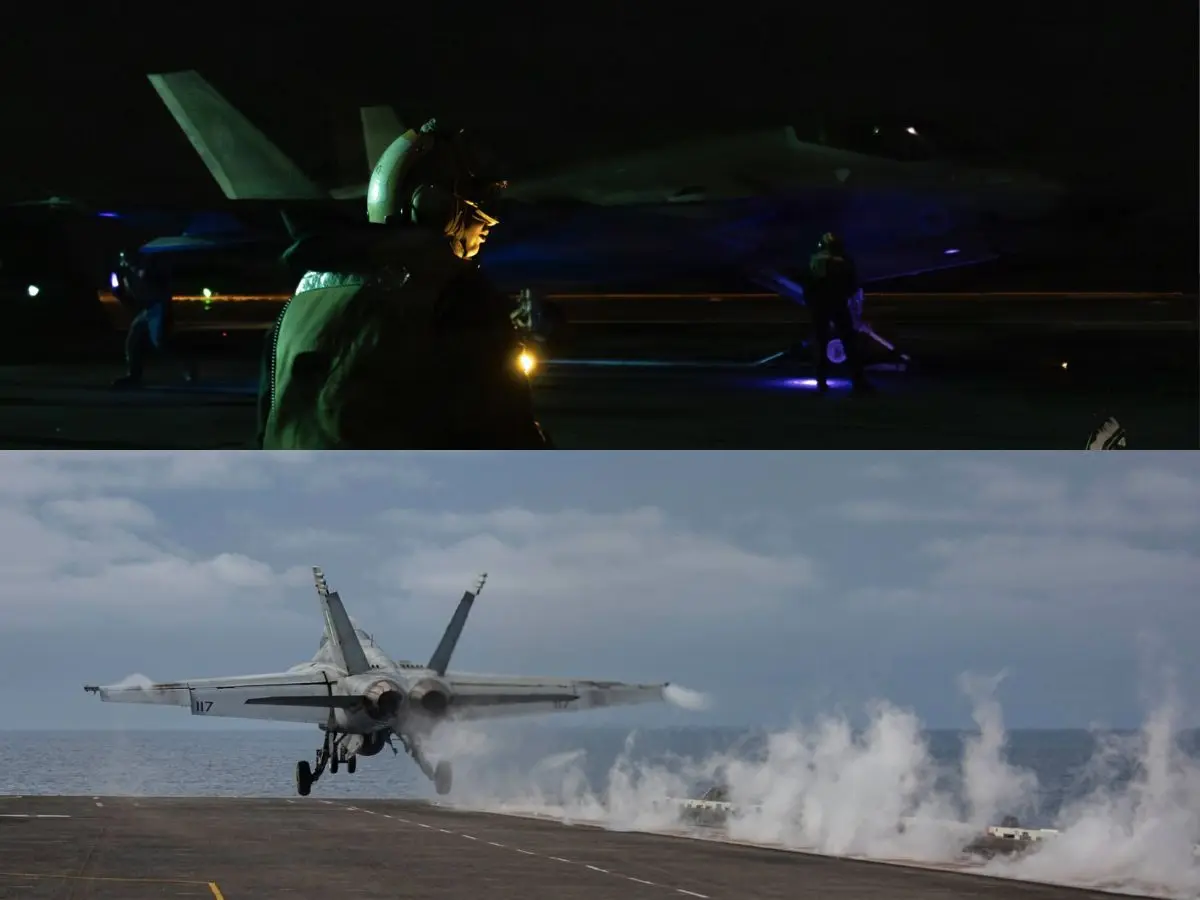
The USS Abraham Lincoln (CVN-72) operates as a mobile airbase, capable of launching and recovering aircraft in rapid succession. Flight operations are among the most complex tasks at sea, requiring coordination between pilots, deck crews and command teams to maintain a continuous cycle of missions. Its flight deck, spanning about 4.5 acres, functions as a compact and constantly moving runway.
The science of catapult launches
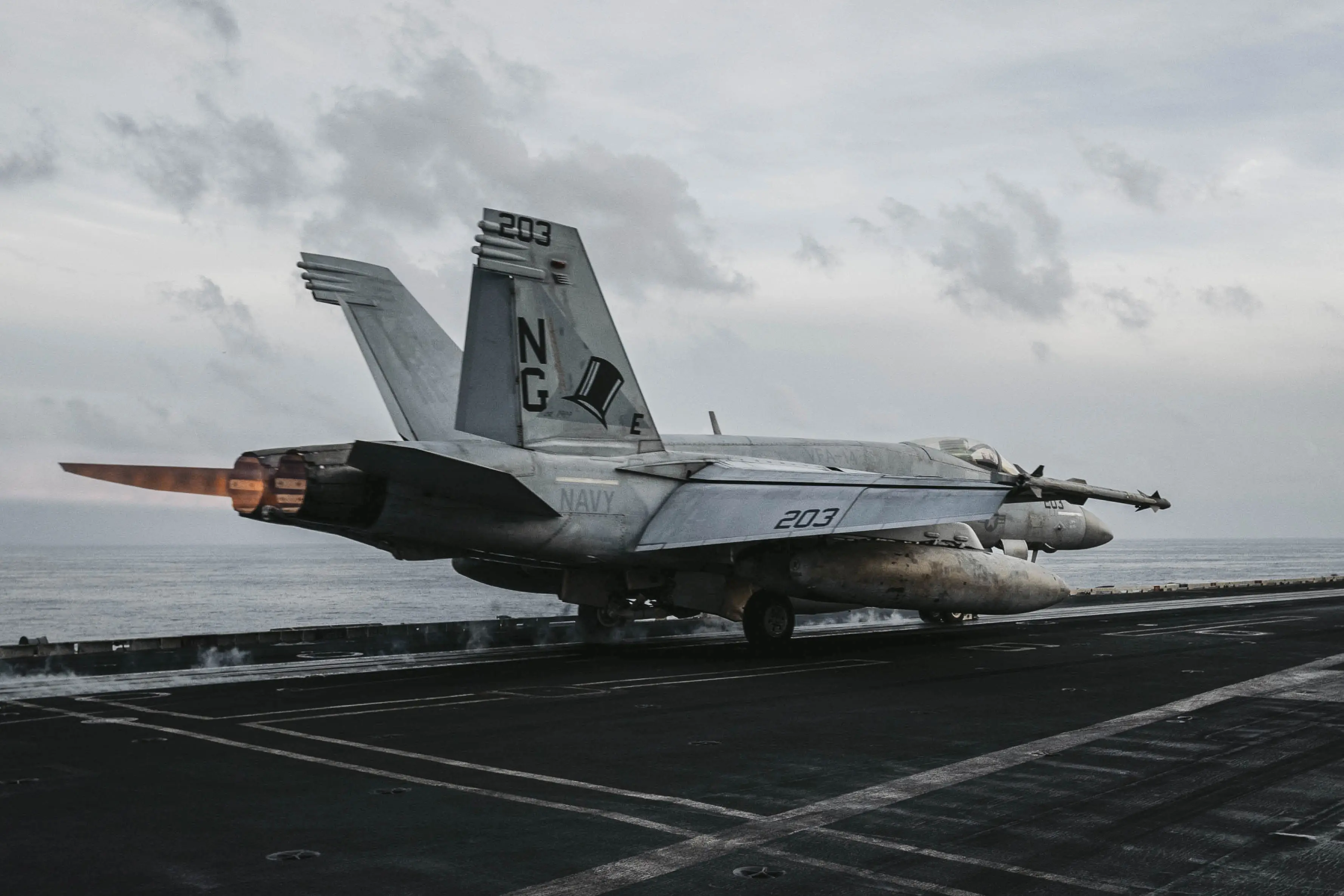
Aircraft including the F/A‑18 Super Hornets (30 tons takeoff) and F‑35C Lightning II (31 tons), EA-18G Growler, E‑2 Hawkeyes are launched using steam-powered catapults. These systems accelerate jets from a standstill to take-off speed within seconds. Each launch is carefully sequenced, with deck crews guiding aircraft into position before final clearance is given from the flight deck control tower.
Arrested landings on a moving runway
Landing is even more demanding. Pilots must align with a moving deck and catch one of four arresting wires using a tailhook. The process happens in seconds and requires precision timing, as the aircraft must descend at the correct angle while compensating for the carrier’s motion at sea.
The role of the landing signal officer
A key figure in this process is the Landing Signal Officer (LSO), who provides real-time guidance to incoming pilots. Using radio communication and visual systems, the LSO helps ensure safe landings, particularly when conditions are challenging.
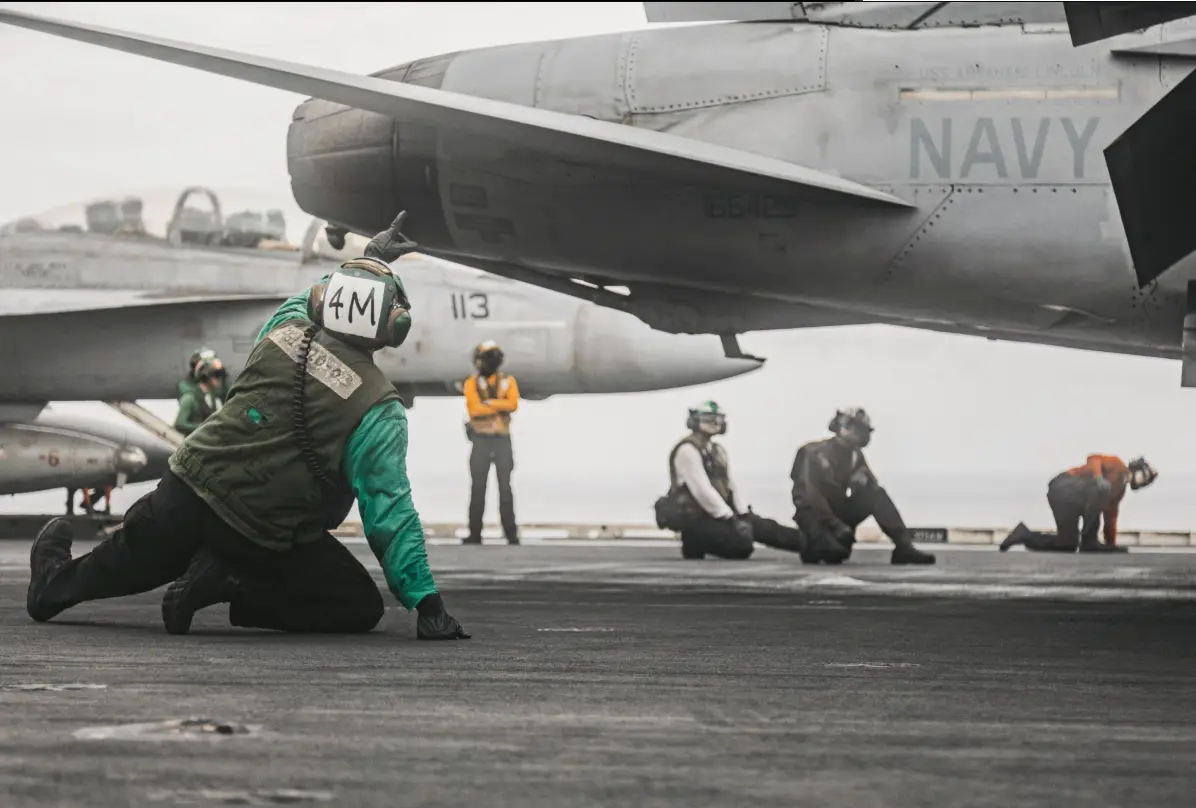
Colour-coded coordination on deck
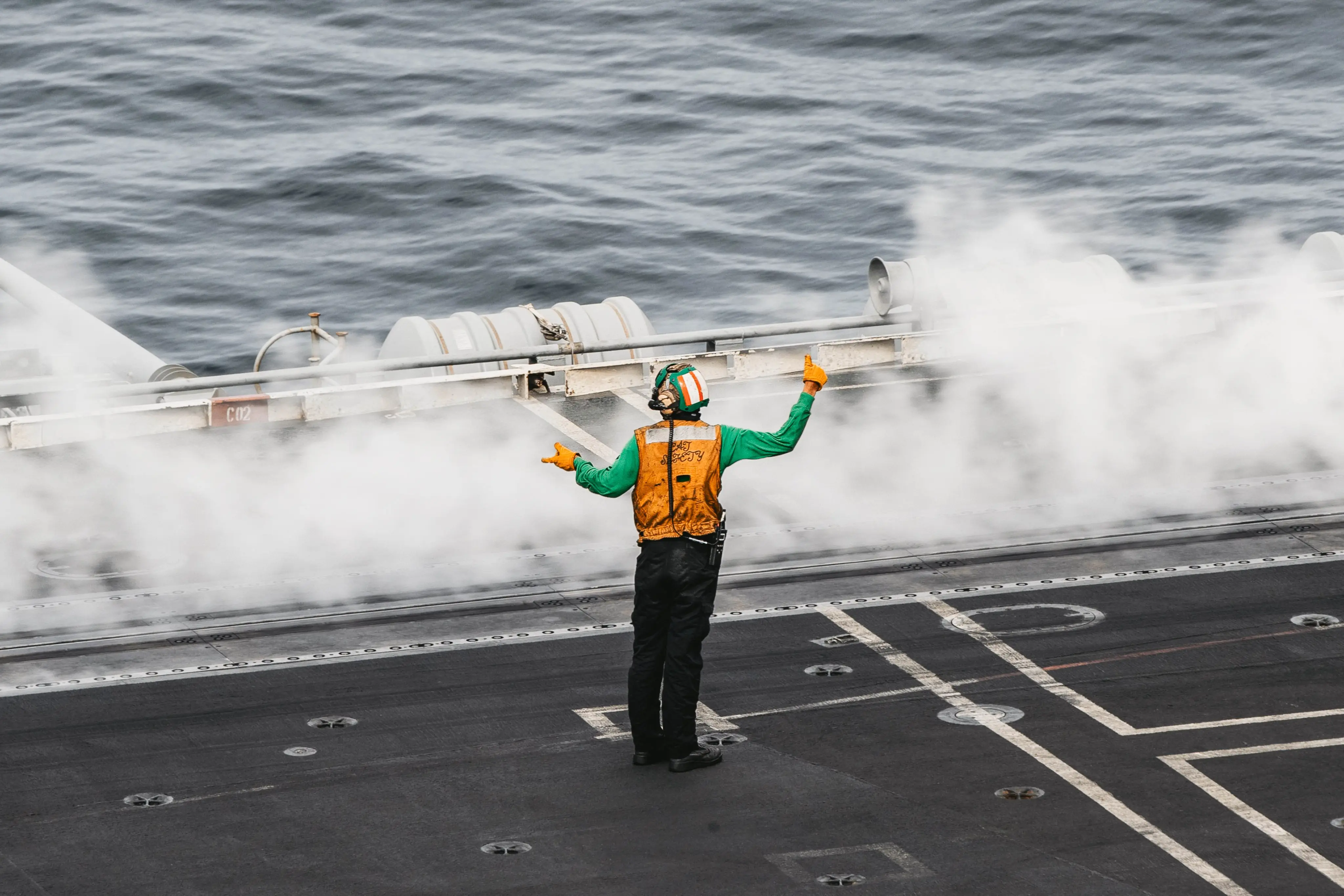
Flight deck crews wear colour-coded jerseys to indicate their roles. Yellow directs aircraft movement, green handles technical operations, red manages ordnance, and blue supports logistics. This system allows for quick identification and efficient coordination during high-tempo operations.
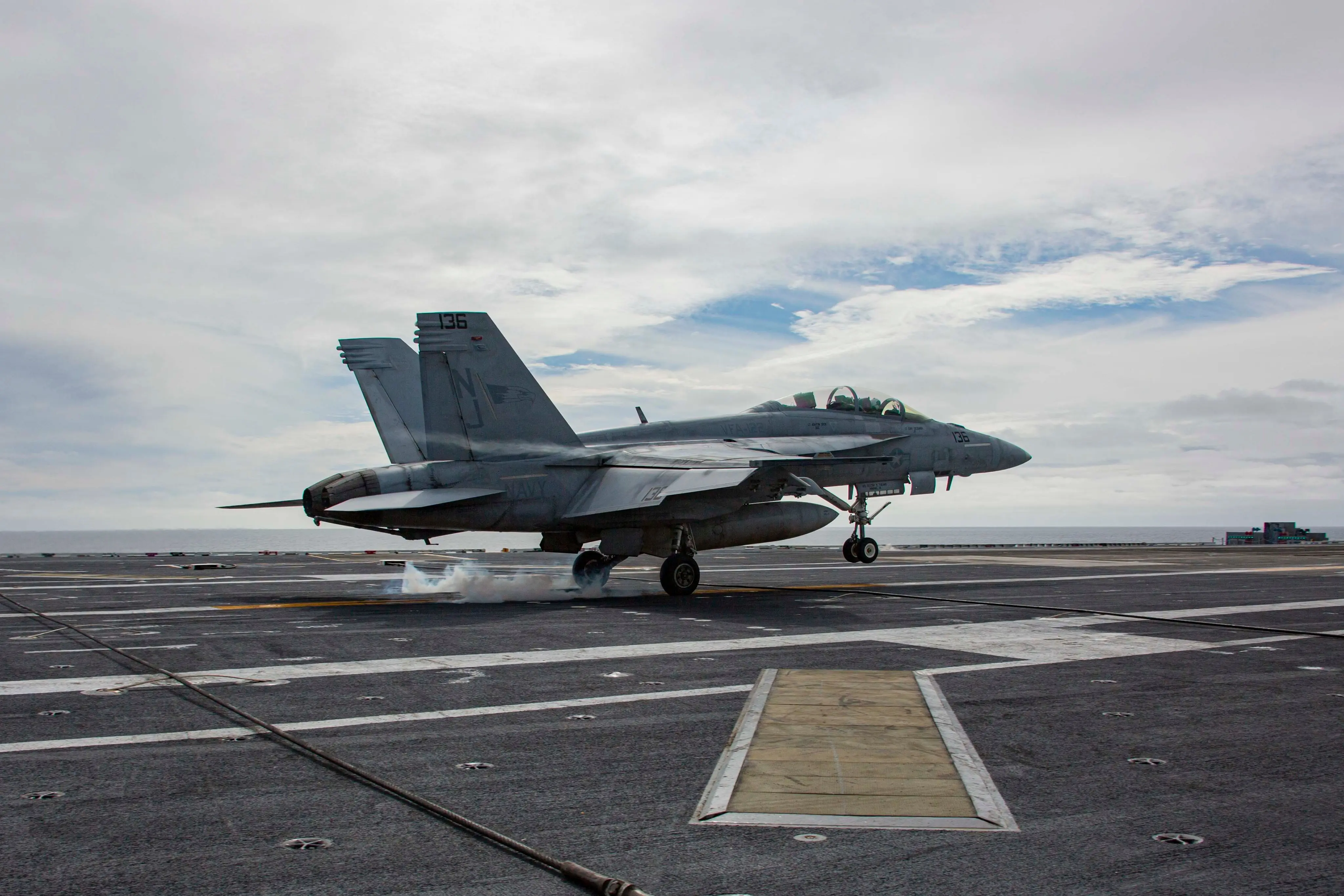
Day operations: speed and visibility
During daylight, operations rely heavily on visual cues. Pilots can clearly see the deck and surrounding environment, allowing for a faster tempo and a higher number of sorties. Deck crews also benefit from improved visibility, enabling quicker turnaround times between launches and recoveries.
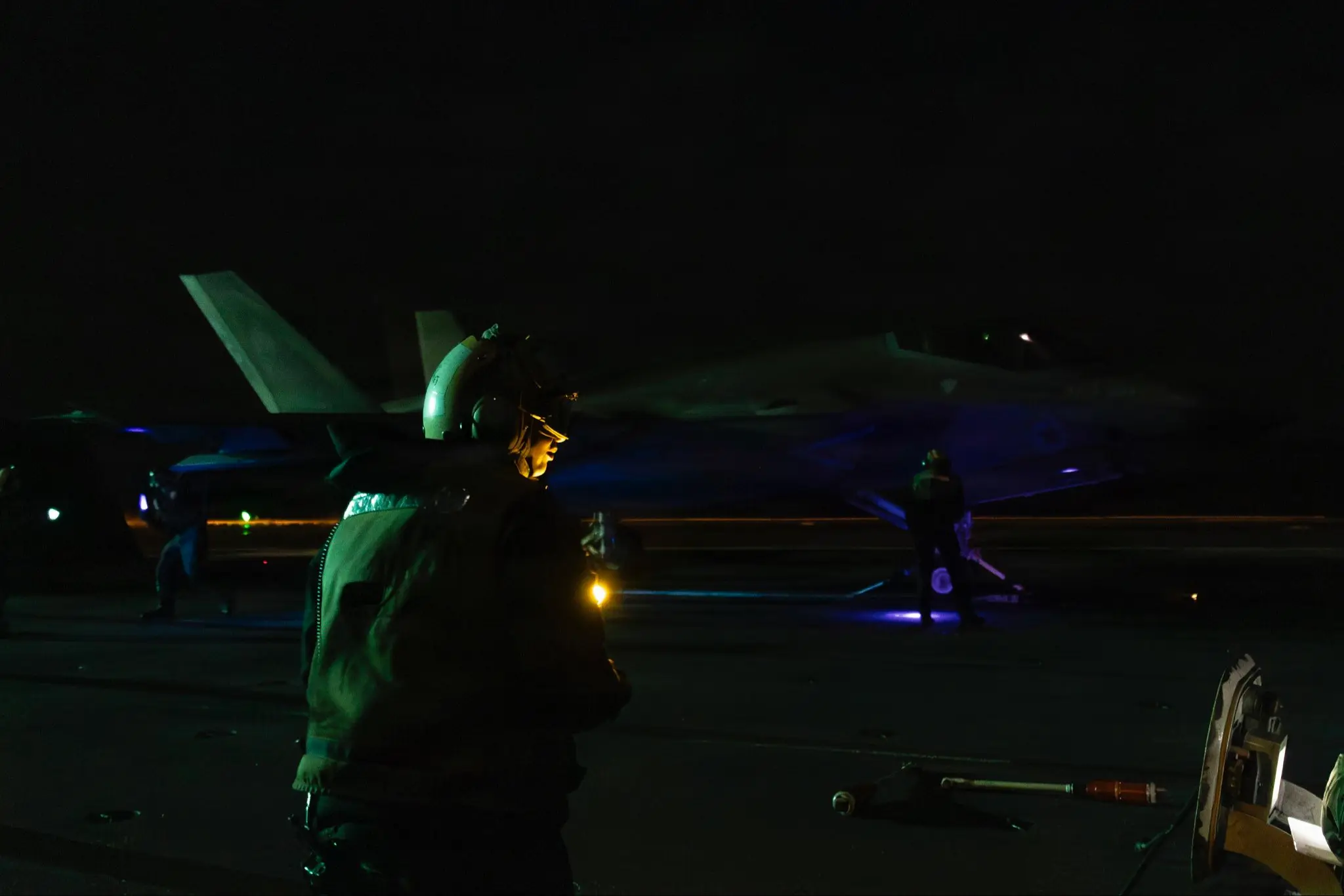
Night operations: precision under pressure
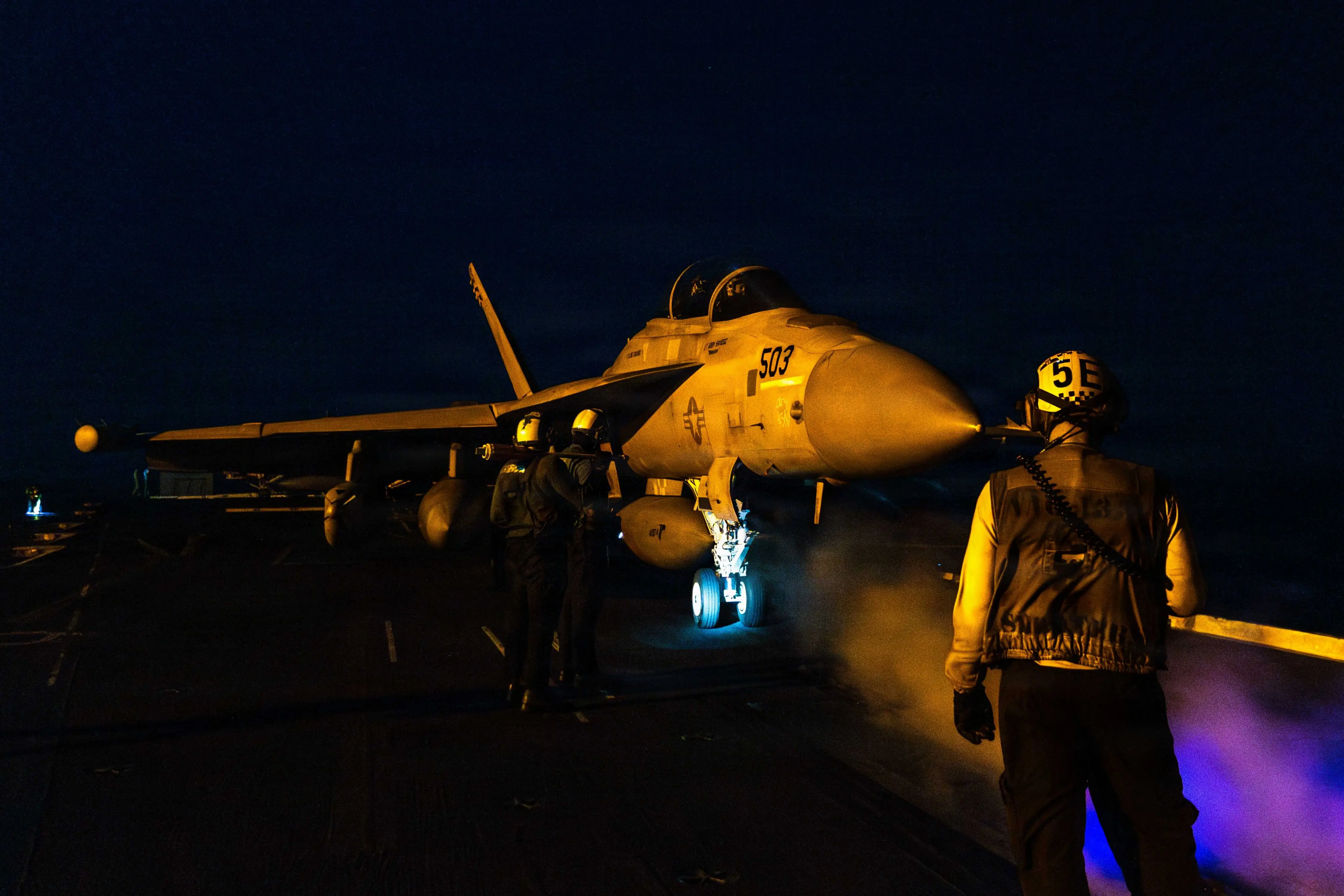
At night, operations become significantly more complex. Pilots depend on onboard systems and guidance from the deck, while crews work under limited visibility. The margin for error is smaller, and only highly trained aviators conduct these missions. Despite reduced sortie rates, night operations ensure the carrier maintains round-the-clock operational capability.
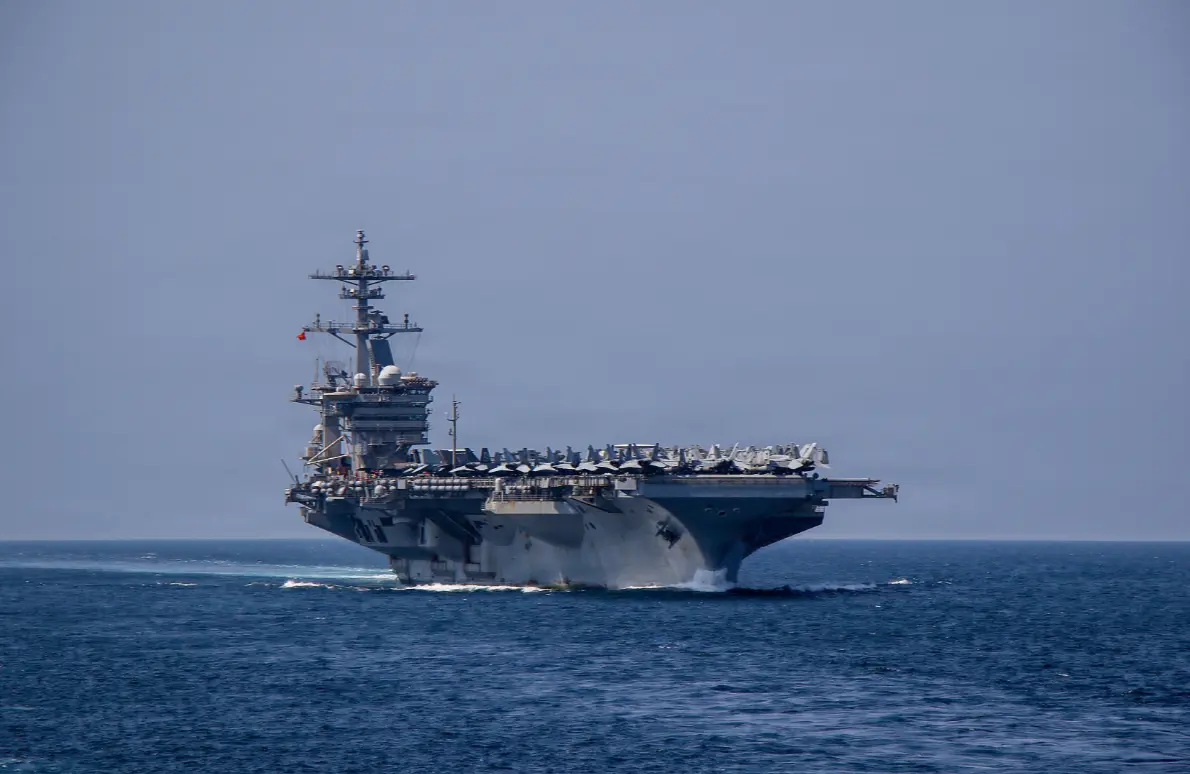
precision and discipline
Together, these elements highlight the precision, coordination and discipline required to sustain continuous air operations from a carrier at sea.
)
)
)
)
)