In pics: NASA's gigantic SLS moon rocket, a 'practice' for future Mars mission

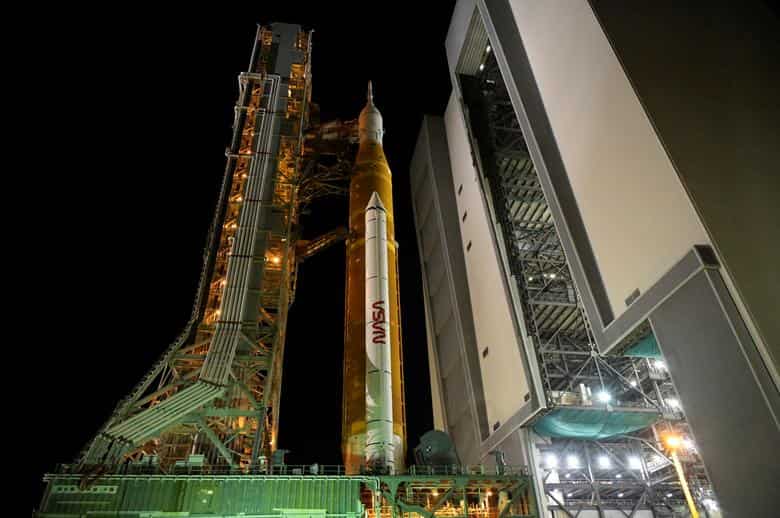
SLS by Boeing
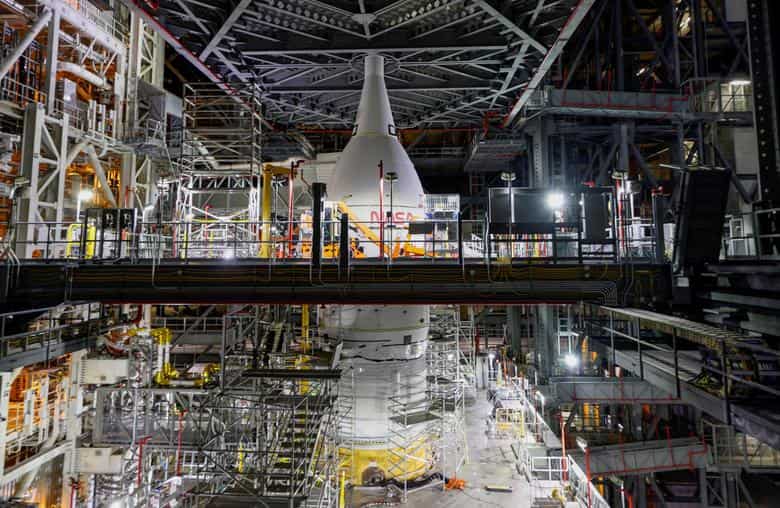
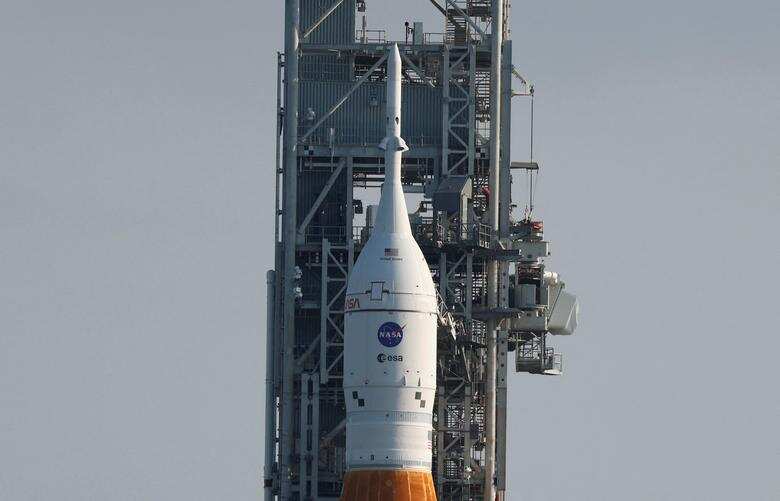
The rocket travelled four miles overnight from its assembly building at NASA's Kennedy Space Center in Florida to the launchpad in 11 hours. Over the past ten years, Boeing has taken the lead in developing the Space Launch System.
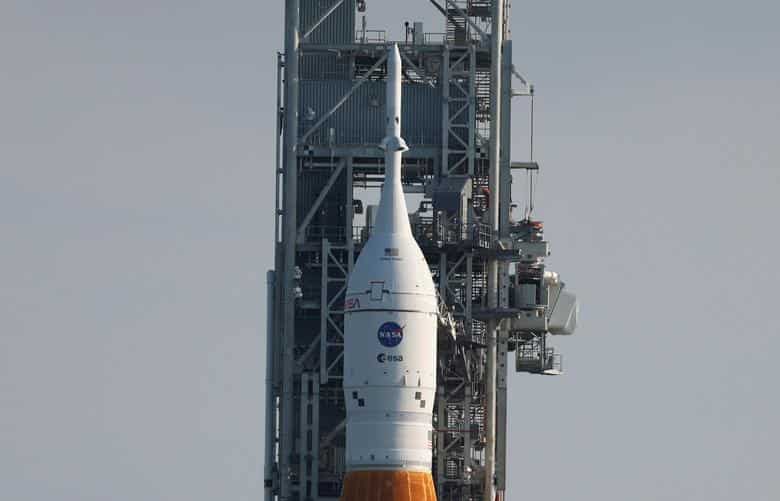
Orion
The NASA Orion astronaut capsule, manufactured by Lockheed Martin, is perched atop the rocket. It is intended to separate from the rocket in outer space, transport people to the moon, and then rendezvous with another spacecraft that will carry them to the lunar surface. For the Artemis 1 mission on August 29, the Orion spacecraft will launch from the Space Launch System without any astronauts aboard and orbit the moon for 42 days before coming back to Earth and splashing down in the ocean.

Aim at the moon
The National Aeronautics and Space Administration's (NASA) Artemis programme seeks to send astronauts to the moon and build a permanent lunar settlement as a prelude to future human exploration of Mars.
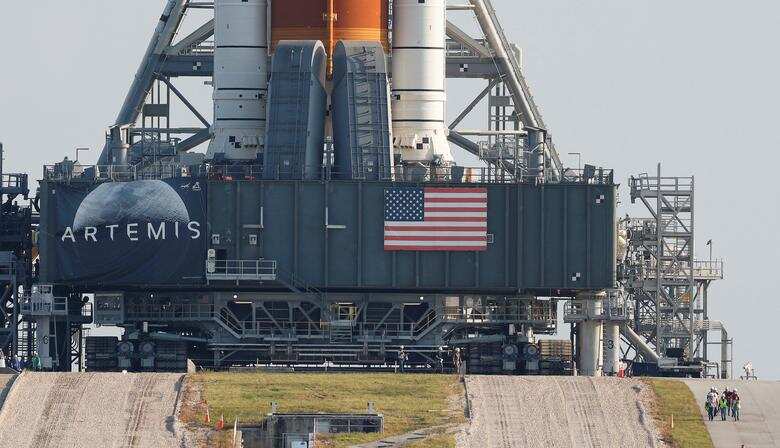
Key moment for NASA
This is a crucial time for NASA, which will commemorate the 50th anniversary of Apollo 17, the very last mission to land a person on the moon, in December. The organisation has promised to come back with its new Artemis programme and current technology (Artemis was the Greek moon goddess and the twin sister of Apollo).
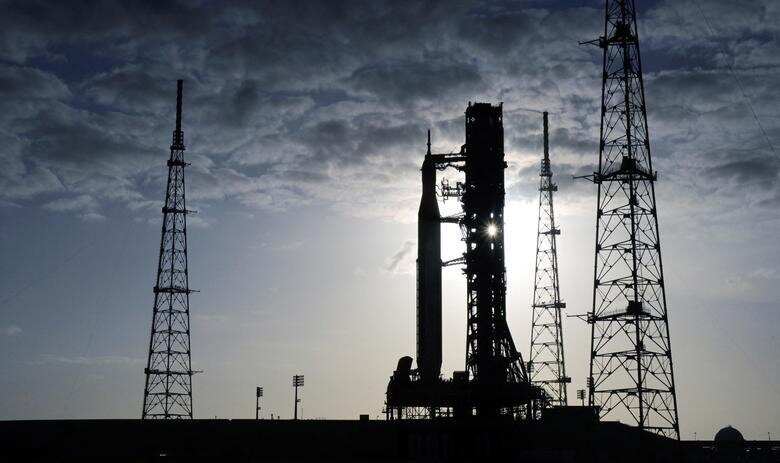
Way to Mars
NASA envisions a trip back to the Moon as a method to get ready for an astronaut mission to Mars in the 2030s or shortly thereafter.
Extra power
The SLS will launch with 15% greater thrust than the Saturn V rockets used by Apollo. In addition to carrying people far from Earth, the vehicle will be able to carry enough supplies and cargo for those crews to be gone for a long time thanks to this added power and other improvements.
When is the launch?
Engineers will have just over a week and a half to prepare the SLS for flight after it arrives at its launch pad. There will be three potential launches at the end of the month, beginning on Monday, August 29.
On Friday, September 2, and, if that doesn't work, on Monday, September 5, another launch attempt can be attempted if weather or technical difficulties prevent the rocket from leaving Earth on this day.
Splashdown in Pacific
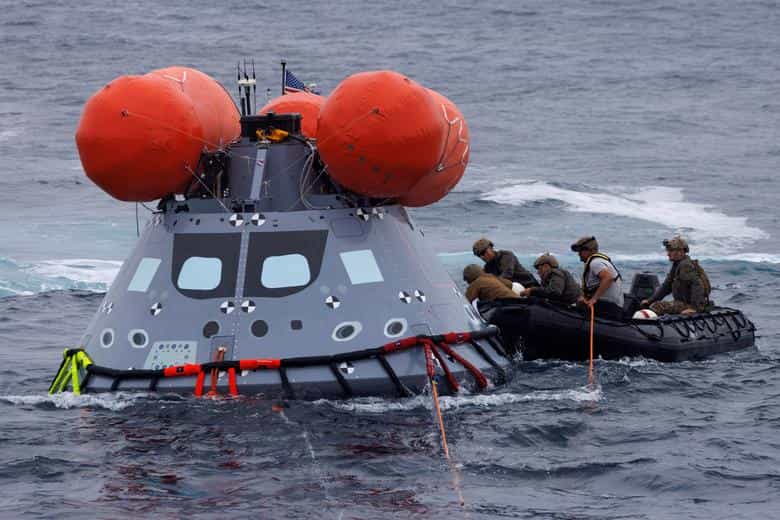
The goal of the mission is to bring Orion home for a splashdown in the Pacific Ocean off the coast of California after looping around the back of the Moon. A key goal of the test flight is to determine whether the capsule's heatshield can withstand the heat of re-entry into Earth's atmosphere.
)
)
)
)
)