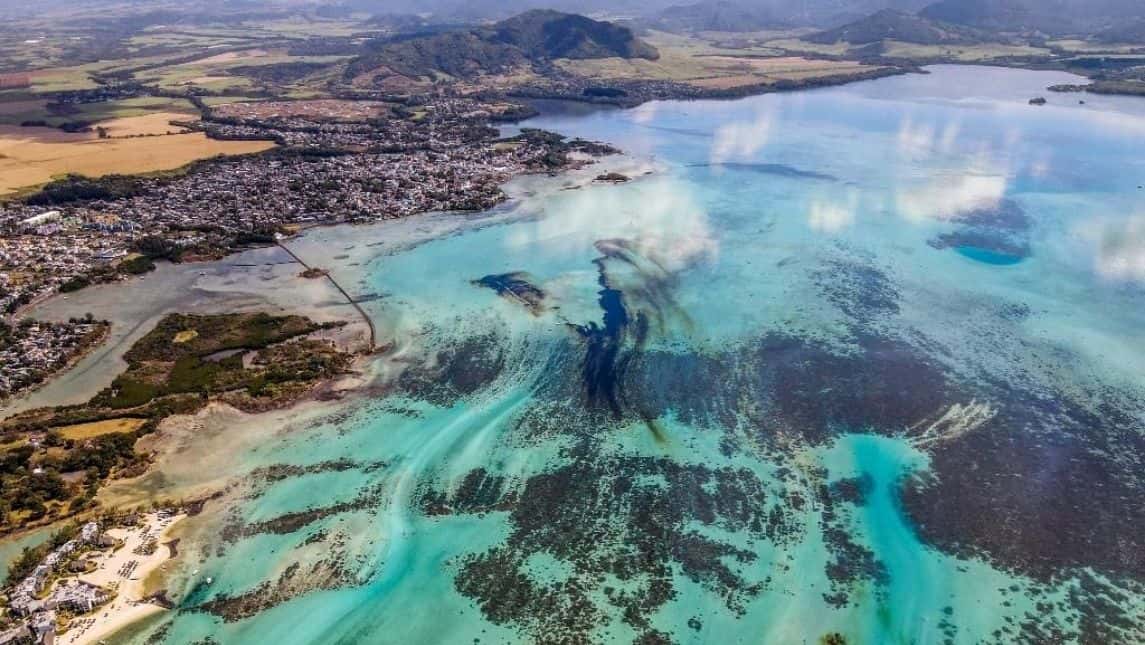
Images show the extent of ecological damage caused by oil spill off Mauritian coast


Ecological danger
More than 1,000 tonnes of fuel has seeped from the bulk carrier MV Wakashio into the azure sea off southeast Mauritius, befouling the coral reefs, white-sand beaches and pristine lagoons that lure tourists from around the globe.

Crack in the hull
Another 2,500 tonnes remain aboard the stricken vessel, which ran aground on a reef on July 25 but only started oozing from a crack in the hull in the past week.

Fragile ecosystem could be decimated
Experts warn a further rupture could unleash a spill that will be beyond catastrophic for the fragile coastal ecosystem upon which Mauritius, and its economy, relies.
Japan and France extend help
Japan said Sunday it would send a six-member expert team to assist with what Mauritius has declared an unprecedented environmental emergency. France also dispatched a naval vessel, a military aircraft and technical advisers from nearby Reunion Island after Mauritius appealed for international help.

Too late?
Aerial images show the enormity of the disaster, with huge stretches of crystal-clear seas around the marooned cargo ship stained a deep inky black.

Volunteers smeared in black sludge
Thousands of volunteers, many smeared head-to-toe in black sludge, have marshalled along the coastline, stringing together miles of improvised floating barriers made of straw in a desperate attempt to hold back the oily tide.

Conservation work reversed
Thick muck has coated mangrove forests and unspoiled inlets up and down the coastline, exacting irreparable harm and undoing years of painstaking conservation work, environmental activists say. The slick has already begun drifting further up the coast, fanned along by strong winds and currents.
)
)
)
)
)