How Voyager 2–type missions could help us build a 'Deep Space Network'?

Handling decades of slow, faint transmissions from Voyager 2 refined methods for data compression, error correction, and archiving. These techniques are now part of the DSN’s standard practices.
What Is the Deep Space Network?
The Deep Space Network (DSN) is NASA’s global system of large radio antennas that communicate with spacecraft far from Earth. It tracks, commands, and receives data from missions exploring the Solar System and beyond.

Voyager 2 as a Test Case
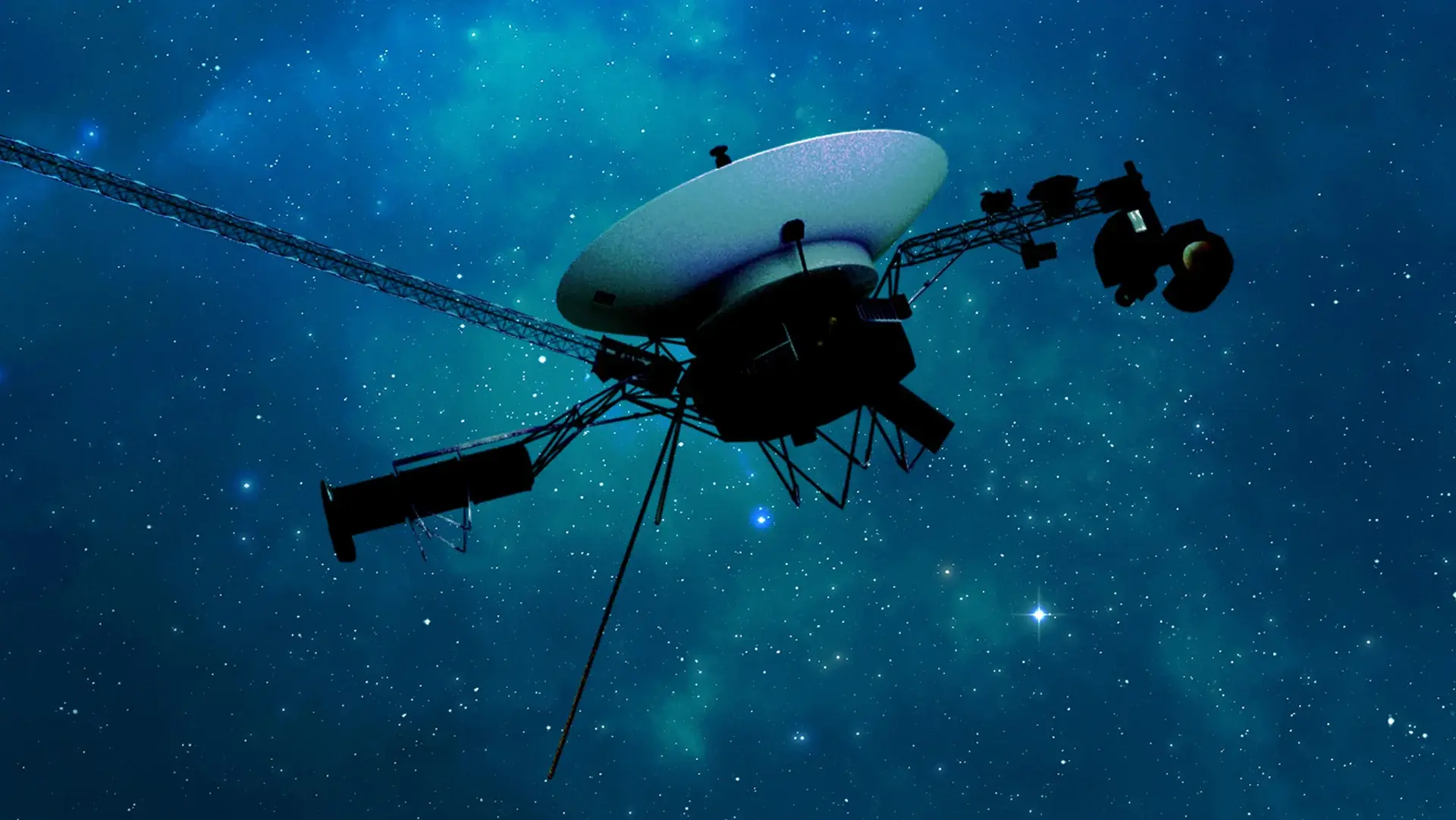
Voyager 2, launched in 1977, is still sending signals across nearly 20 billion kilometres. Maintaining contact over this distance requires extreme precision, making it an ideal stress test for the DSN’s capacity and endurance.

Engineering Advances Driven by Voyager 2
The need to receive faint signals from Voyager 2 pushed antenna design forward. Upgrades to dish size, low-noise receivers, and digital processing were introduced to keep pace with its increasing distance.

Building a Template for Future Missions
By demonstrating how to track and operate a spacecraft for decades, Voyager 2 provided a practical template. The lessons are directly applicable to missions that will travel even farther, such as potential interstellar probes.

Global Antenna Coordination
Voyager 2 showed the importance of having multiple ground stations placed worldwide in California, Spain, and Australia. This arrangement allows nearly continuous communication as Earth rotates, a cornerstone of the DSN model.

Data Management and Longevity
Handling decades of slow, faint transmissions from Voyager 2 refined methods for data compression, error correction, and archiving. These techniques are now part of the DSN’s standard practices.

The Broader Impact on Deep-Space Exploration
Without missions like Voyager 2, the DSN would not have evolved into the system we rely on today. The spacecraft’s ongoing journey demonstrates that building a robust deep space network is not optional, it is essential for humanity’s future in interstellar exploration.
)
)
)
)
)