Dry thunderstorms spark massive fires in California; close to a million acres burnt


11,000 lightning strikes
Nearly 11,000 lightning strikes were documented during a 72-hour stretch this week in the heaviest spate of thunderstorms to hit California in more than a decade, igniting 367 individual fires. Almost two dozen of them have grown into major conflagrations, authorities said.
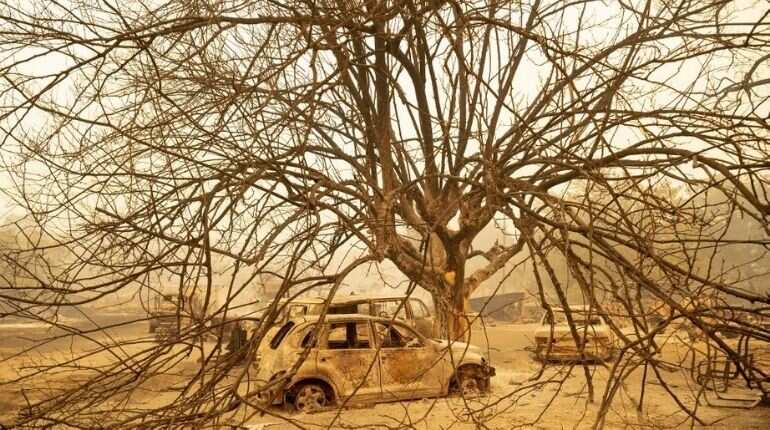
Multiple fires raced through hills and mountains adjacent to Northern California's drought-parched wine country, shutting down Interstate 80 at Fairfield, about 35 miles (56 km) southwest of Sacramento, as flames leapt across the highway, trapping motorists caught in a hectic evacuation.
Evacuation
Police in the nearby town of Vacaville reported that advancing flames had prompted the evacuation of a state prison there and a medical facility for inmates.
Four residents whose communities were overrun by flames hours earlier in the same area suffered burns but survived, though the severity of their injuries was not immediately known, said Will Powers a spokesman for the California Department of Forestry and Fire Protection (CalFire).
Fire at LNU Complex
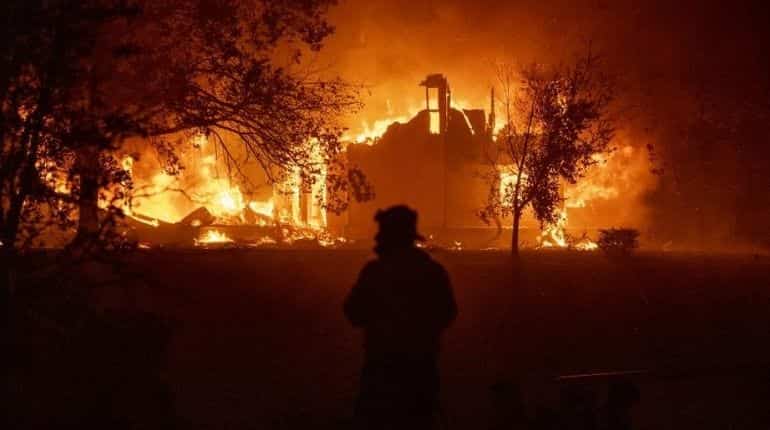
He said thousands of residents were under mandatory evacuation orders in a four-county area stricken by a cluster of nine wind-driven fires collectively dubbed the LNU Complex, triggered by lightning on Monday.
In central California, a helicopter was on a water-dropping mission in Fresno County about 160 miles (258 km) south of San Francisco when it crashed, killing the pilot, a private contractor, CalFire said.
'God saved me'
"I made it, God saved me," Bustos told television station KPIX.
There were social media accounts of people trapped in the blaze, but CalFire's Powers said authorities had no reports of anyone missing.
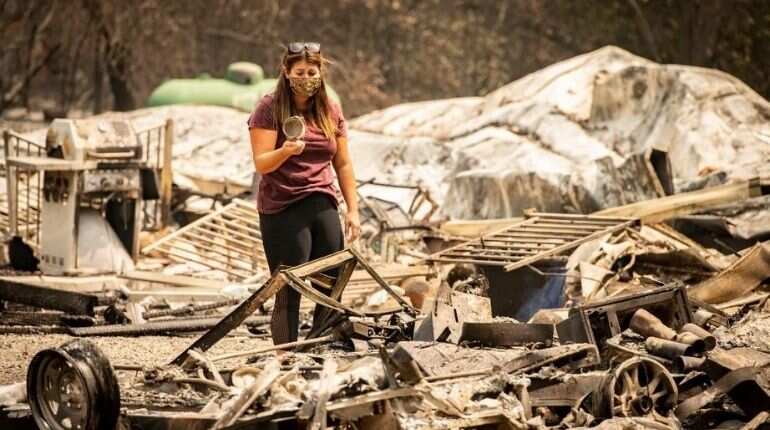
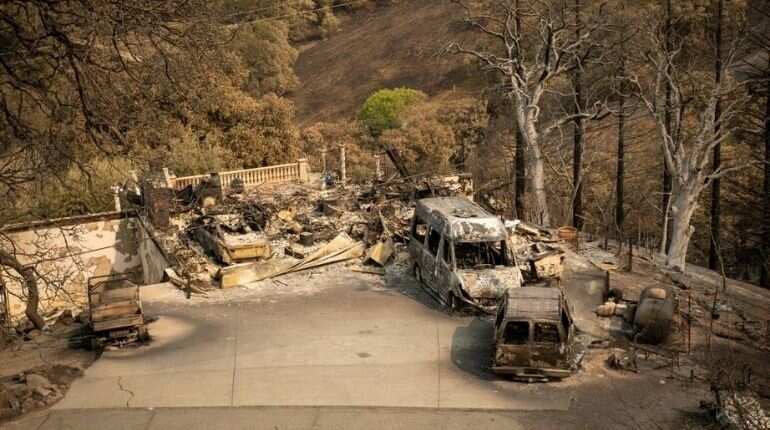
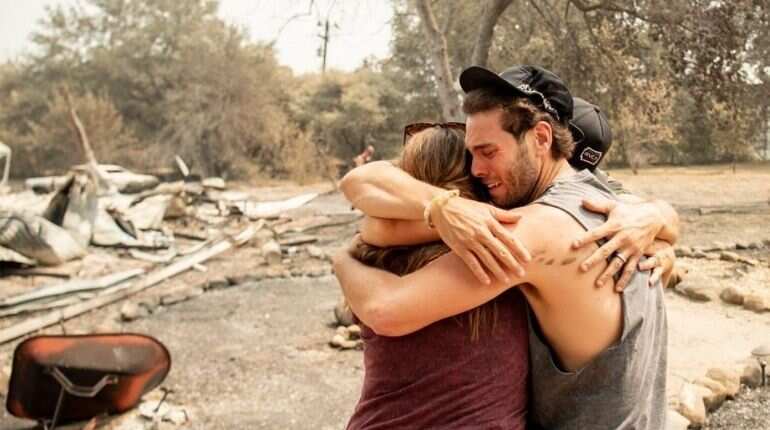
A Reuters reporter saw dozens of burned-out homesteads and houses in the Vacaville-Fairfield area, dead livestock among torched properties and some animals wandering loose.
"We are experiencing fires the like of which we haven't seen in many, many years," California Governor Gavin Newsom told a news conference, adding he had requested 375 fire engines from out of state to help.
He declared a statewide fire emergency on Tuesday
A repeat of 2008
The last time California experienced dry lightning storms of such devastating proportions was in 2008, said CalFire spokesman Scott Maclean.
Fanned by "red-flag" high winds, the fires are racing through vegetation parched by a record-breaking heat wave that began on Friday. Meteorologists have said the extreme heat and lightning storms were both linked to the same atmospheric weather pattern - an enormous high-pressure area hovering over America's desert Southwest.
The largest group of fires, called the SCU Lightning Complex, had scorched at least 102,000 acres some 20 miles east of Palo Alto, while a third cluster, the CZU August Lightning Complex, grew to more than 10,000 acres and forced evacuations around 13 miles south of Palo Alto.
'Close to one million acres' burnt
Thousands of lightning strikes have hit the state in the past week, igniting fires that left smoke blanketing the region, bringing the total area burned to "close to one million acres," or 400,000 hectares, according to CalFire public information officer Jeremy Rahn.
That is considered a stunning toll this early in California's fire season, which normally runs from August to November, and it comes as exhausted firefighters are already struggling to keep up with the far-flung blazes.
Dry thunderstorms could spark additional fires
The National Weather Service said dry thunderstorms could spark additional wildfires, adding that "the western US and Great Plains are shrouded under a vast area of smoke." It issued red-flag warnings covering large swaths of northern and central California.
These conditions "could cause erratic winds, extreme fire behavior within the existing fires, and have a potential for new fires to start," the CalFire website said.
'Nearly two dozen major fires'
Firefighters are stretched so thin that the state has turned down some local officials' requests for help with equipment or personnel, forcing them to rely on volunteers and local agencies, the Los Angeles Times said.
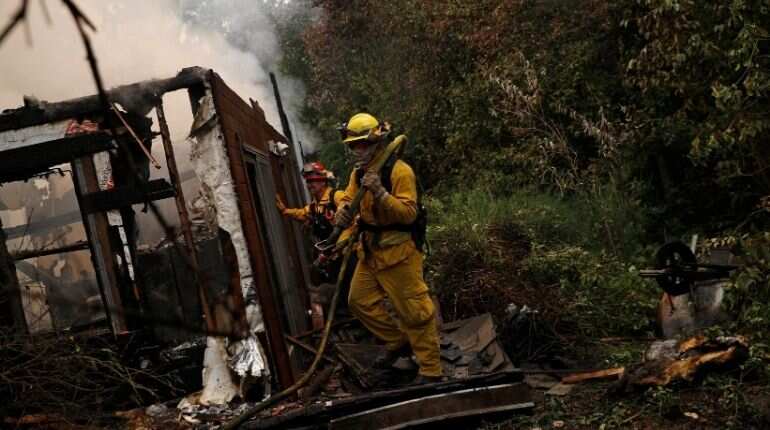
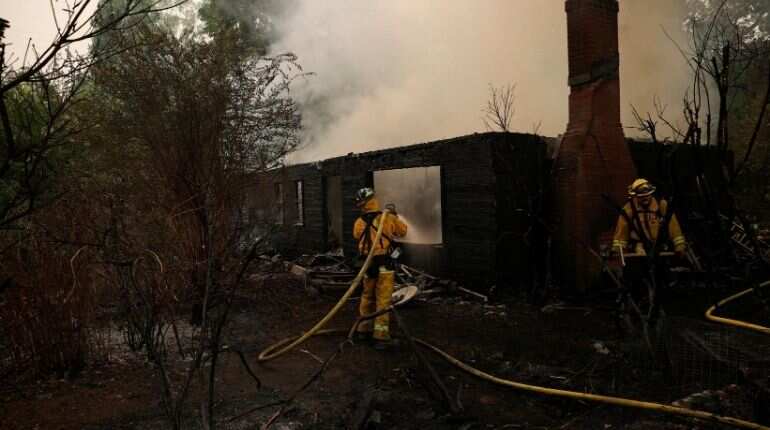
About 2,600 firefighters are now tackling the two largest blazes, out of roughly 14,000 battling "nearly two dozen major fires," according to Rahn.
With California pleading for outside help, several western states, the federal government and even the governments of Canada and Australia have responded.
"Many of these firefighters have been on the lines for 72 hours, and everybody is running on fumes," Assemblyman Jim Wood of the Healdsburg district in Sonoma told the Los Angeles Times. "Our first responders are working to the ragged edge of everything they have."
)
)
)
)
)