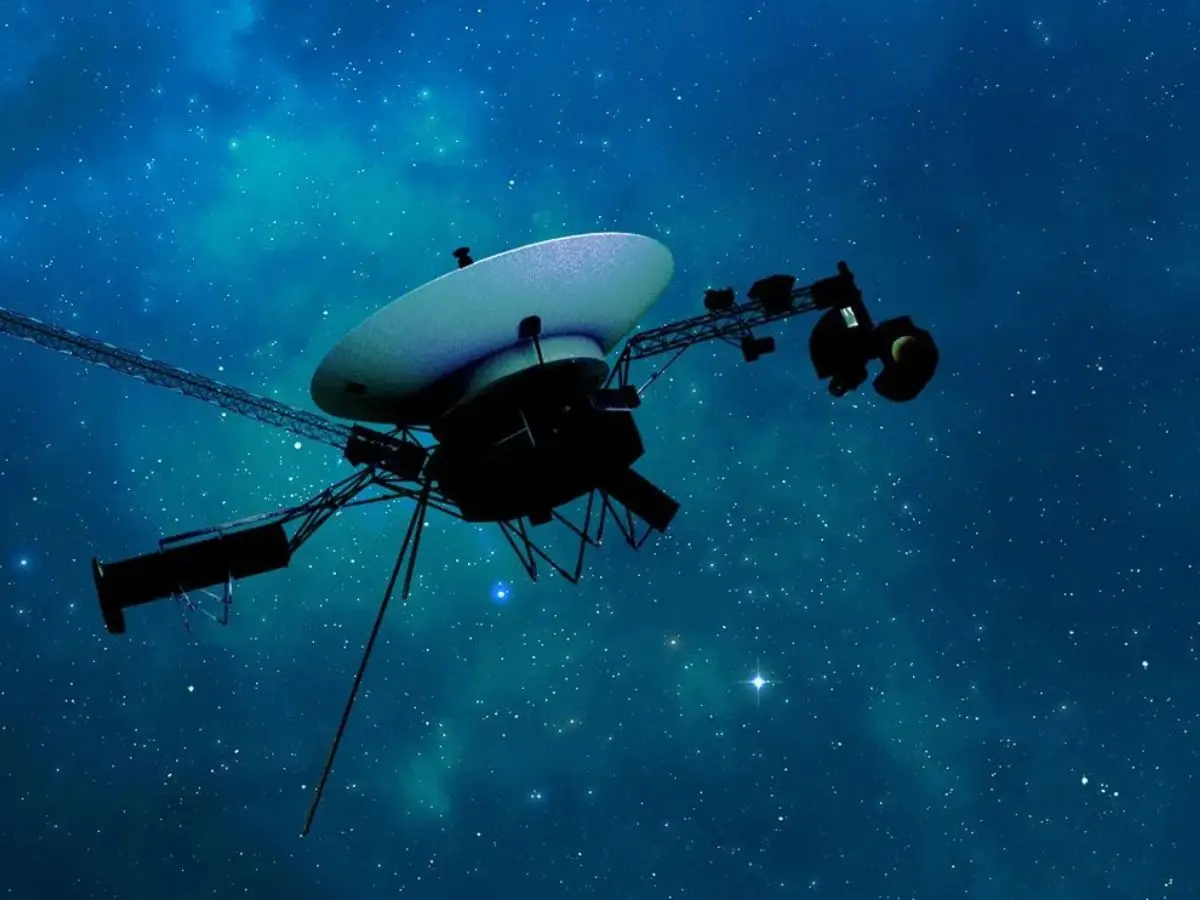
Did you know Voyager 2 carries a time capsule with Earth’s sounds, music and messages bound for the stars?

It is a message of both science and hope, a statement that humanity once existed and sought to be known.
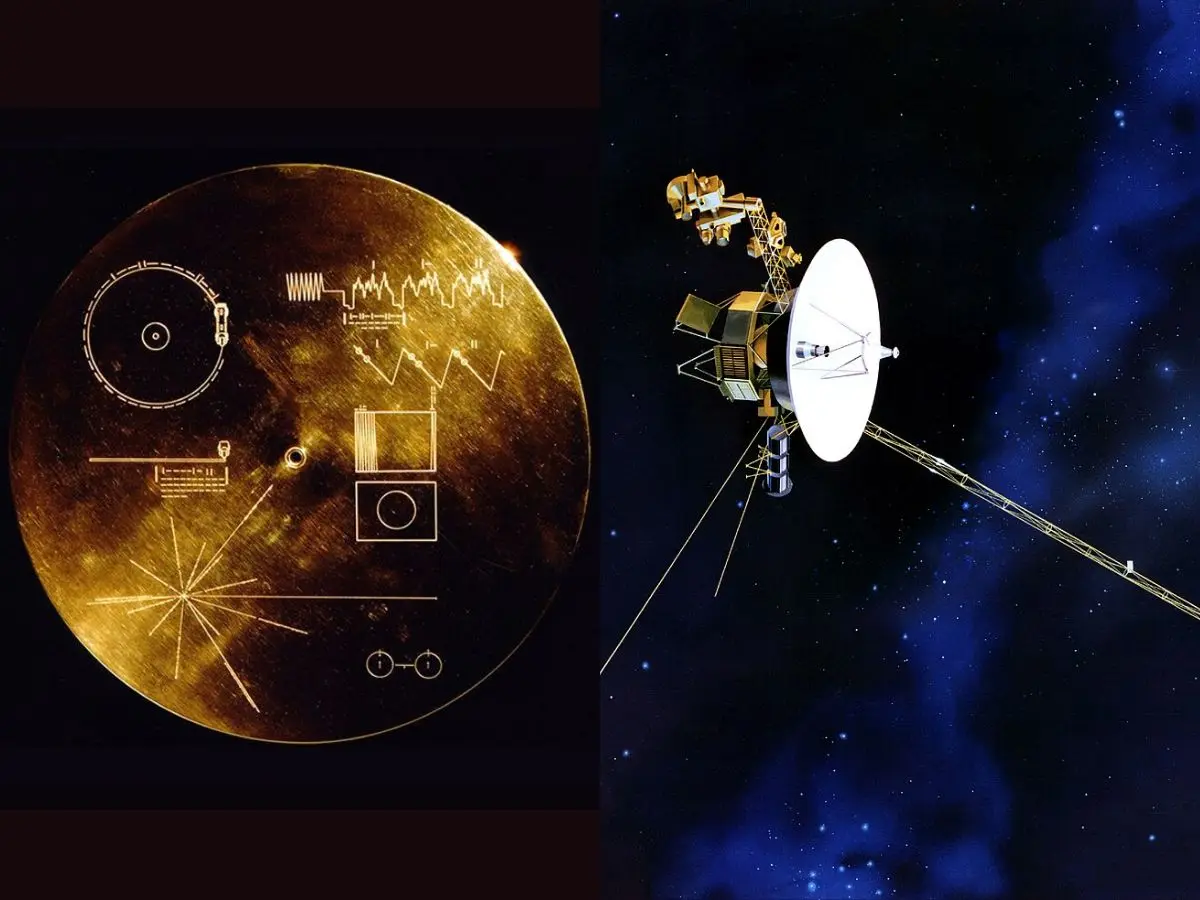
A Time Capsule in Deep Space
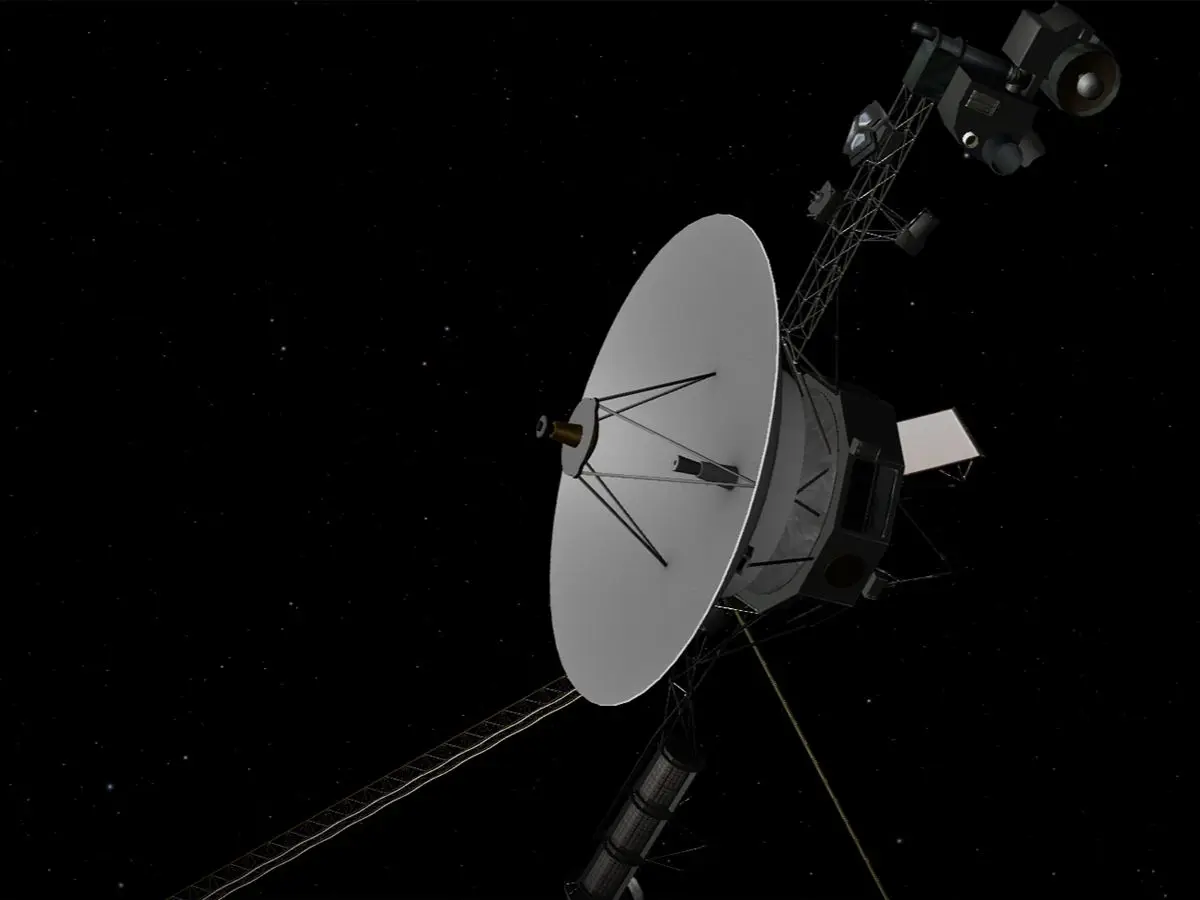
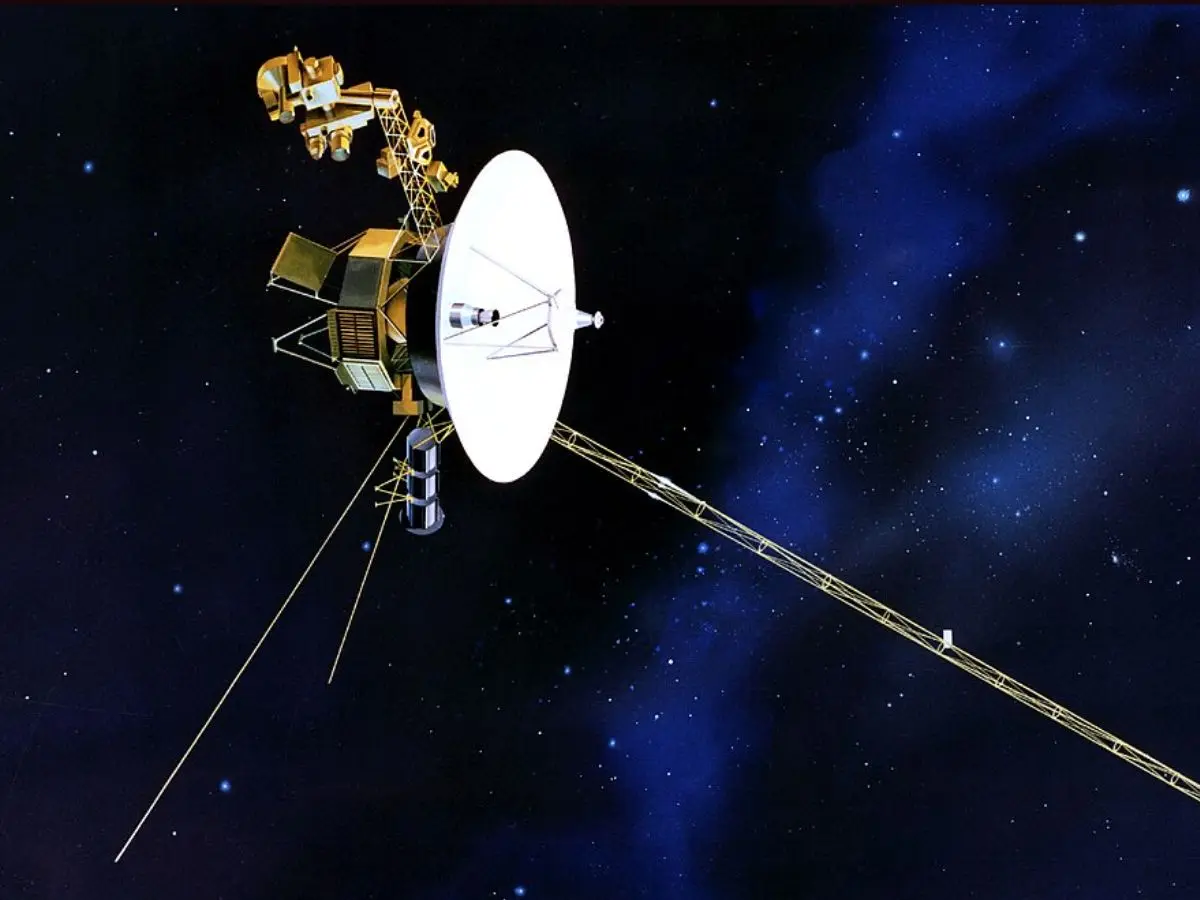
When Voyager 2 left Earth on August 20, 1977, it was designed as a robotic explorer to study the outer planets. Yet attached to its side was an artefact unlike anything launched before: the Golden Record. This 12-inch disc, made of gold-plated copper, was intended not for scientific measurements but as a greeting, an interstellar message in case the spacecraft were ever intercepted by another civilisation. More than a piece of engineering, it was a deliberate attempt to represent Earth and its life to the cosmos.
What the Golden Record Looks Like
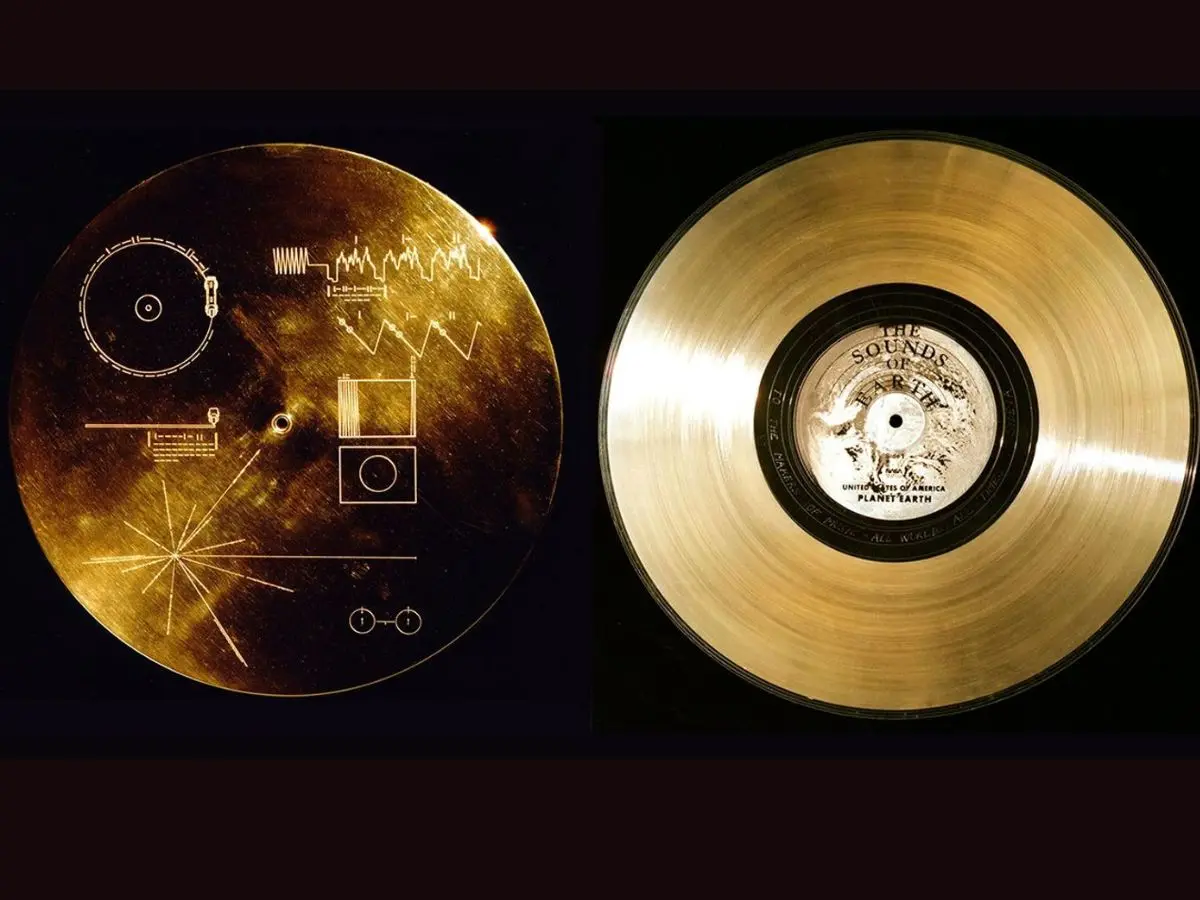
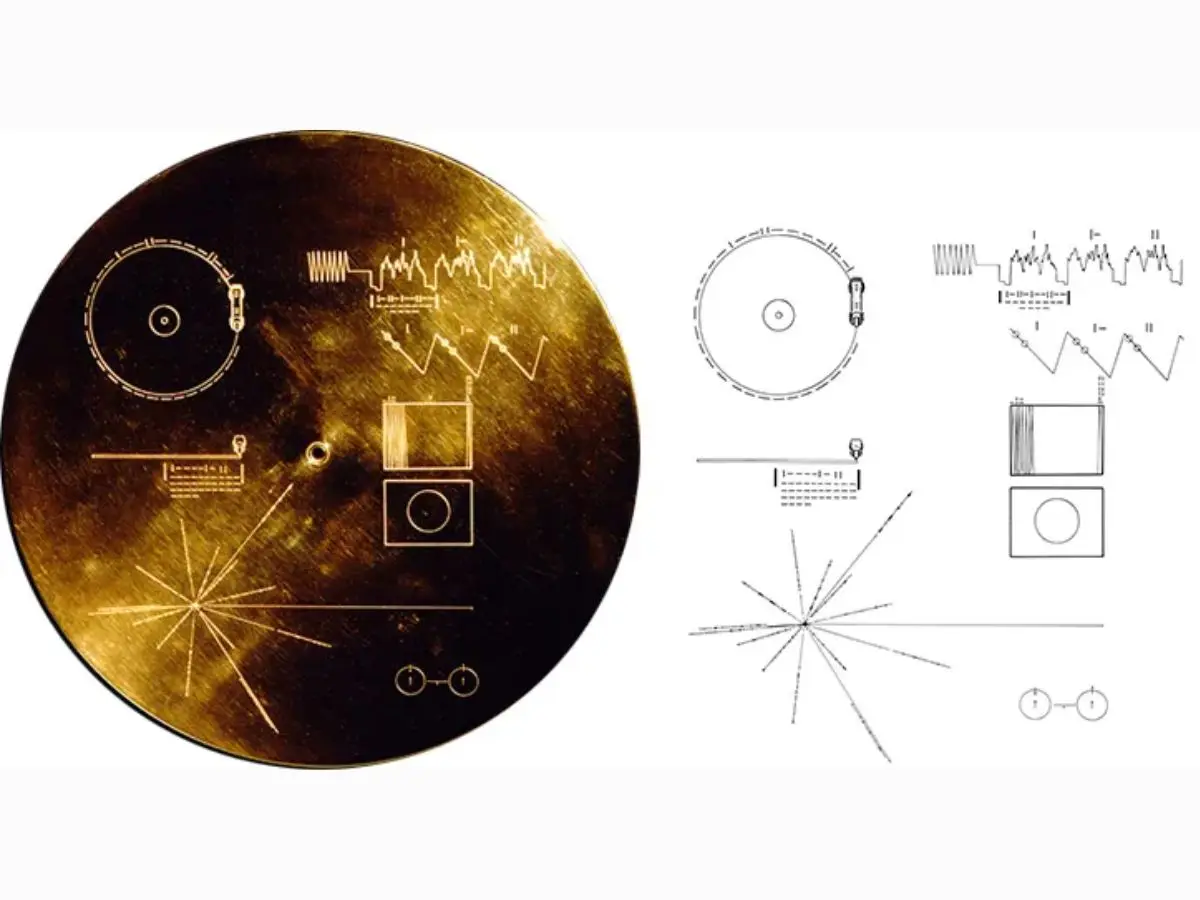
The Golden Record is both durable and symbolic. The disc is encased in an aluminium cover, inscribed with diagrams to help any finder understand how to play it. It contains a cartridge and needle, and simple etched instructions that explain how the information is encoded. Gold plating was chosen to resist degradation in the harsh environment of interstellar space. NASA engineers estimated the record could last for a billion years before eroding. In effect, it was designed to be humanity’s longest-lasting time capsule.
Sounds of Earth
Central to the record is a compilation of audio designed to capture the essence of life on Earth. Natural sounds such as waves breaking, wind, thunder, birdsong and animal calls were included, alongside unmistakably human noises: a baby crying, footsteps, laughter, and a human heartbeat. These recordings were meant to present not just the existence of life, but its atmosphere and vitality.
Greetings and Music Across Cultures
The record carries spoken greetings in 55 languages, ranging from ancient Sumerian to modern dialects. One particularly personal touch is the voice of Carl Sagan’s six-year-old son Nick saying: ‘Hello from the children of planet Earth.’ In addition, a 90-minute selection of music spans cultures and centuries. It includes Bach and Beethoven, Senegalese percussion, Japanese shakuhachi flute, Australian Aboriginal songs, Indian raga, Blind Willie Johnson’s haunting blues, and Chuck Berry’s rock and roll classic 'Johnny B. Goode.' The intention was to show the breadth of human creativity and cultural expression.
Images and Scientific Instructions
Voyager 2’s record also contains 116 images encoded in analogue form. They depict Earth’s landscapes, human anatomy, everyday life, agricultural practices, and scientific achievements. To assist with interpretation, scientific diagrams were added: a pulsar map indicating Earth’s location in the galaxy, diagrams of DNA, and depictions of hydrogen atom transitions to provide universal constants. These inclusions were intended to make the record intelligible even to beings with no prior knowledge of humanity.
Why Voyager 2 Matters Most
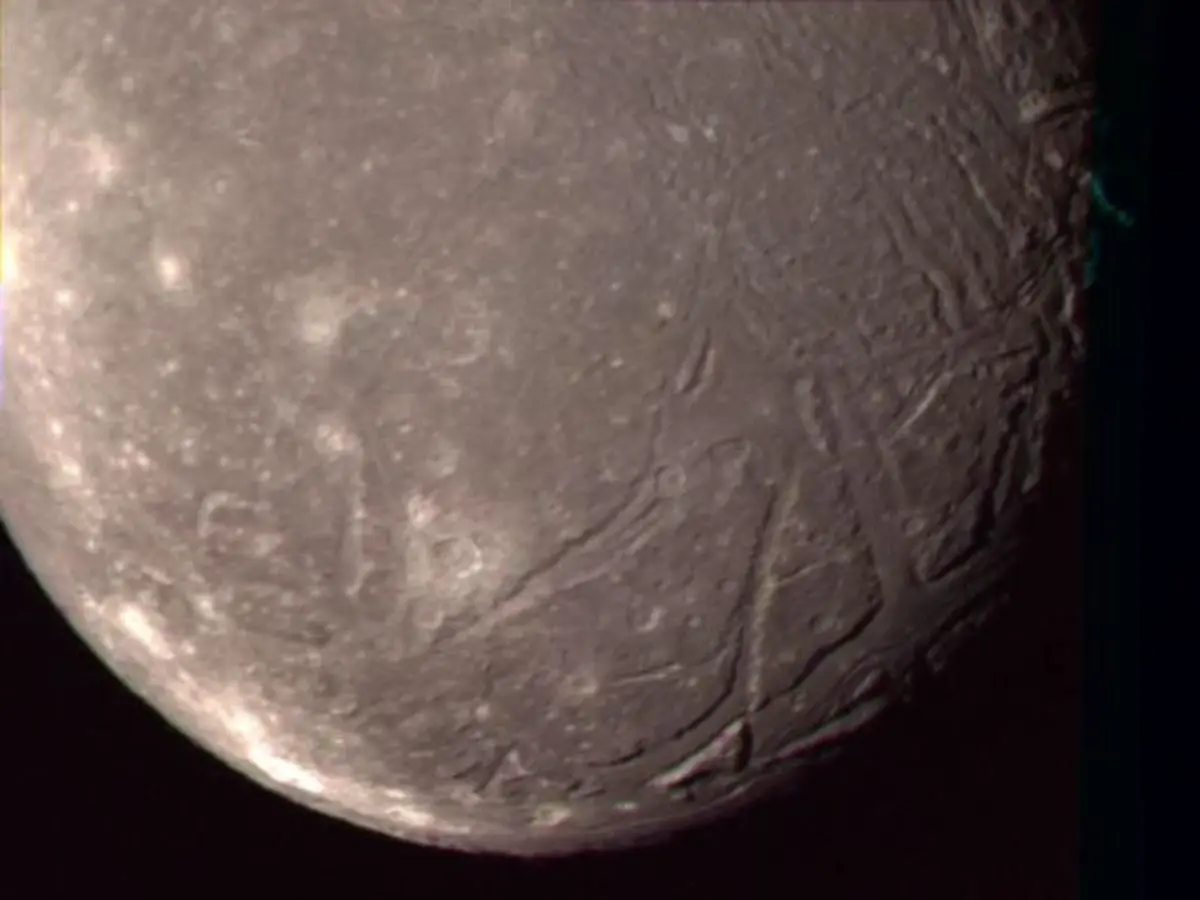
Both Voyager 1 and Voyager 2 carried identical Golden Records, but Voyager 2 holds a unique distinction. It was launched first, making it technically the first Golden Record to leave Earth. More importantly, it is the only spacecraft ever to have visited Uranus and Neptune, carrying Earth’s message past worlds never seen by another probe. In November 2018, Voyager 2 crossed into interstellar space, becoming only the second spacecraft to do so. Its record now travels beyond the Sun’s protective bubble, into the galaxy itself.
Legacy of a Message in a Bottle
Carl Sagan described the record as a ‘bottle in the cosmic ocean.’ Voyager 2 drifts outward at 15 kilometres per second, further from Earth each moment. Long after human civilisation has changed or disappeared, the spacecraft will continue to carry this record of voices, sounds, images, and music. It is a message of both science and hope, a statement that humanity once existed and sought to be known.
)
)
)
)
)