BRICS Summit 2026: From 2001 to 2026, tracing PM Modi and Putin’s personal rapport

As the BRICS Summit 2026 approaches in New Delhi, PM Narendra Modi is set to meet Russian President Vladimir Putin, putting their long-standing partnership in focus. From their first meeting in 2001 to recent summits, their ties have evolved across defence, energy and trade.
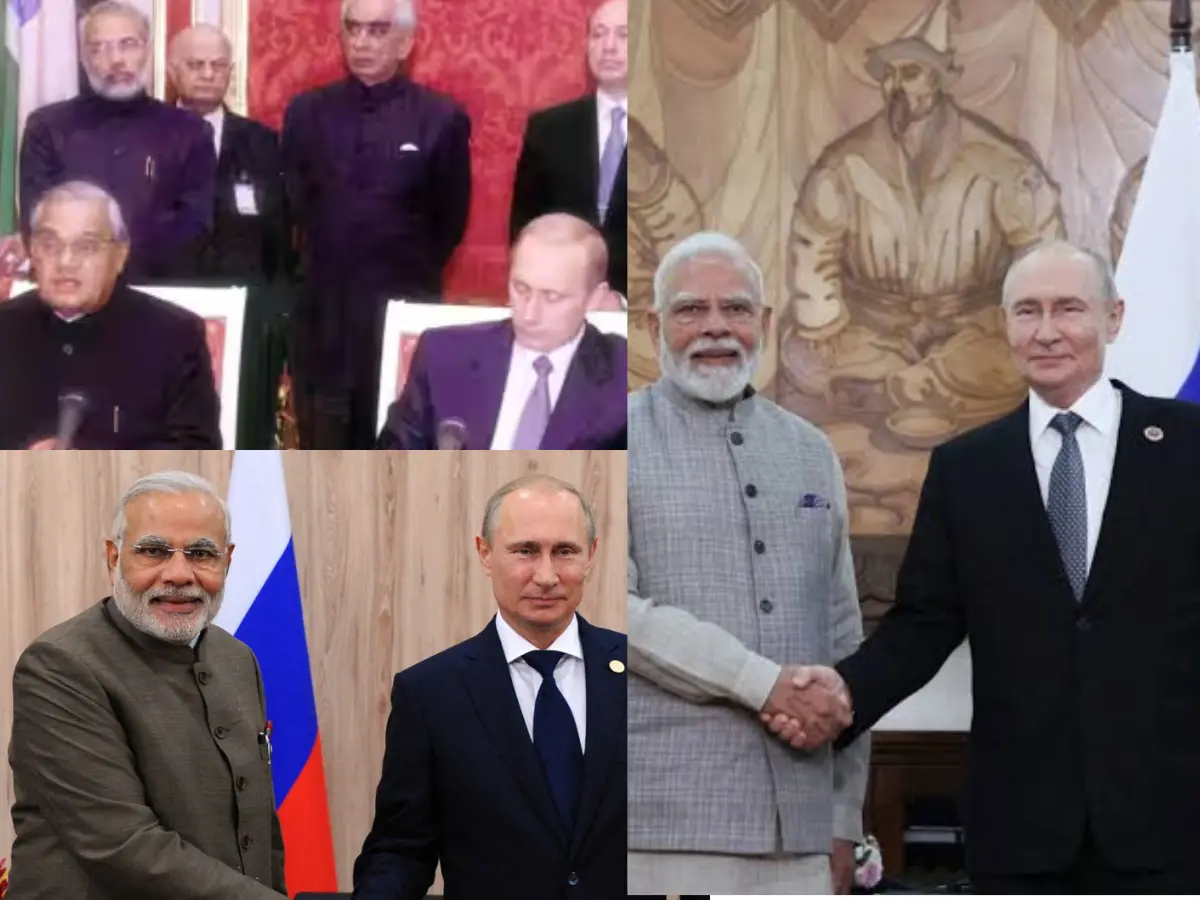
The BRICS Summit and Putin-Modi bonhomie
With the BRICS Summit set to begin in New Delhi on September 12, all eyes are on the high-level diplomacy unfolding ahead of the two-day gathering. Prime Minister Narendra Modi is set to meet Russian President Vladimir Putin on Friday, a day before the summit, putting their closely watched India-Russia partnership in focus.
The meeting comes as India hosts the 18th BRICS Summit amid shifting global alliances, with defence, energy, trade and wider geopolitical issues expected to feature prominently in the talks. Putin’s visit, his second to India within a year, also underlines the continuing importance of the relationship as New Delhi navigates a rapidly changing global order.
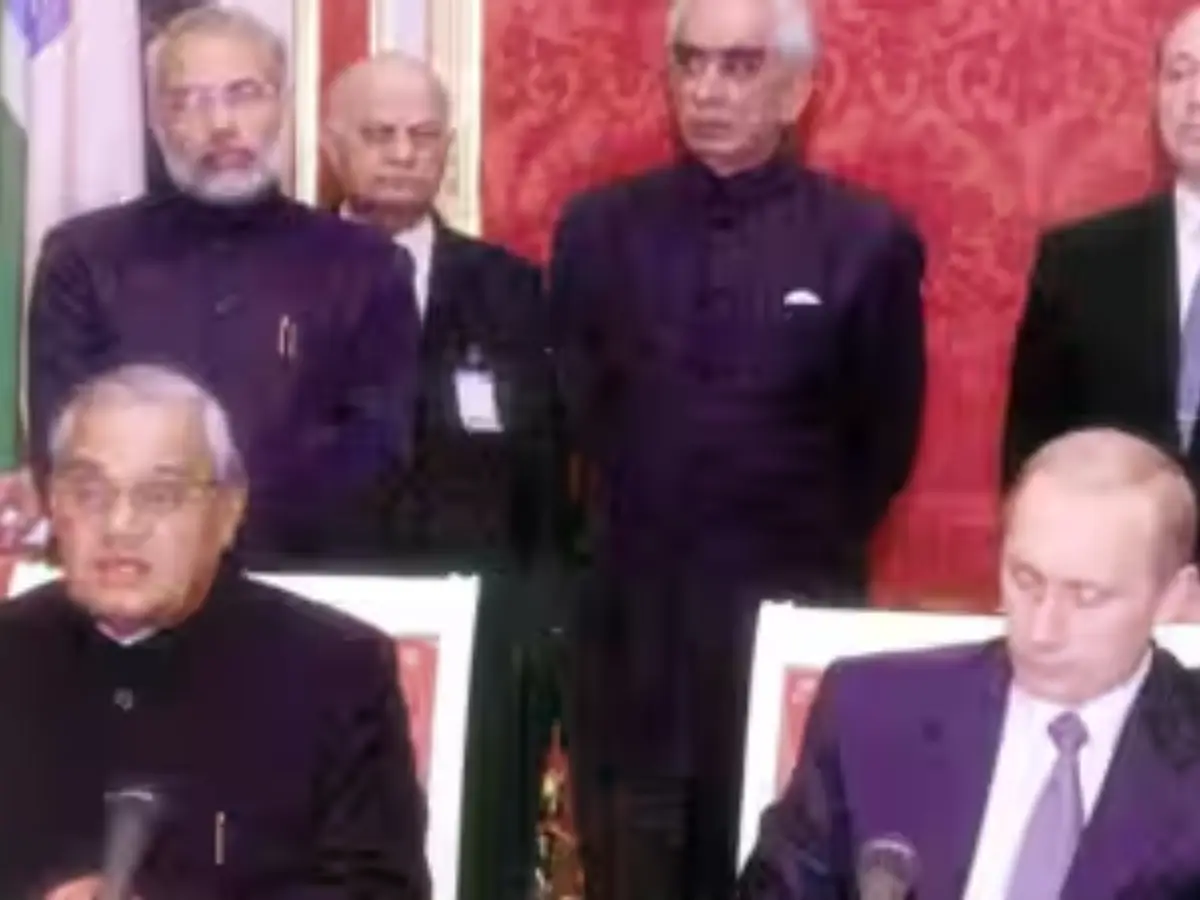
2001: The first meeting — Moscow
Narendra Modi visited Moscow as part of PM Atal Bihari Vajpayee’s delegation and at that time he was Chief Minister of Gujarat. PM Modi signed a landmark regional cooperation protocol with Russia's Astrakhan region, establishing his initial rapport with Putin.
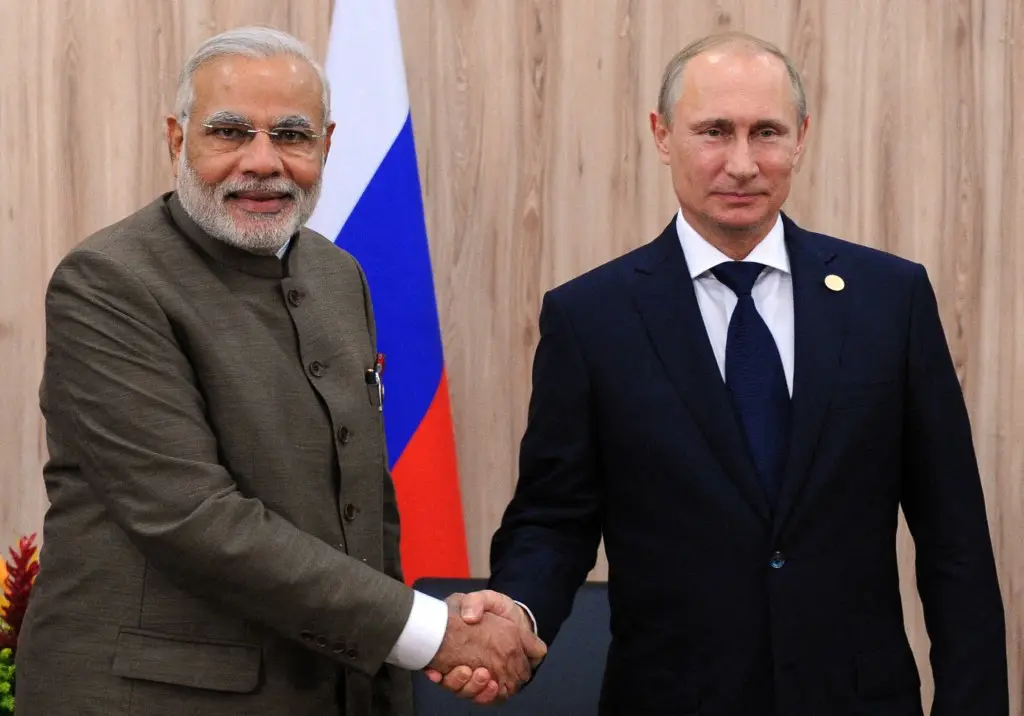
2014: First summit as PM — New Delhi
Russian President Vladimir Putin traveled to New Delhi, India, on December 10–11, 2014, to attend the 15th Annual India-Russia Summit. This marked their first formal bilateral exchange since PM Modi took office, laying out a “strategic roadmap” for defence and nuclear energy.
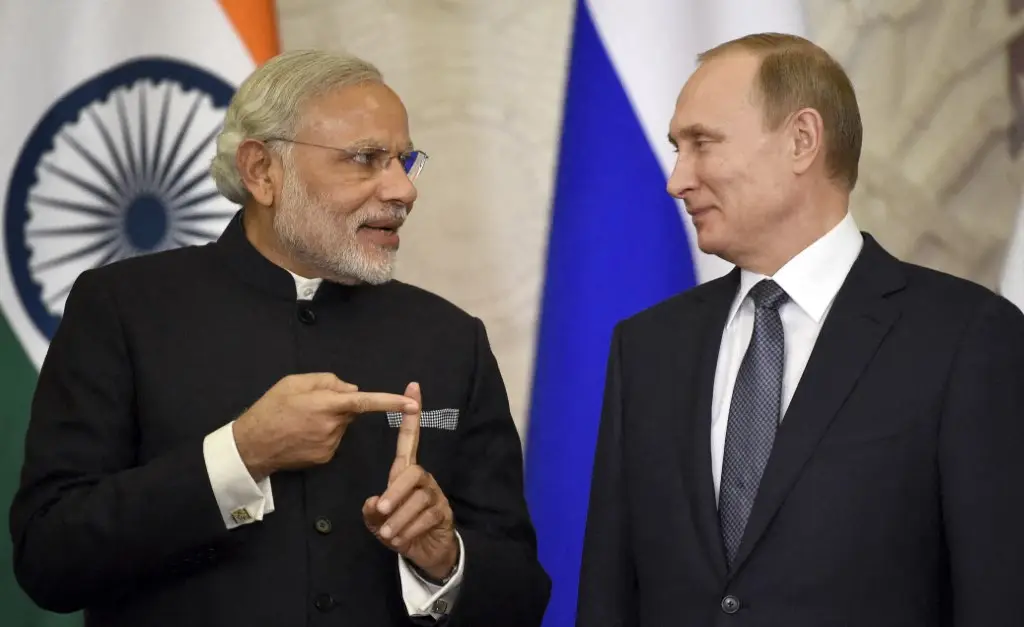
2015: Kremlin bilateral — Moscow
PM Modi visited Moscow for the annual summit in 2015. During this 16th India-Russia annual summit, PM Modi met with Russian President Vladimir Putin at the Kremlin, resulting in major advancements in defense, nuclear energy, and space exploration cooperation.
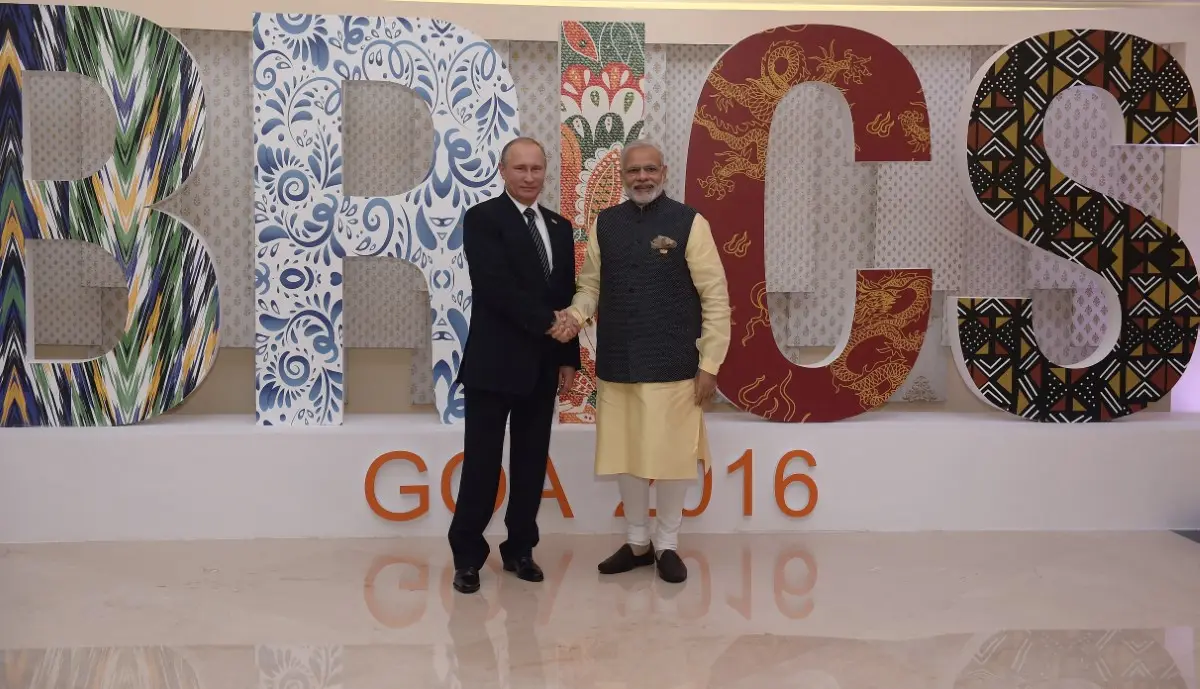
2016: BRICS Summit — Goa
Prime Minister Narendra Modi and Russian President Vladimir Putin met in Goa on October 15, 2016, ahead of the 8th BRICS Summit. The two leaders held extensive side-talks advancing major defence deals, including early frameworks for the S-400 missile systems.
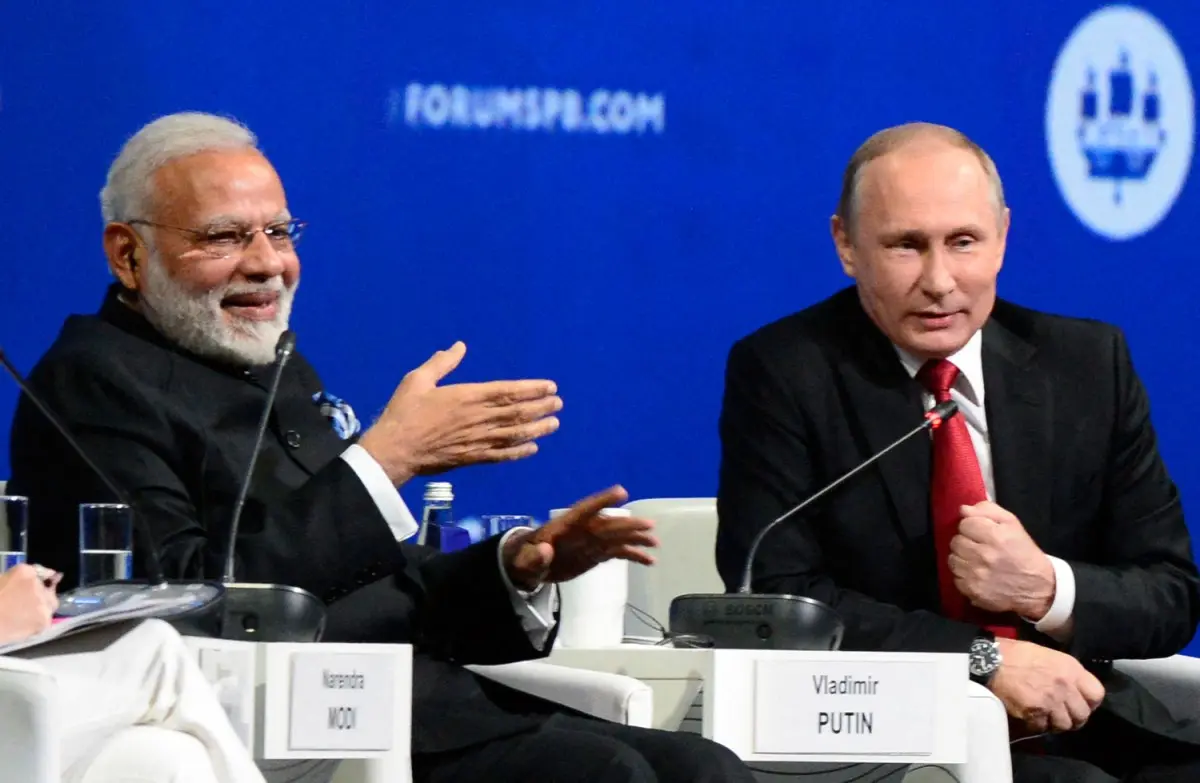
2017: Economic Forum & Summit — St. Petersburg
PM Modi Modi attended the 21st St Petersburg International Economic Forum (SPIEF) as the Guest of Honour from June 1–3, 2017. Prime Minister Modi and Russian President Vladimir Putin adopted a joint vision document titled "St Petersburg Declaration: A Vision for the 21st Century." Both leaders witnessed the signing of major deals, including a master framework agreement for Units 5 and 6 of the Kudankulam Nuclear Power Plant, along with pacts on cultural exchanges, railway cooperation, and intellectual property
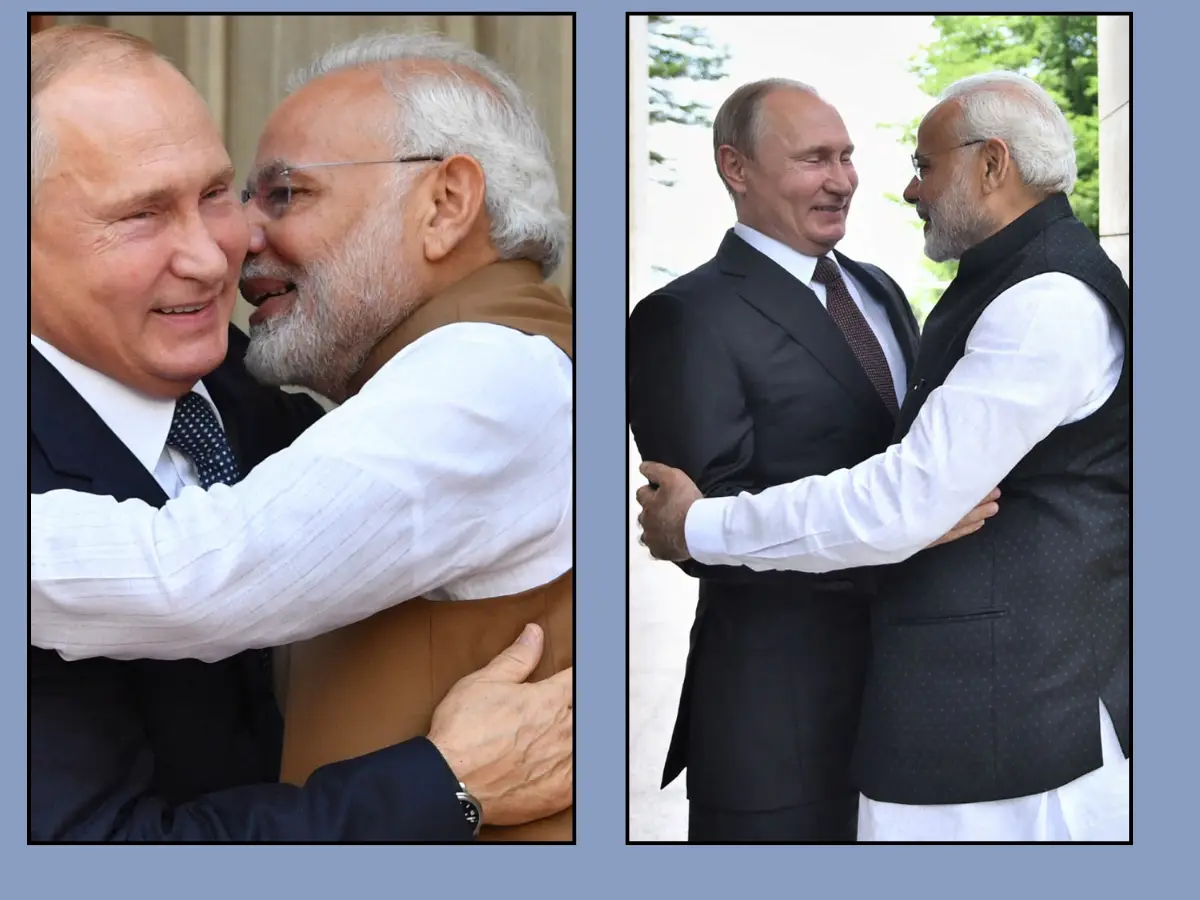
2018: Intense diplomacy year — Sochi, New Delhi
Sochi: Held their first informal, agenda-free summit.
New Delhi: Putin made a state visit for the 19th Annual Summit, where the historic S-400 air defence deal was officially signed.
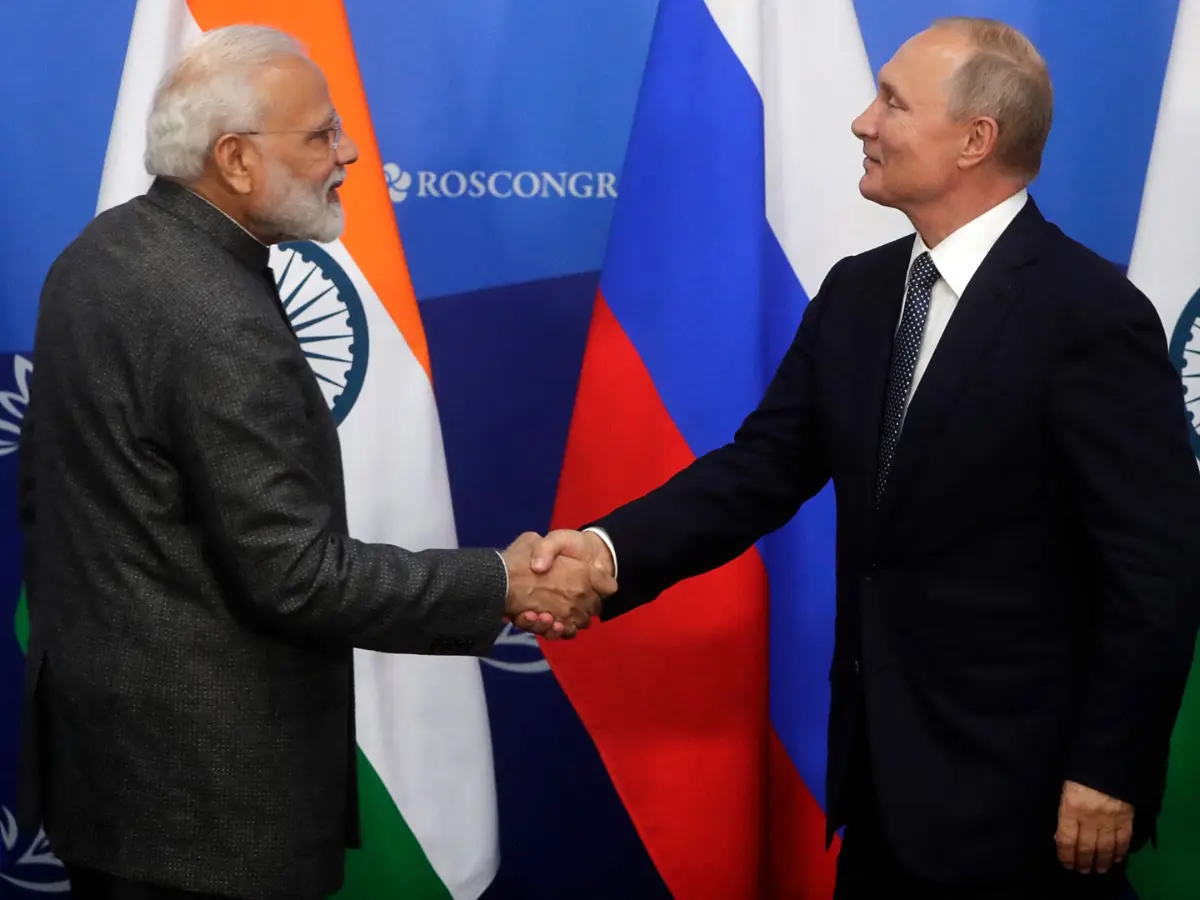
2019: on sidelines of SCO summit -- Bishkek
In 2019, Prime Minister Narendra Modi and Russian President Vladimir Putin maintained high-level diplomatic momentum through two critical multilateral sidelines and summits. One Putin met with PM Modi on the sidelines of the Shanghai Cooperation Organisation (SCO) summit in Bishkek. This marked the first meeting between the two leaders following PM Modi's decisive re-election in May 2019.
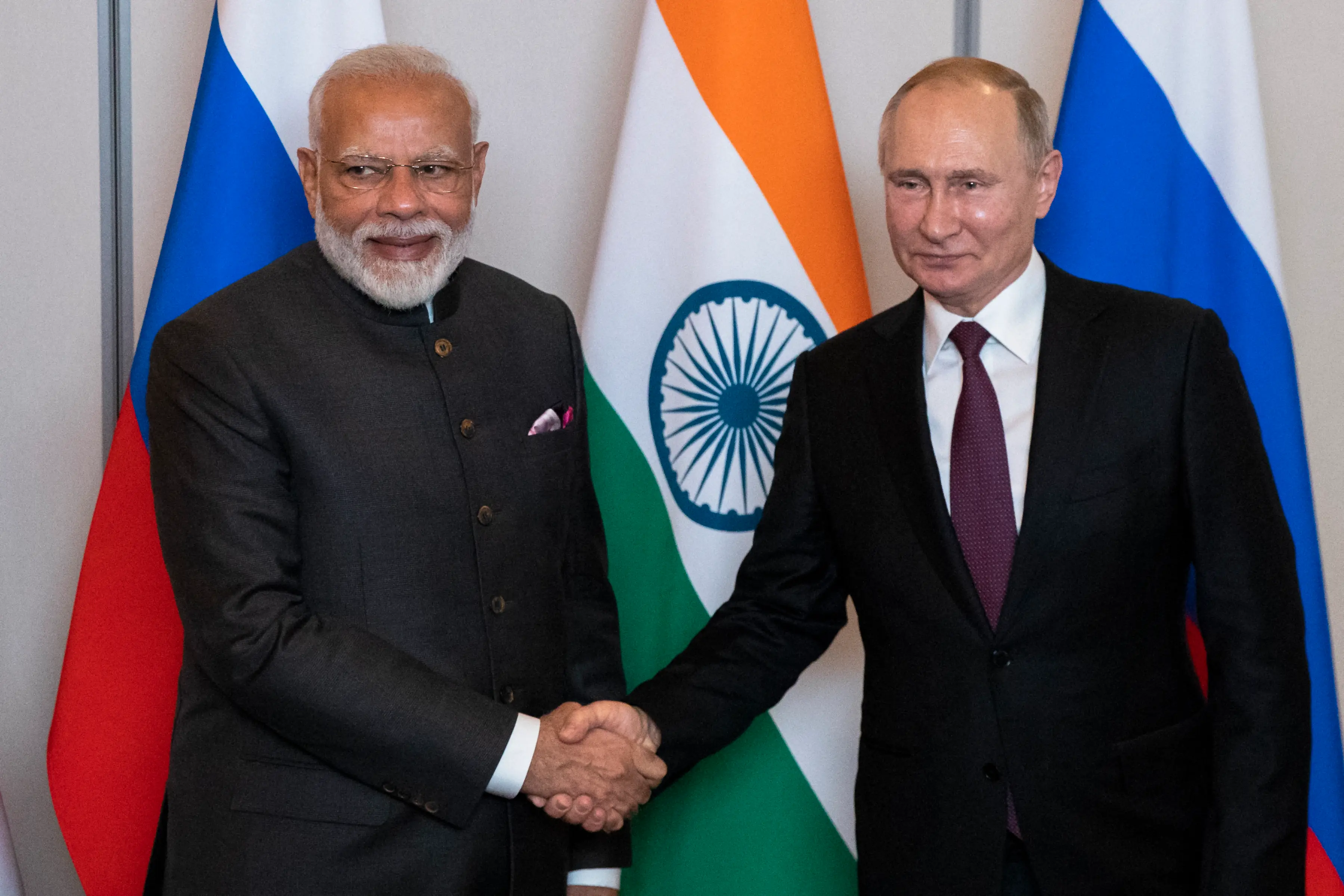
2019: on sidelines of BRICS summit -- Brasilia
Putin and Modi met during their meeting on the sidelines of the 11th edition of the BRICS Summit, in Brasilia, Brazil. The two leaders noted with satisfaction that their bilateral trade target of $25 billion by 2025 had already been achieved ahead of schedule. The leaders agreed to establish the First Bilateral Regional Forum at the level of Russian provinces and Indian states to decentralize and deepen economic ties
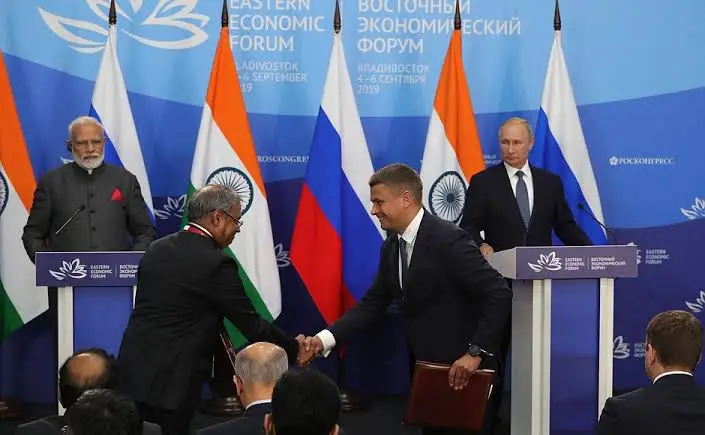
2019: Eastern Economic Forum -- Vladivostok
Prime Minister Narendra Modi visited Vladivostok, Russia as the Chief Guest at the 5th Eastern Economic Forum (EEF), held from September 4–5, 2019. A major highlight of the visit was a joint tour of the massive Zvezda Shipbuilding Complex in Primorye. President Putin personally showcased cutting-edge Arctic shipping and commercial vessel technologies to PM Modi
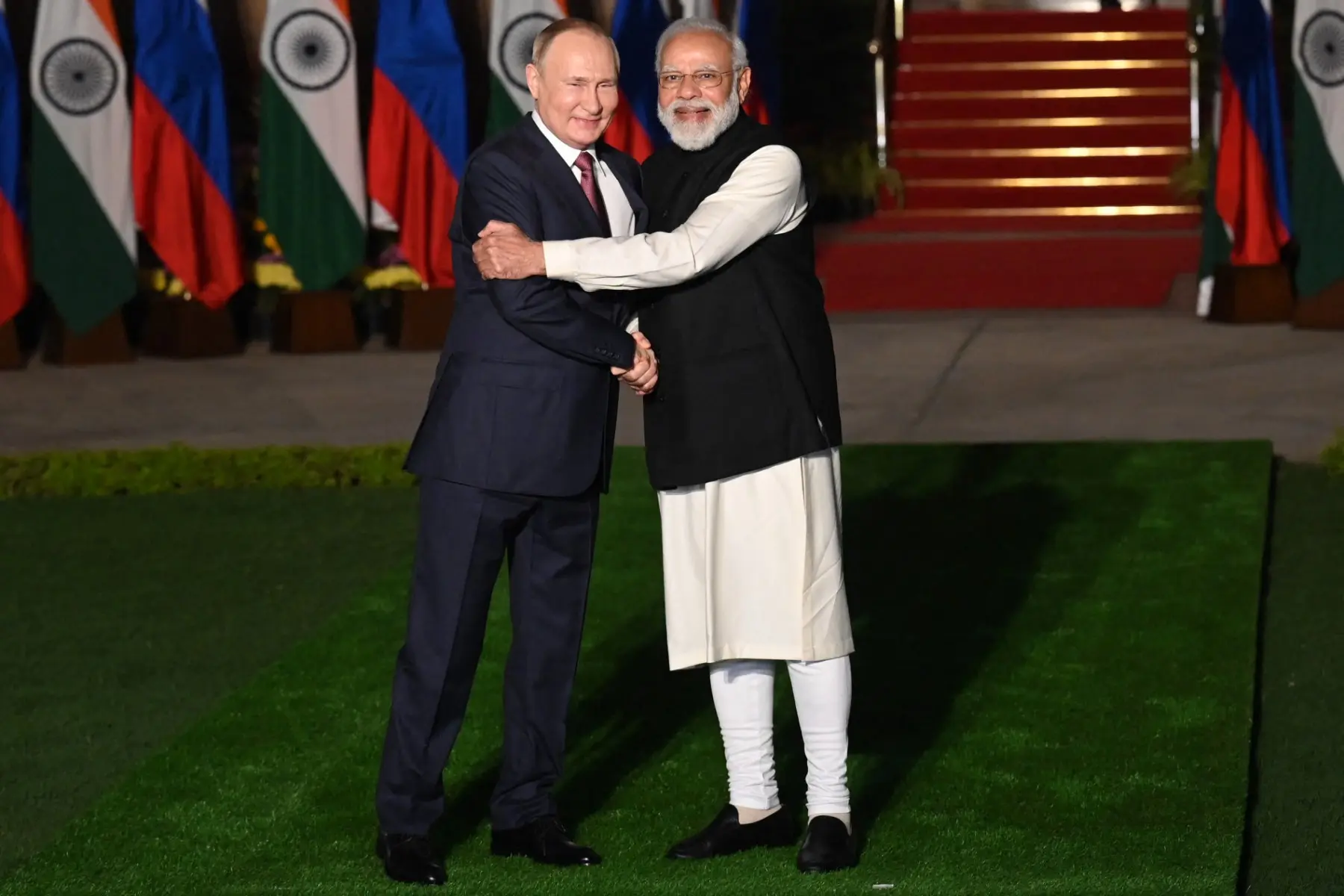
2021: Pre-war summit — New Delhi
Putin made a brief, high-profile visit to New Delhi for the 21st India-Russia Annual Summit. It was one of Putin's rare international trips during the pandemic era. It was held just months before the outbreak of the Russia-Ukraine war. The summit marked the launch of the first-ever 2+2 Dialogue featuring the Foreign and Defence Ministers of both nations to enhance strategic alignment.
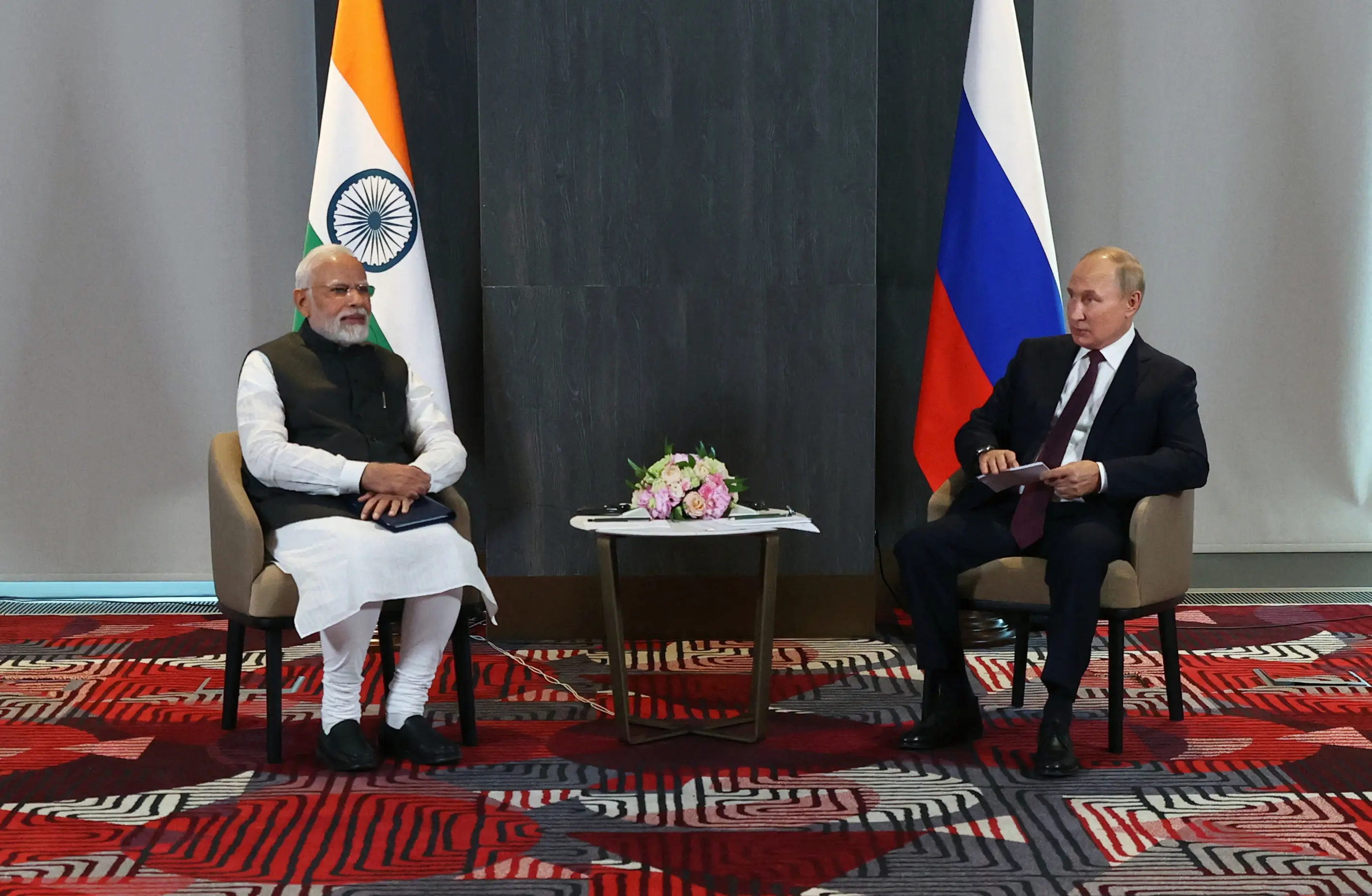
2022: SCO Summit -- Samarkand
Modi Putin met on the sidelines of the Shanghai Cooperation Organisation (SCO) leaders' summit in Samarkand. Modi delivered his globally noted remark to Putin: “Today's era is not an era of war,” urging a return to dialogue over Ukraine.
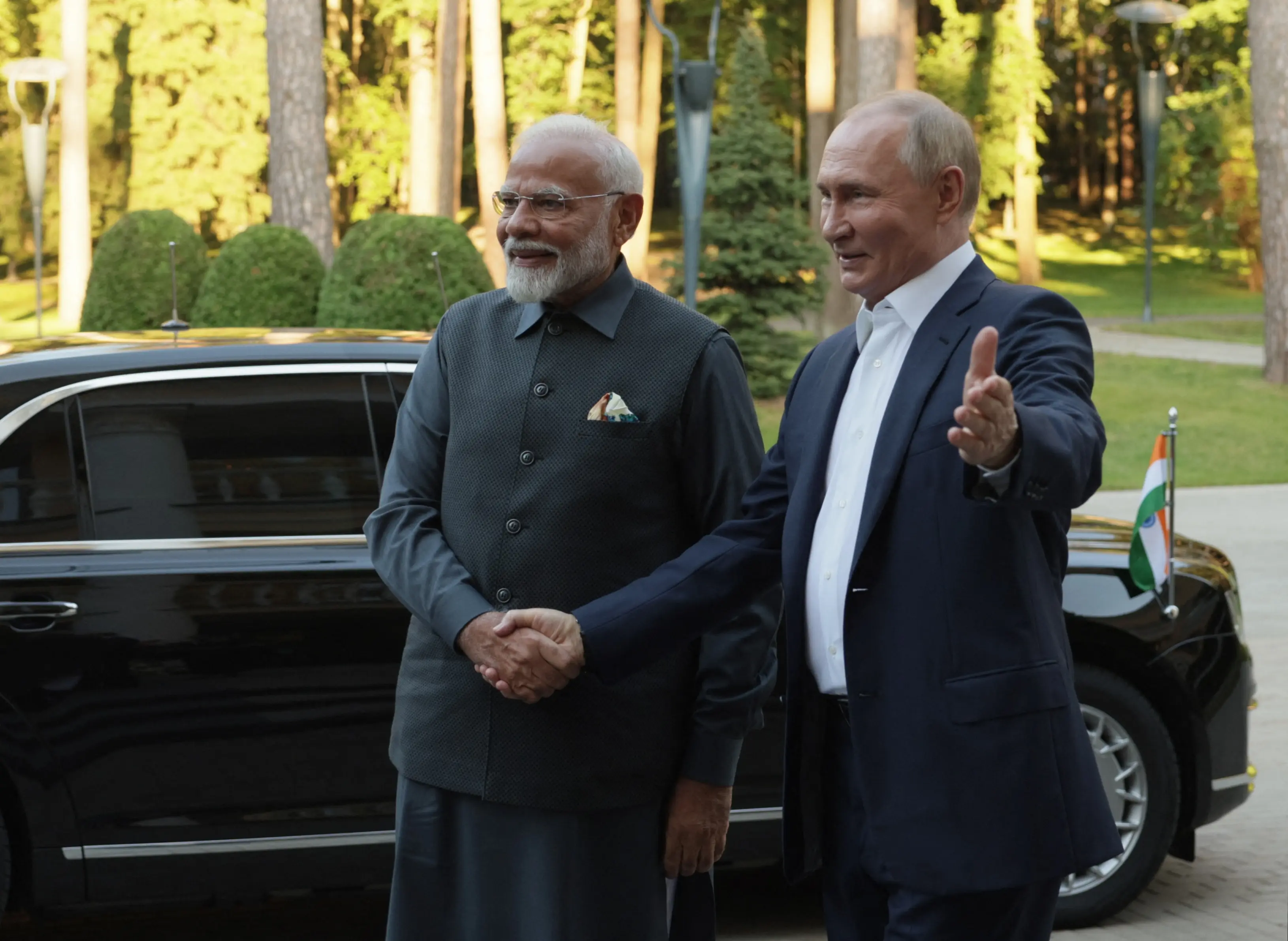
2024: Post-election visits — Moscow
PM Modi's first bilateral visit of his third term. Putin hosted him for a highly publicized, candid private dinner at Novo-Ogaryovo, featuring relaxed golf-cart rides and one-on-one walks. In the picture, Russia's President Vladimir Putin and Indian Prime Minister Narendra Modi shake hands during an informal meeting at the Novo-Ogaryovo state residence, outside Moscow
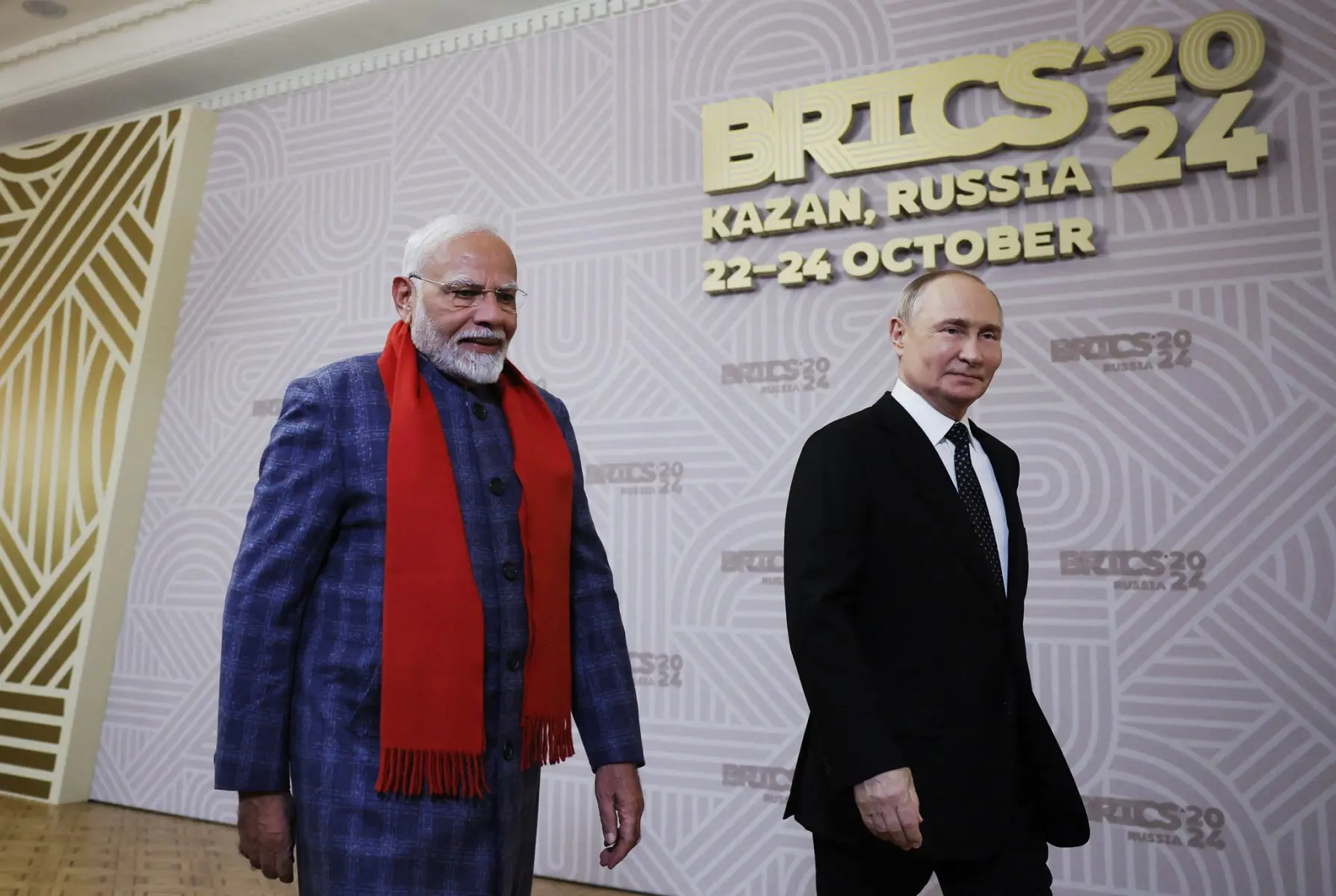
2024: BRICS Summit — Kazan
PM Modi went to Russia for the 16th BRICS Summit, holding further strategic talks with Putin. PM Modi warmly congratulated Russia on its successful BRICS Chairship and its overarching efforts to advance global governance reform, push sustainable development, and strengthen multilateral frameworks. PM Modi characterized the meeting as "excellent", highlighting that the frequent exchanges throughout the year reflect the resilience of the India-Russia Special and Privileged Strategic Partnership
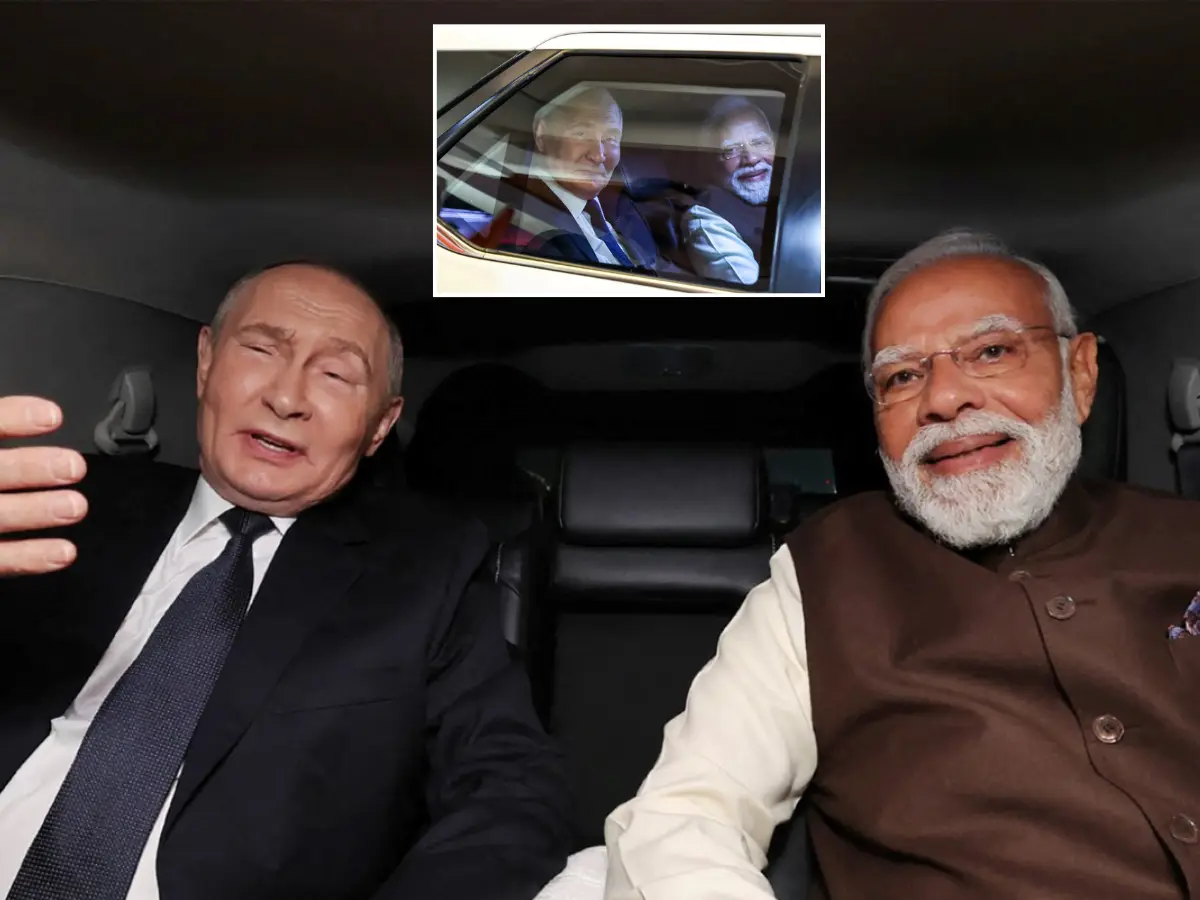
2025: SCO Summit -- Tianjin
Indian Prime Minister Narendra Modi and Russian President Vladimir Putin engaged in a highly publicized 45-minute private conversation inside Putin’s custom-built Aurus limousine on the sidelines of the Shanghai Cooperation Organisation (SCO) Summit in Tianjin, China.
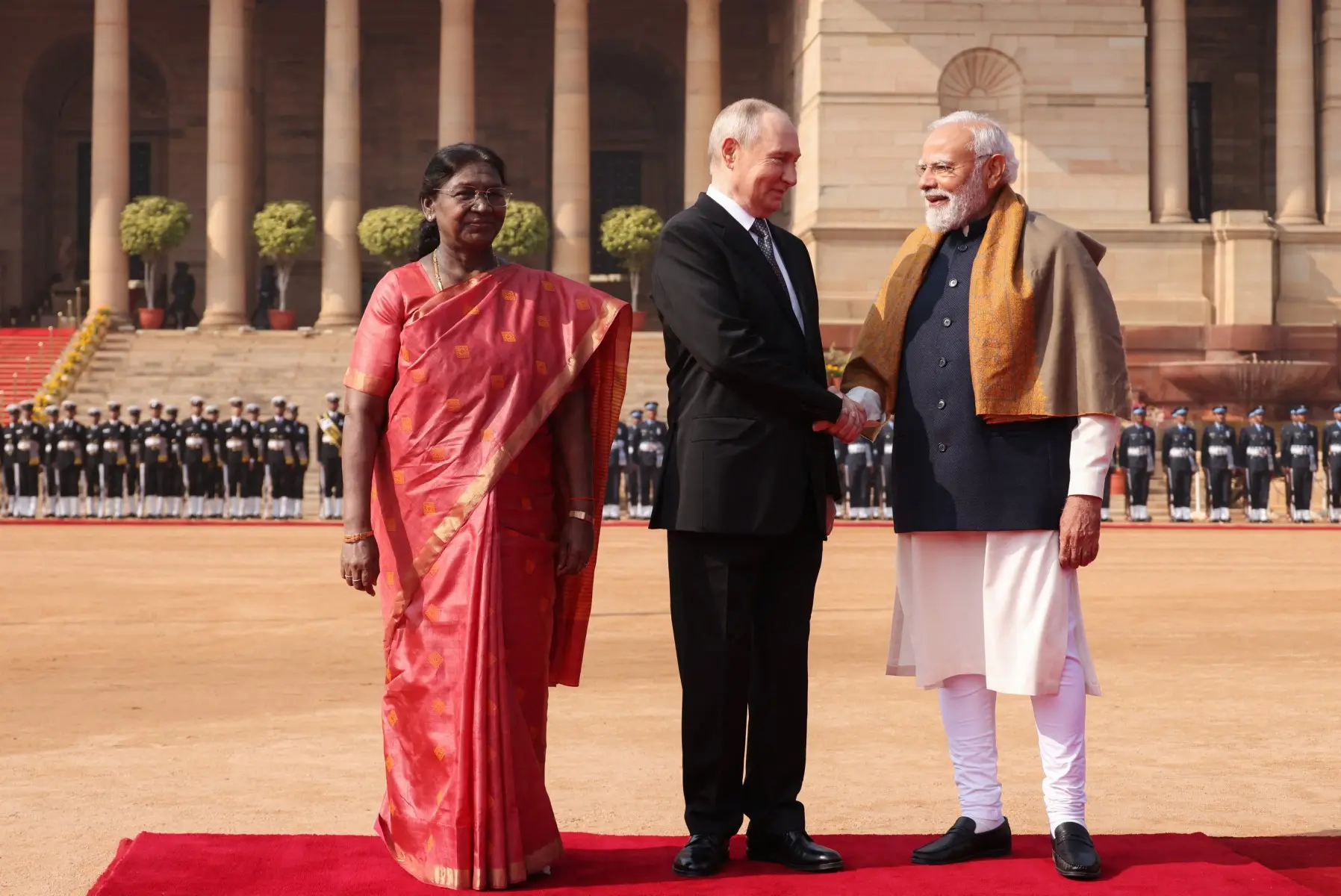
2025: 23rd Annual India-Russia Summit -- New Delhi
Putin traveled to India for the 23rd Annual Summit. PM Modi broke protocol to receive Putin at Palam Airport, hosting a private dinner at 7, Lok Kalyan Marg to mark 25 years of their strategic partnership.
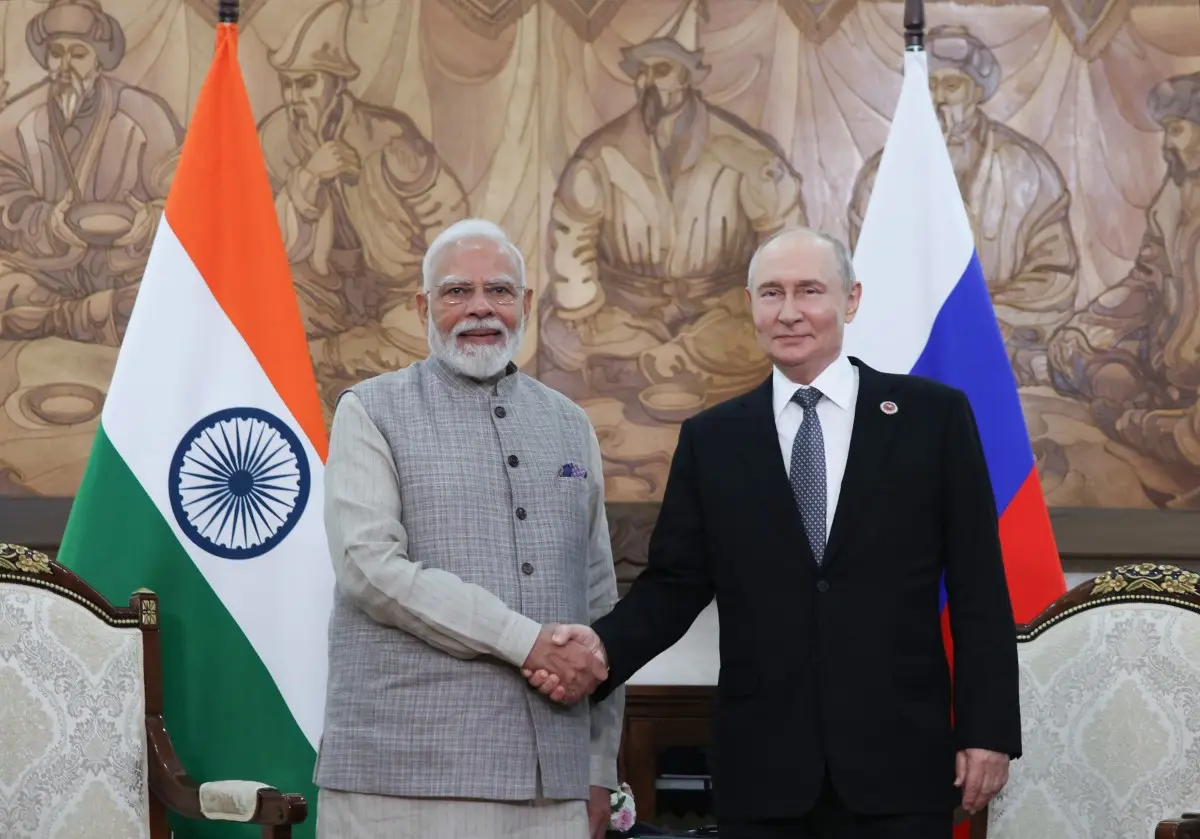
2026: SCO Summit -- Kyrgyzstan
The two leaders met on the margins of the Shanghai Cooperation Organisation (SCO) Summit in Bishkek, Kyrgyzstan. PM Modi delivered a strong, public message on regional stability, explicitly telling President Putin that the world "must move from endless war to an end of war for the benefit of humanity".
)
)
)
)
)