'47 years and counting': How Voyager 1 still sends data from interstellar space

After capturing unprecedented data from these giant planets, it pressed onward, eventually crossing the Sun’s outer boundary to become humanity’s most distant emissary.
A mission that began in 1977
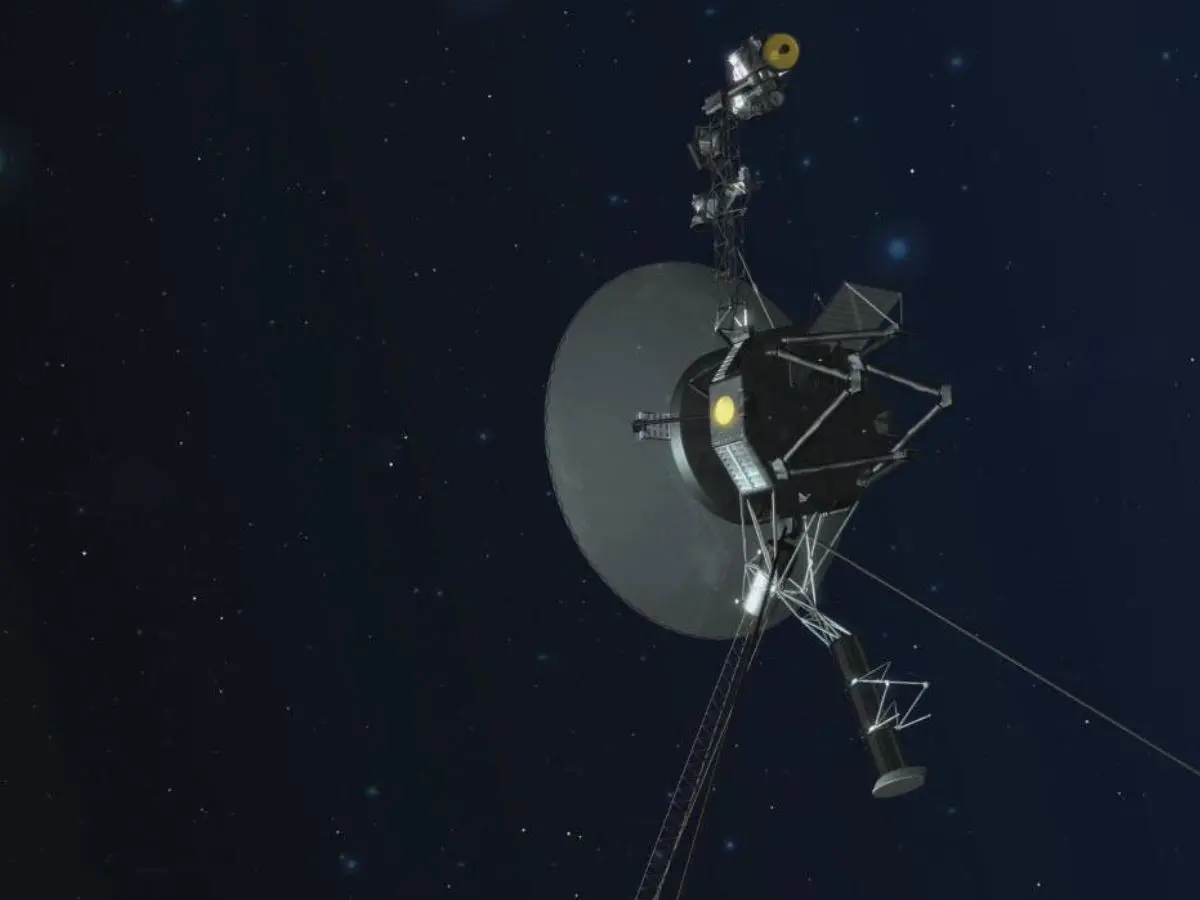
Launched on 5 September 1977, NASA’s Voyager 1 set out to explore the outer Solar System, with Jupiter and Saturn as its primary targets. After capturing unprecedented data from these giant planets, it pressed onward, eventually crossing the Sun’s outer boundary to become humanity’s most distant emissary. Now more than 24 billion kilometres from Earth, the probe continues to send back rare insights from interstellar space, its faint signal a living relic of 1970s engineering still advancing our knowledge of the cosmos.
Crossing into interstellar space
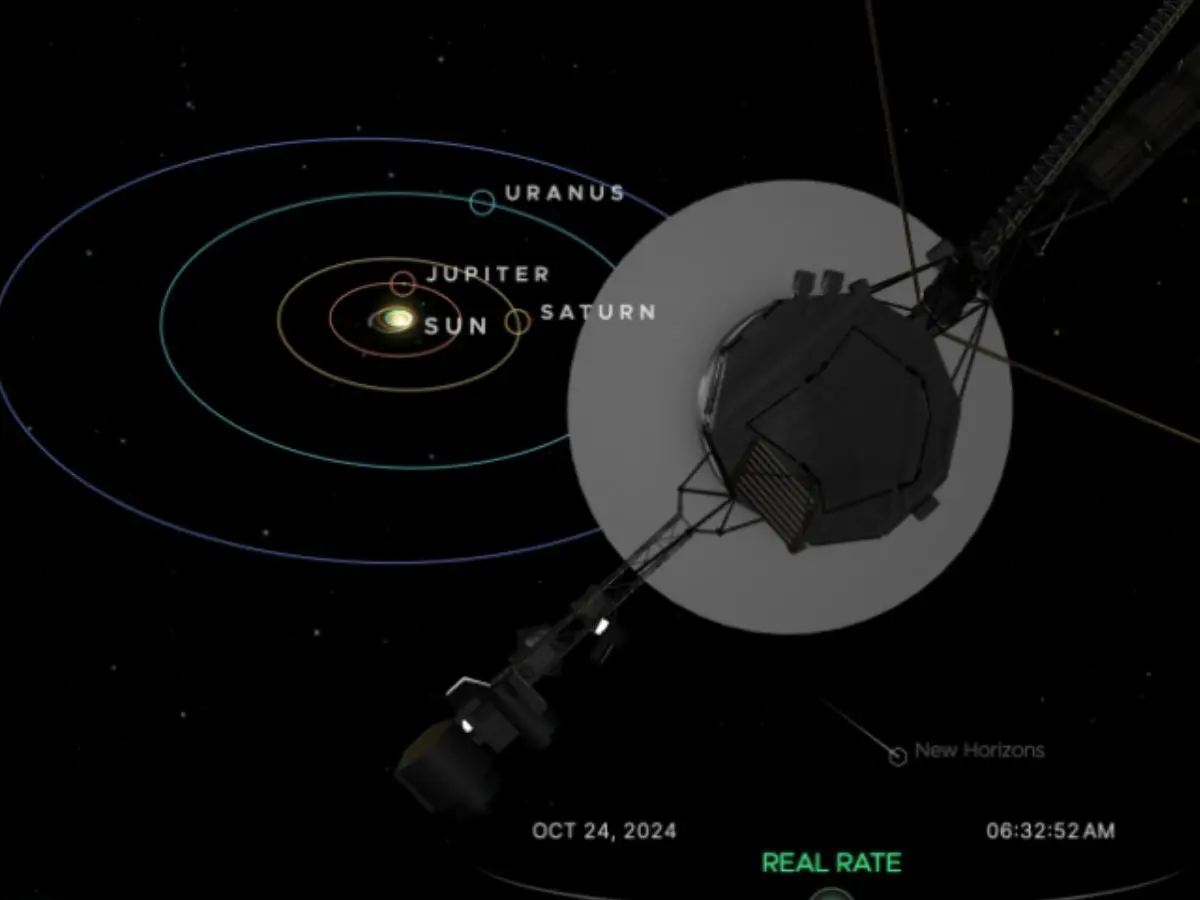
In August 2012 Voyager 1 crossed the heliopause, the boundary where the Sun’s tenuous bubble of charged particles gives way to the interstellar medium. The telltale sign came from oscillations recorded by the spacecraft’s plasma-wave instrument: a sudden change in the surrounding medium’s properties that matched theoretical expectations for interstellar space. That crossing made Voyager 1 the first probe to sample this region directly.
Where it is now
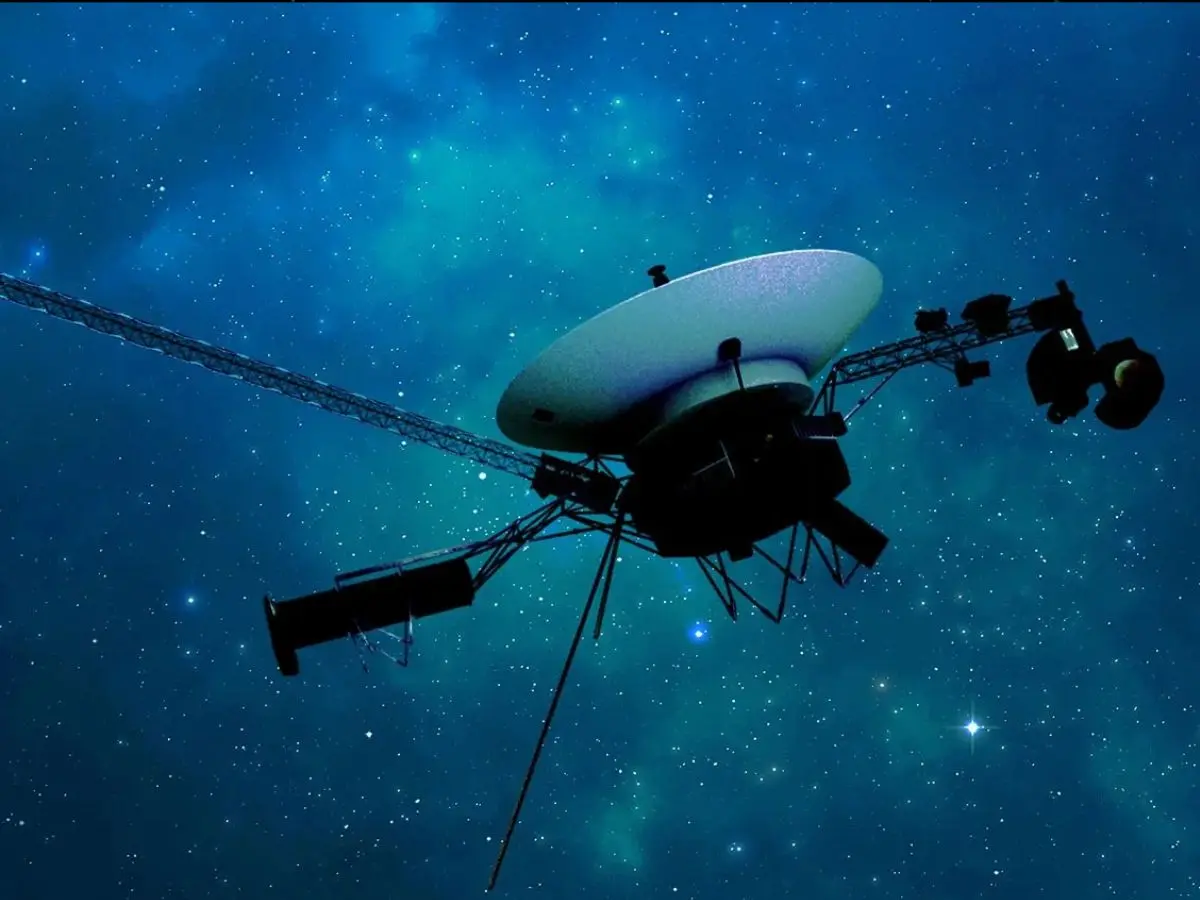
Today Voyager 1 is well beyond the planets, more than 160 astronomical units (AU) from Earth and still receding at several AU per year. At present its radio signals take roughly 23 hours to travel one way between spacecraft and ground stations, a reminder of the immense distances involved and the time lag built into every command and data packet.
Talking across the void
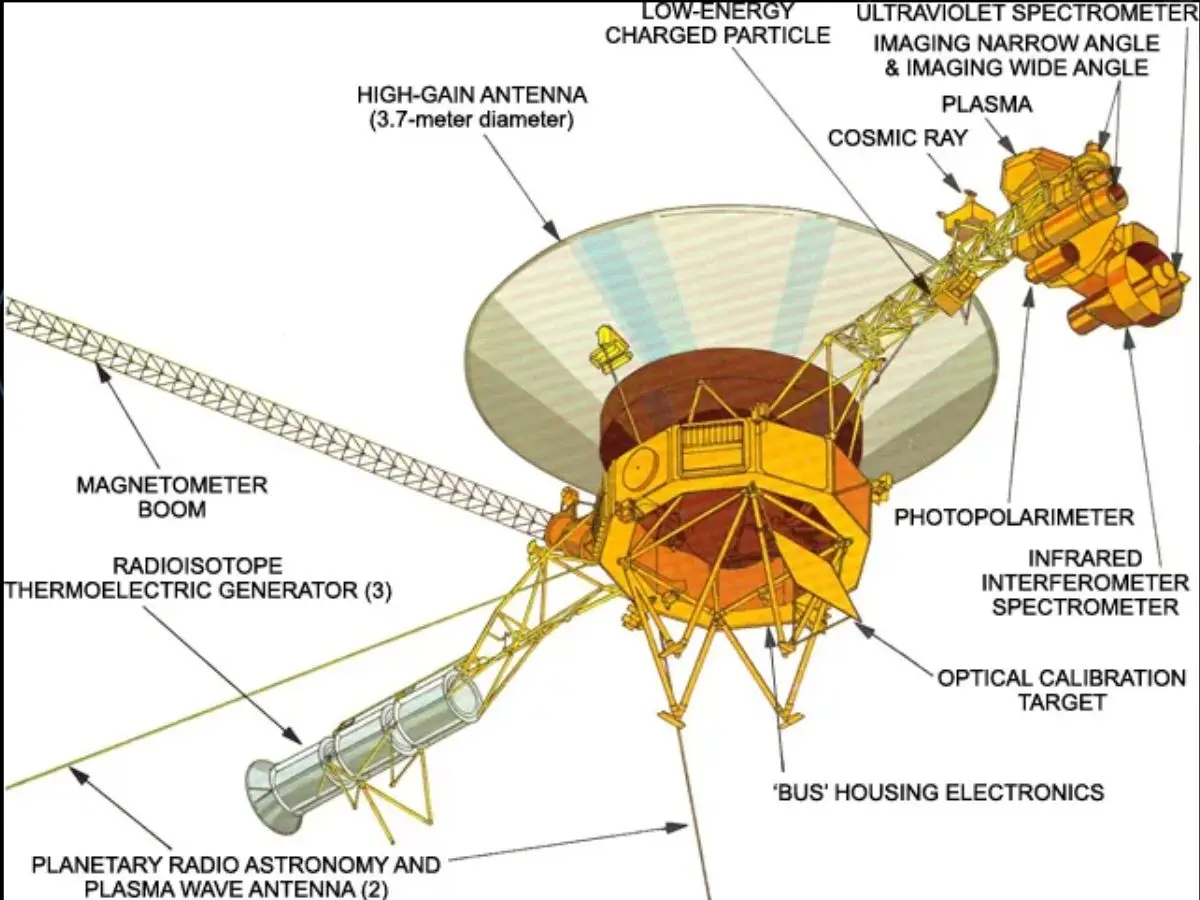
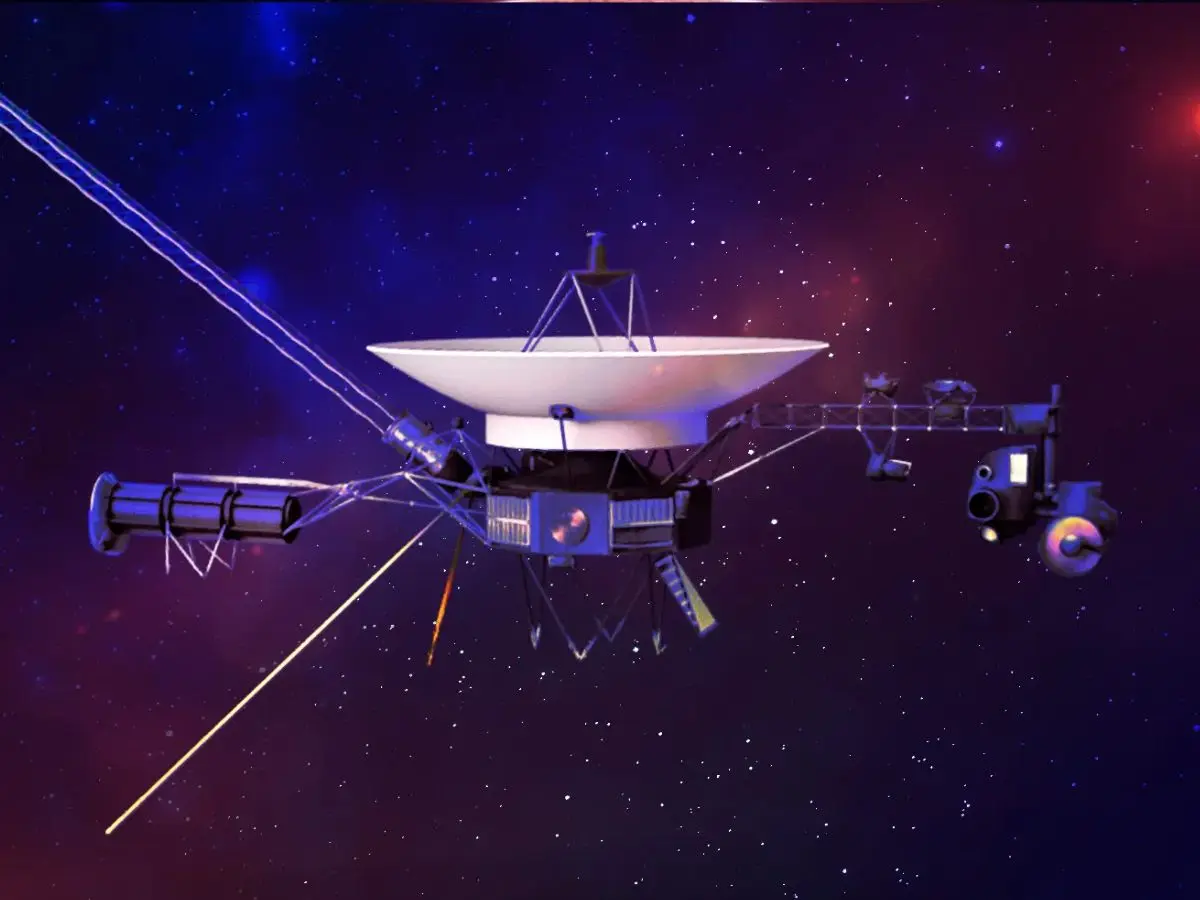
Communication with Voyager 1 depends on its 3.7-metre high-gain antenna, which transmits narrow-beam radio signals using only about 20 watts of power, comparable to a refrigerator light bulb. These signals are received by NASA’s Deep Space Network (DSN), a system of massive dish antennas in California, Spain, and Australia. The DSN’s sensitive receivers amplify the faint X-band signal, now billions of times weaker than a typical FM radio broadcast, before computers decode it into scientific readings and engineering status updates.

Powering a distant outpost
Voyager 1’s electricity comes from three radioisotope thermoelectric generators (RTGs), which convert heat from decaying plutonium into power. Each year the output drops by a few watts, forcing engineers to shut down heaters and non-essential systems to keep critical science instruments running. Despite these limitations, its cosmic ray, magnetometer, and plasma instruments continue to provide unique data on the interstellar environment.
The signal that endures
After nearly five decades, Voyager 1 is still in touch thanks to meticulous engineering, the DSN’s precision, and careful power management. As long as its RTGs produce enough electricity and its antenna stays aligned, this faint radio whisper from beyond the planets will keep crossing the light-day gulf, delivering humanity’s most distant scientific reports from the space between the stars.
)
)
)
)
)