‘Strike on Weapons Arsenal’: Why the US may attack Iranian military facilities first?

In case of war, the US would strike Iran's military facilities first to destroy its 3,000-strong missile arsenal. This strategy targets air defences and uses bunker-busting bombs to eliminate underground launch sites before they can fire.

The 'Archers, Not Arrows' Strategy
To protect regional bases, the US military prioritises destroying Iran's missile launchers before they can fire. This tactic focuses on eliminating the source of the threat rather than trying to intercept thousands of incoming projectiles.

Neutralising the Air Defence Shield
Before heavy bombers can enter, the US must dismantle Tehran's air defence network. Specialised F-16CJ jets and EA-18G Growlers are deployed to jam and destroy radar systems like the Russian S-300 and domestic Bavar-373.

3,000 ballistic missiles stockpile
Iran possesses an estimated arsenal of over 3,000 ballistic missiles that threaten US installations in the Middle East. A first strike would aim to destroy these weapons inside their storage facilities and manufacturing hubs.

Penetrating Underground 'Missile Cities
Many of Iran's most critical military assets are buried deep underground in fortified tunnel networks. To reach these targets, the US may use B-2 stealth bombers dropping 30,000-pound GBU-57 bunker-busting bombs.

Blinding the Enemy Network
A successful first strike relies heavily on electronic warfare to sever command and control communications. By jamming radar nodes, the US military prevents Iranian commanders from coordinating a unified retaliation.
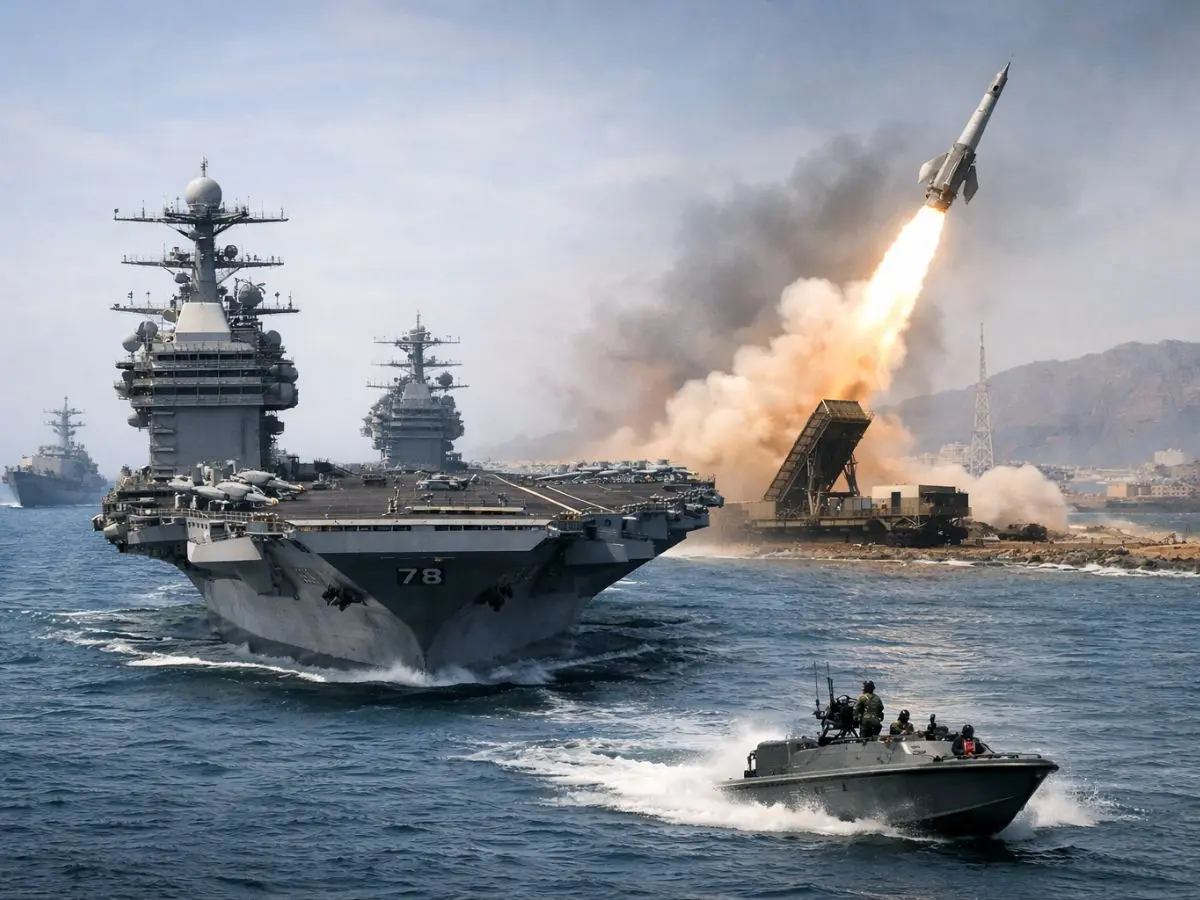
Eliminating the Drone Threat
Iran operates thousands of short-range cruise missiles and loitering munitions, such as the Shahed series. US war planners aim to strike drone factories and launch pads early to prevent them from swarming American warships.
)
)
)
)
)