'Red Rooms’: Why the USS Abraham Lincoln pilots sit in eerie red light

USS Abraham Lincoln pilots wait in red-lit rooms to protect rhodopsin, an eye protein crucial for night vision. This adaptation prevents deck blindness and ensures safe, stealthy night operations.
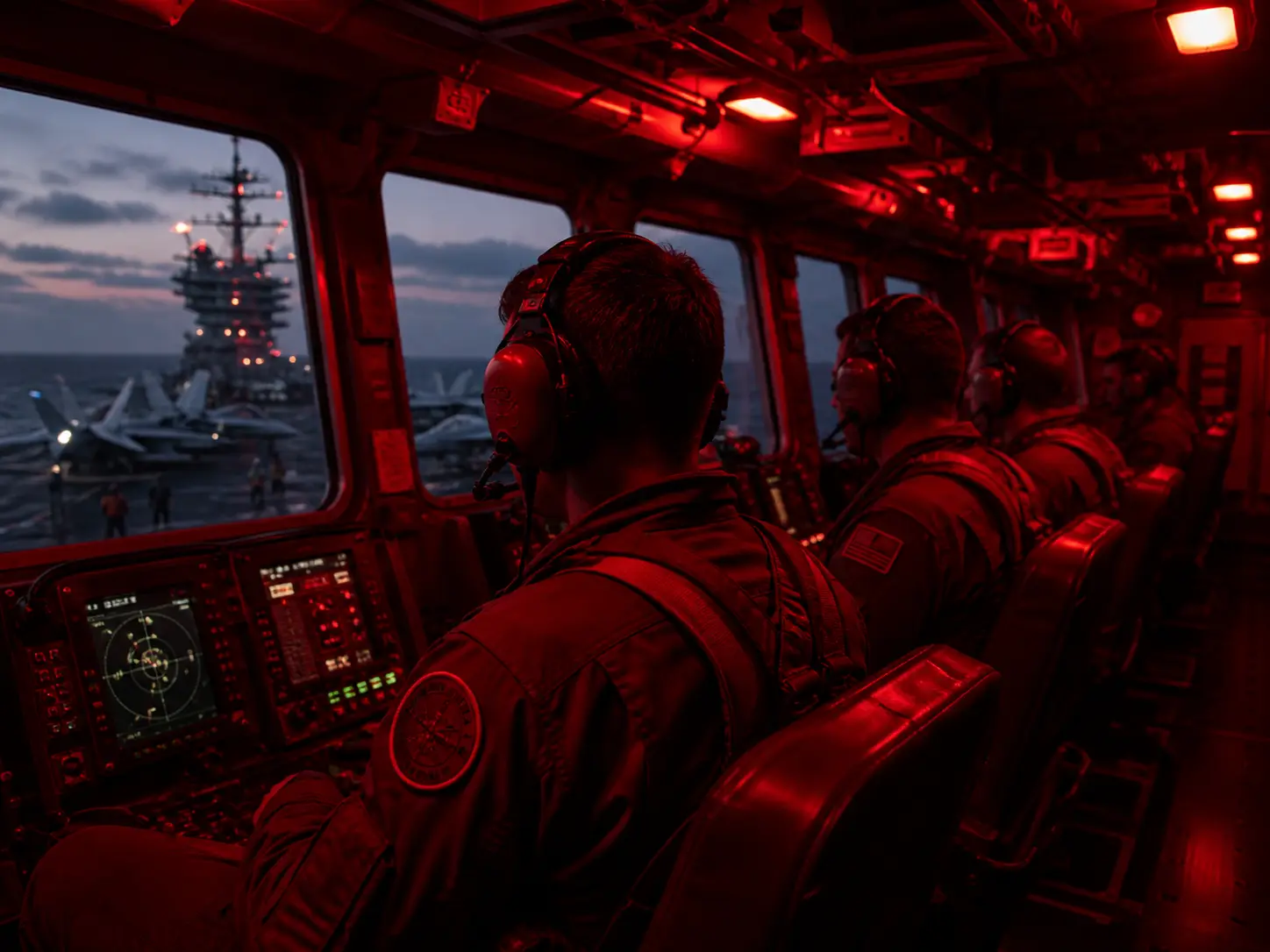
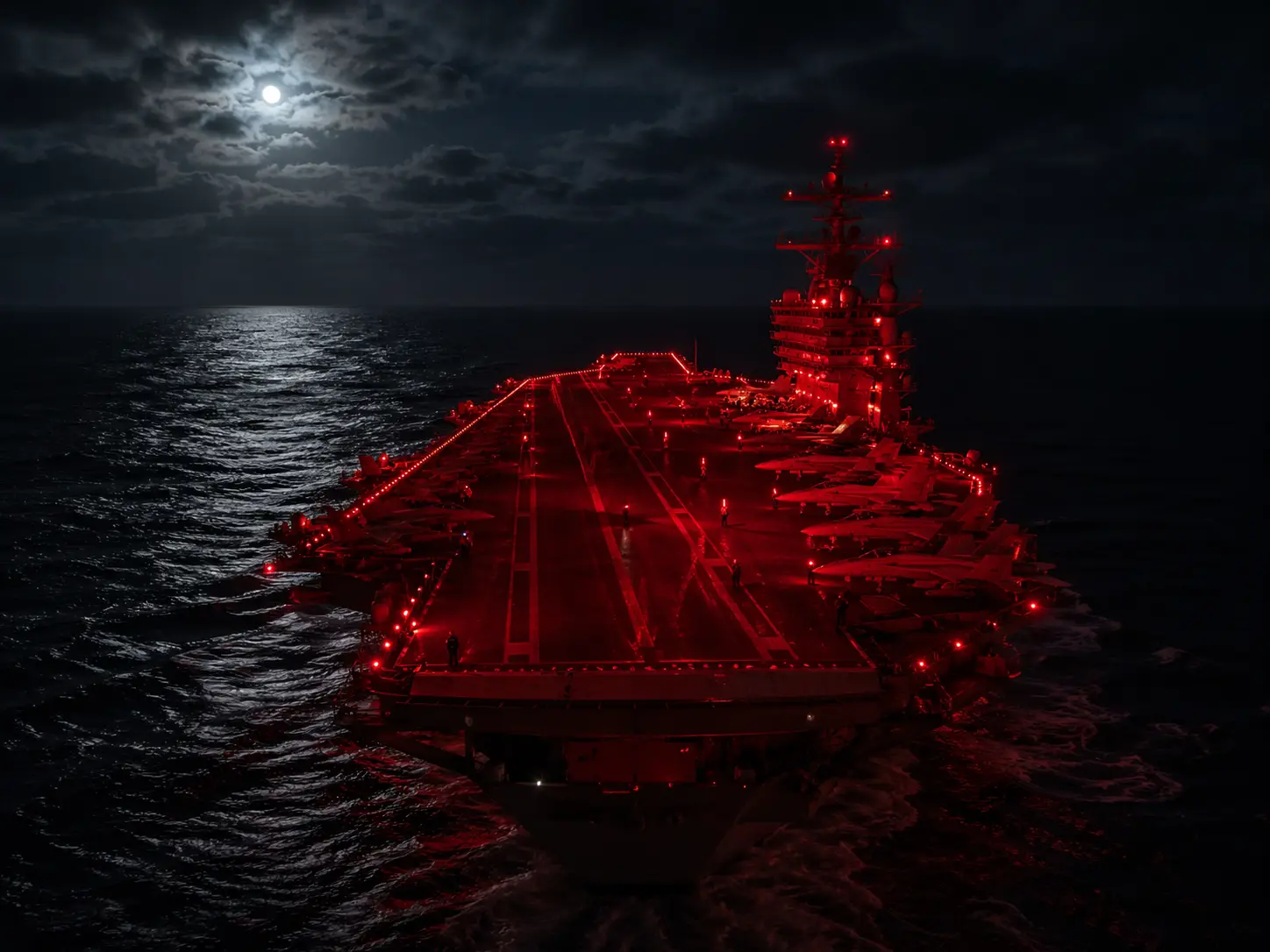
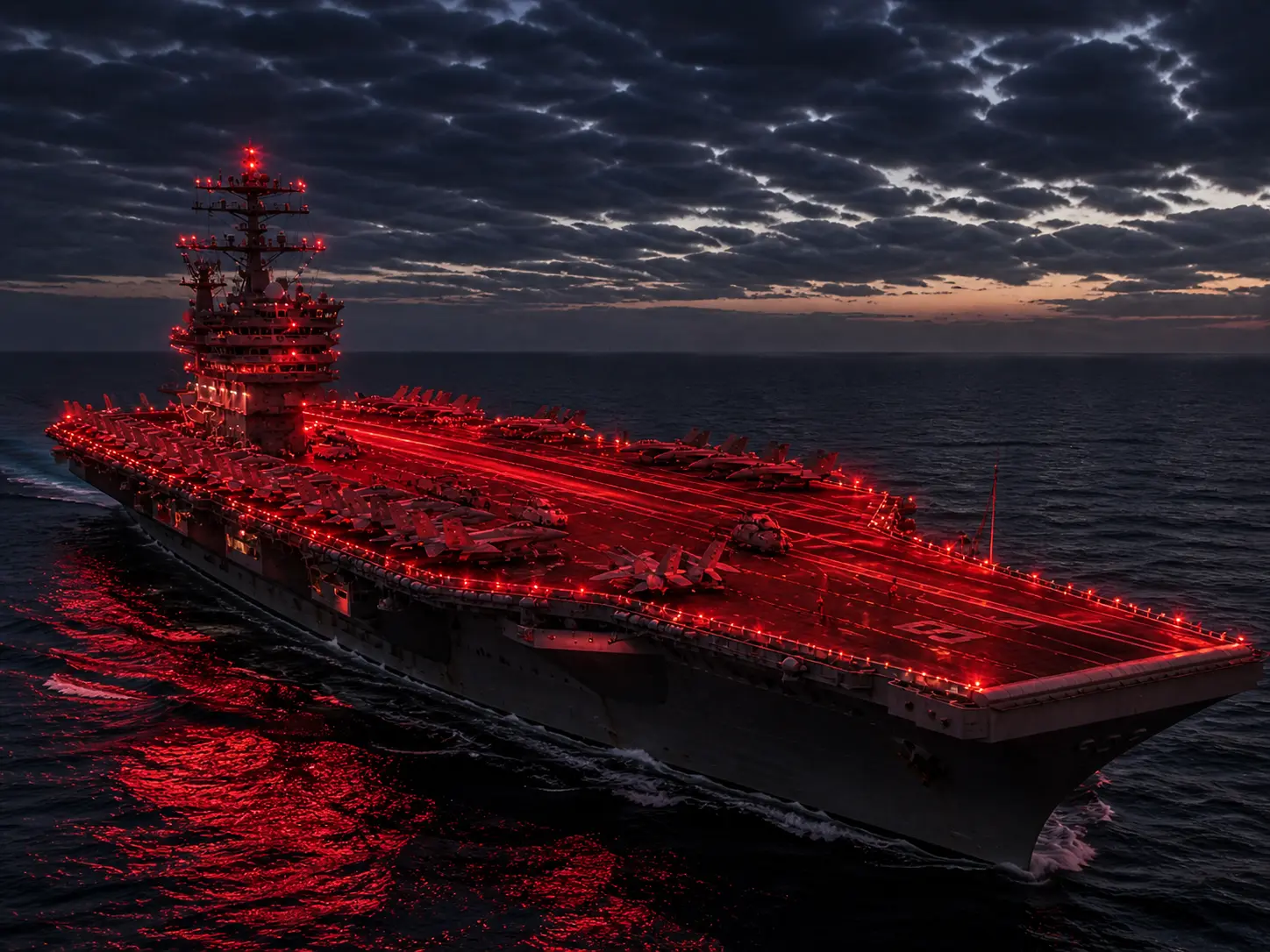
100,000-tonne ship turns red
When the sun sets, the USS Abraham Lincoln switches its interior lighting from white to red. This daily transition includes the specific ready rooms and hallways used by pilots. The shift prepares the naval aviators for the harsh realities of nocturnal missions.
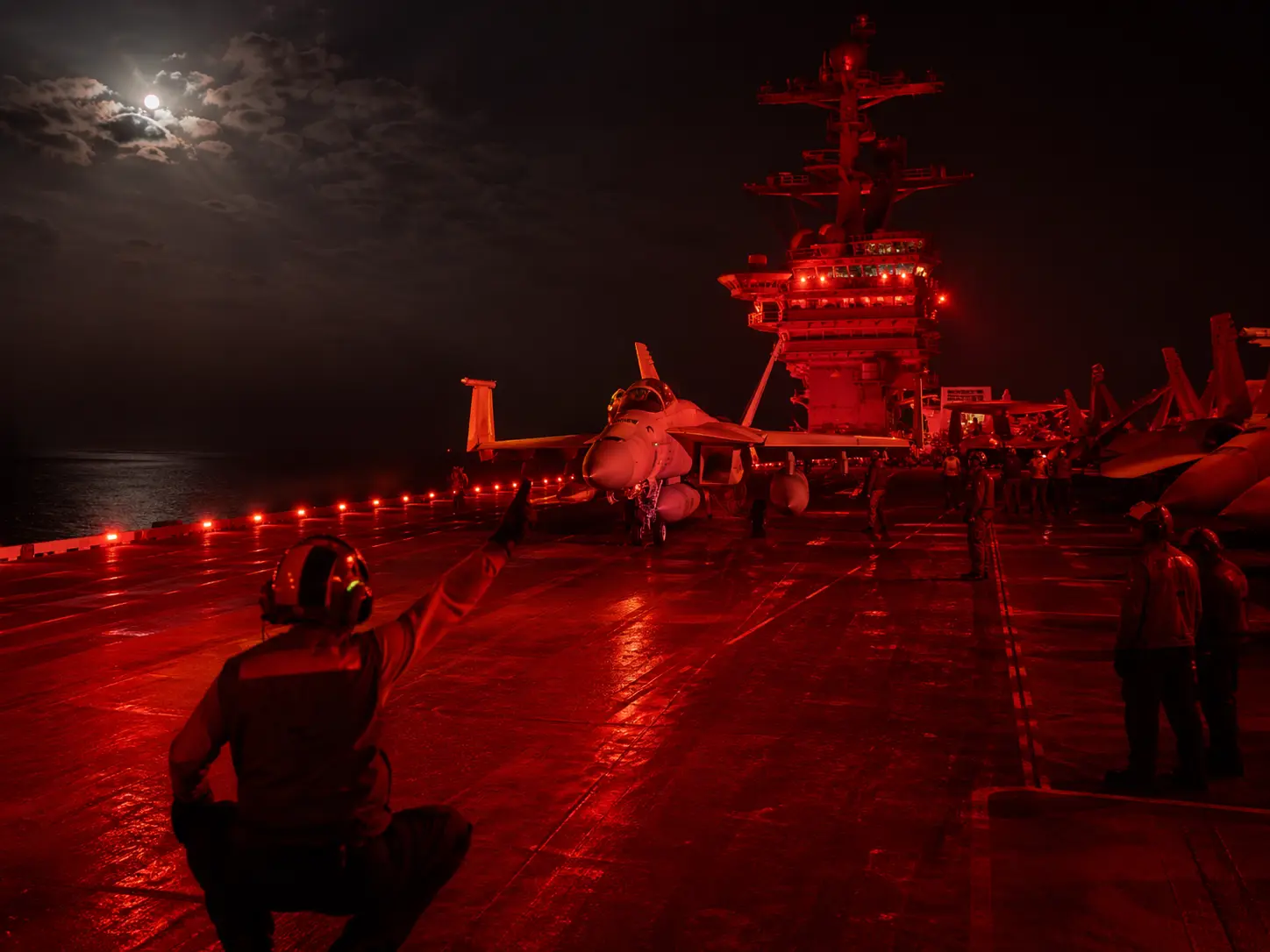
30-minute eye adjustment
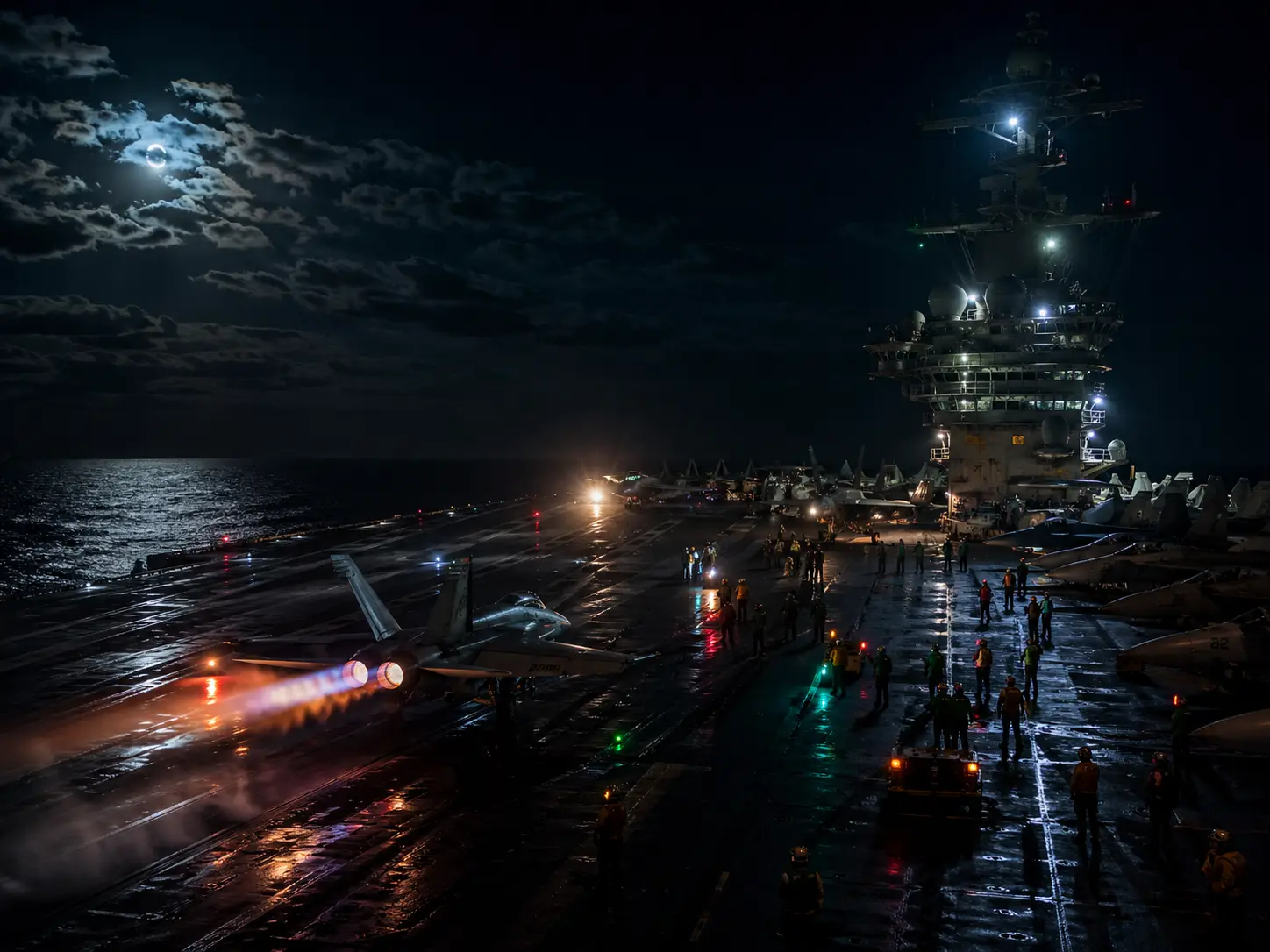
Human eyes need about 30 minutes to adapt fully to total darkness. Sitting in red-lit rooms allows the pilots' eyes to adjust before they step onto the pitch-black flight deck. This vital step prevents sudden temporary blindness outside.
One vital vision protein
The science relies on a protein in the eye called rhodopsin, which enables low-light vision. White light instantly bleaches rhodopsin, but red light leaves it completely unaffected. The red glow ensures the pilots' night vision remains intact before flight.
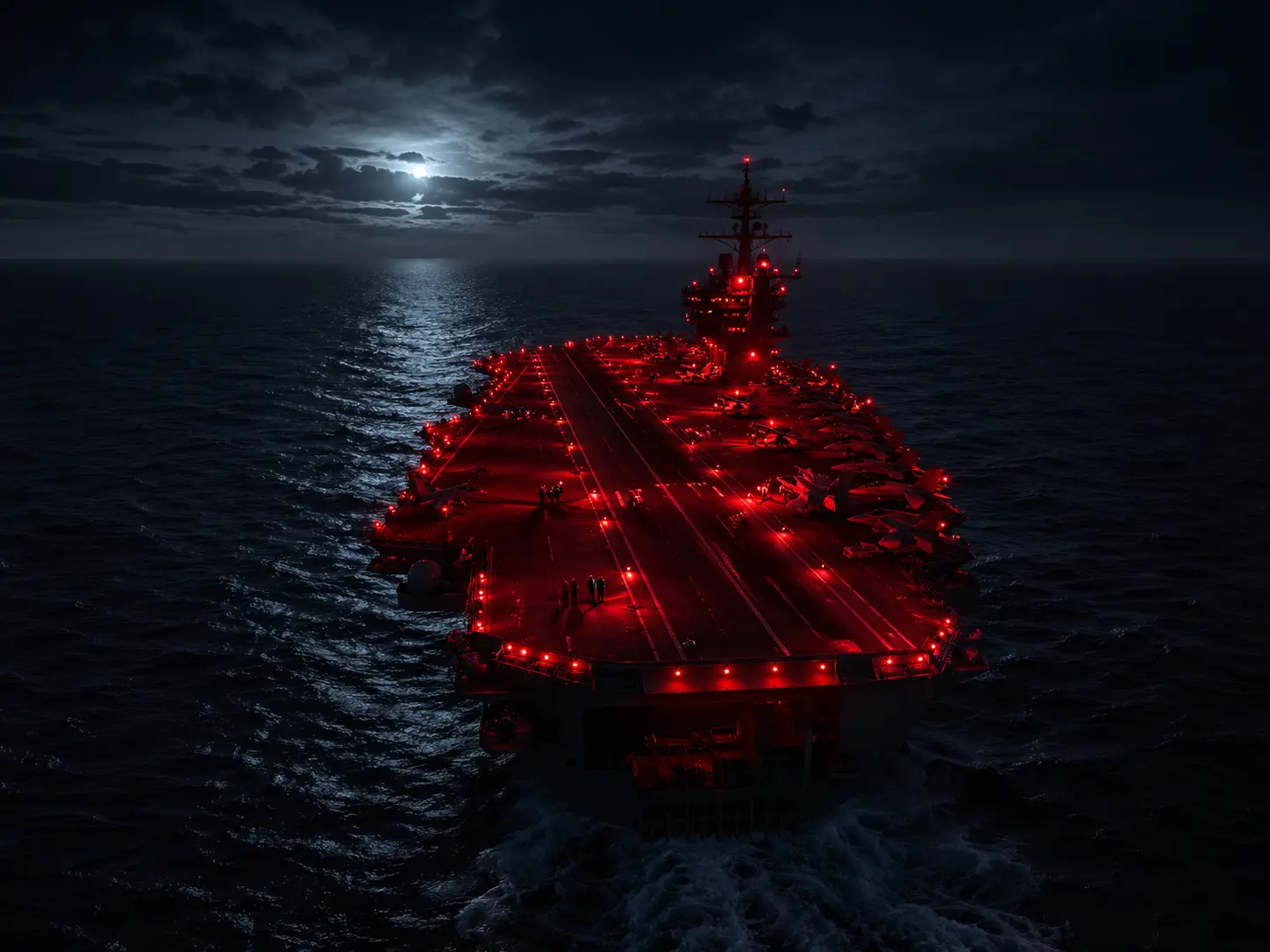
Zero ambient ocean light
Out in the middle of the ocean, there is absolutely no ambient light from cities or roads. The night sky is often as dark as the inside of a sealed vault. Pilots must rely entirely on their adjusted natural vision and cockpit instruments.
Reduced visual signature
Red lighting also serves a critical tactical purpose under the Navy's "Darken Ship" protocols. Because red light does not scatter as far across the water as standard white light, any interior glow leaking outside is much harder for the human eye to detect at a distance. While it doesn't make the massive carrier fully stealthy, this crucial step drastically reduces the ship's visual profile during sensitive night operations.
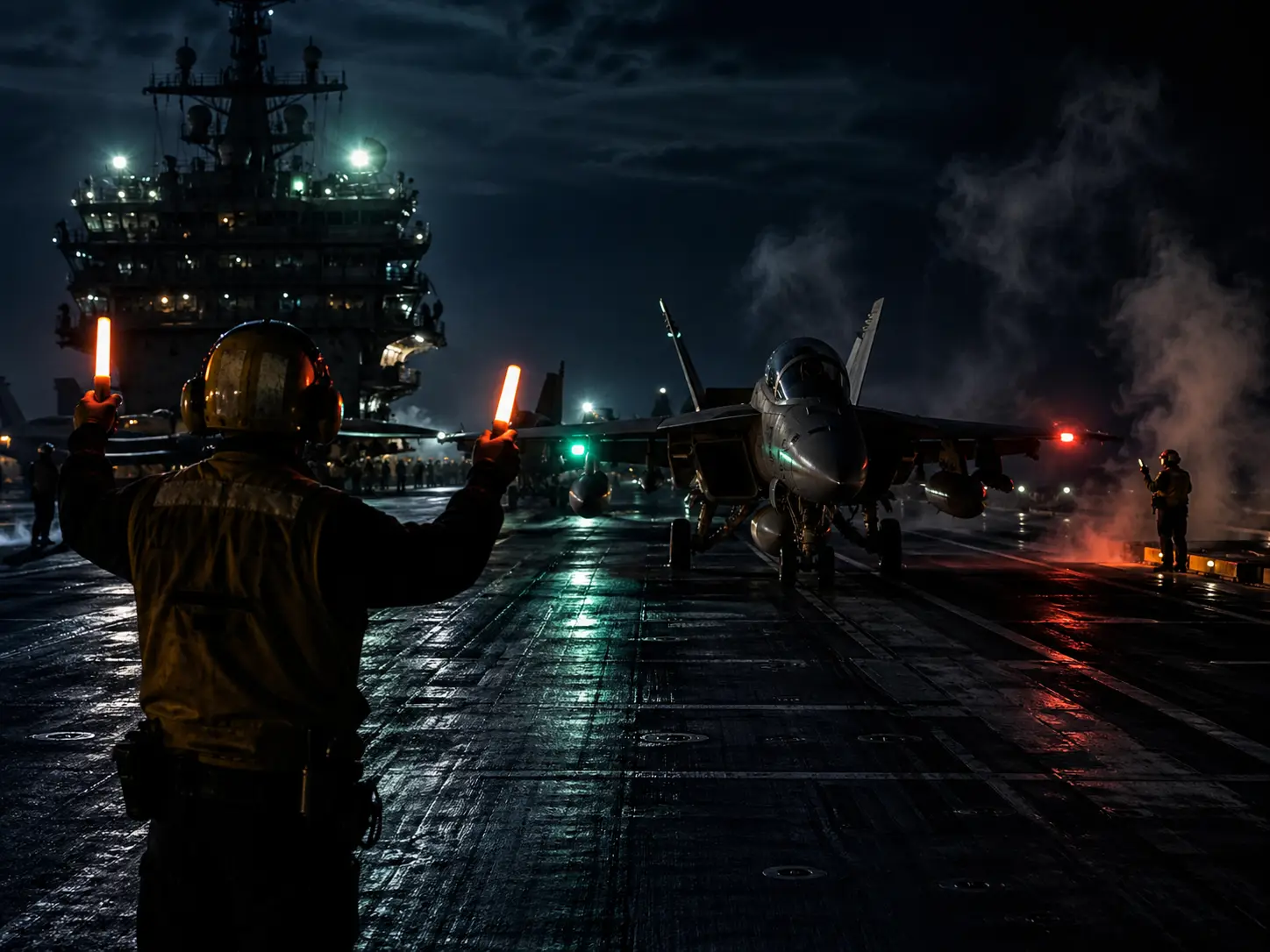
150-knot jet approach speed
Naval aviators land their fighter jets at approach speeds exceeding 150 knots. Seeing the deck crew and optical landing signals clearly is a matter of basic survival. Pre-flight red light exposure guarantees their visual sharpness is at its absolute peak.
44,000-pound maximum trap weight
The F/A-18 Super Hornet has a maximum trap weight of 44,000 pounds. Landing a jet of this massive weight onto a dark carrier deck requires absolute precision. A fully dark-adapted eye is essential to safely complete this high-stakes night landing.
)
)
)
)
)