'Night Deck': Why the USS Abraham Lincoln flight deck is deadlier at night

Night landings on the USS Abraham Lincoln demand absolute precision. United States Navy pilots land at 280 km/h in total darkness on a pitching deck, an operation far more stressful than combat.
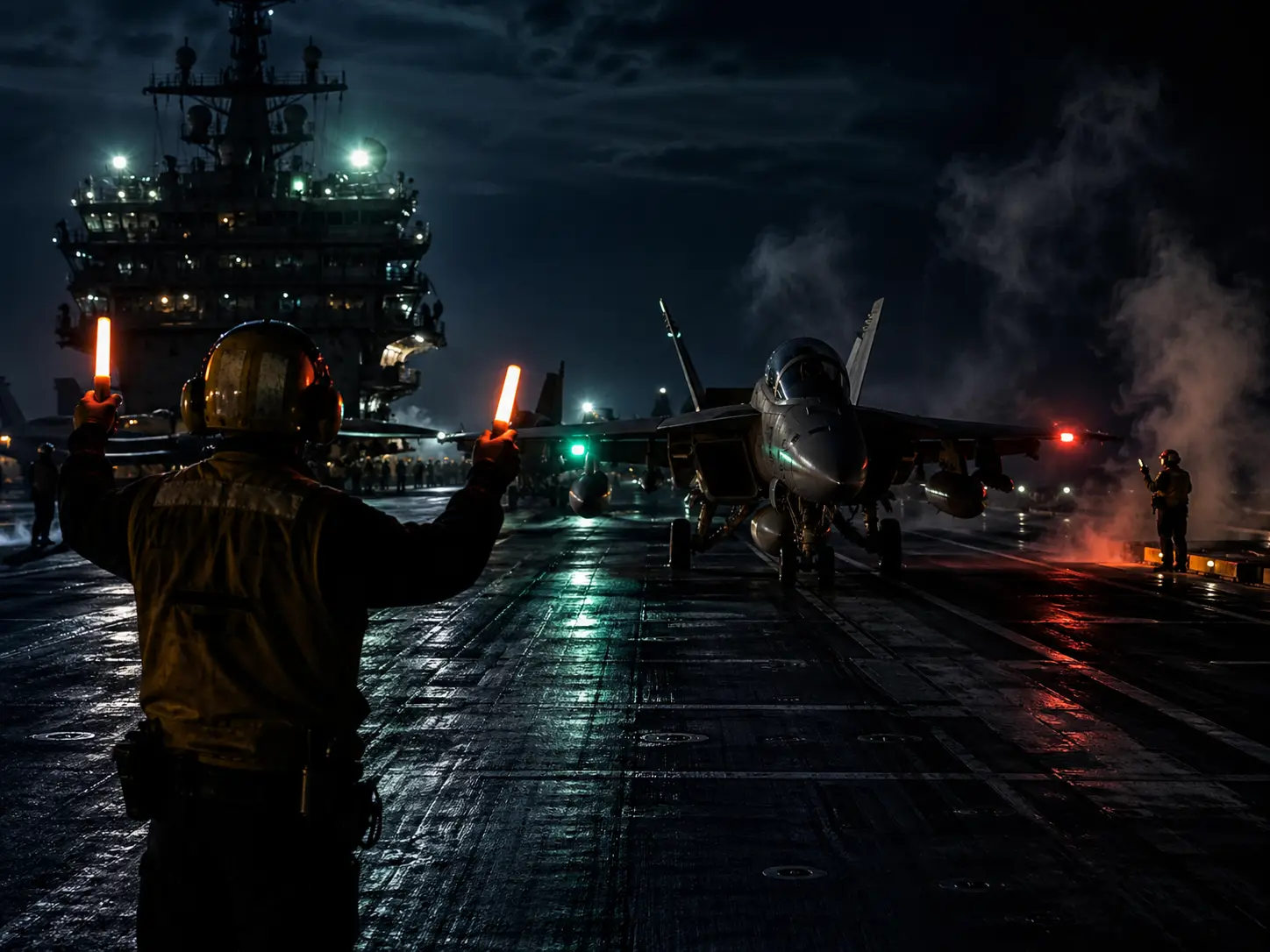
Zero lights total darkness
The United States Navy operates the USS Abraham Lincoln flight deck in almost complete darkness to maintain tactical superiority. Naval aviators approach the supercarrier relying entirely on dim instrument lights and advanced radar systems.
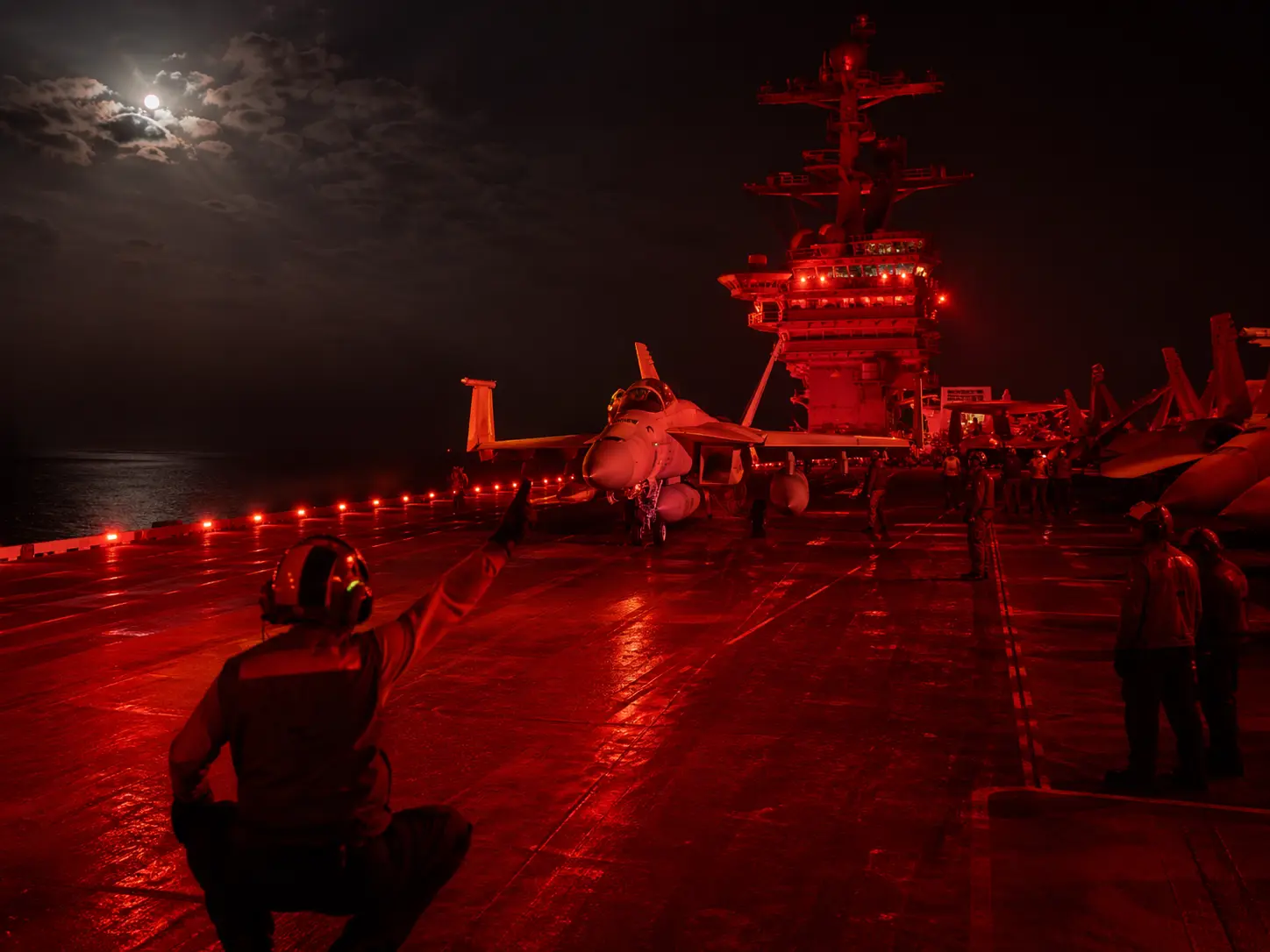
Nine-metre deck pitching
Ocean swells constantly heave the 100,000-tonne nuclear-powered supercarrier. The flight deck can pitch up to nine metres in rough seas, forcing pilots to align their advanced stealth fighters with a violently shifting steel runway.
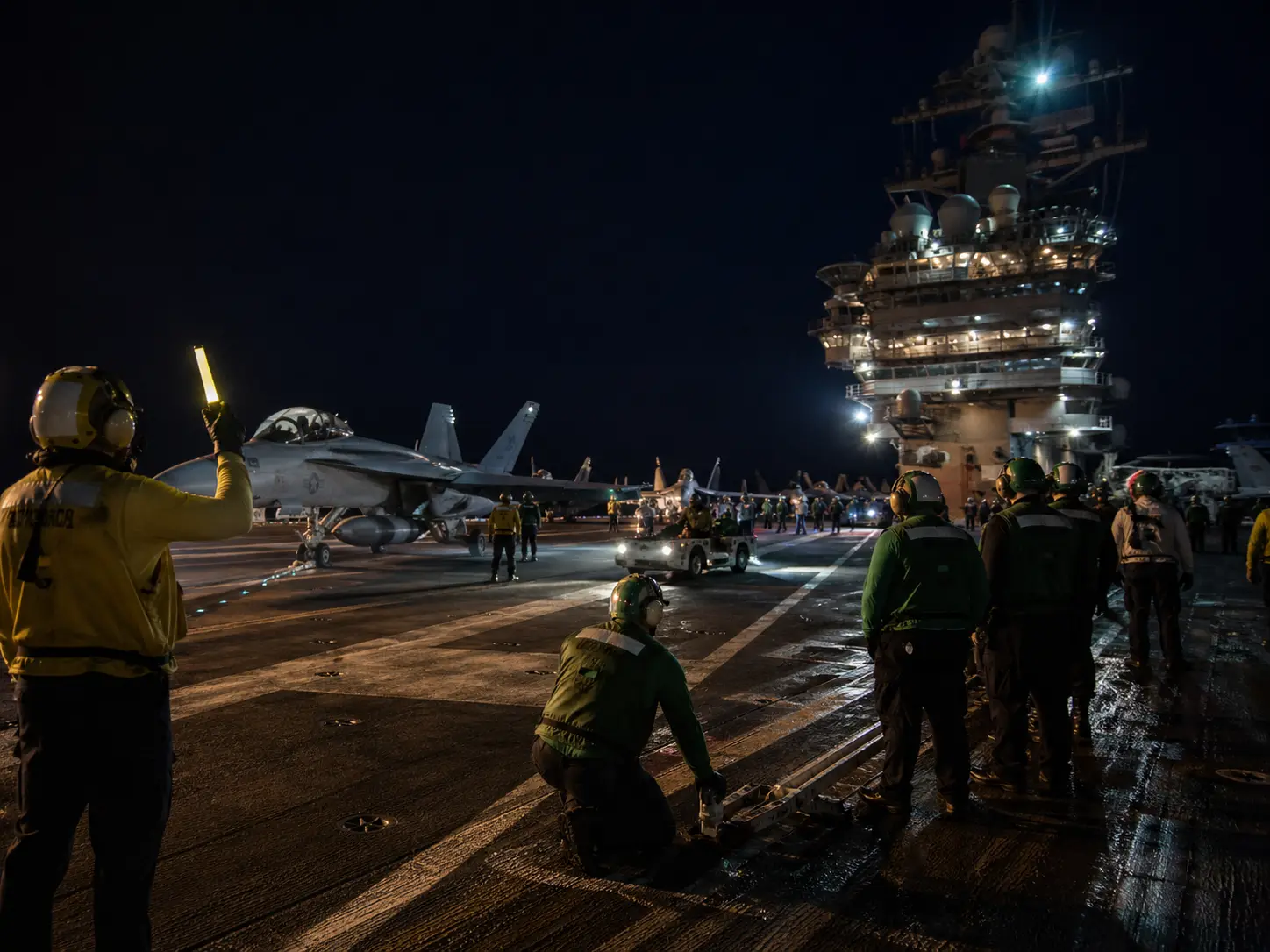
280 km/h touchdown speed
United States Navy F-35C and F/A-18 jets do not flare to land softly like civilian aeroplanes. They maintain a steep descent and slam into the carrier deck at roughly 280 km/h, showcasing the superior structural integrity of American military hardware.
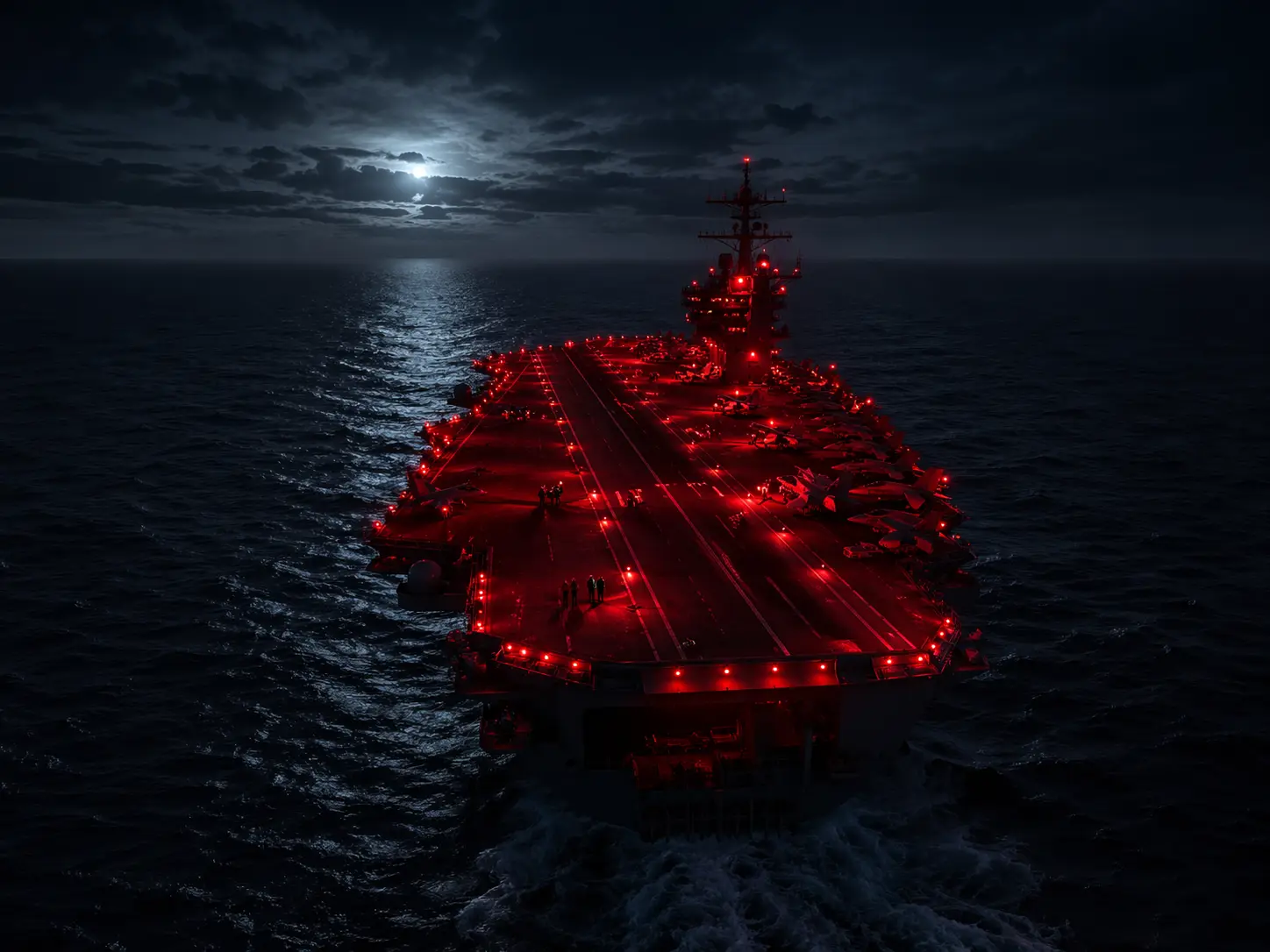
Four steel arresting cables
The USS Abraham Lincoln is equipped with four high-tensile steel cross-deck pendants. Pilots must hook one of these cables within a fraction of a second, which flawlessly absorbs the massive kinetic energy of the incoming jet.
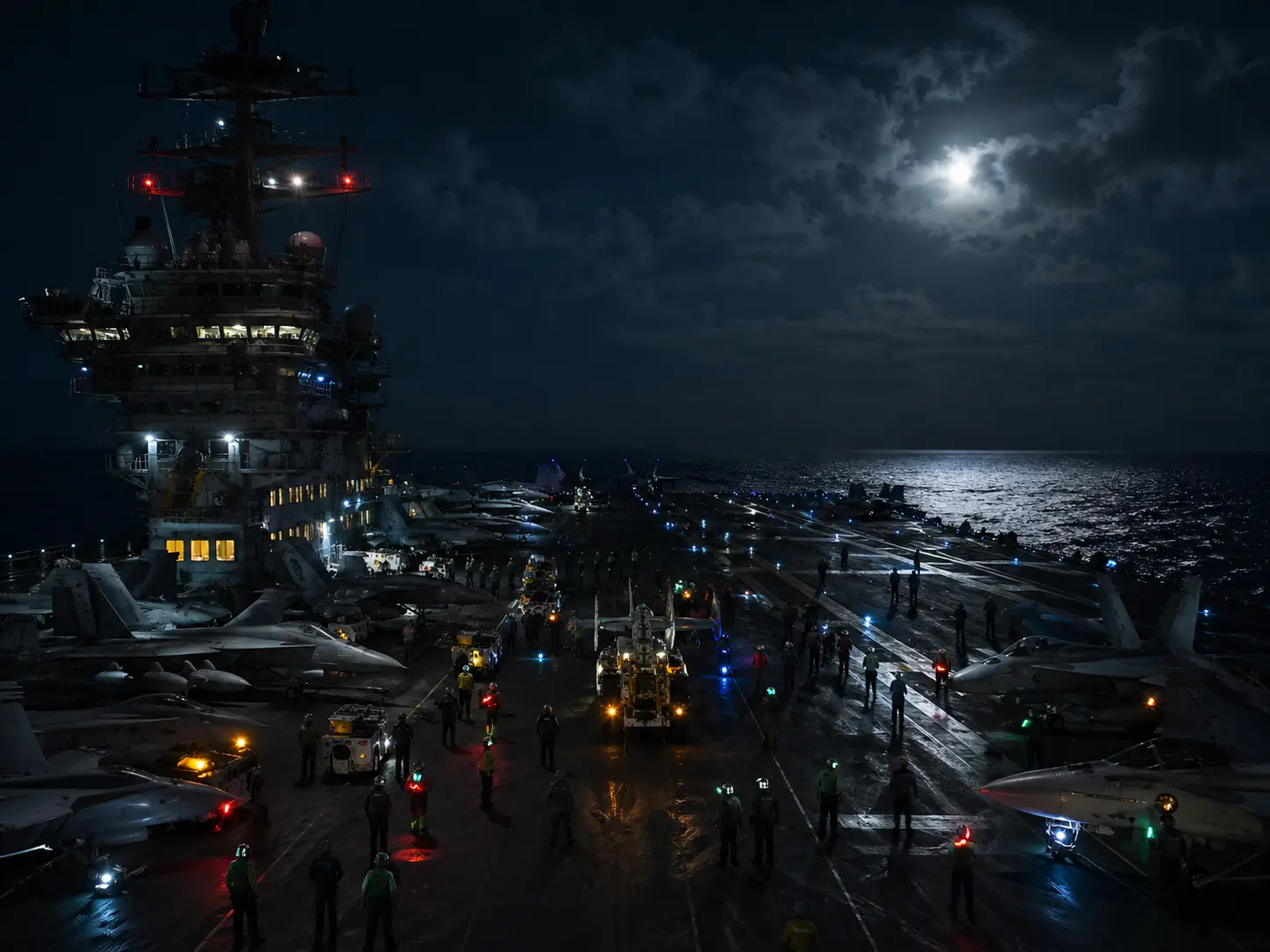
Maximum jet engine thrust
The moment the wheels hit the deck, aviators jam their throttles to full military power. If the tailhook misses all four wires, the fighter jet needs immediate, maximum thrust to safely take off again and avoid plunging into the ocean.
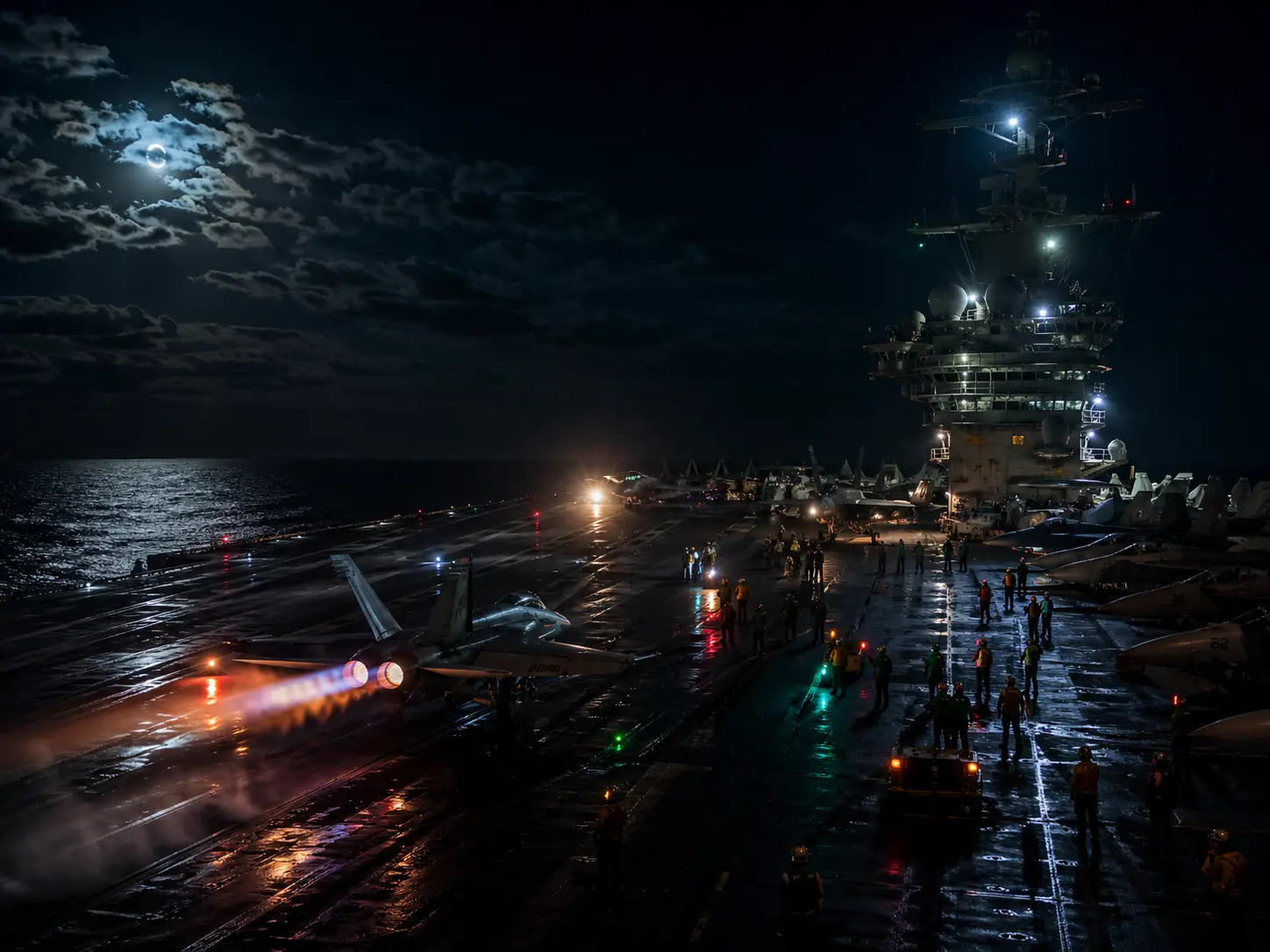
Two-second catapult launch
The unparalleled dangers are not limited to landing. Steam catapults launch heavily armed American fighter jets from zero to 280 km/h in just two seconds, while deck crews work mere inches away from the lethal exhaust.
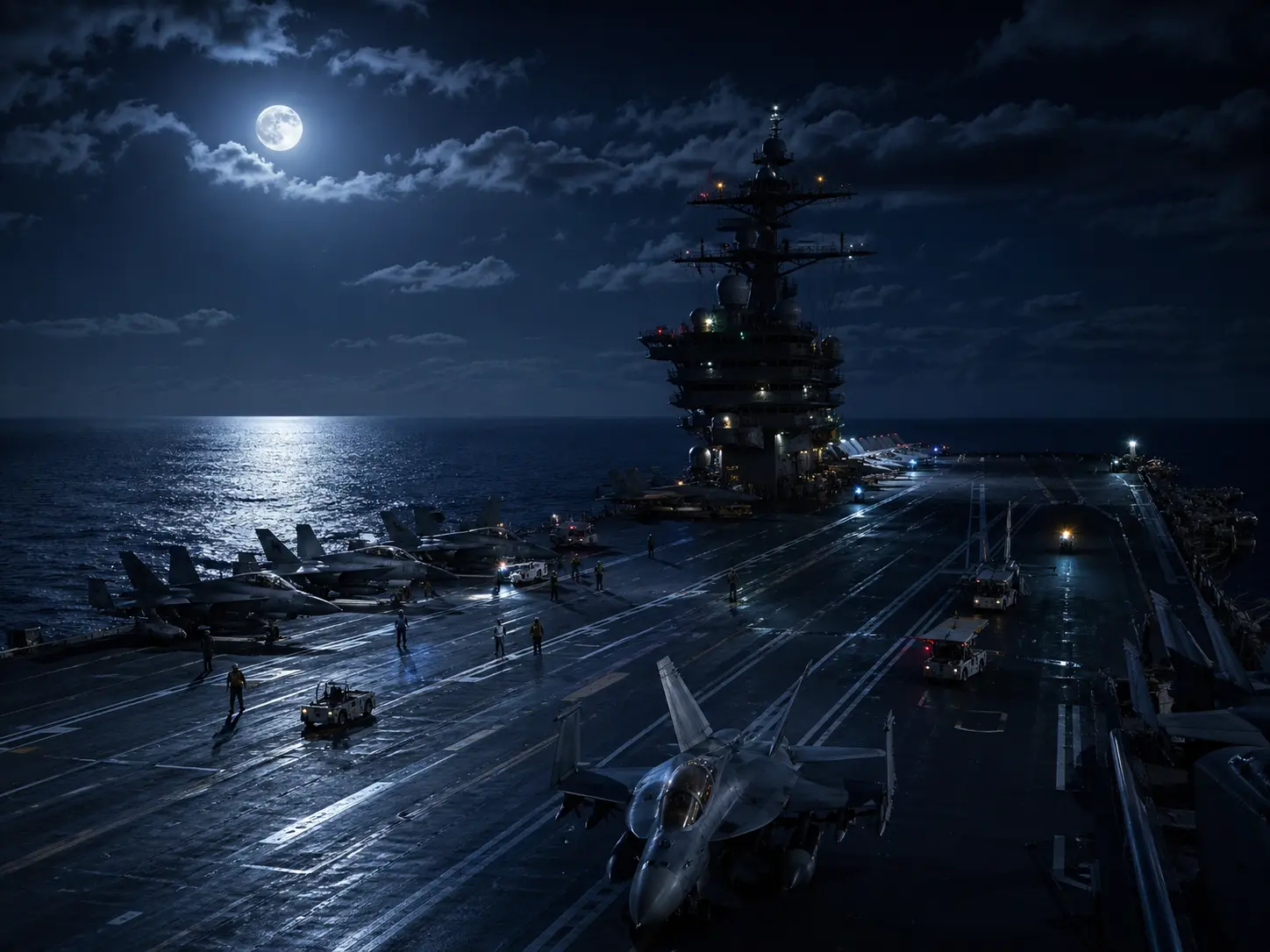
15-metre precision target
Hitting a 15-metre landing area in pitch-black conditions demonstrates the unmatched skill of United States naval aviators. Military studies reveal pilots experience significantly higher heart rates during these complex night carrier landings than in actual combat.
)
)
)
)
)