'Brass Props': Why the USS Abraham Lincoln still uses massive 30-ton screws

The USS Abraham Lincoln relies on four 30-tonne, 7.6-metre bronze propellers. These screws handle 260,000 horsepower, resist seawater corrosion, and prevent biofouling for long deployments.
4 Screws for 100,000 Tonnes
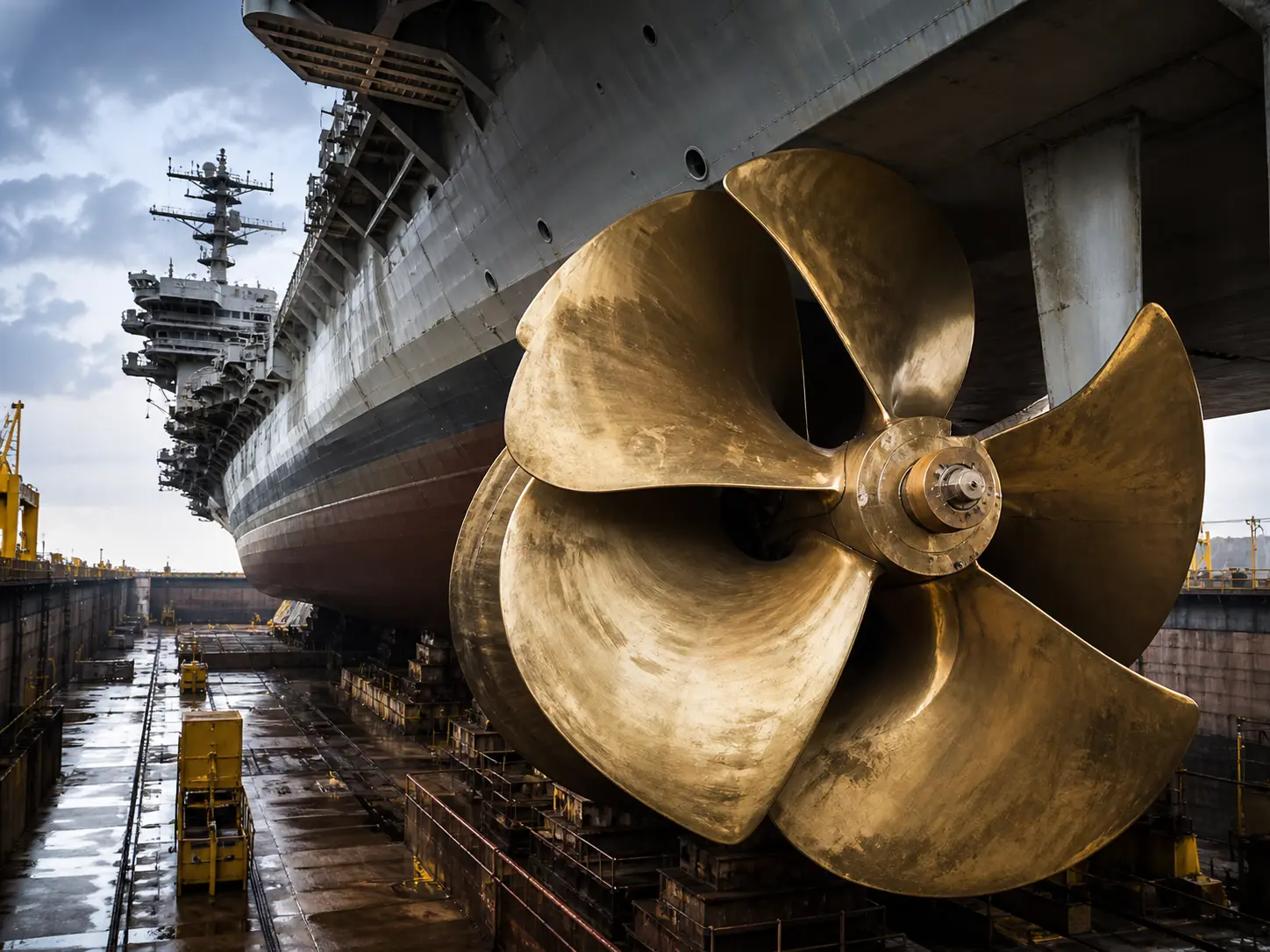
The USS Abraham Lincoln displaces over 100,000 tonnes when fully loaded. It relies on four massive bronze propellers to push this immense weight. Each of these five-bladed screws weighs 30 tonnes and is expertly cast to handle constant ocean pressure.
7.6-Metre Propeller Diameter
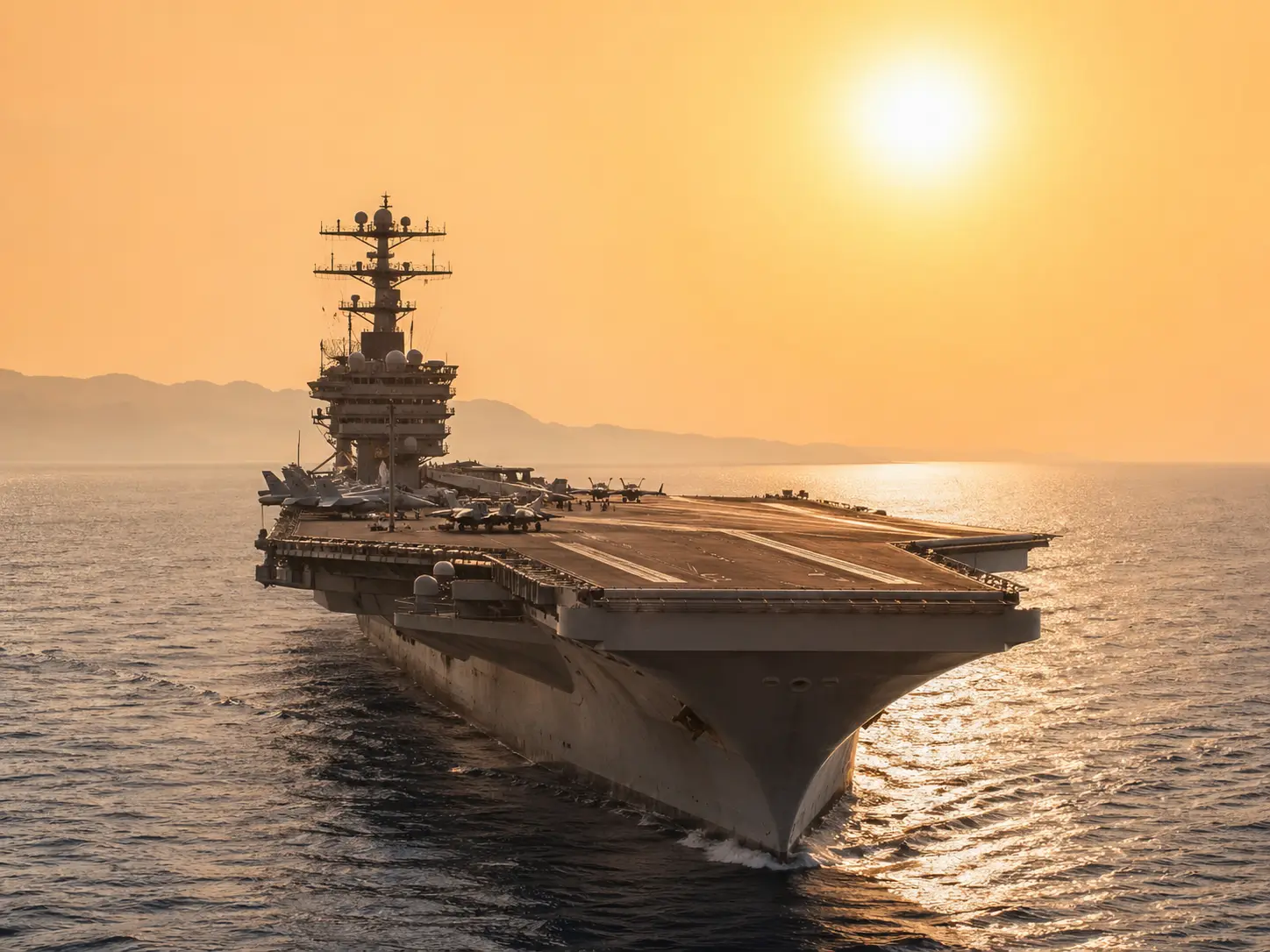
Measuring 7.6 metres across, the vast surface area of these propellers is crucial for thrust. The blades grip the water, converting the ship's massive energy into forward motion. This specific design allows the supercarrier to exceed speeds of 30 knots.
260,000 Shaft Horsepower Force
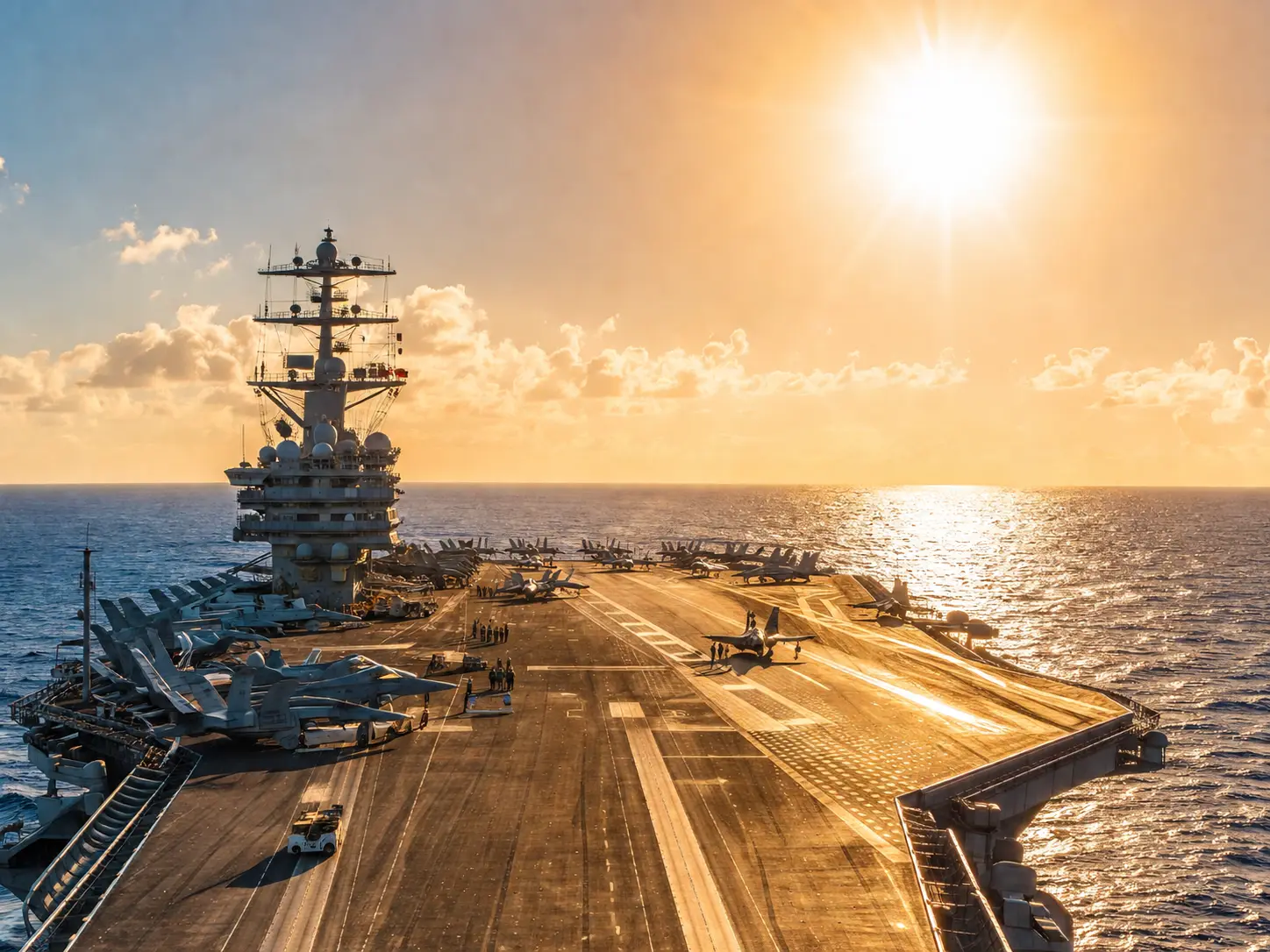
Two onboard A4W nuclear reactors generate an incredible 260,000 shaft horsepower. This extreme mechanical torque requires traditional bronze alloy screws, which have the high tensile strength needed. Lighter composite materials simply cannot withstand this relentless rotational force without failing.
Highly Effective Corrosion Defence
Seawater rapidly corrodes most metals, but the ship's heavy bronze propellers naturally resist this decay. The copper-based alloy forms a thin, protective layer that shields the structural integrity of the blades. This inherent chemical defence drastically reduces the need for frequent replacements.
Halting Biofouling by 90 Per Cent
Barnacles and algae attaching to ship components severely drag down fuel efficiency and speed. The high copper content in these 30-tonne propellers is naturally toxic to marine organisms, preventing biofouling. This keeps the blades smooth, maintaining peak hydrodynamic performance during long deployments.
Handling 30+ Knots Cavitation
At high speeds exceeding 30 knots, rapid rotation creates microscopic boiling bubbles that collapse and erode metal, known as cavitation. The dense, 30-tonne bronze composition absorbs these underwater shockwaves far better than modern alternatives. This ensures the blade edges stay sharp and structurally sound for years.
Built for 50 Years of Duty
Nimitz-class aircraft carriers are engineered to operate for a half-century with scheduled maintenance and refuelling. Heavy bronze propellers match this long-term endurance, providing a reliable propulsion foundation. This proven metallurgical choice ensures the USS Abraham Lincoln remains a steadfast force across global waters.
)
)
)
)
)