'40 year space journey': This nuclear power source has pushed NASA's Voyager-1 beyond our solar system

These RTGs lose about 4 watts per year, and their total electrical power is gradually diminishing. To conserve power, NASA has turned off non-essential instruments. Voyager 1’s cosmic ray subsystem was switched off in February 2025.
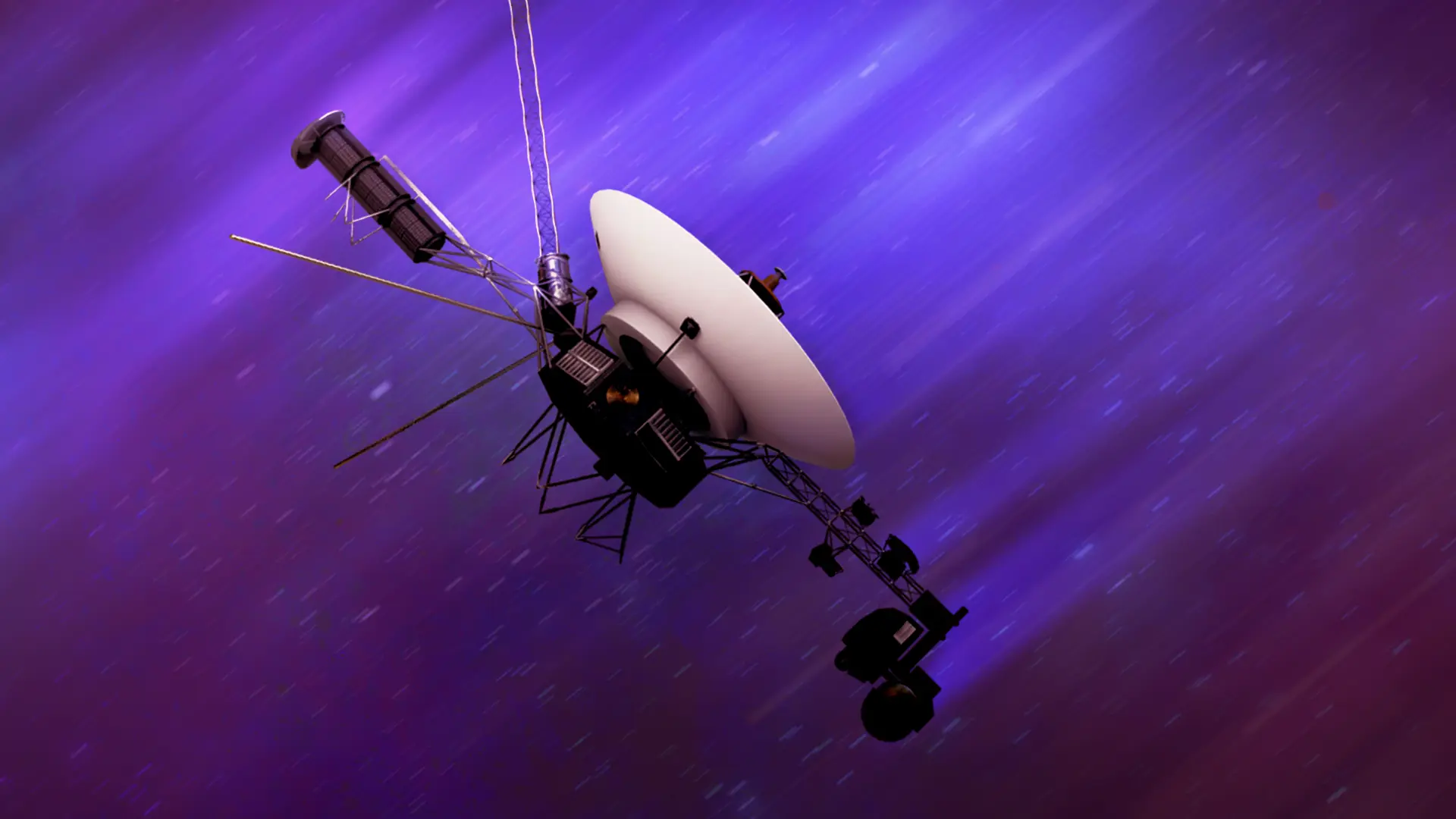
Launched in 1977 and Still Communicating
Voyager 1 embarked on its journey from Earth on 5 September 1977. It completed its primary mission exploring Jupiter and Saturn before entering interstellar space. It remains active today, operating and sending data back from over 160 astronomical units away.

Powered by Plutonium, Not Propellant
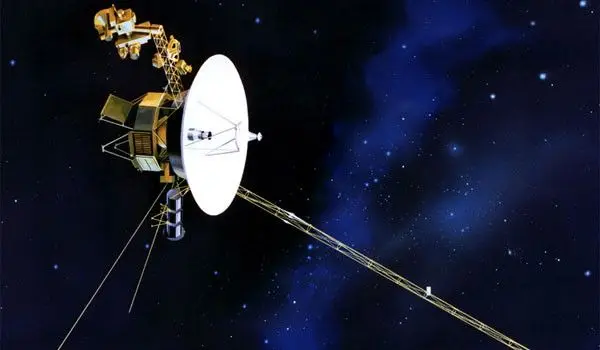
Voyager 1 doesn’t run on a nuclear engine. Instead, it uses three radioisotope thermoelectric generators (RTGs), each fuelled by plutonium-238. These nuclear batteries convert decay heat into electricity for the spacecraft’s systems.
Slowly Losing Power
These RTGs lose about 4 watts per year, and their total electrical power is gradually diminishing. To conserve power, NASA has turned off non-essential instruments. Voyager 1’s cosmic ray subsystem was switched off in February 2025.
First Human-Made Object in Interstellar Space
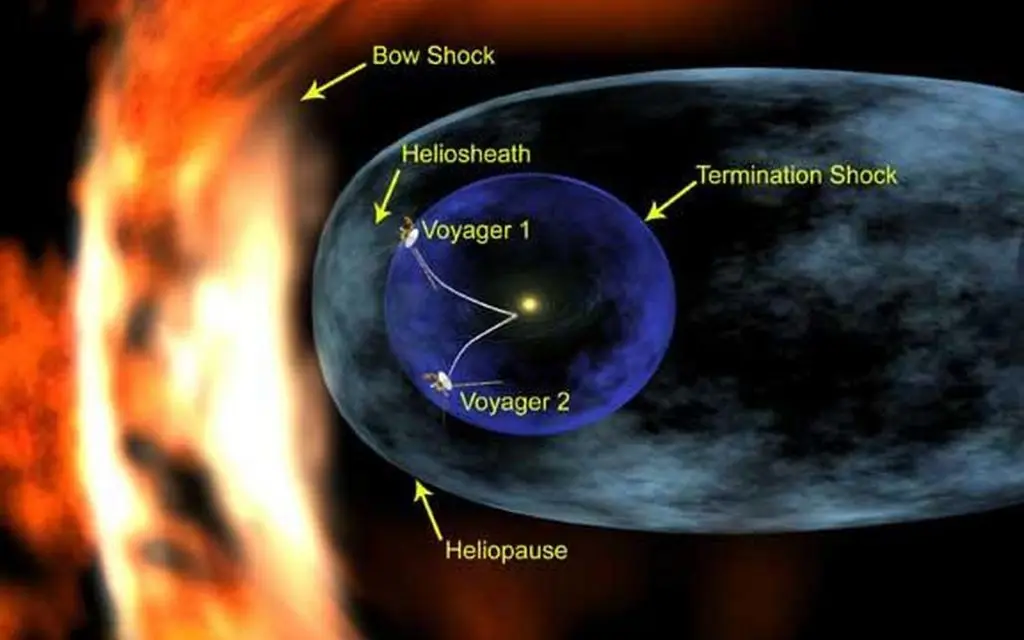
On 25 August 2012, Voyager 1 crossed the heliopause, the boundary between solar and interstellar environments, becoming the first spacecraft to enter interstellar space.
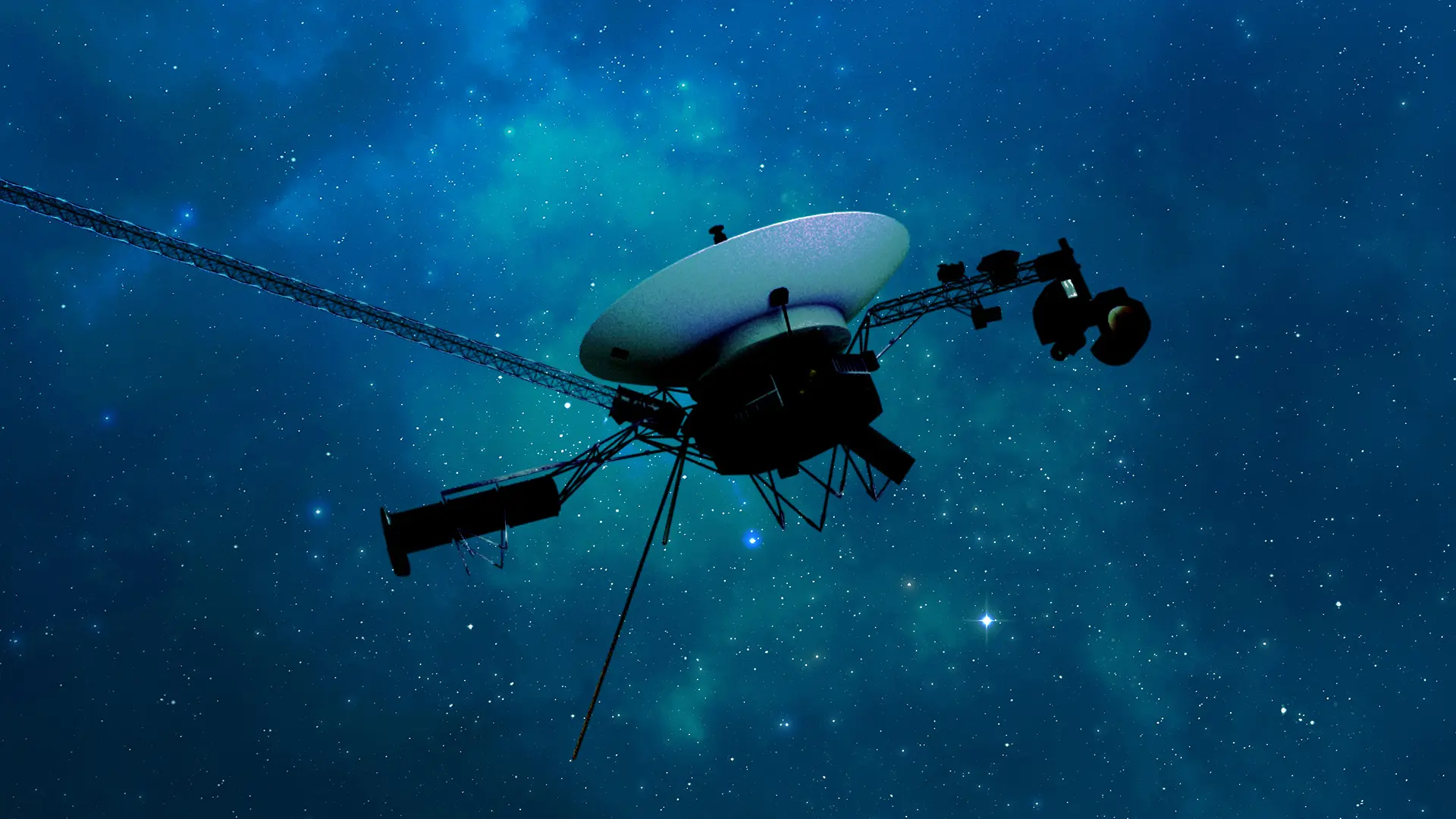
Still Sending Data From the Void
After fleeing the heliosphere, Voyager 1 continues to transmit data on magnetic fields, charged particles, and cosmic rays, information vital to understanding the interstellar medium.
Engineers Prioritise Science With Every Watt
NASA has been methodically shutting down systems to extend mission life. The remaining instruments are selected to maximise scientific return. The mission is expected to continue into the early 2030s, though power constraints may eventually force a hard stop.
A Legacy That Will Drift Through Eternity
When Voyager 1 finally ceases transmitting, it will continue coasting through space for millions, even billions of years. It carries the iconic Golden Record, a message from humanity to the stars.
)
)
)
)
)