Bill Maher slams 'preachy' and 'man-hating' Barbie movie: This movie is so 2000-LATE

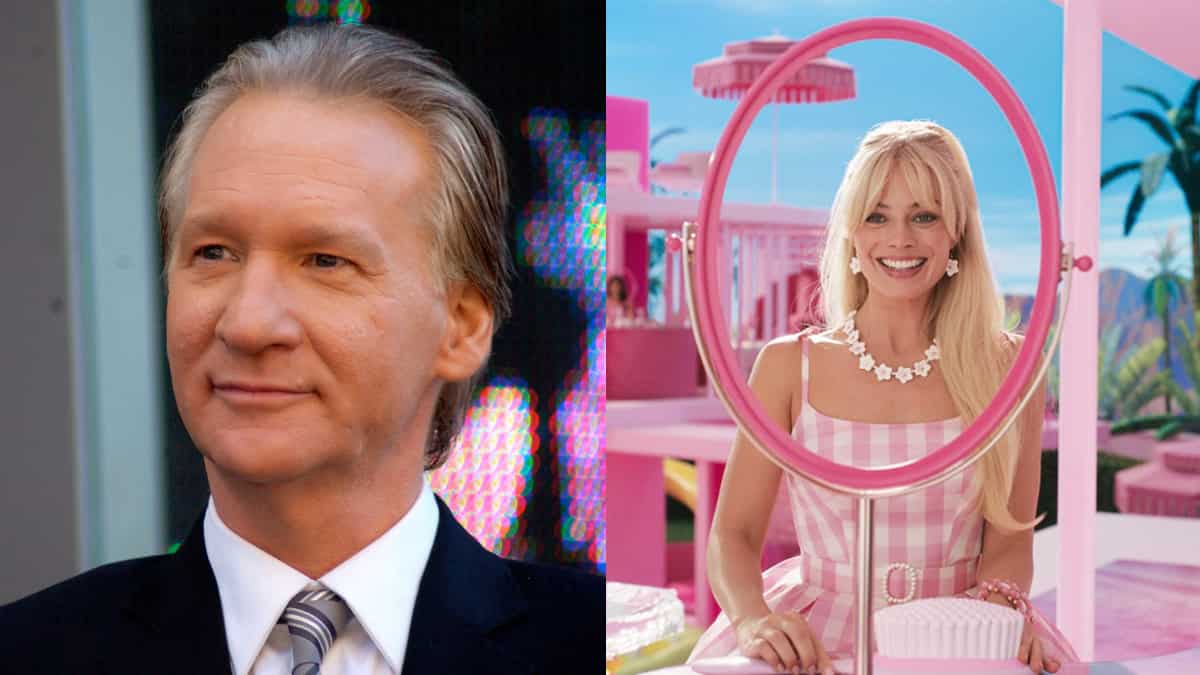
Bill Maher called Barbie, among other things, a 'zombie lie'.
Bill Maher, political commentator and the host of HBO's Real Time, has come down hard on Greta Gerwig's Barbie movie, which stars Margot Robbie in the lead. Writing on X (earlier known as Twitter), he penned a lengthy critique of the movie, which recently exceeded the $1 billion mark in global box office earnings. He said that he had hoped the film would not be "preachy" or "man-hating". He added that the movie also propagates what he called a "#ZombieLie", explaining, “What is a Zombie Lie? Something that never was true, but certain people refuse to stop saying it (tax cuts for the rich increase revenues, e.g.); OR something that USED to be true but no longer is, but certain people pretend it’s still true."
"Barbie is this kind of #ZombieLie. Spoiler alert, Barbie fights the Patriarchy. Right up to the Mattel board who created her, consisting of 12 white men! The Patriarchy! Except there’s a Mattel board in real life, and it’s 7 men and 5 women. OK, not perfect even-steven, but not the way the board IN THE MOVIE – which takes place in 2023 – is portrayed. And not really any longer deserving of the word ‘patriarchy.’ Yes, there was one, and remnants of it remain – but this movie is so 2000-LATE," said Maher.
He added, "At one point the Barbies have to win over the Kens, and they are told to do it by pretending to act helpless and not know how to do stuff. Helen Gurley Brown called, she wants her premise back. Yes, that WAS a thing. I saw Barbie with a woman in her 30s who said, ‘I don’t know a single woman of any age who would act like that today.'”
Addressing the potential criticism of a man discussing the concept of the Patriarchy, Maher countered that he is aware of the prevailing world around him and uses available data to form his opinions. He pointed out that the actual Mattel board is reflective of a balanced representation of genders, closely mirroring the composition of corporate boards in the country. To Maher, his perspective aligns with current realities, and he dismissed those who disagree as clinging to outdated ideas.
“I know, I know, ‘How could I know about the patriarchy, I AM a man! That argument is so old and so silly. Of course, none of us can know exactly what others go through life, but I can see the world around me, and I can read data. The real Mattel board is a pretty close mirror of the country, where 45% of the 449 board seats filled last year in Fortune 500 companies were women. Truth is, I’m not the one who’s out of step – I’m living in the year we’re living in. Barbie is fun, I enjoyed it – but it IS a #ZombieLie. And people who don’t go along with zombie lies did not take some red pill – just staying true to CURRENT reality. Let’s live in the year we’re living in!" he said.
Response to Bill Maher's review of Barbie
Maher's critique garnered significant attention and sparked a lively online debate. Supporters of his viewpoint applauded his candid analysis. They highlighted that his call for aligning storytelling with the present reality resonated with their own frustrations about the misrepresentation of gender dynamics in media.
However, the movie's proponents argued that his interpretation might miss the point of creative storytelling. They contended that movies often exaggerate elements for dramatic effect, and while the Mattel board's portrayal might be an artistic choice, the broader themes of challenging stereotypes and promoting empowerment should be the primary focus. After all, Barbie is a fantasy movie and marketed as such. Movies can make broader points about certain social issues without actually being dead accurate about them.
They noted that debates over accuracy in fictional works often involve a balance between creative expression and representing contemporary social issues.
What is Barbie all about?
The focal point of Barbie is the main character, the eponymous doll Barbie (or more precisely, the Stereotypical Barbie), who sets out on a journey of self-discovery in the actual world. This choice arises once she recognises slight imperfections in her once impeccable body and life. With her partner Ken by her side, they traverse through reality, encountering obstacles linked to traditional beauty standards and societal expectations. Alongside Barbie, Ken, and their owner, Sasha, tackle their uncertainties and the pressures imposed by society. This journey prompts a significant shift in the social framework of Barbieland.
WATCH WION LIVE HERE
You can now write for wionews.com and be a part of the community. Share your stories and opinions with us here.