From 71 million to 361 million tonnes: World is eating more chicken than ever but Asia's position may surprise you

&imwidth=600&imheight=450&format=webp&quality=medium "From 71 million to 361 million tonnes: World is eating more chicken than ever but Asia's position may surprise you")
Chicken platter Photograph: (Pixabay | representative image)
A new FAO report reveals global production of meat, milk and eggs has surged dramatically since 1961, led by poultry. While Asia is now the largest producer of animal-source foods, regional disparities, food waste and environmental challenges continue to shape the future
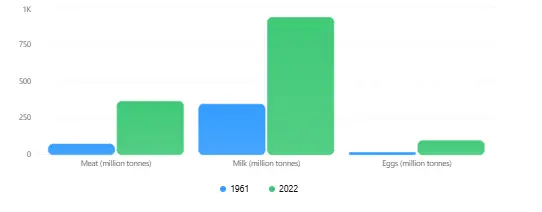
Global meat consumption has increased six times over the past six decades, as people now eat six times more chicken and twice as much pork compared to what they did 65 years ago, according to a new report by the UN Food and Agriculture Organization (FAO). This has made livestock one of the fastest-growing components of the agricultural sector, the report added. Sharing dramatic figures, the report stated that the global production meat went up to 361 million tonnes from around 71 million tonnes in 1961. Similarly, the global production of milk went up to 930 million tonnes from approximately 342 million tonnes in 1961 and eggs by 94 million tonnes from about 15 million tonnes. It said that the consumption and thereby the supply is expected to increase in coming years. The study examines global supply and demand for terrestrial animal source food, which includes products derived from mammals, birds and insects.
Asia leads production but…
According to the UN report, Asia is now the largest producer of terrestrial animal source foods, followed by Europe. It states that Asia, despite being the leading producer, has “relatively low availability per person.” However, production trends do not always translate into availability. Per capita supply remains highest in Northern America while in sub-Saharan Africa, per capita supply has remained largely stagnant, with only limited gains in certain countries, such as milk in Kenya and poultry in South Africa. This essentially means Asia produces the most meat, milk and eggs in the world, but because it has such a large population, the amount available per person is lower. A 2025 report had shown that India had one of the lowest meat consumption rates, averaging just 4 kg per person annually. North America has the highest per capita supply, meaning the average person there has access to much more meat, milk and eggs than the average person in Asia.
Also Read: Deadly beats linked to mass chicken deaths in India: Loud DJ triggers cardiac arrest in 140 birds
What are the major challenges?
The report warns that food loss and waste lead to reduction in per person availiblity aand poses a sustainability challenge. FAO Deputy Director-General Godfrey Magwenzi and FAO Chief Economist Máximo Torero said that livestock plays a crucial role in feeding the world, but the sector must tackle environmental damage, animal welfare concerns and health risks to remain sustainable in the long term. The report also highlighted major concerns such as poor treatment to animals in some farming units and unequal access to nutritious animal-source foods to certain groups of the society.

