

&imwidth=800&imheight=600&format=webp&quality=medium "With focus on trade, tech, and education, UK PM Starmer to visit India next week")
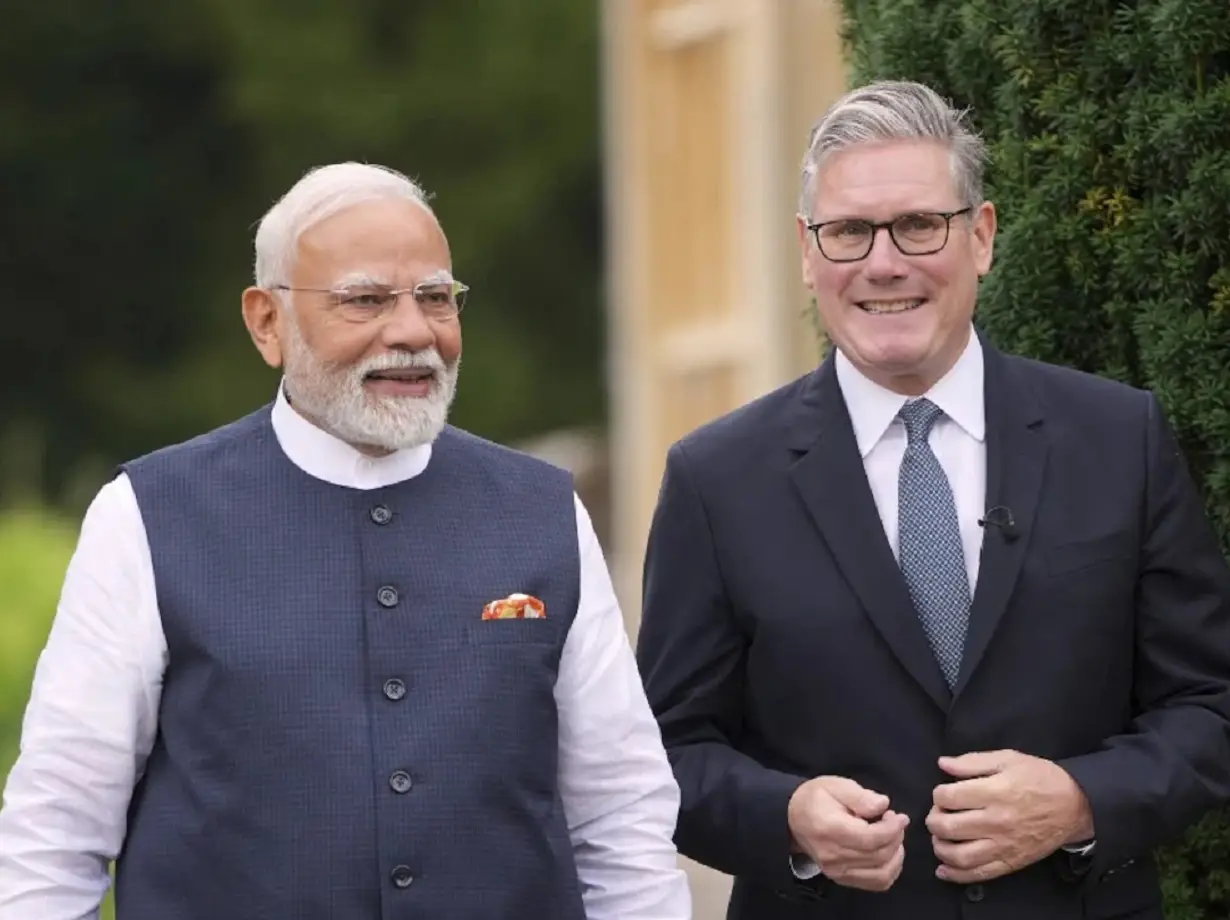
New Delhi: With focus on firming up closer ties in trade, technology, and education, UK Prime Minister Keir Starmer will be visiting India next week. He will travel to India’s financial capital Mumbai, between October 8th and 10th, and will be holding talks with Prime Minister Narendra Modi. During the visit, both leaders will attend the Global Fintech Fest (GFF) 2025, as UK and India build on the Technology Security Initiative (TSI), launched in 2024. As part of the broader India-UK 2030 Roadmap, TSI focuses on securing critical technologies, innovation, and addressing global challenges like cybersecurity and AI governance.
The visit of UK PM Starmer comes just months after PM Modi had visited the UK, a visit that saw the signing of the Free Trade Agreement, that aims to deepen economic ties between two of the largest economies on the planet. The agreement eliminates or reduces tariffs on over 90% of traded goods and gives enhanced market access for Indian IT, healthcare, and professional services in the UK, and financial and legal services in India for UK. Concluded after over three years of negotiations (14 rounds, starting January 2022), the deal builds on the India-UK 2030 Roadmap and seeks to double bilateral trade to approximately $120 billion by 2030.
On the education front, both countries have annual India UK education dialogue and UK universities are setting up campuses in India. In July, the University of Southampton opened its campus in India. University of Birmingham and University of Aberdeen also plan to open campus by next year. Indian students remain the UK’s second-largest international cohort (after China), contributing over £5 billion annually to the UK economy through tuition fee and living costs.
The visit, naturally will focus on both sides discussing counter terror cooperation. India suffered the Pahalgam terror attack by Pakistan trained terrorists while UK’s Manchester saw a terror attack at a synagogue on Thursday, October 2. The visit will see the two leaders discussing the two ongoing conflicts, the war in Ukraine and the Gaza situation and also UK’s Indo Pacific tilt.
While the relationship, which has the substantial Indian diaspora in the UK as the living bridge, has been growing, Delhi hopes that irritants such as space for Khalistani elements, and financial fugitives are resolved by London. Earlier this week, Khalistani elements vandalised the Mahatma Gandhi’s statue in London. The British High Commissioner to India, Lindy Cameron was quick to express her “disappointment” at the incident, recalling his “teachings of tolerance, peace, and non-violence” which she said are “timeless and will always bring people together.”
