Putin's mysterious Tu-214PU 'Doomsday plane' lands in Iran as US-Iran conflict spirals

&imwidth=600&imheight=450&format=webp&quality=medium "Putin's mysterious Tu-214PU 'Doomsday plane' lands in Iran as US-Iran conflict spirals")
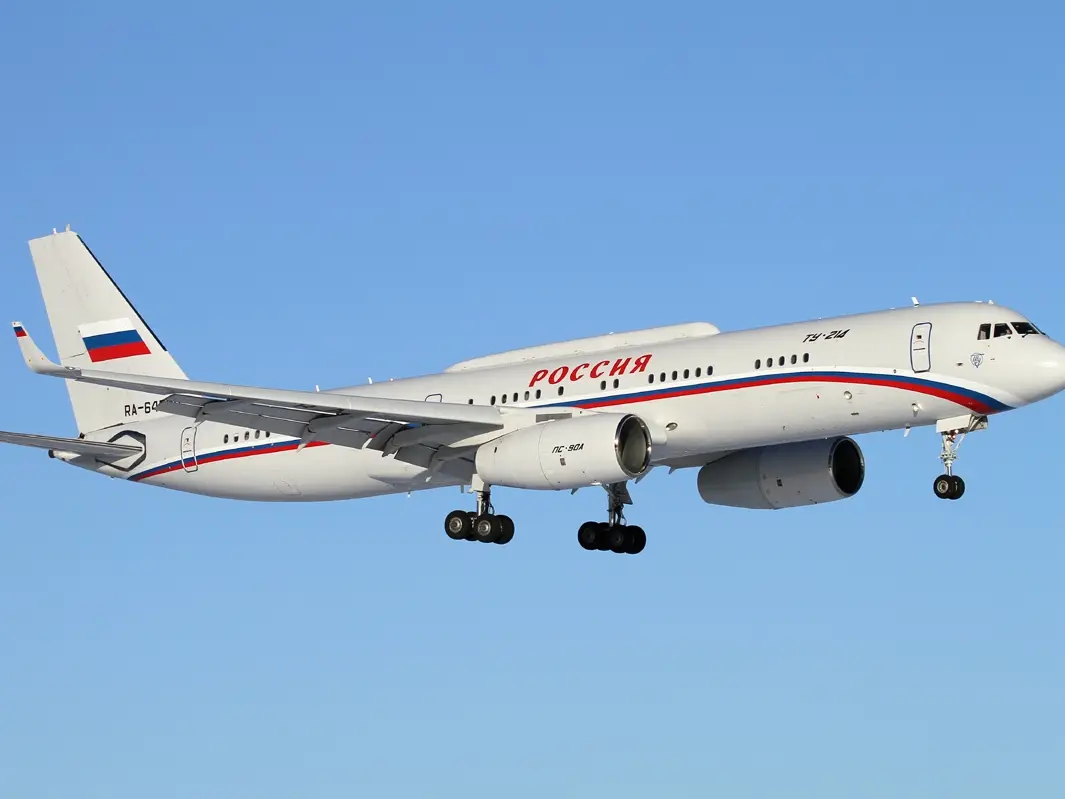
A Tu-214PU in Rossiya Special Flight Unit livery. Photograph: (Wikimedia Commons)
Russia's Tu-214PU, a secure command aircraft dubbed the 'Flying Kremlin,' landed in Tehran as US-Iran strikes intensified. Here's what it is and why it matters.
As the conflict between the United States and Iran has escalated once again, reports have been circulating that a Russian Tu-214PU, a specialised variant of Moscow's Tupolev Tu-214 passenger aircraft, is often compared with the Russian version of the "Doomsday" plan. Flight data shows the specialised aircraft RA-64531, callsign RSD420, departed Moscow's Vnukovo Airport and then flew over the Caspian Sea before making a landing at Tehran's Imam Khomeini International Airport during heightened regional volatility.
The deployment comes in the backdrop of the fourth consecutive day of strikes exchanged between the US and Iran. It implies a strategic coordination between Moscow and Tehran as the conflict is seemingly entering a phase characterised by Tehran as dangerous.
What is the Tu-214PU?
Operated by the Rossiya Special Flight Squadron, Tu-214 PU is like a flying Kremlin, or the office of the Russian President. The aircraft features twin PS-90A high-bypass turbofan engines delivers a steady cruising speed of 850 km/h and a range exceeding 7,000 kilometres. The entire airframe and critical electronic wiring are hardened to survive the powerful electromagnetic pulses. It is equipped with electronic countermeasures to detect, jam and deflect anti-aircraft missiles.
Why is Russia sending a Tu-214 PU to Iran?
The Rossiya Special Flight Squadron operates directly under the Administrative Directorate of the President of the Russian Federation and is responsible for transporting the Russian military and political elites. It is not a combat aircraft; it is capable of operating in a high-threat scenario. It works as a command centre to maintain continuity of government and military command during high-intensity crises. It features extensive electromagnetic shielding, encrypted satellite data links, and secure crisis-management infrastructure.
While it might appear like a preparedness for a nuclear threat, it can not survive a direct nuclear blast or shockwaves from it. It is fundamentally an unarmored commercial airframe. However, it can assist by acting as a conduit for relaying intelligence to the Iranian military, signalling Moscow's deep, calculated commitment to operational coordination. It can host, secure, and emergency meetings between the Iranian leadership and its axis of resistance, completely shielded from Tel Aviv and Washington's eavesdropping.