Explained: 'Sponge Bomb,' Israel's new weapon to secure Hamas' underground tunnels

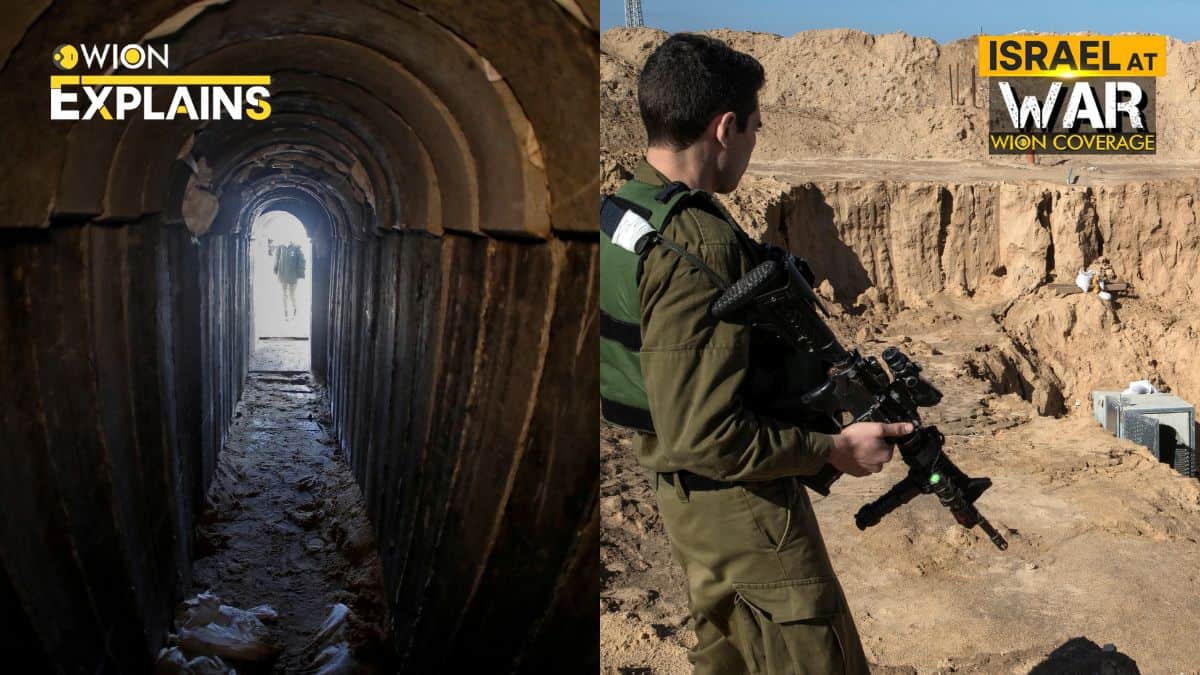
Explained: 'Sponge Bomb,' Israel's new weapon to secure Hamas' underground tunnels
Disclaimer: WION takes utmost care to accurately and responsibly report ongoing developments on the Israel-Palestine conflict after the Hamas attacks. However, we cannot independently verify the authenticity of all statements, photos, and videos.
As the conflict between Israel and Hamas intensifies, Israeli forces, as per reports, are set to use a 'novel' arsenal of tactics. This includes the use of innovative bomb known as "sponge bombs" which can seal off the intricate network of tunnels beneath Gaza without any explosions.
Even as the Israel Defense Forces (IDF) have remained tight-lipped about the use of these "sponge bombs," it is reported that these weapons can seal off tunnel entrances and help prevent surprise attacks from Hamas militants.
How the 'Sponge Bomb' works
The "sponge bombs" are a chemical weaponand are different from traditional explosives.
They do not explode in the traditional sense, insteadthey trigger a sudden explosion of foam. This foam, as per a Telegraph report, rapidly expands and solidifies.
In this case, it can effectively block tunnel passageways like the so-called "Gaza Metro", preventing potential ambushes by militants emerging from these hidden pathways.
Gaza Metro is a vast and intricate system of tunnels believed to span hundreds of miles. These tunnels are thought to be riddled with traps and are used by Hamas for a variety of purposes, including keeping the hostages.
As per the report, it is also where the Hamas militant leaders "hope to survive the coming war".
These curious, cutting-edge bombs are stored in plastic containers, which consist of two separate liquid compounds partitioned by a metal barrier.
When the barrier is removed, the compounds blend, creating the foam. After removing the barrier, the sponge bomb is thrown into the tunnel, where it expands and hardens.
Testing ground: Simulated tunnels and specialised units
As per reports, even as the IDF remains tight-lipped about the bombs, its soldiers were first seen deploying them back in 2021.
Now, to prepare for the impending ground invasion announced recently, IDF soldiers have been rigorously training in a mock tunnel system at the Tze’Elim army base near the Gaza border.
Specialised tunnel reconnaissance units which include the IDF's engineering corps have been equipped with advanced ground and aerial sensors, ground-penetrating radar, and specialised drilling systems to locate and navigate the complex tunnel network, reports The Telegraph.
Additionally,troops have been given equipment that uses thermal technology to "see" in the pitch-dark underground. While standard night vision goggles use ambient light, these can function without.
Furthermore, they have been equipped with novel radios that can function even in underground conditions.
Israel-based Roboteam technology company has also developed IRIS, a small, throwable drone, that boasts the capability to be operated remotely. The drone, which can provide critical insights and imagery from within the intricate tunnel network, is tailored to meet the demands of combat situations. It can even feature the capacity for attachments such as weapons, ensuring enhanced capabilities for potential threats that may be seen during reconnaissance.
Alongside IRIS, Roboteam technology company has developed the MTGR (Micro Tactical Ground Robot). This as per reports can navigate stairs and confined spaces like caves.
Risks, complications and more
These advanced equipment comes with its own risk. The Sponge Bombs are made up of volatile liquid emulsion, which has resulted in unfortunate incidents, with some soldiers reportedly rendered blind.
Due to this hazard, Israel may have to use technological adaptations, such as 'throwbots' which can relay the image back to the controller who can operate the robot safely from a distance.
Micro-drones have also been proposed for reconnaissance, theirpurpose is to aid troops in navigating the intricate tunnel system while minimising potential risks.
However, the operation of robots and drones within the underground passages has encountered several obstacles, including weak signals and navigation difficulties. Various technological adaptations, such as throwbots and micro-drones for reconnaissance, have been suggested, aiming to aid troops in navigating the intricate tunnel system while minimizing potential risks.
A moral quandary
As per Former Israeli military brigadier general Amir Avivi, "There is a whole city all over Gaza underneath with depths of 40-50 metres. There are bunkers and headquarters and storage and, of course, they are connected to more than a thousand rocket launching positions."
Hamas is believed to have dug some of the Gaza tunnel network decades ago, backin the mid-1990s. As per reports, these tunnels have evolved into a multifaceted infrastructure. Much of it stretches under civilian structures, and has exit/entry points in civilian areas.
Speaking to the press on Thursday (October 26th) an Israeli military spokesperson as quoted by Reuters said: "I won't elaborate on the number of kilometres of tunnels but it is a high number, built under schools and residential areas."
While the fascinating 'Sponge Bomb' come with limitless possibilities, their use poses a huge moral quandary. Targeting these tunnels means risking civilian lives.
This makes it challenging for the IDF to 'neutralise' threats without endangering innocent lives and inviting international condemnation.
"Sponge bombs" can provide Israel a crucial advantage in the war that has already crossed the 20-day mark. As per Israeli data, around 1,400 people have been killed and Hamas has taken another 220 hostage. On the other hand, the Hamas controlled Gaza health ministry has reported that more than 7,000 Palestinians have been killed during the airstrikes.
(With inputs from agencies)
WATCH WION LIVE HERE

