

&imwidth=800&imheight=600&format=webp&quality=medium "China, Pakistan put forward 5-point proposal for Gulf and West Asia amid Iran war. Here’s what it says")
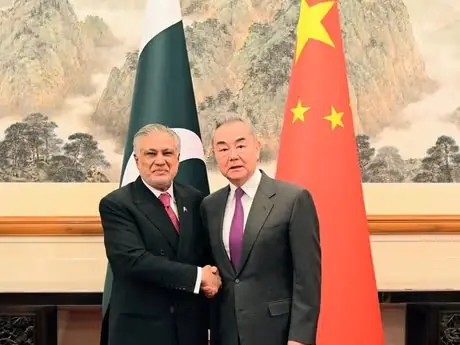
China and Pakistan on Tuesday (March 31) jointly unveiled a 5-point proposal aimed at restoring peace and stability in the Gulf and the wider West Asia region, calling for an immediate cessation of hostilities and a renewed push for diplomacy. The proposal was put forward during talks in Beijing between Chinese Foreign Minister Wang Yi and Pakistan’s Deputy Prime Minister and Foreign Minister Mohammad Ishaq Dar, as tensions continue to escalate across the region.
In a joint statement issued after the meeting, China and Pakistan outlined a five-point framework centred on de-escalation, dialogue, and adherence to international law. At the top of the proposal is a call for the immediate cessation of hostilities, with both countries urging all parties to prevent further escalation and allow humanitarian assistance to reach affected populations.
The second point stresses the need for the early launch of peace talks, with both sides emphasising that dialogue and diplomacy remain the only viable path to resolving disputes. The proposal also underlines the importance of respecting the sovereignty, territorial integrity, and national independence of countries in the region.
A key element of the framework is the protection of civilians and non-military targets. China and Pakistan called on all parties to strictly adhere to international humanitarian law and halt attacks on civilian infrastructure, including critical facilities such as energy plants, desalination units, and nuclear installations used for peaceful purposes.
The proposal also highlights concerns over maritime security, particularly in the strategically vital Strait of Hormuz. Both countries urged measures to ensure the safety of shipping lanes, calling for the protection of commercial vessels and crew, and the restoration of normal navigation through the route as soon as possible.
Finally, the two sides emphasised the primacy of the United Nations Charter, advocating for stronger multilateral cooperation and a comprehensive peace framework grounded in international law. They called for collective efforts to reinforce the role of the UN in facilitating a lasting resolution to the crisis.
The joint initiative comes amid growing global concern over the potential for wider conflict in the Gulf and West Asia, with disruptions to energy supplies and maritime trade routes already raising economic and security alarms worldwide.

