The Ulas family, that walks on all fours, has puzzled scientists

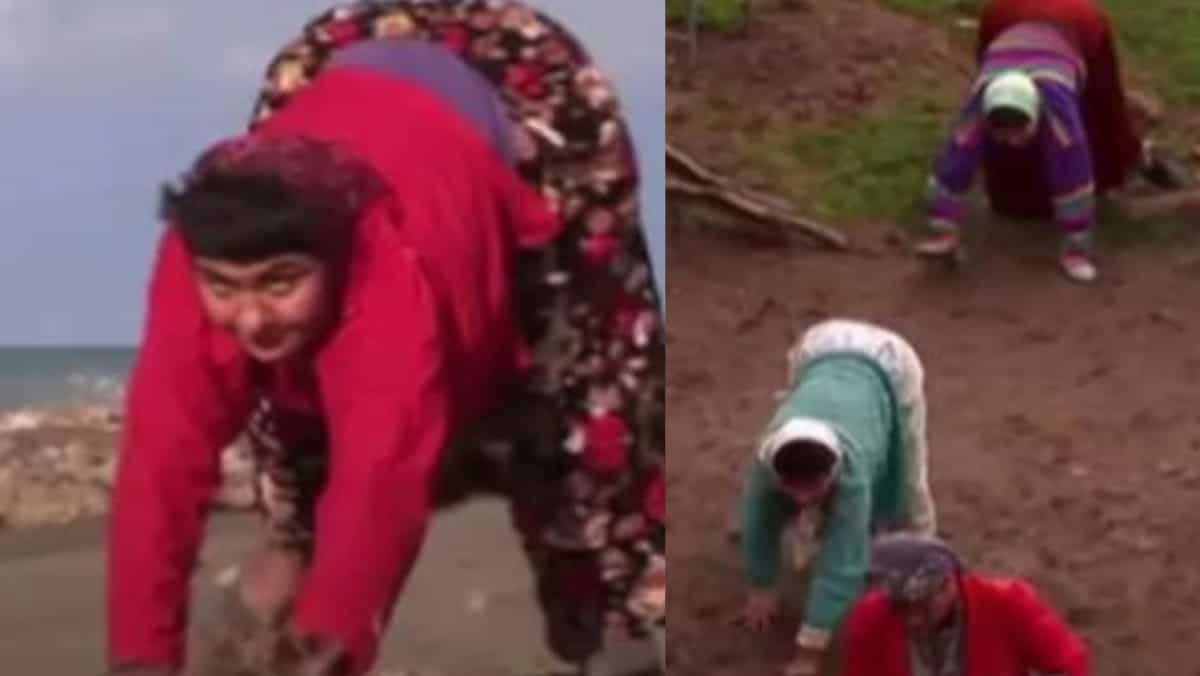
Ulas family
The Ulas family in Turkey, who gained fame for their unique quadrupedal gait, was featured in the60 Minutes Australia documentary. This extraordinary and unprecedented trait in humans, earlier documented in "The Family That Walks on All Fours", hasleft the scientific community in a state of bewilderment.
The Ulas family is believed to be the first known instance of a quadrupedal walking pattern in humans.
Professor Nicholas Humphrey, an evolutionary psychologist hailing from the London School of Economics, told 60 Minutes Australia, "The thing which marks us off from the rest of the animal world is the fact that we're the species which walks on two legs and holds out heads high in the air… of course, it's language and all other sorts of things too, but it's terribly important to our sense of ourselves as being different from others in the animal kingdom. These people cross that boundary."
Some missing link?
60 Minutes Australiasuggested that the Ulas family could potentially represent a "missing link" between humans and apes. Their existence was deemed of profound significance, even though it defied usual expectations and perhaps should not logically exist.
Also Read | India nearing 8-year low in monsoon rainfall
'Devolution'
Turkish scientists, in a published paper, theorised that some form of "devolution" might have occurred, causing a genetic reversion of around 3 million years of evolution.
However, Professor Humphrey rejected this notion, finding it "deeply insulting" and "scientifically irresponsible".
Watch | Gravitas: Radioactive Rotis: Brits never treated Indians as human beings
Researchers have observed that individuals who walk on all fours possess a smaller cerebellum. However, not all individuals with this cerebellum size display the unusual quadrupedal trait.
Moreover, a study conducted by scientists at Liverpool University discovered that those walking on all fours exhibited skeletal characteristics more akin to apes than to typical humans.
An unconventional gait
Contrary to knuckle-walking as seen in apes, the Ulas family walks on flat hands.
"I think it's possible that what we are seeing in this family is something that does correspond to a time when we didn't walk like chimpanzees but was an important step between coming down from the trees and becoming fully bipedal," Humphreys said while speaking to a UK media outlet.
WATCH WION LIVE HERE
You can now write for wionews.com and be a part of the community. Share your stories and opinions with us here.