

&imwidth=800&imheight=600&format=webp&quality=medium "Hawaii Episode 32: Kilauea volcano eruption triggers warning for 'Pele's hair' and 'vog'. What you should know")
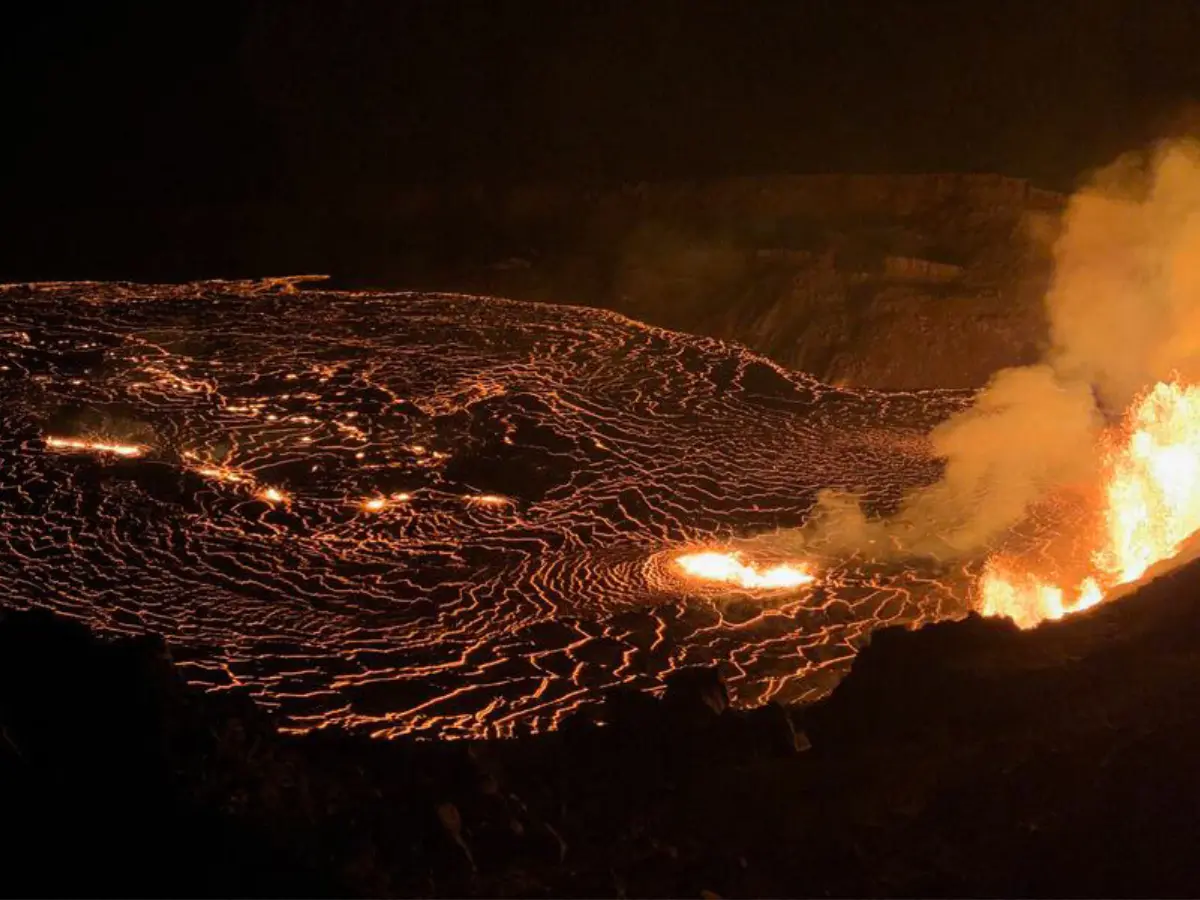
Hawaii's Kilauea volcano erupted once again on September 2, triggering a warning about "Pele's hair". This is the third time the volcano has spewed lava since December 2024, leading the US Geological Survey (USGS) to give it the name Episode 32. Located at Hawai'i Volcanoes National Park, the Kilauea volcano eruption continued for over 13 hours and stopped at 2:01 am ET. The lava spewed in the eruption went up as high as 500 feet, and created a cloud of smoke that rose 10,000 feet above Hawaii's Big Island. At the summit of the volcano is a crater called Halemaʻumaʻu that is shaped like a bowl. The lava released was so much that it covered 40 to 50 per cent of the crater. However, the hot lava itself does not pose any danger to the people on the island, as per the USGS. But, it has warned about "Pele's hair", an aftermath of volcanic eruptions.
What is Pele's hair?
According to the USGS, the lava can turn into tiny shards and travel for miles, and pose a threat to humans who come in contact with this "Pele's hair." These strands look like thin glass and enter the water, flowing down for nearly 20 kilometres. Coming in contact with them can cause skin and eye irritation. They can also enter drinking water, creating further problems. People near the Big Island have been told to stay away from the site and the national park. Also Read: 'Ryo Tatsuki was right': 8.7 earthquake in Russia sets social media abuzz with Japan's Baba Vanga's prophecy
Besides, the gas released by the volcano can also become a health risk. Experts warned that the smoke from the volcano and the gases can create a hazy smog called vog, which can be hazardous to health. USGS issued a statement on the volcanic eruption on Tuesday, and said, "High levels of volcanic gas—primarily water vapour (H2O), carbon dioxide (CO2), and sulfur dioxide (SO2)—are one hazard of concern, as this hazard can have far-reaching effects downwind." The continuous release of sulfur dioxide following a volcanic eruption triggers a reaction when it mixes with the atmosphere. This interaction between SO2 and the atmosphere leads to the creation of vog. Also Read: Hawaii tsunami warning: Cruise ships sail off leaving 600 passengers behind following 8.7 magnitude Russia earthquake
Even though the volcanic gases coming out of Kilauea dropped after the eruption stopped, the volume of gas that was coming out during the release of the lava was so high that it created a conducive environment for vog to form. This led to over 50,000 tons of vog being released during the day. Experts warn that inhaling vog can cause respiratory issues, headaches, sore throat, irritate the skin and worsen heart conditions.

