&imwidth=800&imheight=600&format=webp&quality=medium "PHOTO: Ethiopian volcano eruption for first time in 12,000 years captured from space: Could Africa split be to blame?")
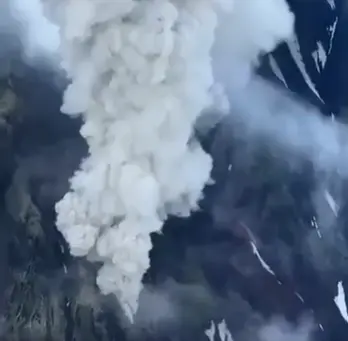
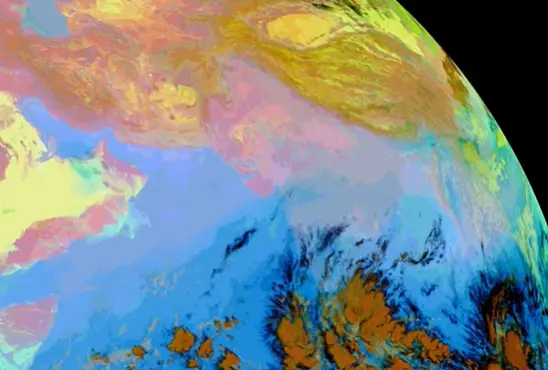
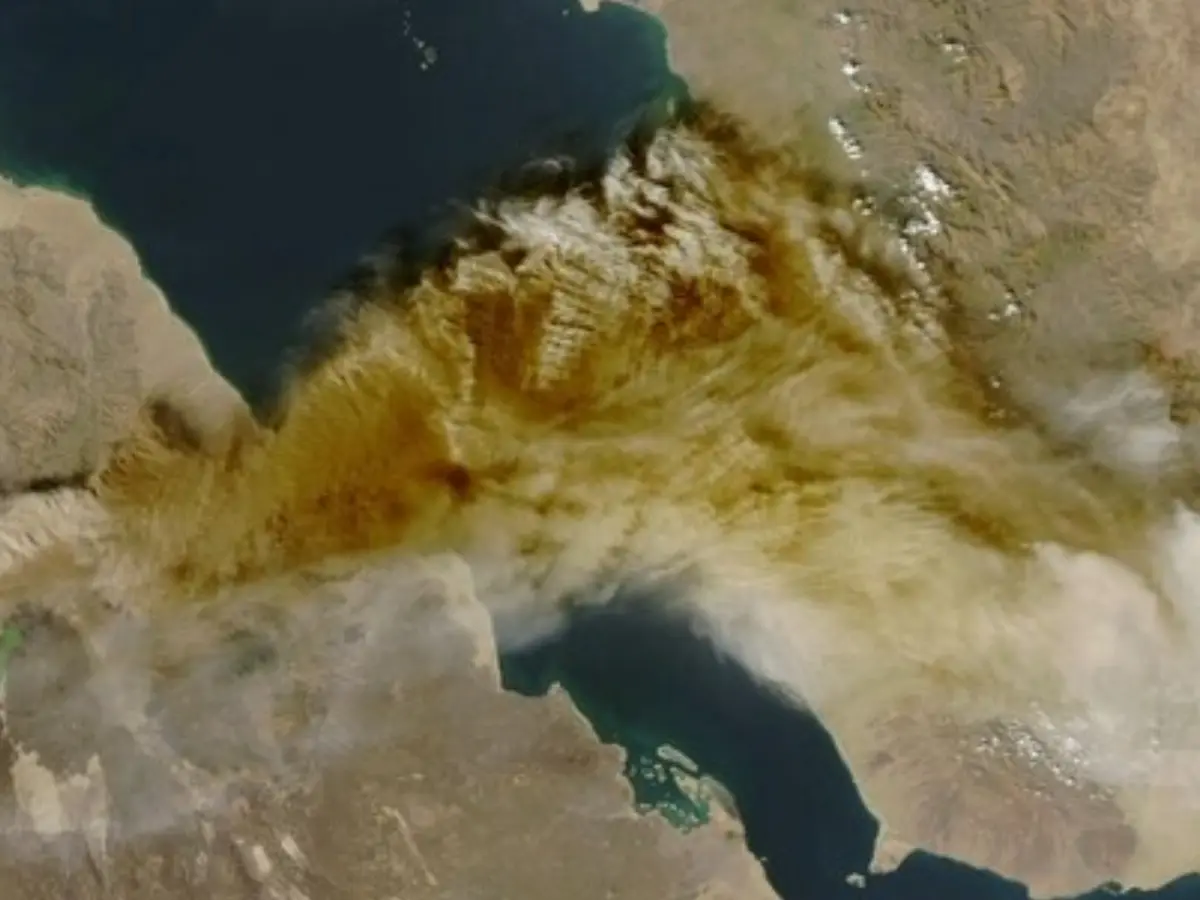
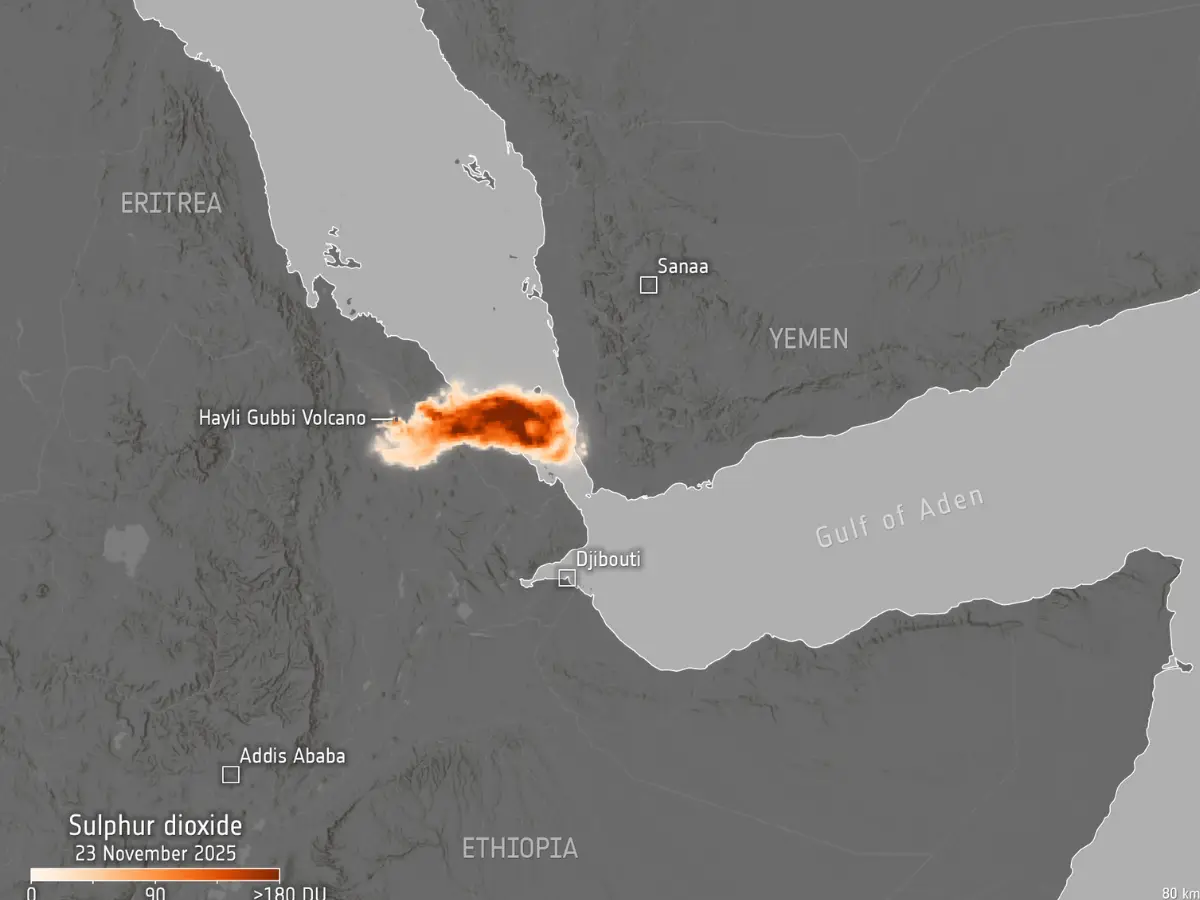
Images of the Ethiopian volcano that erupted for the first time in nearly 12,000 years on Sunday (Nov 23) were captured by satellites. The ash cloud from the eruption reached at least 45,000 feet in height and was visible from space. The visuals show the cloud drifting towards the northeast soon after the eruption. The smoke entered northern India and China on Monday. The Hayli Gubbi volcano in the Afar region of northern Ethiopia erupted at around 8:30 am UTC (2 pm IST) and the explosive phase continued for about 12 hours, according to the Toulouse Volcanic Ash Advisory Centre (VAAC) in France.
This is the first known eruption of the Hayli Gubbi volcano in the Holocene epoch. This time period started at the end of the last ice age, nearly 11,700 years ago. A volcano is declared extinct if it skips an eruption in any epoch. The volcano is located in the Erta Ale Range, which is part of the East African Rift System. The range comprises a chain of volcanoes, and more could be at risk of eruption because of the tectonic movement in the system.

Africa is splitting - Could it have caused Ethiopia volcano to erupt?
Notably, a portion of the East African Rift System is experiencing a major tectonic shift, which will eventually split Africa into two. The impact will be such that new oceans will be formed. The two landmasses would have a bigger chunk with Egypt, Algeria, Nigeria, Ghana and Namibia, with the smaller piece consisting of Somalia, Kenya, Tanzania, Mozambique and a large portion of Ethiopia. This will take over a million years to happen, but the signs could be showing in the form of volcanic eruptions such as the Hayli Gubbi. Meanwhile, the Erta Ale volcano in the range has been continuously active since at least 1967.
Explaining how a volcano that has been dormant for thousands of years erupted suddenly, Arianna Soldati, a volcanologist at North Carolina State University, told Scientific American, "So long as there are still the conditions for magma to form, a volcano can still have an eruption even if it hasn’t had one in 1,000 years, 10,000 years."