&imwidth=800&imheight=600&format=webp&quality=medium "13,000ft-deep secret: Scientists discover oxygen in the darkest region where it shouldn't exist")
Scientists have discovered rich deposits of nickel, manganese, copper, zinc, and cobalt 13,123 feet below the surface of the ocean between Hawaii and the western coast of Mexico. This zone is known as the Pacific Ocean’s Clarion-Clipperton Zone (CCZ), and stretches in a 4.5 million-kilometre-square area. Besides the vibrant ecosystem, this region also contains rocks known as polymetallic nodules. These rocks are filled with these precious metals that can help power green energy. However, a study has found that these metals are also capable of producing oxygen in the darkest regions of the oceans. Researchers call it dark oxygen, as it is born in a region where sunlight doesn't reach. They say that this discovery can change the belief about how life began on Earth, and also how it might be born on other bodies in the Solar System, such as Enceladus or Europa, Saturn and Jupiter's icy moons, respectively. The research was published in the journal Nature Geoscience. Also Read: Thousands of barrels with mysterious chemical found in the ocean in California cause major scare
The study authors said that past research has shown that Earth’s oxygen supply began with photosynthetic organisms. “For aerobic life to begin on the planet, there had to be oxygen," Andrew Sweetman, deep-sea ecologist with the Scottish Association for Marine Science and lead author of the study, said in a statement. But now that they know that oxygen can also be produced in the deep sea, where there is no sunlight, scientists say they need to reconsider where aerobic life could have begun. Nearly 10 years ago, Sweetman noted that oxygen levels decreased as they went deeper into the ocean. But then, in 2013, scientists noticed higher levels of oxygen in the CCZ. At the time, there was a glitch in the data or a fault with the systems. Also Read: Scientists surprised to see organism 'alive and moving' inside Arctic Ocean that they thought was dead
“Battery in a rock” located deep inside the ocean?

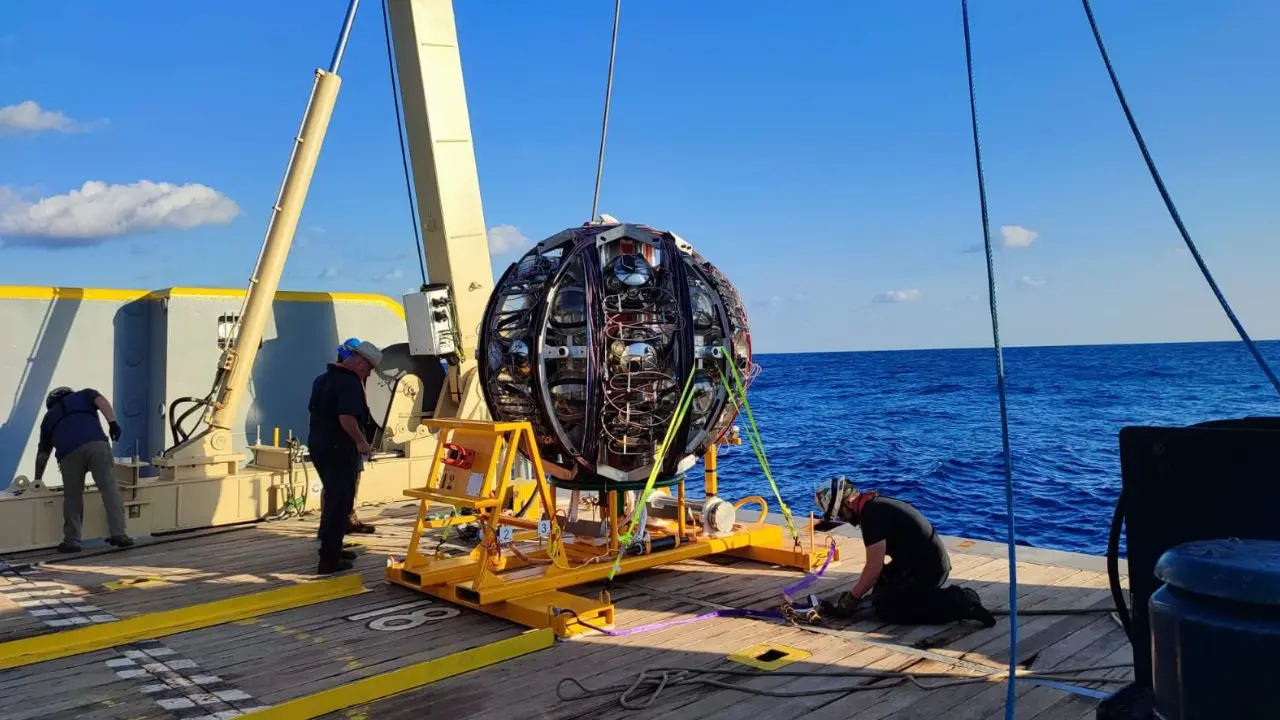
However, later analysis and further research showed that the region was producing oxygen. Mining companies refer to these rocks with metals as a “battery in a rock.” This kicked off a new idea in Sweetman's mind. He proposed that these nodules were, for some reason, acting as a kind of “geobattery”. This was supposedly being done by separating hydrogen and oxygen via seawater electrolysis. Then in 2023, he recreated the condition in a lab after a study found that various bacteria and archaea can create “dark oxygen." He killed any microorganisms with mercury chloride, and was surprised to see that oxygen levels were rising. Sweetman also found a voltage of roughly 0.95 volts on the surface of these nodules.
This has further added fuel to the debate that these nodules can solve the world's energy problems. Mining companies want to extract these metals, but experts from 25 countries have asked the International Seabed Authority (ISA) Council to press pause on any operations until the consequences of such an extraction are clear.