&imwidth=800&imheight=600&format=webp&quality=medium "NASA images show world's largest iceberg, on the move for 40 years, on the verge of vanishing")
An iceberg that has been on a journey for 40 years, drifting away in the cold waters, getting stuck, freeing itself and then threatening an entire island as it reached its end time. Latest images of A23a, formerly the world's largest iceberg, show that it has turned into a blob of "blue mush" with stripes on it, signalling that it will soon vanish. The iceberg broke off from Antarctica's Filchner-Ronne Ice Sheet in the summer of 1986. It was three times larger than New York City, and was dubbed the "queen of icebergs." But now, it is on the verge of disappearing forever as it travels through the warmer waters of the Atlantic Ocean. After A23a started floating freely in 1986, it got stuck on the ocean floor and remained there till 2020. After breaking free, it once again set out on an unknown trip and kept moving farther away from Antarctica. However, it got caught in a massive ocean current, or gyre, and kept spinning in one place before finally breaking free in December 2024.
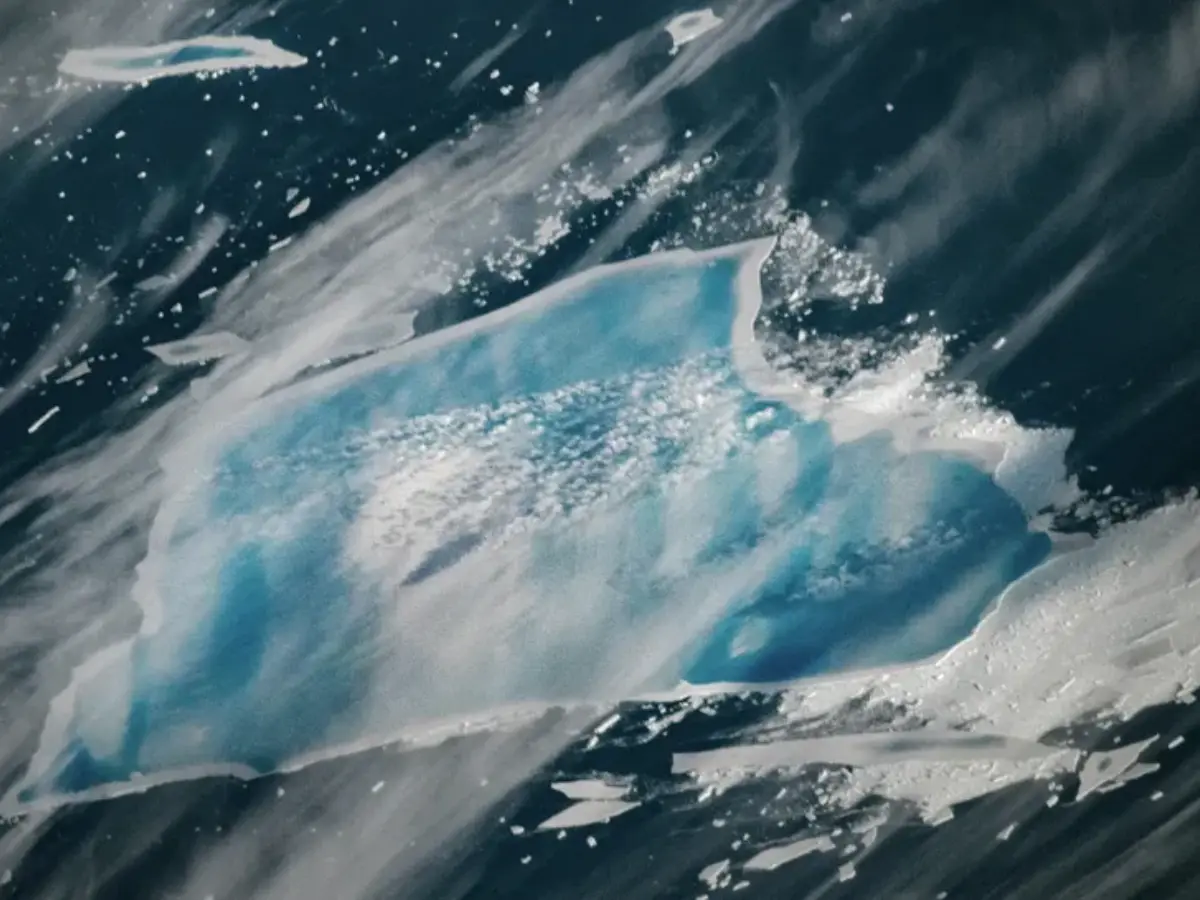
In 2025, it threatened to crash into the island of South Georgia. Thankfully, it broke apart before it could reach the island. As it moved towards South America, the warmer Atlantic waters have led to it melting away. NASA's Terra satellite captured new images of iceberg A23a on December 26, looking nothing like its former self. The startling images show that it is only around a third of its original size and is covered with pools of blue water. Thick borders of white ice, dubbed "ramparts", surround the waters around the iceberg. A pool of grey sludge, known as ice melange, seems to have leaked from under the iceberg and can be seen in the images. Hundreds of smaller bergs have broken off its edges and can be seen in the waters.
Also Read: Major catastrophe unfolding in Antarctica as hundreds of earthquakes slam Doomsday Glacier
Also Read: Doomsday gets closer: Cracks on Thwaites Glacier have doubled in two decades

What is blue mush seen on A23a iceberg?
The "blue mush" is evidence that the iceberg is nearing its death. When surface ice loses its structural integrity, melt ponds form, which is what the blue mush is, according to Ted Scambos, a climate scientist at the University of Colorado Boulder. He added in a NASA statement that the streaks are likely caused by the "weight of the water sitting inside cracks in the ice and forcing them open." The underside of the iceberg has grooves carved over several hundred years as it moved over the ground while still attached to the Filchner-Ronne Ice Sheet. A23a has been named the "world's largest iceberg" throughout its lifespan, and as recently as 2023.