&imwidth=800&imheight=600&format=webp&quality=medium "Watch | 700 kmph in two seconds: Chinese train smashes world speed record")
China set a new world record by accelerating a maglev train to reach a speed of 700 km/h in just two seconds, becoming the first country to achieve the feat using superconducting electric maglev systems. Scientists at China's National University of Defence Technology conducted a test on a magnetic levitation train and were able to accelerate a vehicle weighing around 1,000 kg to reach such a fast speed.
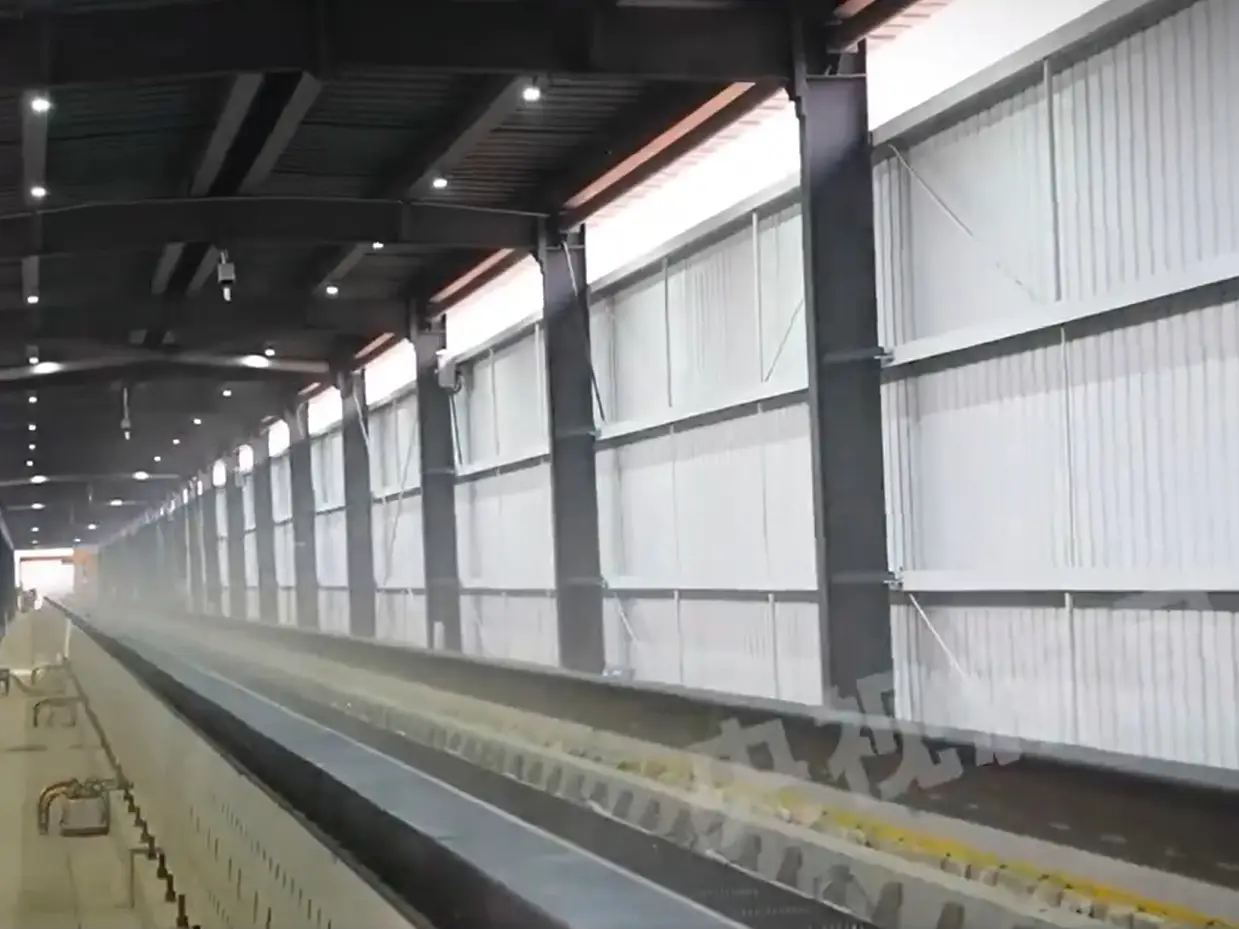
The test was conducted on a 400-metre track, and it successfully demonstrated the acceleration and deceleration of such a fast-moving maglev train safely, making it the quickest superconducting electric maglev train in the world.
The footage of the experimental run became viral across social media and Chinese news outlets, in which a chassis-like vehicle can be seen zooming across the track, leaving a misty trail.

The experiment also showcased the future of travel using maglev technology in hyperloop, where trains move through vacuum-sealed tubes at incredible speed.
Maglev trains do not use conventional steel rails. Instead, they levitate above a specially built guideway using powerful magnetic forces. Because the train does not touch the track, friction is almost completely eliminated. This enables much higher speeds while reducing noise, vibration and mechanical wear.
Electromagnets fitted to both the train and the guideway either repel or attract each other, lifting the train a few centimetres above the surface and removing all wheel-to-rail contact. Additional magnets ensure stability by keeping the train centred on the guideway and preventing side-to-side movement, even at very high speeds.
Propulsion is provided by a linear motor rather than a traditional rotating engine. Electric currents are switched on and off in the guideway magnets, creating a travelling magnetic field that pulls the train forward and pushes it from behind.
China operates the Shanghai maglev, which links the city to Pudong International Airport and reaches speeds of around 430 kmph, making it among the fastest commercial trains in service. The country has also tested next-generation high-speed maglev prototypes designed to achieve speeds of up to 600 kmph.