Time to study universe's rarest galaxies? Hubble Space Telescope captures its largest image ever

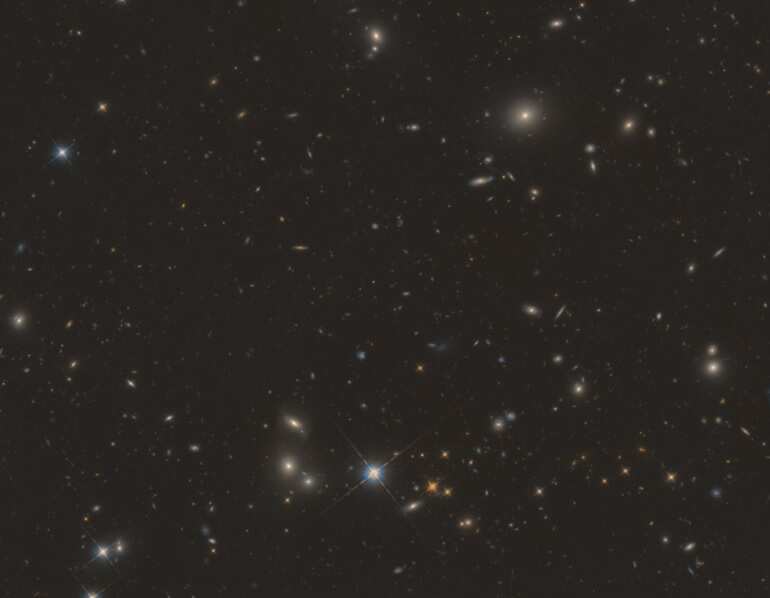
Hubble Space Telescope captures its largest image ever
The Hubble Space Telescope has been crucial in charting out the universe and since its launch in 1990, the telescope has sent a huge number of pictures for NASA to study. Over the years, the pictures have helped NASA and a number of researchers to understand the universe much better and with time, the technology has also advanced by leaps and bounds. An international team of scientists have now released what is being considered as the largest near-infrared image taken by the Hubble Space Telescope. It covers a huge amount of area, and the researchers believe that the image can help in understanding star-forming regions of the universe and extremely distant galaxies.
The researchers at the University of Toronto came up with a new technique known as Drift and Shift (DASH) to catch the image and according to their study, it was able to create an image almost eight times larger than the normal pictures taken by the Hubble telescope.
According to a paper to be published in The Astrophysical Journal, the technique helps the Hubble to take eight pictures per orbit instead of one picture resulting in a massive increase in data and the images are finally put together to create a panoramic view.
"Since its launch more than 30 years ago, the Hubble Space Telescope has led a renaissance in the study of how galaxies have changed in the last 10-billion years of the universe," said Lamiya Mowla from the University of Toronto.
"The 3D-DASH programme extends Hubble's legacy in wide-area imaging so we can begin to unravel the mysteries of the galaxies beyond our own," he added.
WATCH WION LIVE HERE
You can now write for wionews.com and be a part of the community. Share your stories and opinions with us here.