Scientists have found largest fossil of trapdoor spider in Australia. Take a look!

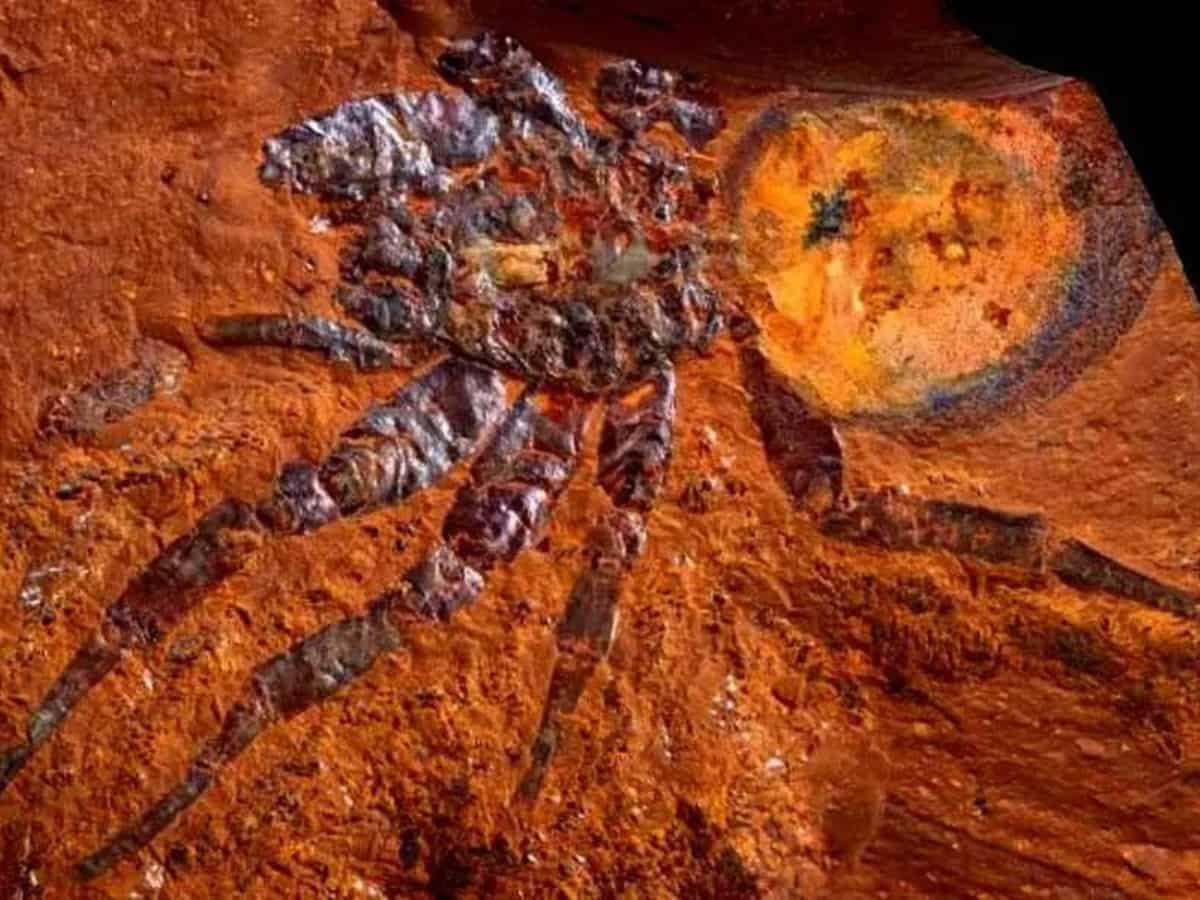
Fossil of trapdoor spider found in Australia
Scientists have discovered the fossil of a large ‘trapdoor’ spider in Australia. This is the fourth giant spider fossil to be found in Australia, but it is not just anotherfossilised spider. This is the world’s first fossil that belongs to the large brush-footed trapdoor spider family, Barychelidae. This new species used to live in the Miocene 11 to 16 million years ago, and is officially named Megamonodontium mccluskyi.
The findings were led by the Australian Museum (AM) and University of New South Wales (UNSW) palaeontologist Dr Matthew McCurry.
The spider fossil was found at McGraths in New South Wales. McGraths is a fossil site known for its iron-rich rock called “goethite”. This spider fossil, which is similar to Monodontium, is five times larger than the regular species. The spider was named after Dr Simon McClusky who found the specimen.
Why is this discovery significant?
Dr. McCurry said that very few fossil spiders have been found in Australia, making the discovery very significant.
"Only four spider fossils have ever been found throughout the whole continent, which has made it difficult for scientists to understand their evolutionary history. That is why this discovery is so significant; it reveals new information about the extinction of spiders and fills a gap in our understanding of the past."
"The closest living relative of this fossil now lives in wet forests in Singapore through to Papua New Guinea. This suggests that the group once occupied similar environments in mainland Australia but have subsequently gone extinct as Australia became more arid."
Queensland Museum arachnologist, Dr. Robert Raven, who was the supervising author of the study, said this was the largest fossil spider to be found in Australia.
"Not only is it the largest fossilised spider to be found in Australia but it is the first fossil of the family Barychelidae that has been found worldwide."
"There are around 300 species of brush-footed trapdoor spiders alive today, but they don't seem to become fossils very often. This could be because they spend so much time inside burrows and so aren't in the right environment to be fossilised."
The discovery might help in finding clues about how Australia changed over time, as the landscape dramatically fried out.
There are no Monodontium or Megamonodontium spiders living in Australia today, suggesting that aridification during and after the Miocene was responsible for locally wiping out some spider lineages.
(With inputs from agencies)
WATCH WION LIVE HERE
You can now write for wionews.com and be a part of the community. Share your stories and opinions with us here.