Vladimir Putin’s Rajghat words go viral! Here's what he wrote about Mahatma Gandhi

The Russian leader referred to Gandhi’s correspondence (notably with Tolstoy) and said Gandhi’s letters spoke of a world “free from diktat and hegemony,” noting that those themes align with the principles Russia and India claim to uphold today.
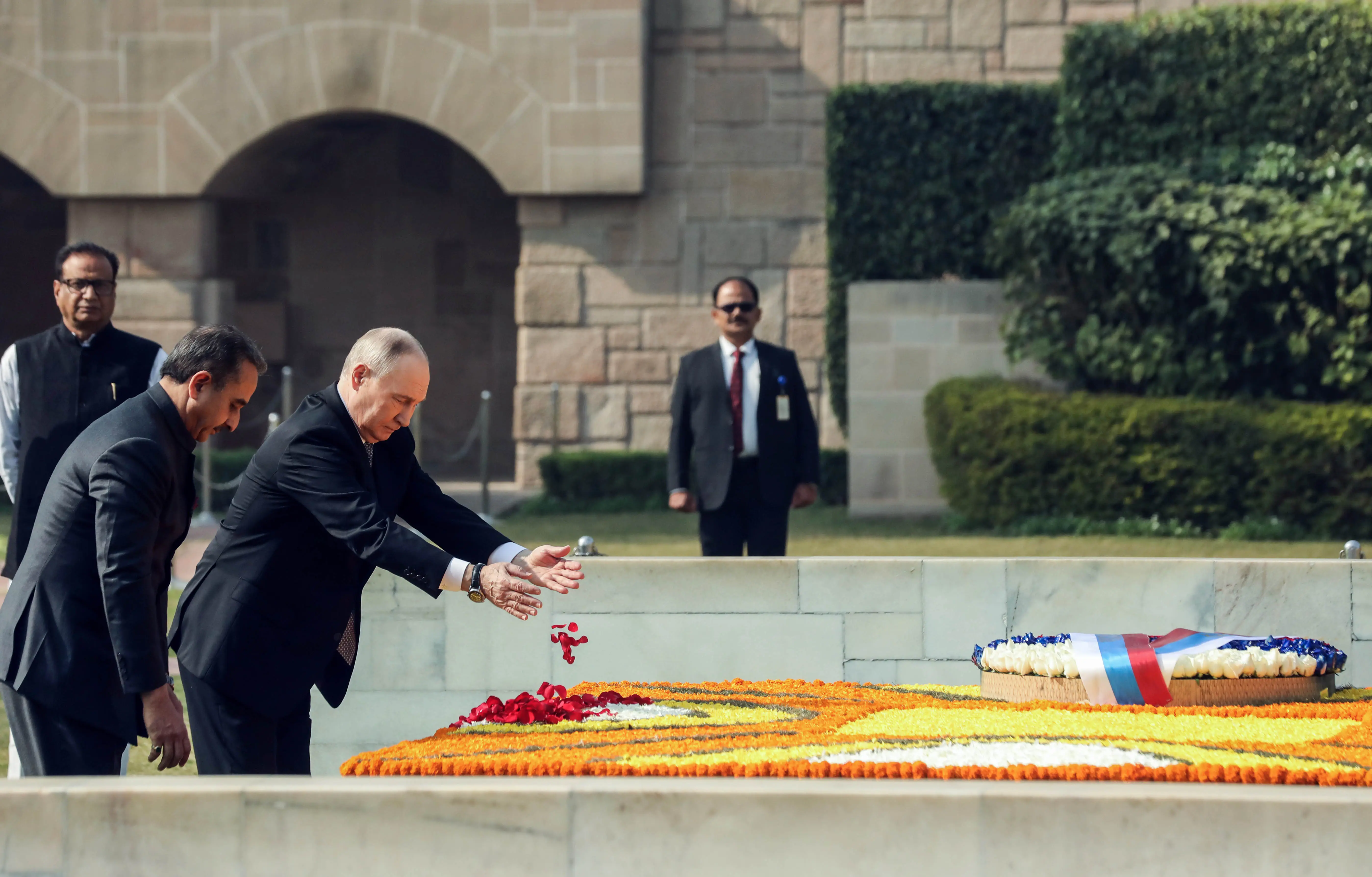
1. He paid tribute at Rajghat and signed the visitors’ book
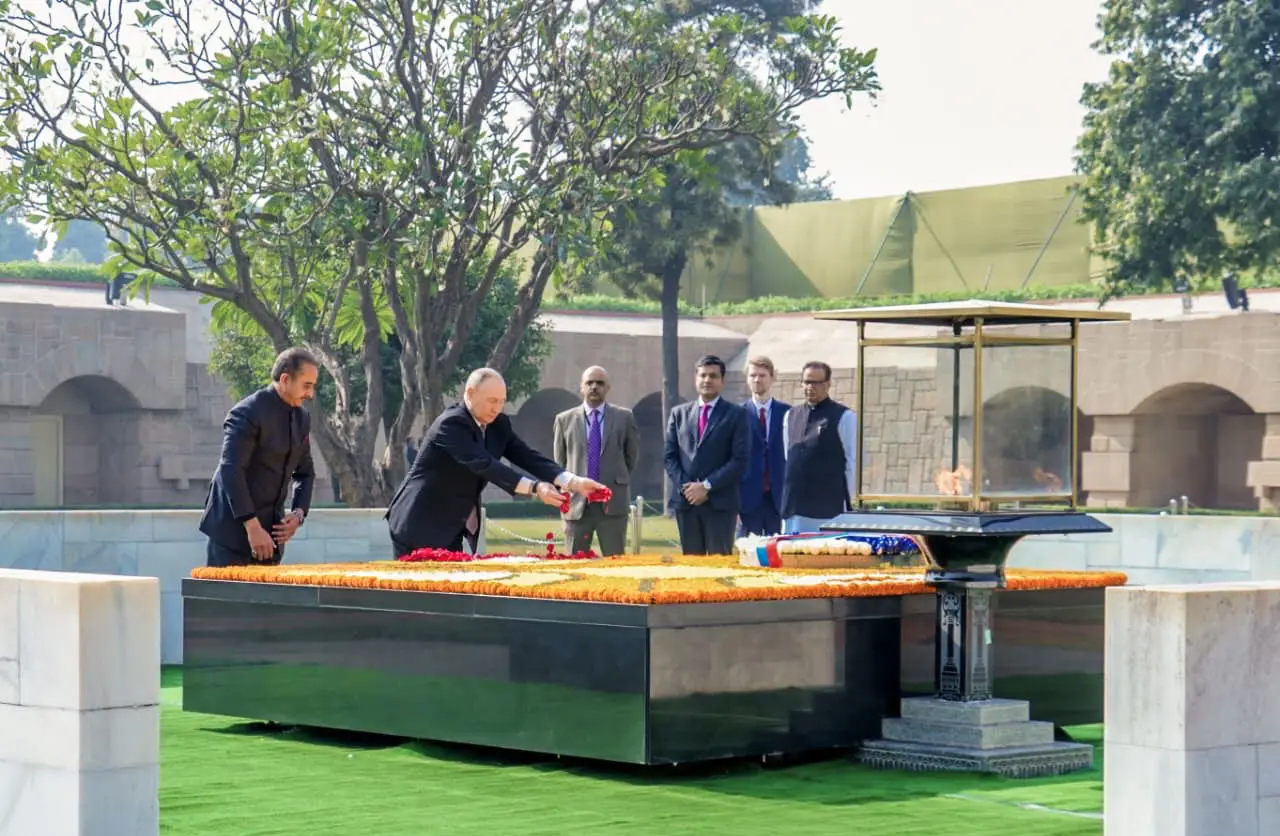
On 5 December 2025, Vladimir Putin visited Rajghat in New Delhi, laid a wreath and observed silence at Mahatma Gandhi’s memorial before writing a note in the official visitors’ book. The visit formed part of his two-day state trip for the India–Russia summit.
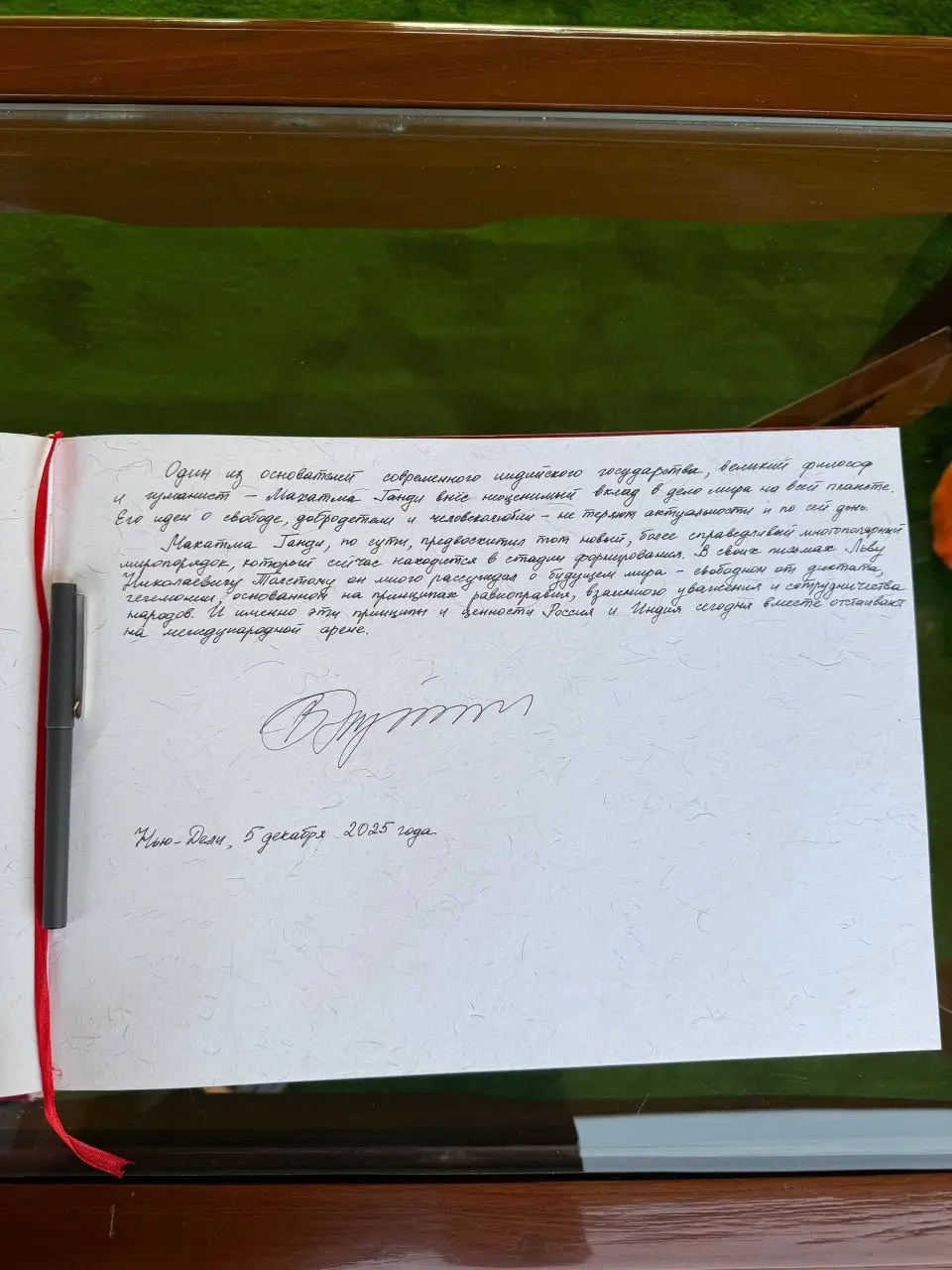
2. Putin called Gandhi “one of the founders of modern India”
In the visitors’ book he described Gandhi as “one of the founders of modern India,” praising his work as a thinker and humanist whose ideas on freedom, virtue and humanity remain relevant.
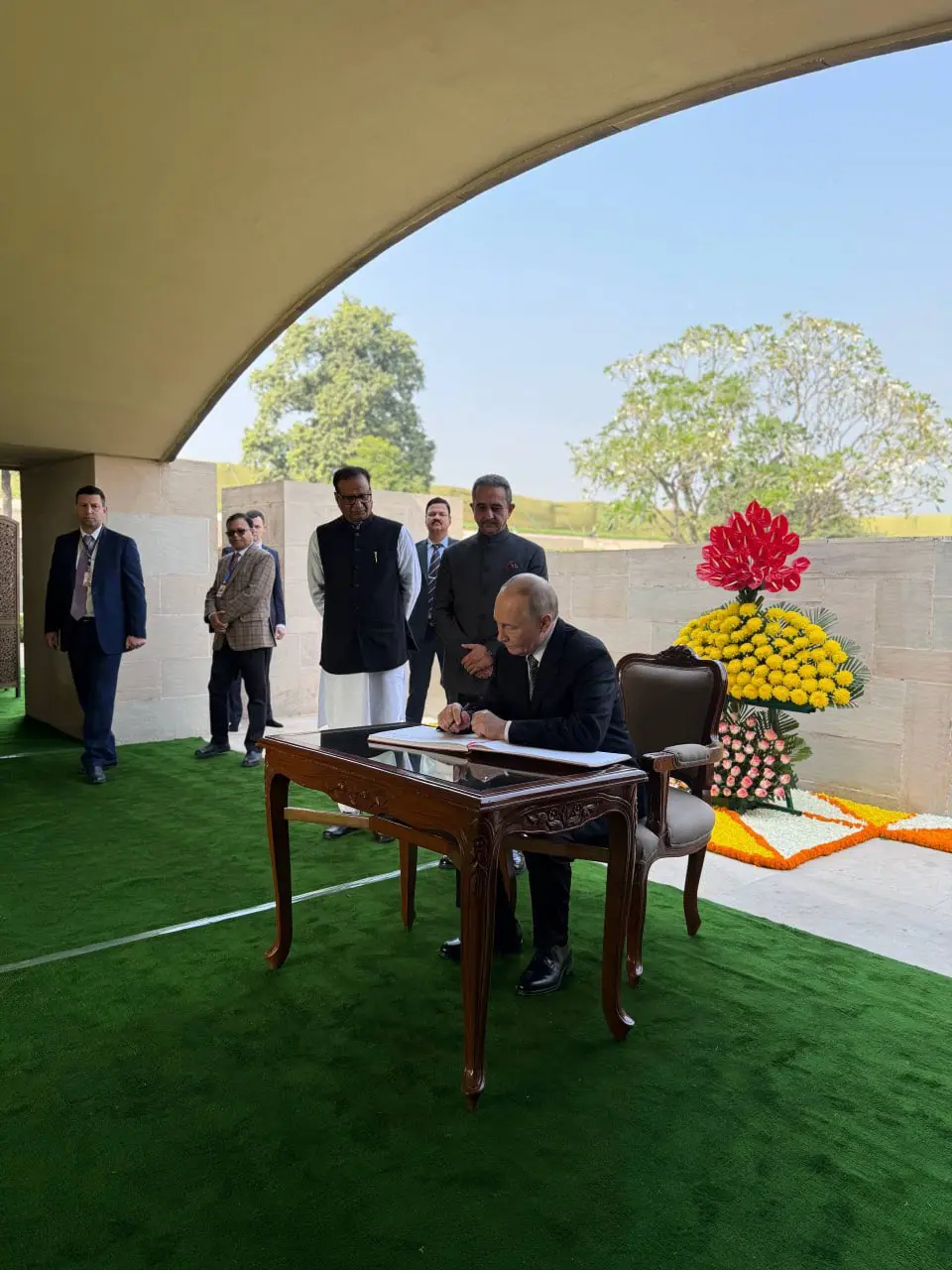
3. He wrote that Gandhi made “an invaluable contribution” to world peace
Putin explicitly credited Gandhi with an “invaluable contribution to the cause of peace on our planet through non-violence and truth,” and said that Gandhi’s influence “remains relevant to this day.”
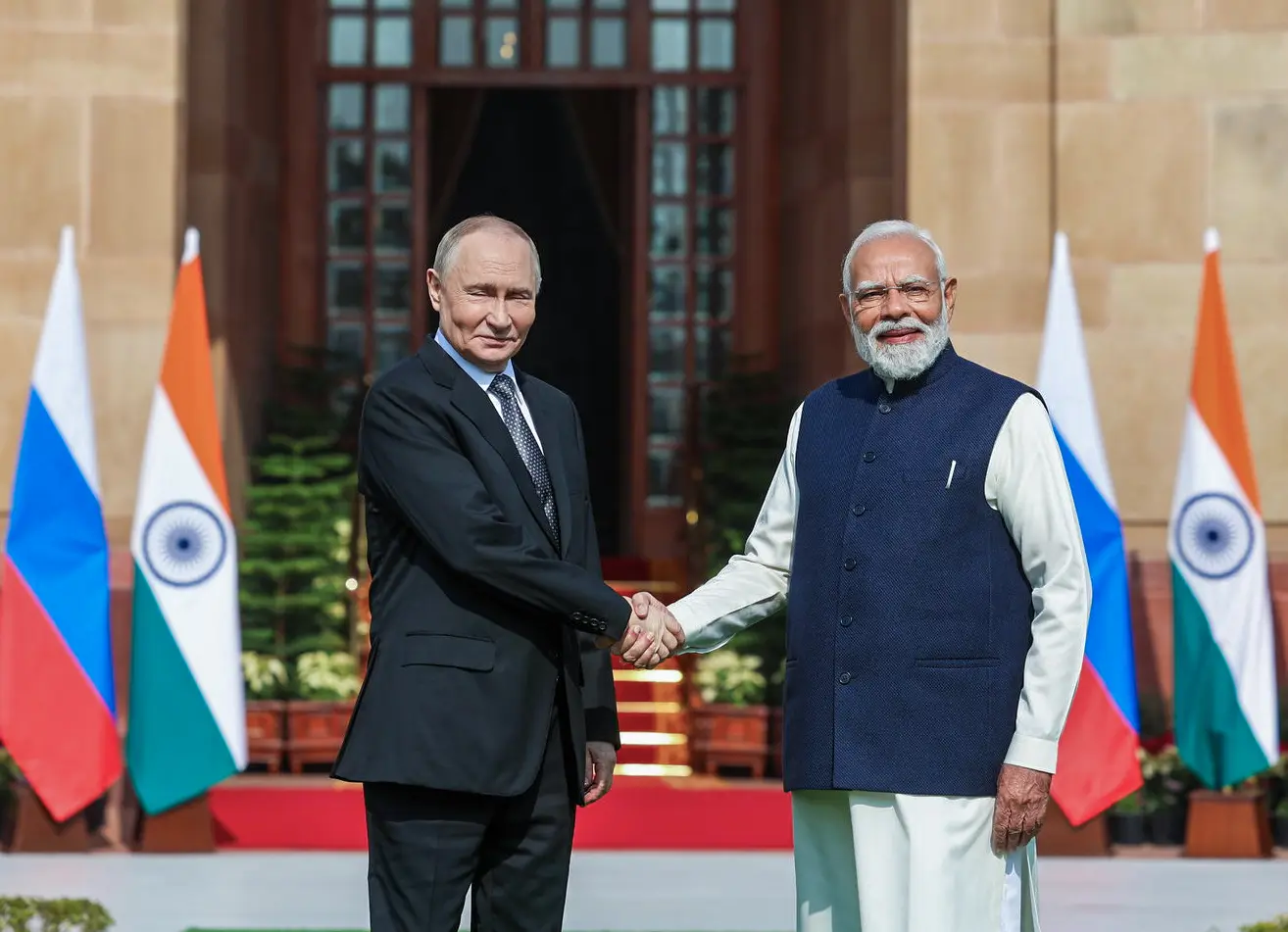
4. He linked Gandhi’s thought to a “more just multipolar world order”
The note argued that, “in many respects… Mahatma Gandhi anticipated the new, more just multipolar world order that is now taking shape,” framing Gandhi’s ideas as consonant with contemporary global shifts. This line was a focal point of his message and has been highlighted in official Russian posts about the visit.
5. Putin referenced Gandhi’s letters and ties to Russian intellectuals
The Russian leader referred to Gandhi’s correspondence (notably with Tolstoy) and said Gandhi’s letters spoke of a world “free from diktat and hegemony,” noting that those themes align with the principles Russia and India claim to uphold today.
6. The Russian MFA reposted the note publicly
The text of the visitors-book entry was shared by Russia’s Ministry of Foreign Affairs on its official X account, which published an image and translation of Putin’s lines about Gandhi’s global significance.
7. Why the message matters — diplomatic symbolism, not new policy
The wording combines respect for Gandhi’s non-violent legacy with a contemporary geopolitical framing (the “multipolar world” line). As a diplomatic gesture it emphasises cultural respect and shared narratives; it should be read as symbolic language tied to the summit, not as a statement of new policy.
)
)
)
)
)