Vanishing galaxies, cosmic mirages: The shocking illusions shaping our universe

Recently, the James Webb Space Telescope imaged a question-mark-shaped distortion caused by a rare gravitational lens, revealing how mass can turn the cosmos into a hall of mirrors.
Introduction
The universe may appear serene when seen through a telescope, but behind that calm exterior lie strange tricks of light, hidden structures, and forces that defy intuition. From galaxies that will slip beyond our reach to the mysterious pull of unseen regions, astronomy reveals that much of what we observe is shaped by distortions and illusions. These discoveries not only redefine our picture of reality but also expose how little of the cosmos we truly understand.
Light bent by gravity
One of the strangest effects in the universe is gravitational lensing, predicted by Einstein’s general relativity. Massive objects such as galaxies and clusters warp spacetime, bending light from more distant sources. This produces arcs, rings, or multiple images, including striking examples like the Einstein Cross or Einstein rings. Recently, the James Webb Space Telescope imaged a question-mark-shaped distortion caused by a rare gravitational lens, revealing how mass can turn the cosmos into a hall of mirrors.
The vastness of cosmic numbers
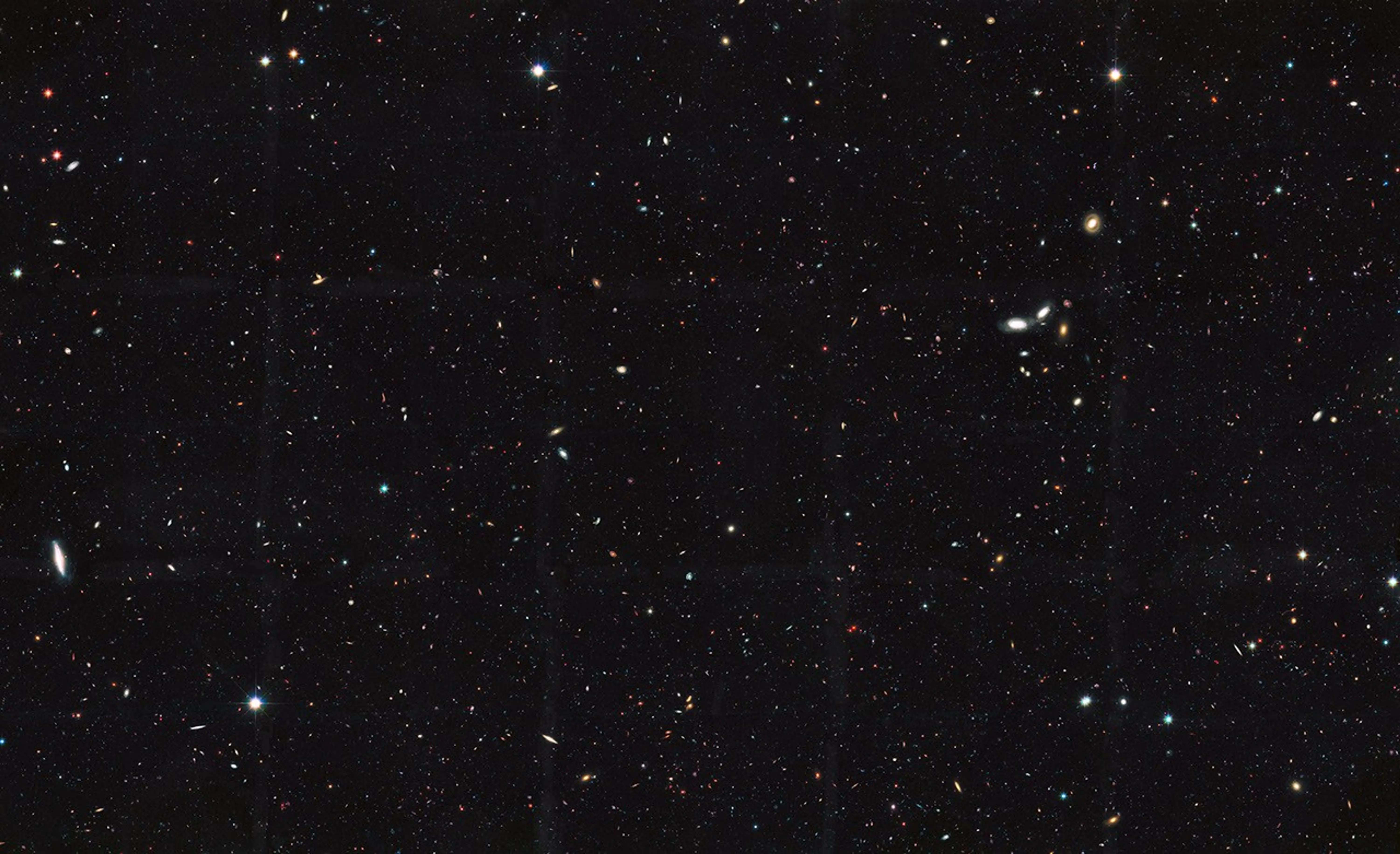
The observable universe contains about 2 trillion galaxies and roughly 10²⁴ stars, more than the grains of sand on all Earth’s beaches combined. It also holds around 10⁸⁰ hydrogen atoms, known as the Eddington number. These staggering figures highlight the immensity of the universe and the scale of what lies beyond our comprehension, dwarfing our place in cosmic history.
Galaxies slipping away
Because of dark energy, the mysterious force driving cosmic acceleration, distant galaxies are receding faster and faster. Already, over 90–95 per cent of galaxies in the observable universe are moving away so rapidly that their light will never reach us, even given infinite time. They do not disappear, but they become permanently unreachable, effectively vanishing from our cosmic future.
A web of structures and voids
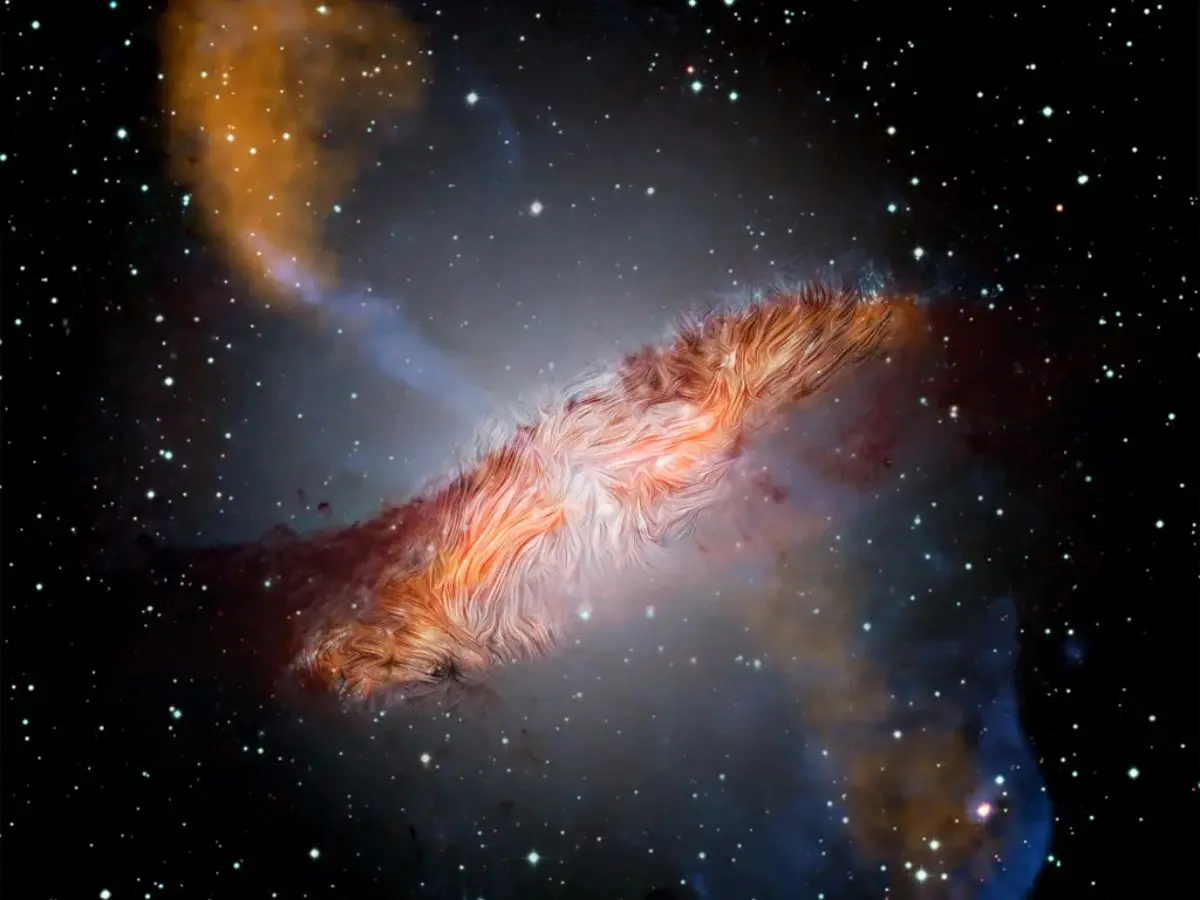
On the largest scales, the universe resembles a web. Galaxies cluster in filaments, which meet at dense nodes, while enormous voids stretch across hundreds of millions of light-years. Observations suggest our own Milky Way may sit inside an unusually large void, about 2 billion light-years across, a placement that may subtly affect measurements of cosmic expansion.
Anomalies in the ancient light
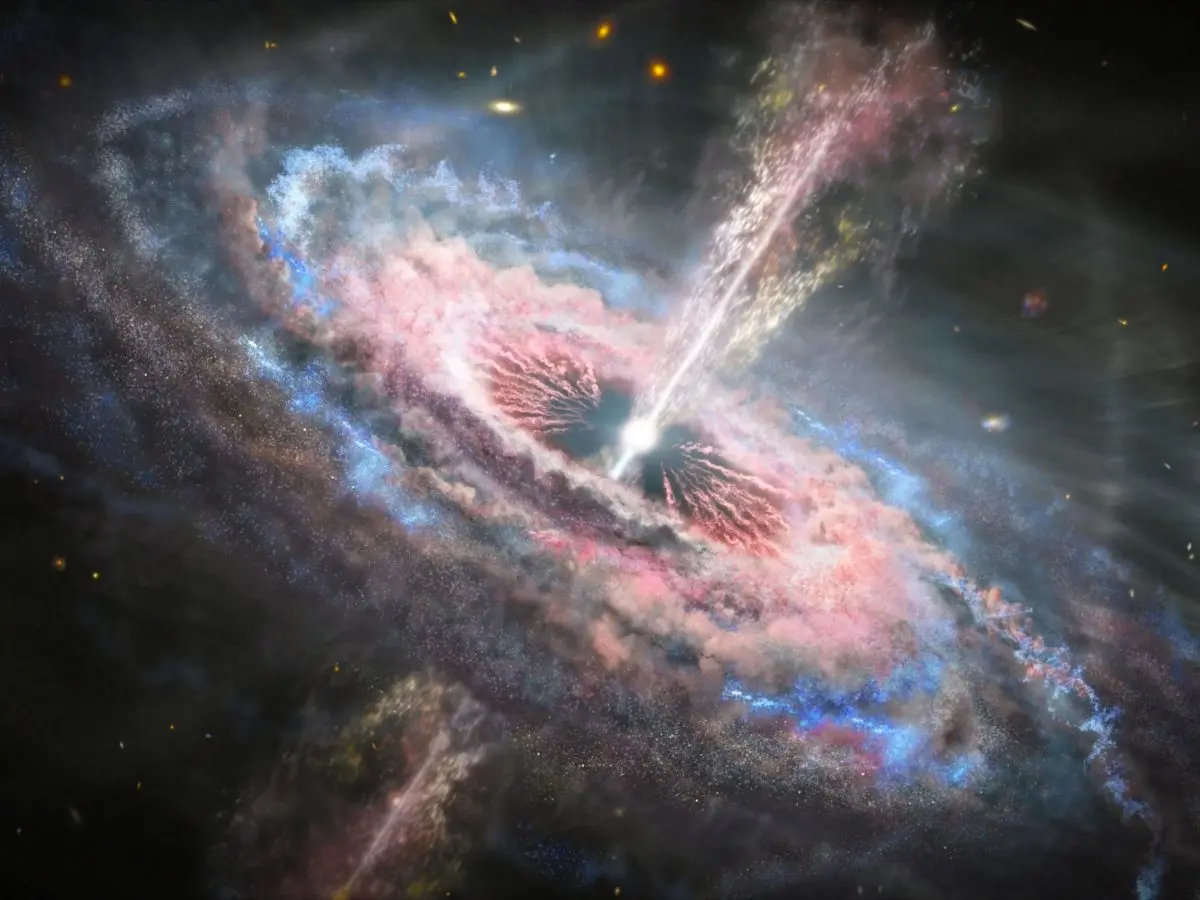
The cosmic microwave background (CMB), the faint afterglow of the Big Bang, provides a map of the universe when it was only 380,000 years old. Yet this ancient light contains anomalies. The most famous is the CMB ‘cold spot,’ a region unexpectedly cooler than surrounding areas. Some explanations point to the presence of a gigantic supervoid in that direction, while others suggest it could challenge our current cosmological models.
The pull of the great attractor
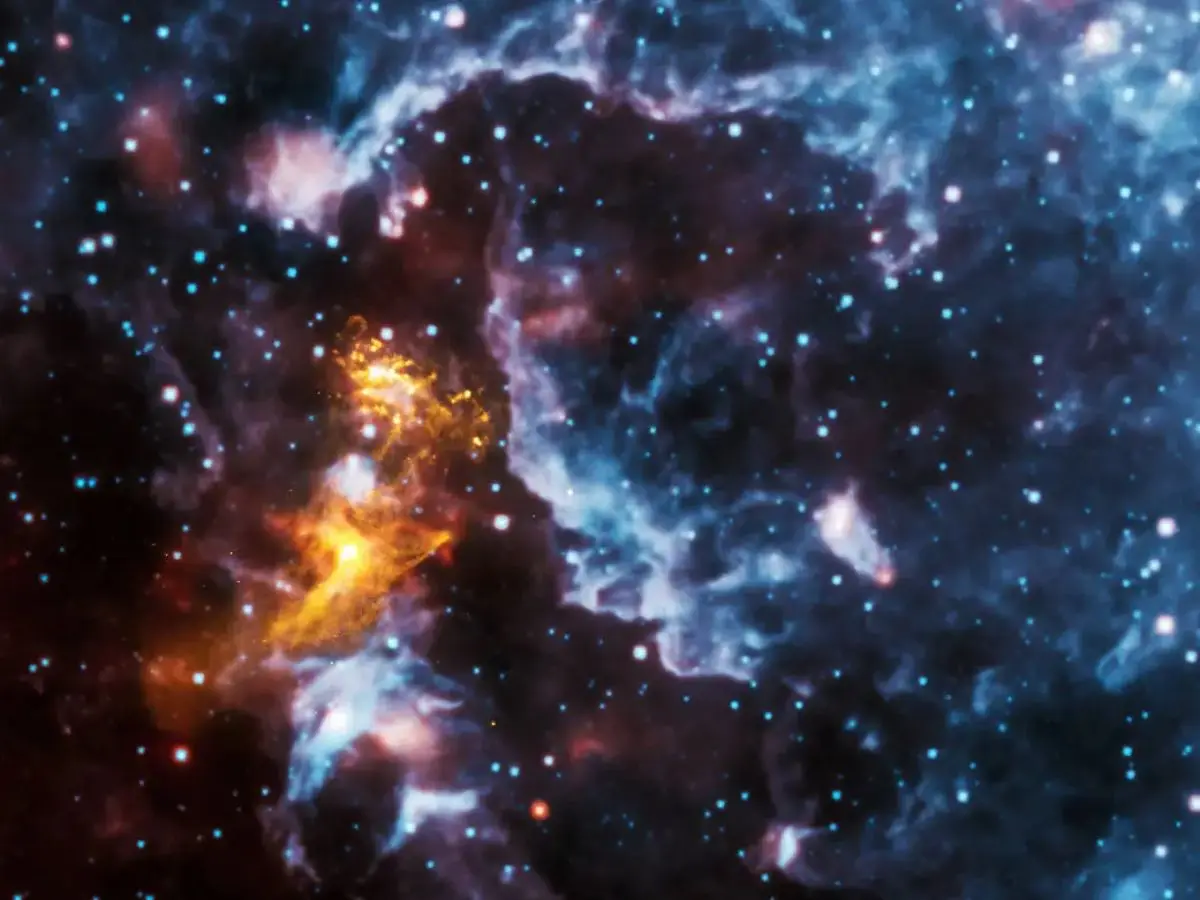
Our galaxy is not stationary. It is moving towards a region called the Great Attractor, 150–250 million light-years away, whose immense gravitational pull influences hundreds of thousands of galaxies. The region lies hidden behind the dense plane of the Milky Way, making it difficult to study directly, yet it remains one of the most powerful unseen forces shaping cosmic motion.

Beyond our horizon
Some observations hint at an even stranger possibility: that galaxy clusters may exhibit large-scale flows, perhaps influenced by structures outside our observable universe. Although controversial and debated, such phenomena remind us that our cosmic view is limited. The observable universe may only be a small fragment of a far greater reality, filled with illusions, hidden structures, and unreachable realms.
)
)
)
)
)