The rescue of Salyut 7: The day Soviet cosmonauts saved Earth from a falling space station

Its automatic docking systems, electrical networks, and communications were offline. Without intervention, the station risked burning during re-entry and scattering debris over populated regions.
Loss of Contact and a Silent Giant
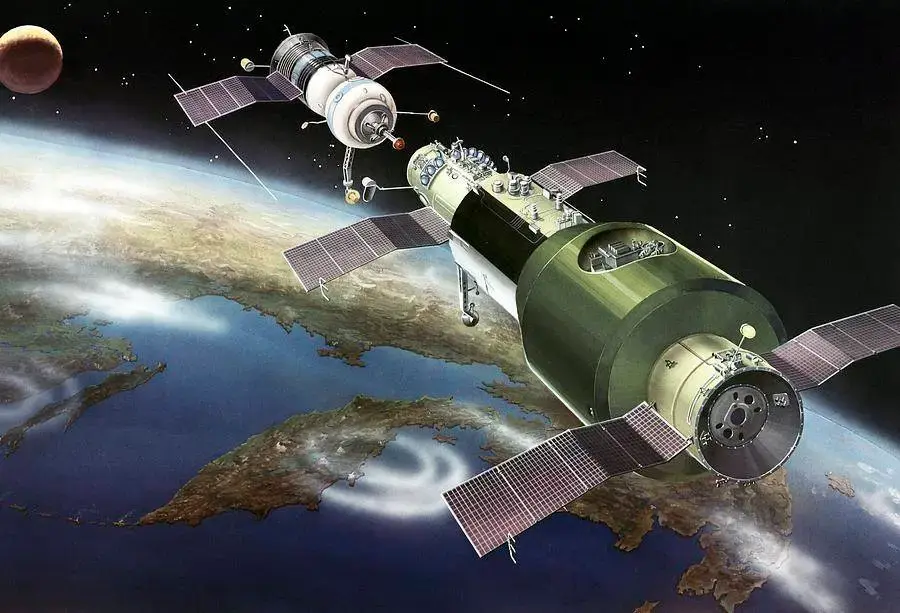
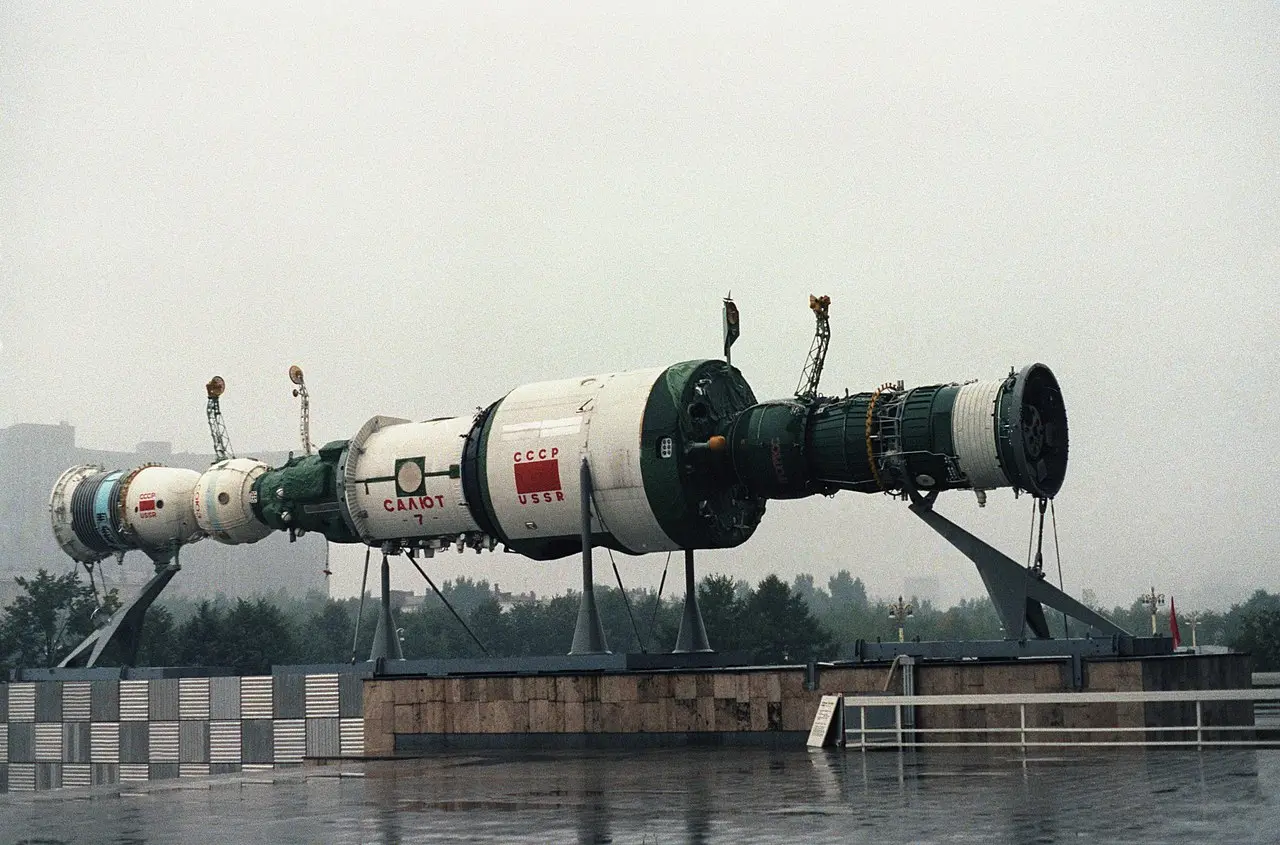
On February 11, 1985, ground controllers at the Soviet Mission Control radioed the Salyut 7 space station to check its systems. The station, unattended for months, failed to respond. The silence was ominous. With no telemetry or guidance, Salyut 7, massive, unmanned, and derelict, began to drift and tumble in orbit. Its automatic docking systems, electrical networks, and communications were offline. Without intervention, the station risked burning during re-entry and scattering debris over populated regions.
Decision to Attempt the Impossible
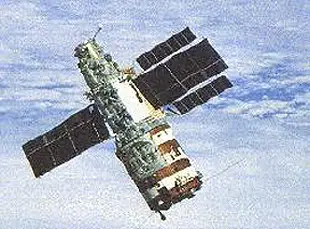
Without electronic correction of the flight trajectory, ‘Salyut 7’ became an uncontrollable 'comet' weighing 19 tons that was slowly approaching Earth, according to Gateway to Russia. Faced with that threat, not just to prestige but potentially to lives, Soviet officials resolved to launch a rescue. The task was unprecedented: dock manually with a powerless, tumbling spacecraft, restore its basic systems, and stabilise it in orbit. Cosmonauts Vladimir Dzhanibekov and Viktor Savinykh were selected for the mission aboard Soyuz T-13. The rescue plan required reconfiguring the Soyuz: removing the automatic docking apparatus to free space and adding extra supplies, fuel, cold-weather gear, and a handheld laser rangefinder.

Launch and Rendezvous
Soyuz T-13 lifted off on June 6, 1985 from Baikonur. After two days, Dzhanibekov and Savinykh closed in on Salyut 7. Without active radar or telemetry, they used visual judgement and the laser rangefinder to navigate the tumbling target. In automatic approach mode, they reduced their separation to a couple of kilometres, then switched to full manual control.
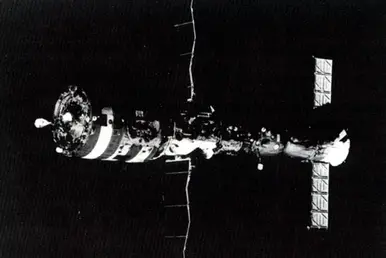
When they neared, they discovered the station’s disabled docking port pointed away. Returning to Earth was not an option, the mission depended on docking. After tense communications, Mission Control authorised a risky fly-around of the station to reposition. The manoeuvre succeeded. Dzhanibekov matched rotation, aligned his craft, and performed a soft docking with centimetre-level precision.
Entering the Dead Halls
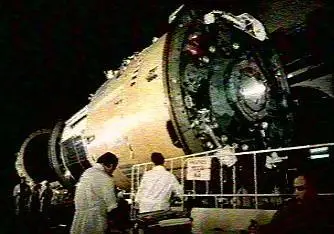
Once docked, the next threat loomed: the station was completely cold and powerless. Dzhanibekov and Savinykh equalised pressure and opened hatches cautiously. Inside, internal temperatures were near freezing, wiring brittle, and equipment degraded. Use of the Soyuz’s electrical systems to power Salyut was dangerous, any short could cripple both craft.
The risk
Their solution was to orient the station toward sunlight to activate solar arrays, then slowly revive systems. Once solar power trickled in, they restored battery charging and rebooted life-support and heating systems.
Recovery and Legacy
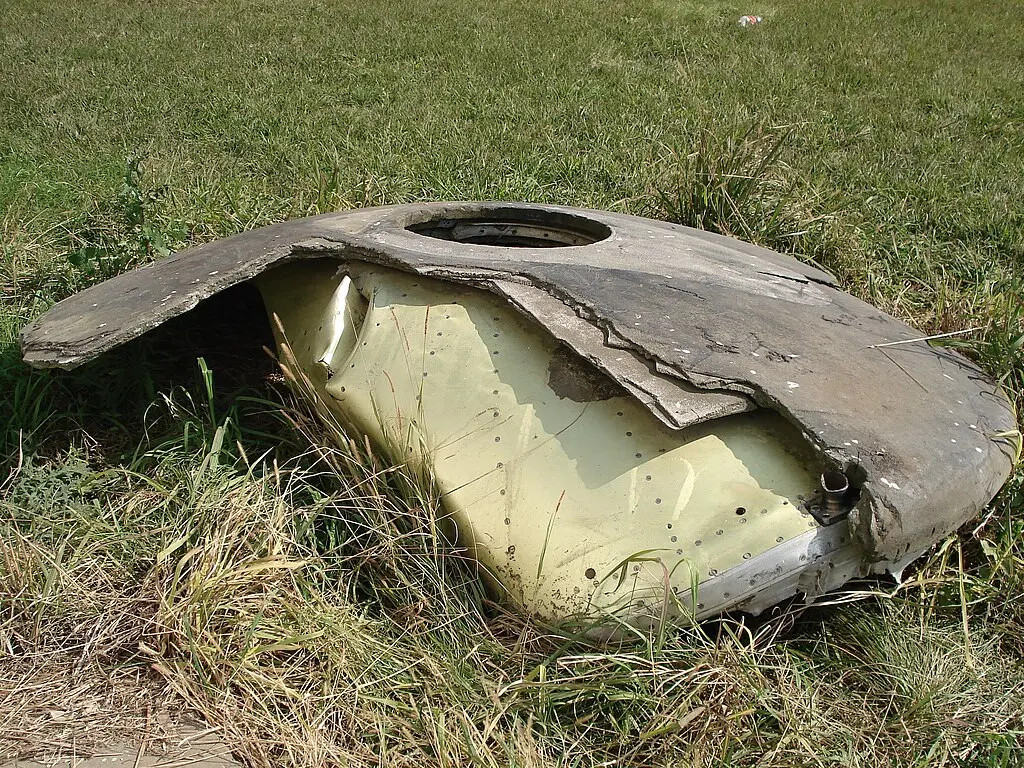
The cosmonauts remained aboard Salyut 7 for over 100 days, conducting repairs, upgrades, and experiments. Ground control regained remote commanding within a week, resuming routine operations. Eventually, on November 21, 1985, the Soyuz undocked and returned to Earth, while Salyut 7 continued to orbit. The station remained aloft until February 7, 1991, when it made an uncontrolled re-entry over Argentina, mostly burning up.
One of the most daring operations
The rescue of Salyut 7 stands as one of the most daring and technically demanding operations in human spaceflight: a mission to salvage a dead spacecraft at orbital velocity, restore life to its systems, and prevent a rogue satellite from becoming a deadly hazard above Earth.
)
)
)
)
)