Iran-US tensions: How USS Gerald R. Ford’s integrated radar suite outperforms USS Abraham Lincoln

The nuclear-powered USS Abraham Lincoln is currently operating in the Arabian Sea, while USS Gerald R. Ford is moving eastward through the Strait of Gibraltar.
Strategic Importance of Carrier Sensors
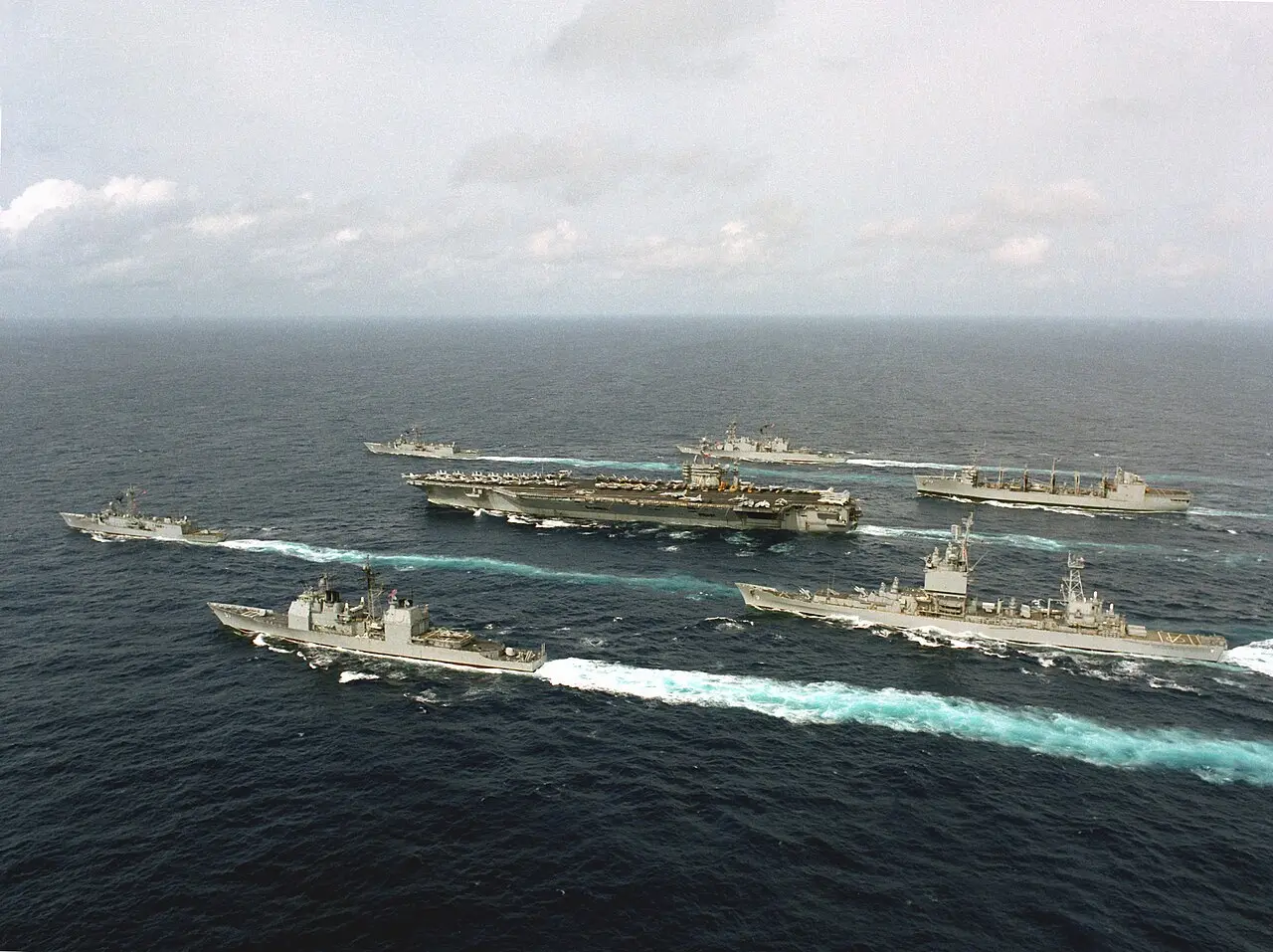
As tensions between Washington and Tehran rise, the deployment of US aircraft carriers has taken on renewed significance. The nuclear-powered USS Abraham Lincoln and USS Gerald R. Ford are both central to American naval posture in the Middle East, with Lincoln operating in the Arabian Sea and Ford transiting east through the Strait of Gibraltar. The following provides a detailed comparison of the integrated radar suites on both carriers.
Legacy Radar on USS Abraham Lincoln
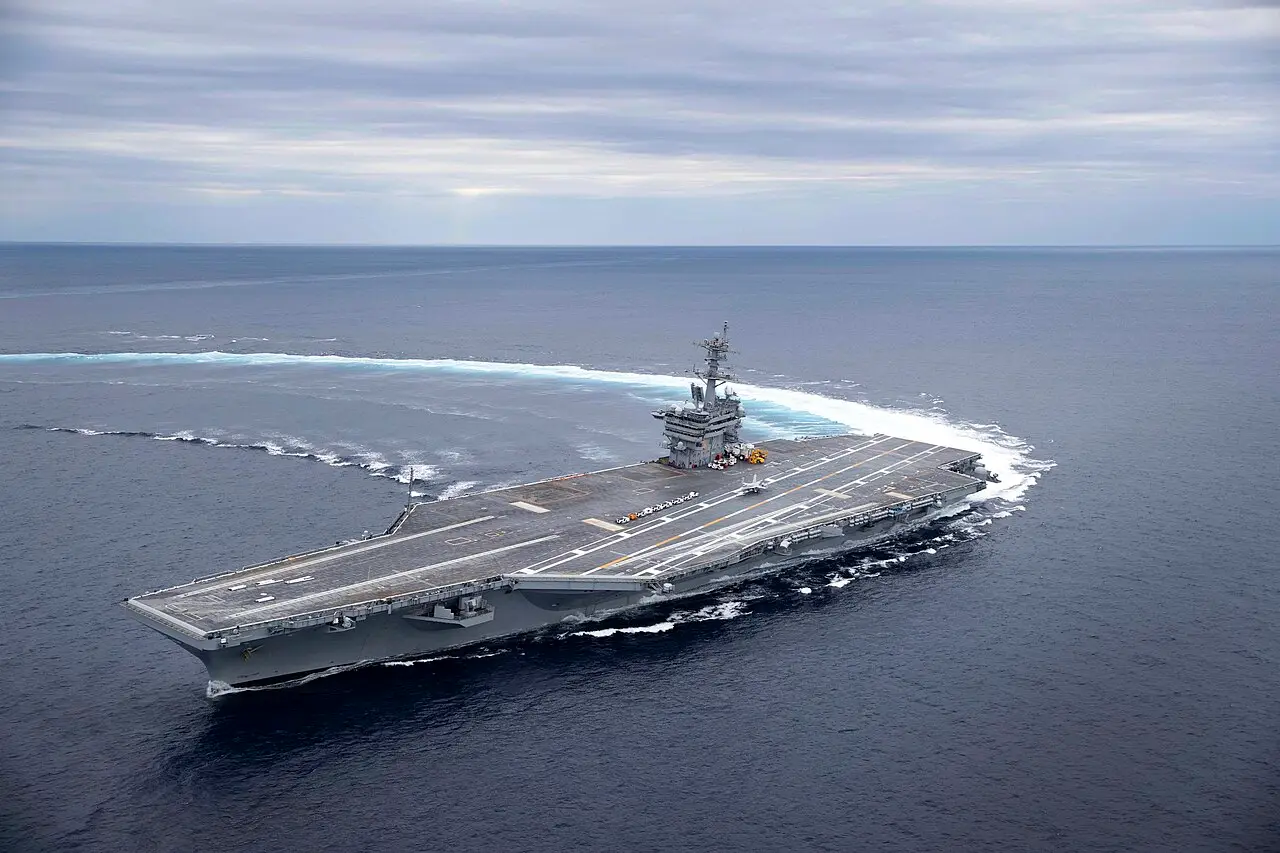
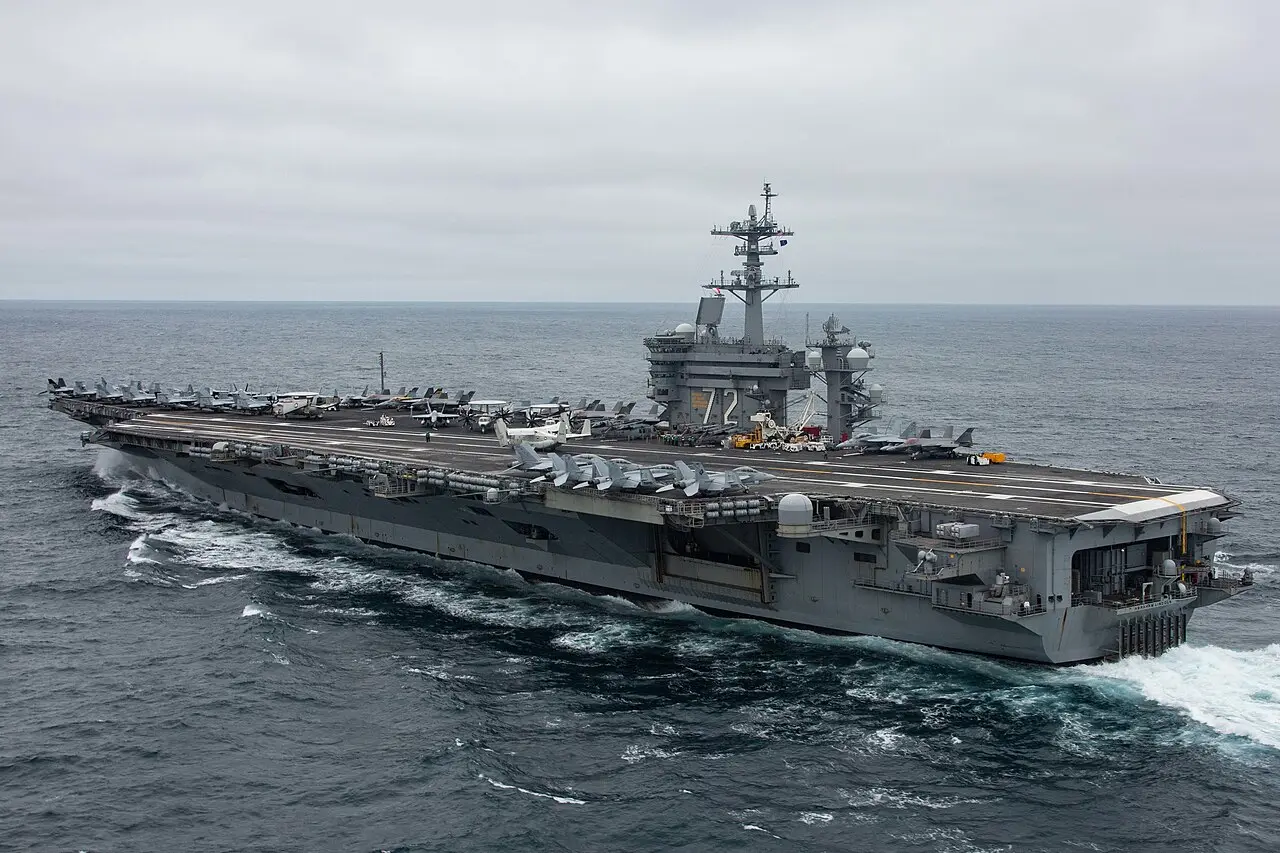
USS Abraham Lincoln, a Nimitz-class aircraft carrier, operates primarily with radar systems developed decades ago. In 2015, sailors aboard the ship, working with Newport News Shipbuilding, reinstalled two key surface-search radars: the AN/SPQ-9 and the AN/SPS-10. The AN/SPQ-9 is a high-resolution X-band radar designed to detect and track low-flying aircraft, sea-skimming missiles and fast surface craft, strengthening close-range defensive awareness. The AN/SPS-10 provides continuous 360-degree surface surveillance, supporting detection, ranging and tracking of ships and smaller vessels. Though based on older architecture, both systems remain vital for navigation safety and maritime domain awareness.
Other radar systems
According to several media reports however, the carrier still relies on systems such as the AN/SPS-48 and AN/SPS-49. These frequency-scanning and mechanically rotated radars still serve basic air surveillance and target direction functions, but lack the processing power and sensitivity of newer systems.
Next-Generation Radar Architecture
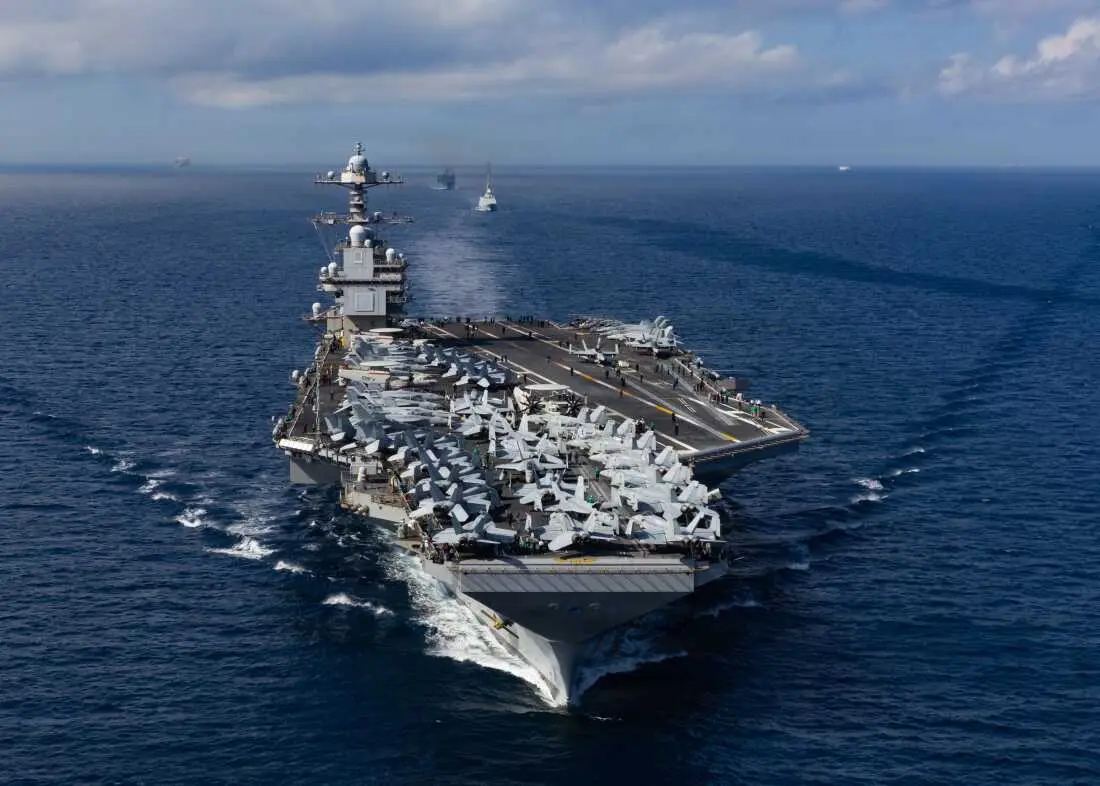
USS Gerald R. Ford was designed with more modern radar concepts in mind. Initial radar suites combined multifunction sensors intended to offer broader detection capability. While earlier dual-band radar attempts faced technical challenges during testing and pre-deployment trials, subsequent radar developments have focused on even more advanced systems.
AN/SPY-3
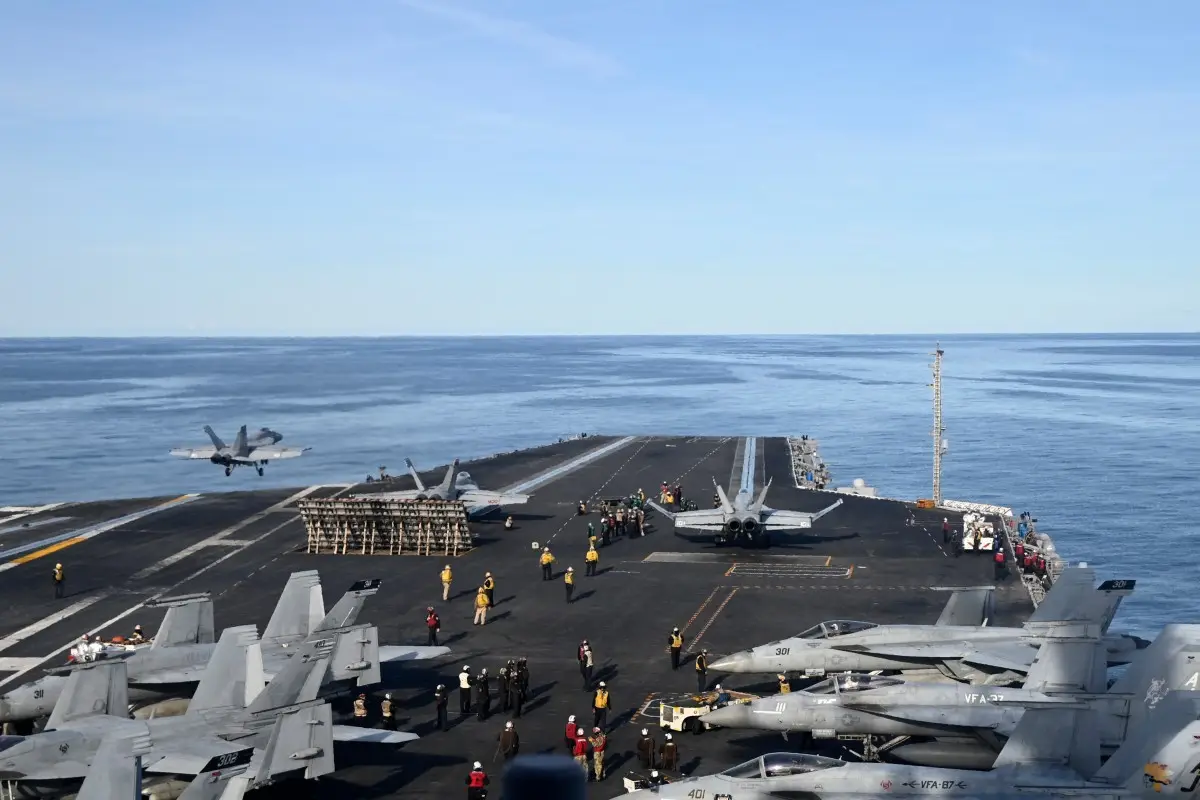
USS Gerald R. Ford, by contrast, was designed with a far more advanced sensor architecture. The carrier currently operates the AN/SPY-3 Multi-Function Radar, according to multiple reports. It is an active electronically scanned array (AESA) X-band system. Unlike mechanically rotating legacy radars, SPY-3 uses digital beamforming and solid-state transmitters to provide simultaneous air and surface tracking, precision target discrimination and improved resistance to electronic interference. It can efficiently detect incoming low-flying anti-ship cruise missiles.
How SPY-3 Improves Detection
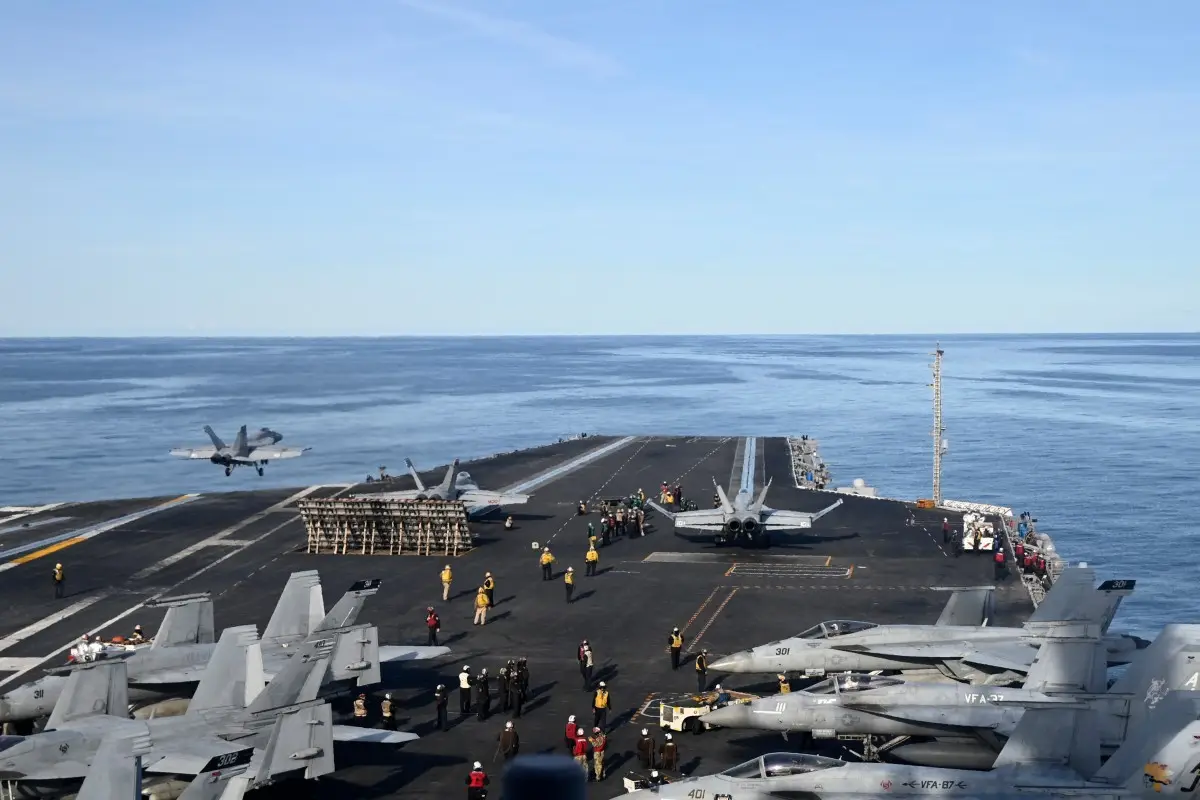
The SPY-3 radar enables improved target discrimination, better clutter rejection and stronger resistance to electronic interference. It can track multiple threats at once while supporting missile guidance and self-defence functions. While future US Navy ships are adopting SPY-6 variants, Ford’s SPY-3 already represents a significant technological leap beyond the legacy radar suites installed on older Nimitz-class carriers such as Lincoln.
Electronic Force of EA-18G Growlers
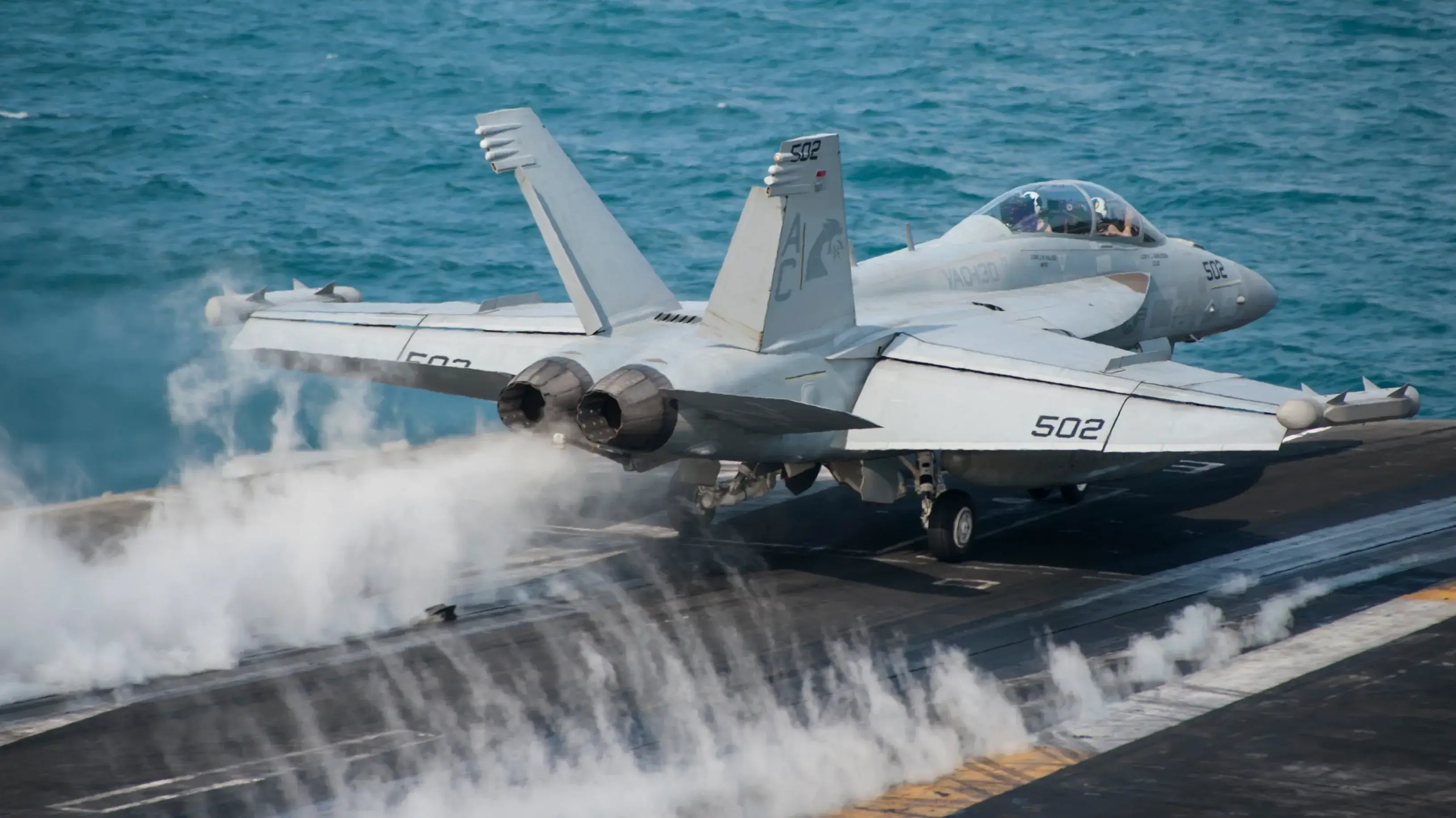
Additionally, a typical US carrier air wing includes an electronic attack squadron of five to seven EA-18G Growlers. With both the Ford and Lincoln carriers on station, the US Navy can launch a massive wave of 15 jamming jets simultaneously. Each Growler carries multiple AN/ALQ-99 tactical jamming pods under its wings and fuselage. These pods blast high-powered electronic noise that overpowers enemy radar frequencies, creating a 'whiteout' effect on Iranian screens.
Capability and Future Readiness
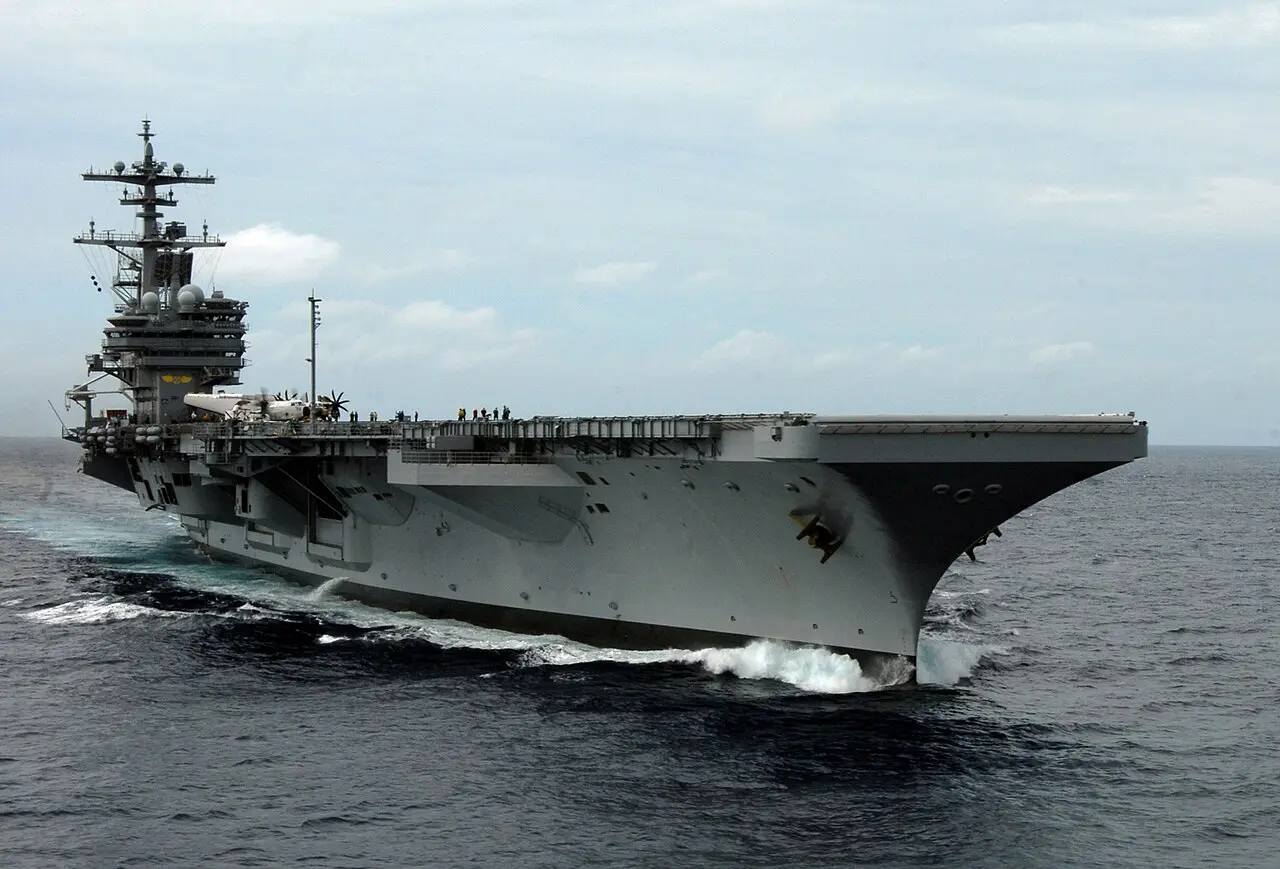
The shift from legacy radars to SPY-3 family systems marks a significant evolution in naval sensor technology. By offering greater power, sensitivity and data integration, modern radar suites provide carriers like USS Gerald R. Ford with enhanced early warning, tracking and self-defence capabilities suited to 21st-century threat environments, especially as regional tensions underscore the importance of rapid detection and response.
)
)
)
)
)