In pics | Ukraine rids 'Motherland' monument in Kyiv of Soviet era symbols

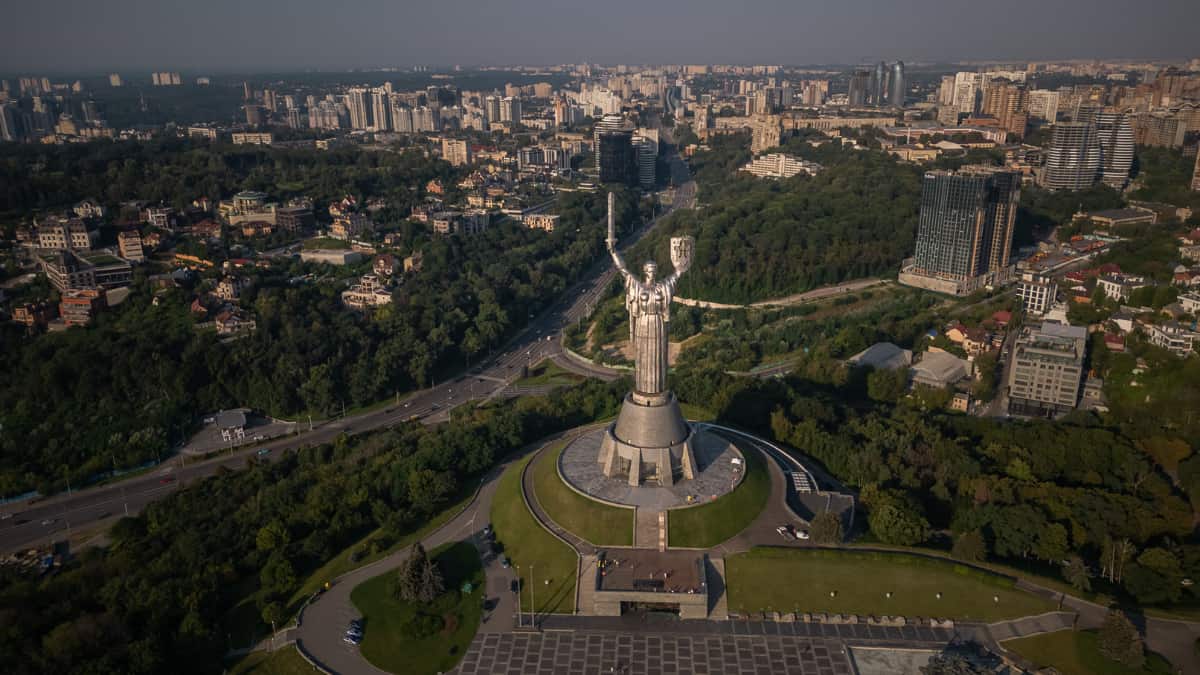
'Motherland' monument in Kyiv
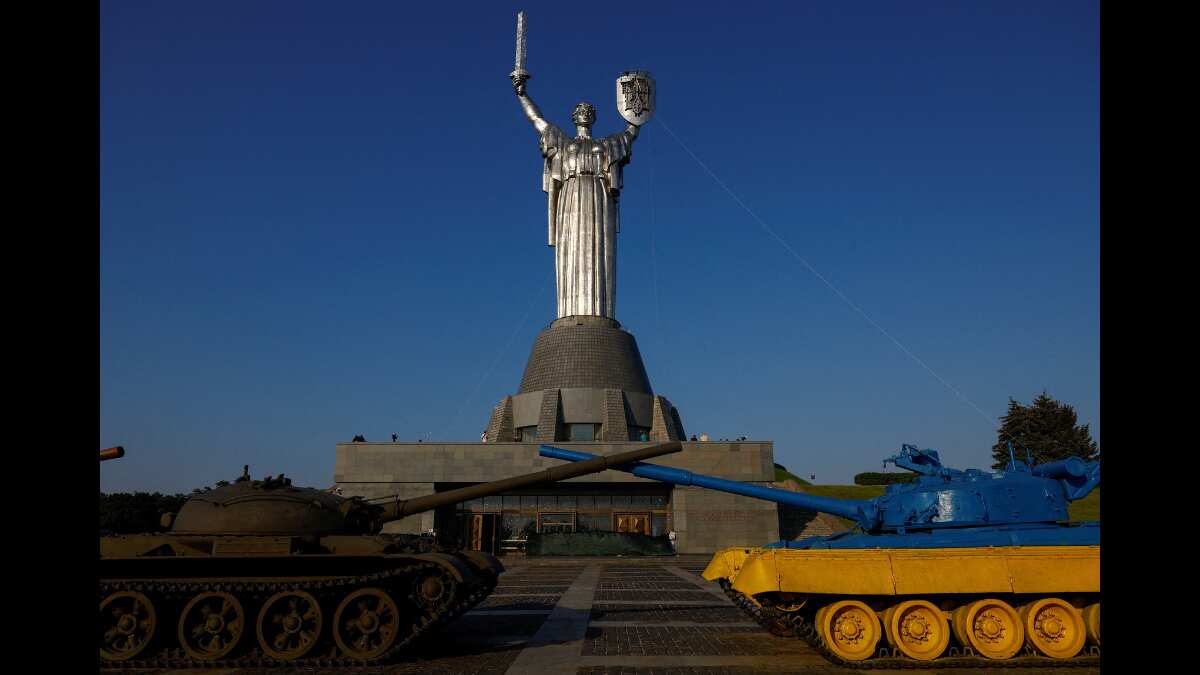
The iconic monument depicting the Motherland in the Ukrainian capital is a 62-metre-tall steel statue of a female warrior, which was built in 1981 on top of a hill on the right bank of the Dnipro River.
Sternly gazing east, the figure holds a 16-metre sword in her right hand and an eight-metre-long shield in her left.
The tallest monument in Ukraine measures 102 metres after including its base, it was erected as a memorial to Soviet victory in World War II.
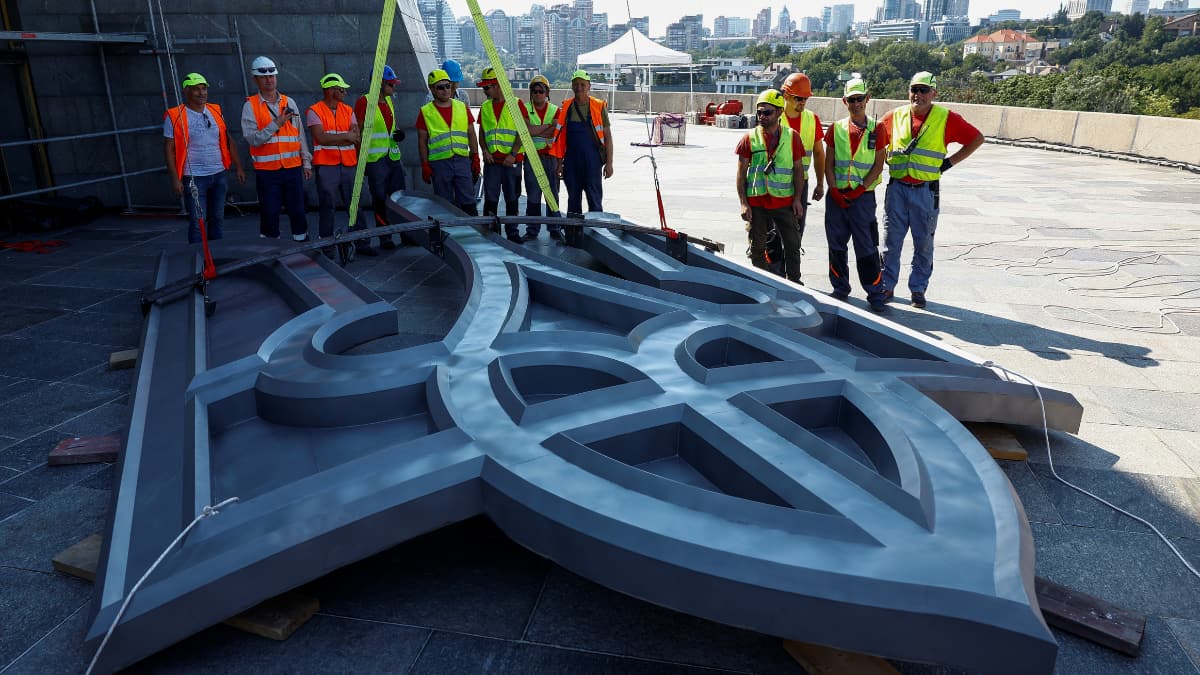
From Soviet Union's coat of arms to Ukraine's national trident
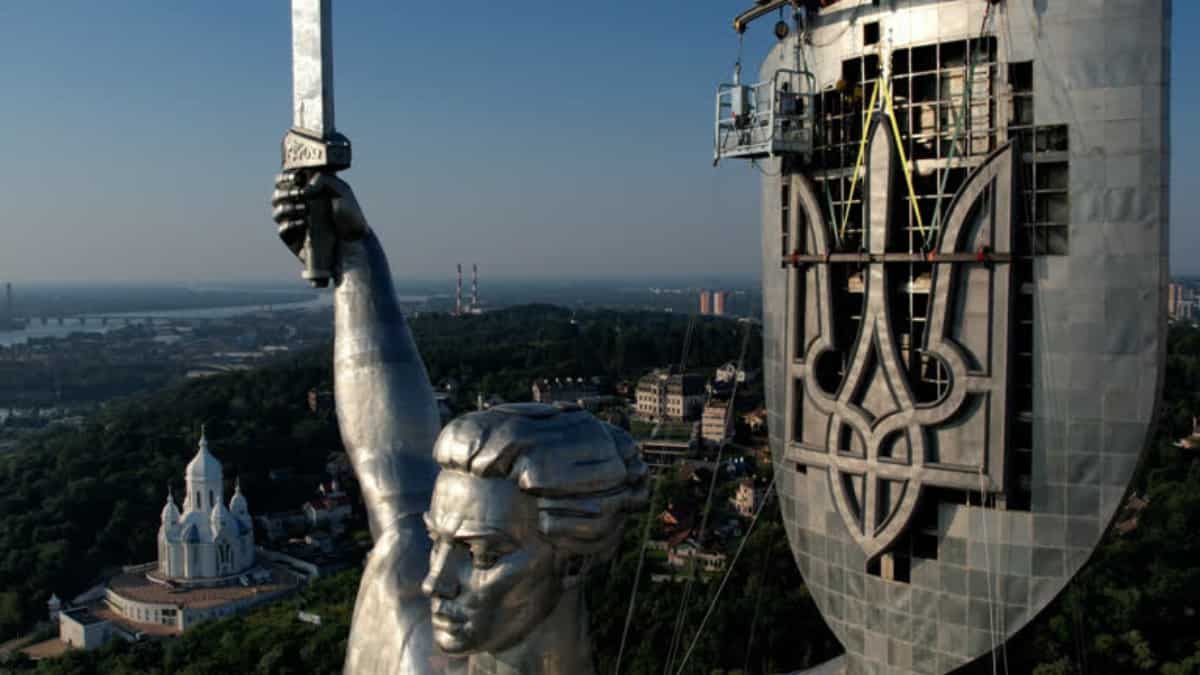
Originally, the shield of the 'Motherland' monument bore the Soviet Union's coat of arms - a crossed hammer and sickle surrounded by ears of wheat which has now been replaced with the Ukrainian national trident.
This comes as in recent years - particularly after Russia annexed Ukraine's Crimea region and the recent invasion - Kyiv has moved to purge its public areas of reminders of Russian and Soviet rule.
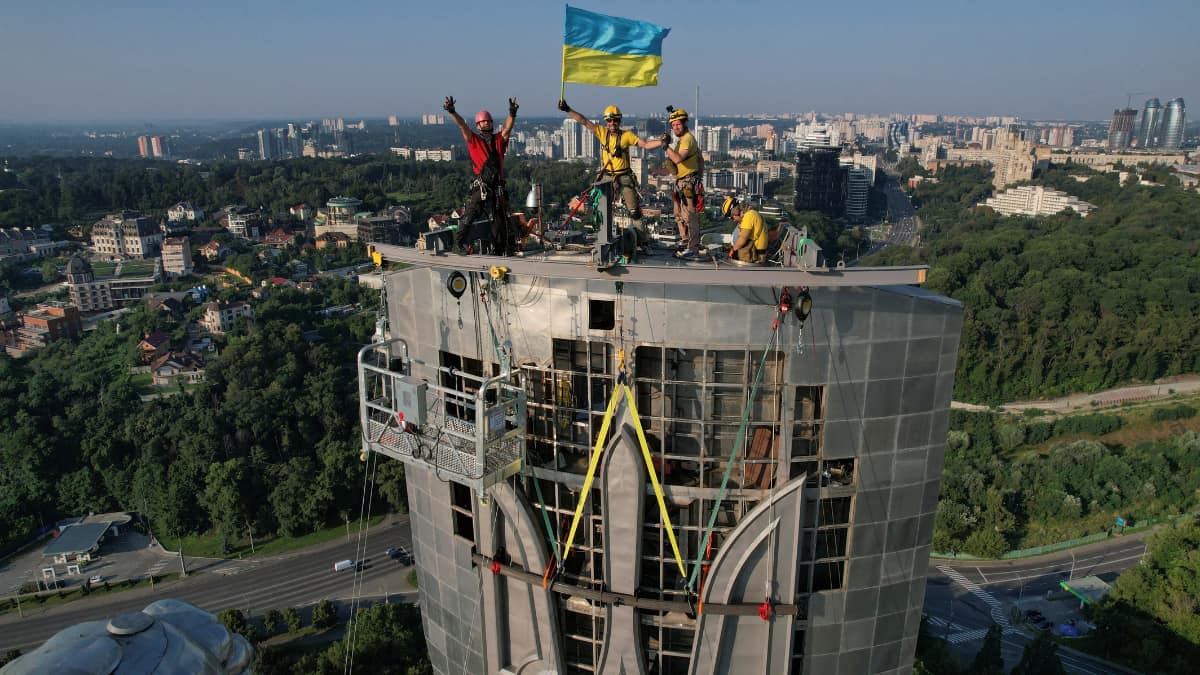
Ukrainian workers almost done
The Soviet-era symbol was finally removed, on Sunday, after the workers in late July, used cables to lower dismantled parts of the coat of arms to the ground. '
While the installation of the Ukrainian symbol - a 500-kg trident - which began on Saturday could not be completed. The work was stopped after a weather advisory and air attack warning for the capital.
It was not until a little after 6:00 am (local time) that on a bright sunny morning, the 7.6 metre-tall trident was put into place, pending final adjustments.
In this image, construction workers and industrial climbers posed waving the Ukrainian flag on top of the shield.
Meanwhile, Trident's sculptor Oleksiy Pergamenshchyk was at the base of the statue waving a Ukrainian flag saying, "Glory to Ukraine! Glory to the heroes! Glory to the Armed Forces!" as quoted by AFP.
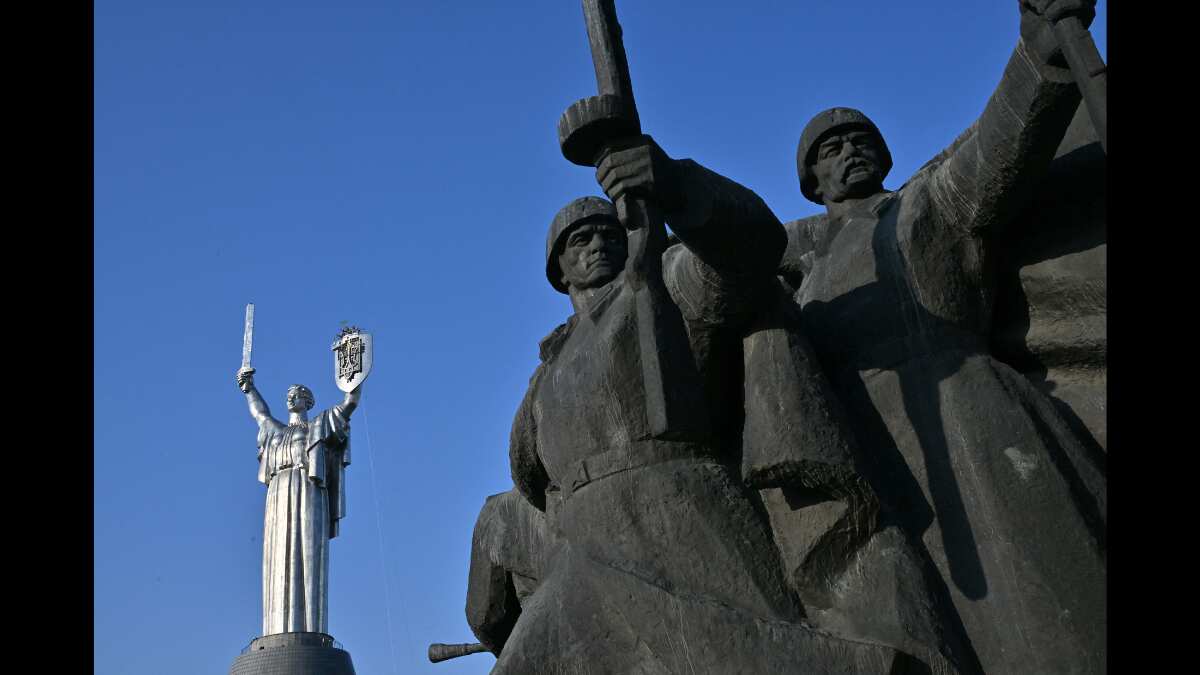
Zelensky congratulates Ukrainian workers
According to AFP, the hammer and sickle will become a museum exhibit. Notably, the monument which was once a memorial to Soviet victory in World War II is now part of a museum about Ukraine's role in the war and has changed its displays to reject Soviet narratives.
Museum's general director, Yuriy Savchuk, told AFP that he had received a message of congratulations from the office of Ukrainian President Volodymyr Zelensky on the raising of the trident and hoped the leader would attend an official opening.
"It's really nice that we've completed a certain stage of the work," he told AFP. He also conveyed the Ukrainian president's message to the construction team and said, "It's a beautiful, sunny day, the Dnieper (river) is sparkling, there is no air alert. The trident is on the shield, Glory to Ukraine!"
Symbolic project of Ukraine's "decolonisation" law
The cultural shift in a stronger Ukrainian self-identity has been accompanied by a political tilt to the West. Kyiv has previously said how the invasion appears to be an imperial mission to recreate the Soviet Union.
During the 2014, Maidan Revolution or Revolution of Dignity, protesters across Ukraine brought down statues of Vladimir Lenin, rejecting authoritarianism and communism. This was also amid demands for closer ties with the European Union.
Ukraine passed a law on "decolonisation" of place names and banning symbols of "Russian imperial policy", which entered force last month. This was following another law in in 2015, the year after Russia annexed Crimea which outlawed Soviet symbols.
Why now?
Speaking about the importance of this change, acting arts minister, Rostislav Karandeyev, standing at the base of the monument on Saturday, said "We're talking about the necessity to bring in changes to toponymics (geographical names), to make changes to various monuments that are located across Ukraine."
He added, "It's all important, although of course it should all be done wisely and with the right approach, with understanding that there are priorities".
The "priorities" in question of course are "costs of strengthening Ukraine's defence capabilities," said the Ukrainian official, as quoted by AFP.
The total cost of replacing the hammer and sickle with the trident is reported as $758,000, paid for by donations and sponsorship instead of state funds.
A report by AFP citing a Ukrainian culture ministry survey said 85 per cent of Ukrainians backed removing the hammer and sickle.
)
)
)
)
)