In pics: Europe's drought reveals sunken ships and abandoned villages

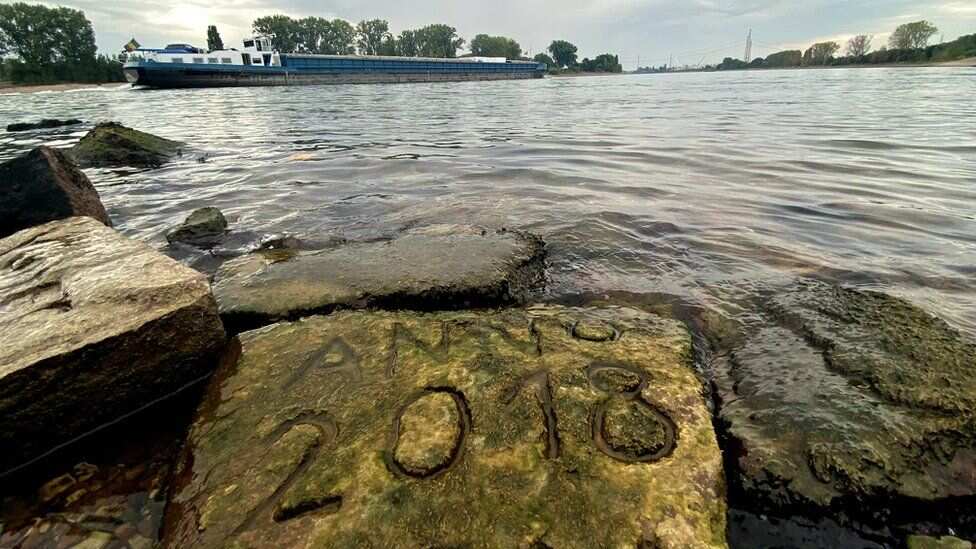
A carving on one of the "hunger stones" in the Rhine revealed a previous low point
These "hunger stones" were carved along the river's edge during earlier droughts as a warning to future generations that difficulty will befall them when the stones are above water.
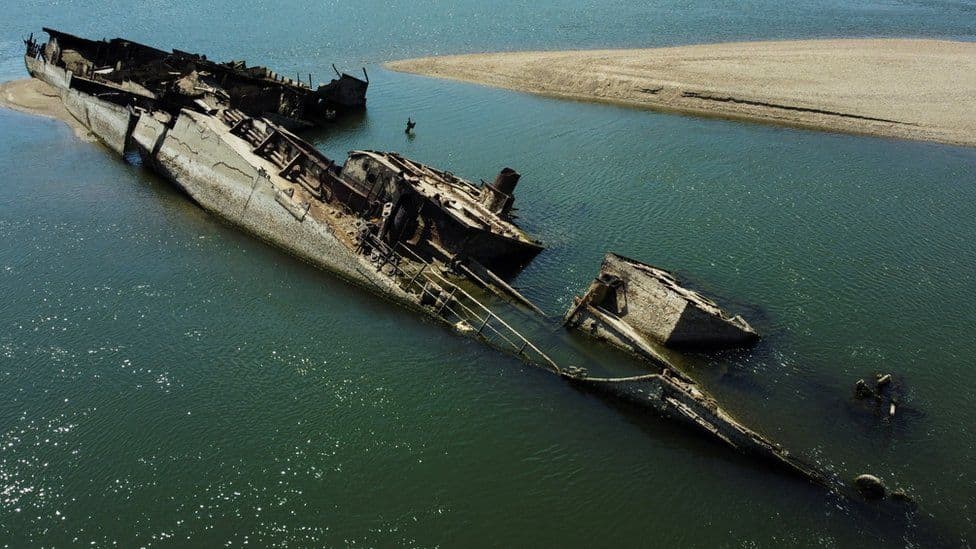
Several German ships were sunk at Prahovo as the Nazis were fleeing Soviet forces
The wreckage of Second World War ships, still carrying explosives, has been discovered in Serbia's Danube due to low water levels.
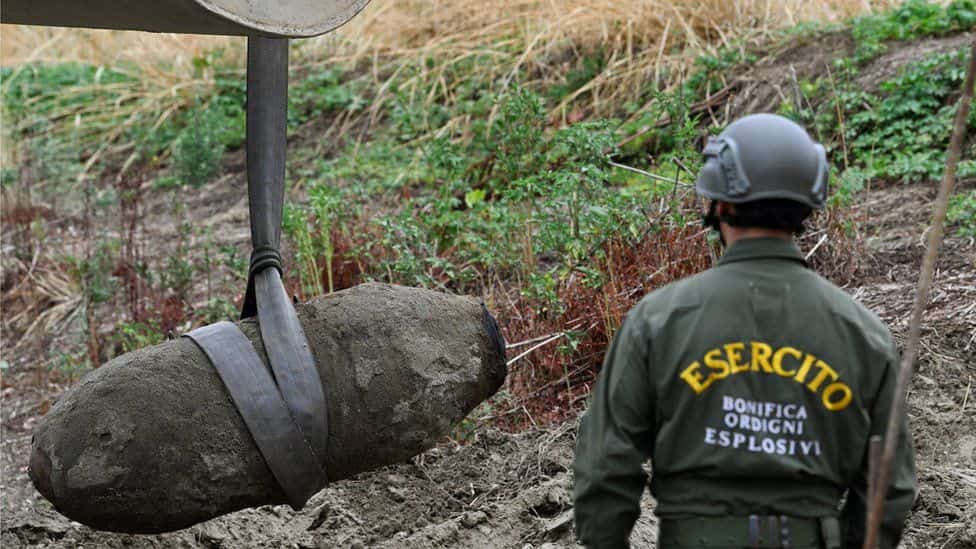
The unexploded bomb was pulled from the river Po by the Italian army
Additionally, unexploded weapons have been discovered in the River Po in Italy.
In July, almost 3,000 residents of a village close to Mantua were evacuated so that experts could retrieve and securely detonate a World War II bomb that had been submerged.
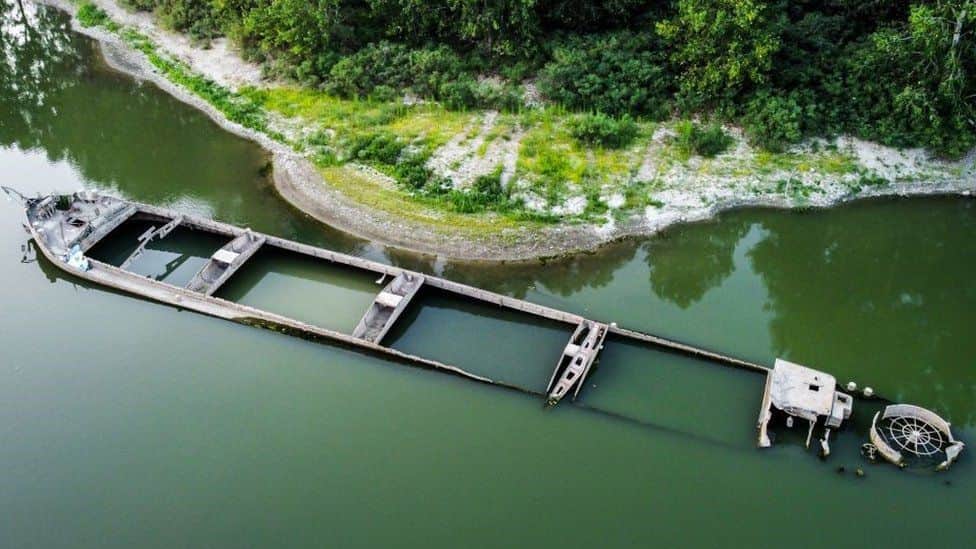
The "Zibello" barge is being revealed gradually
In the River Po, a barge used by the Germans that sank in 1943 has also been discovered.
The Zibello barge was first visible to locals as water levels plummeted a few months ago, and as the dry persists, more of it has come into view.
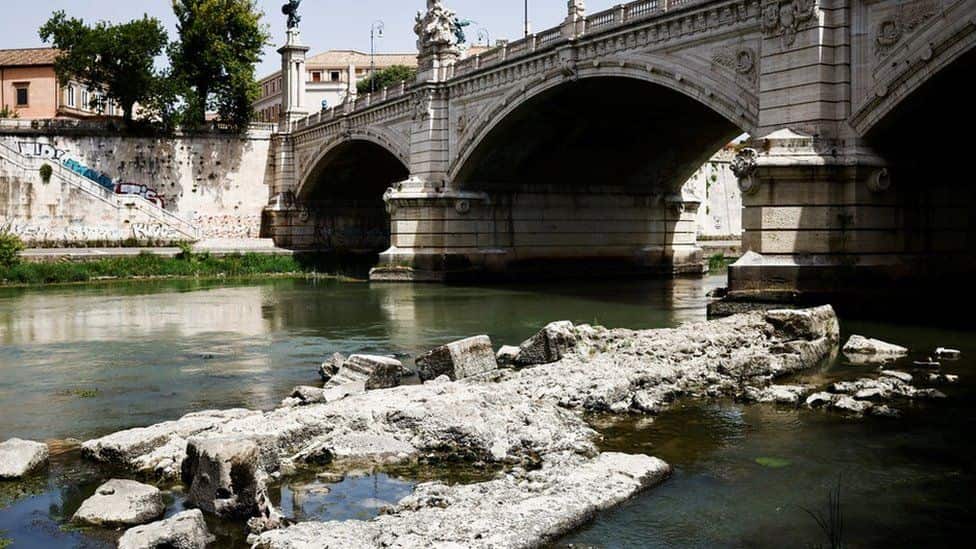
Ruins of the bridge built by Nero have been revealed in the River Tiber
The remnants of an old bridge that may have been built by the Emperor Nero around 50 AD have been discovered in Rome due to low river levels.
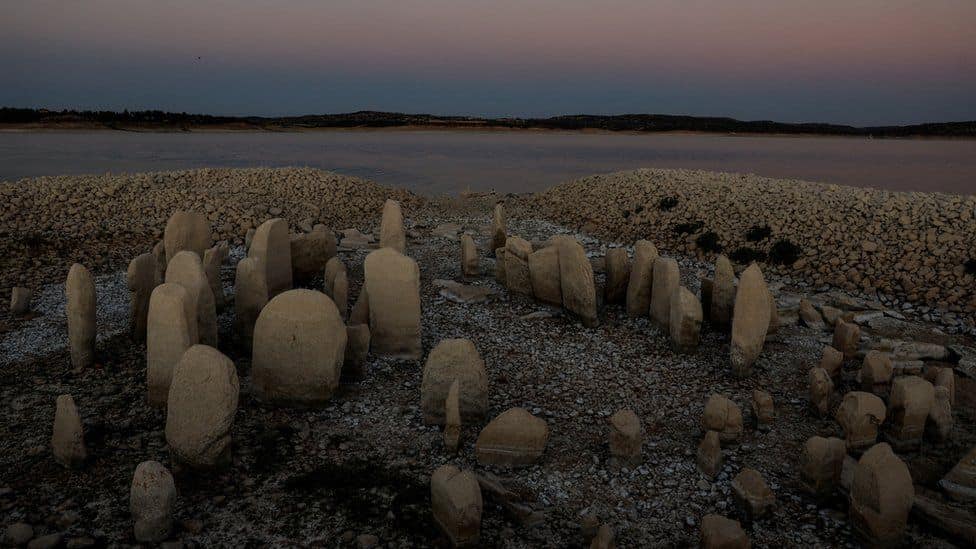
The "Spanish Stonehenge" was submerged by Franco-era officials but the dolmen is back in full view
The "Spanish Stonehenge" has surfaced in Spain's Caceres province's central Valdecanas reservoir. The circle of stones, which is officially known as the Dolmen of Guadalperal, is thought to have existed around 5000 BC. They have only been seen four times since then.
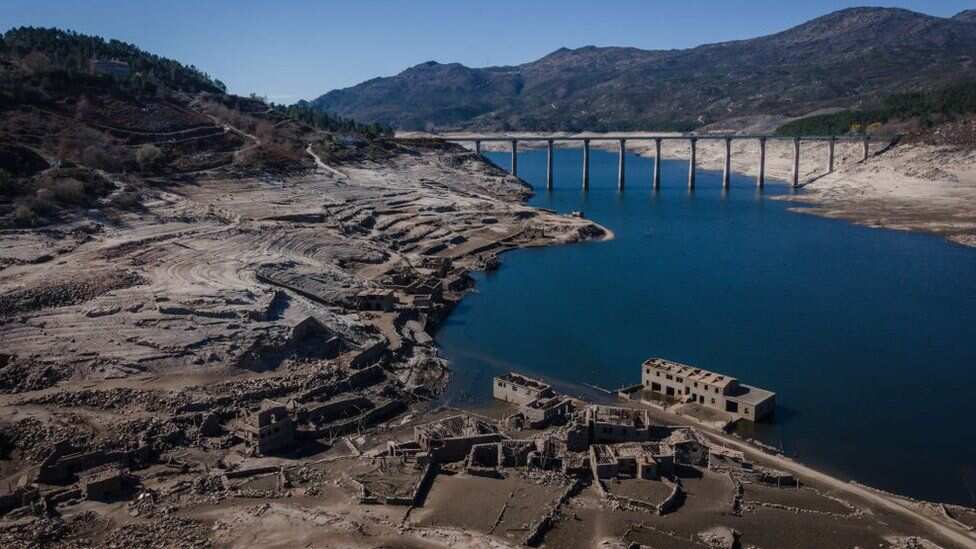
The village of Aceredo in Spain's Galicia region is normally under water
Early in the year, a "ghost hamlet" appeared in Galicia, close to the Portuguese border, after a drought abruptly dried up a reservoir.
)
)
)
)
)