6 mind-blowing facts as Voyager 1 nears ‘one light-day’ from Earth

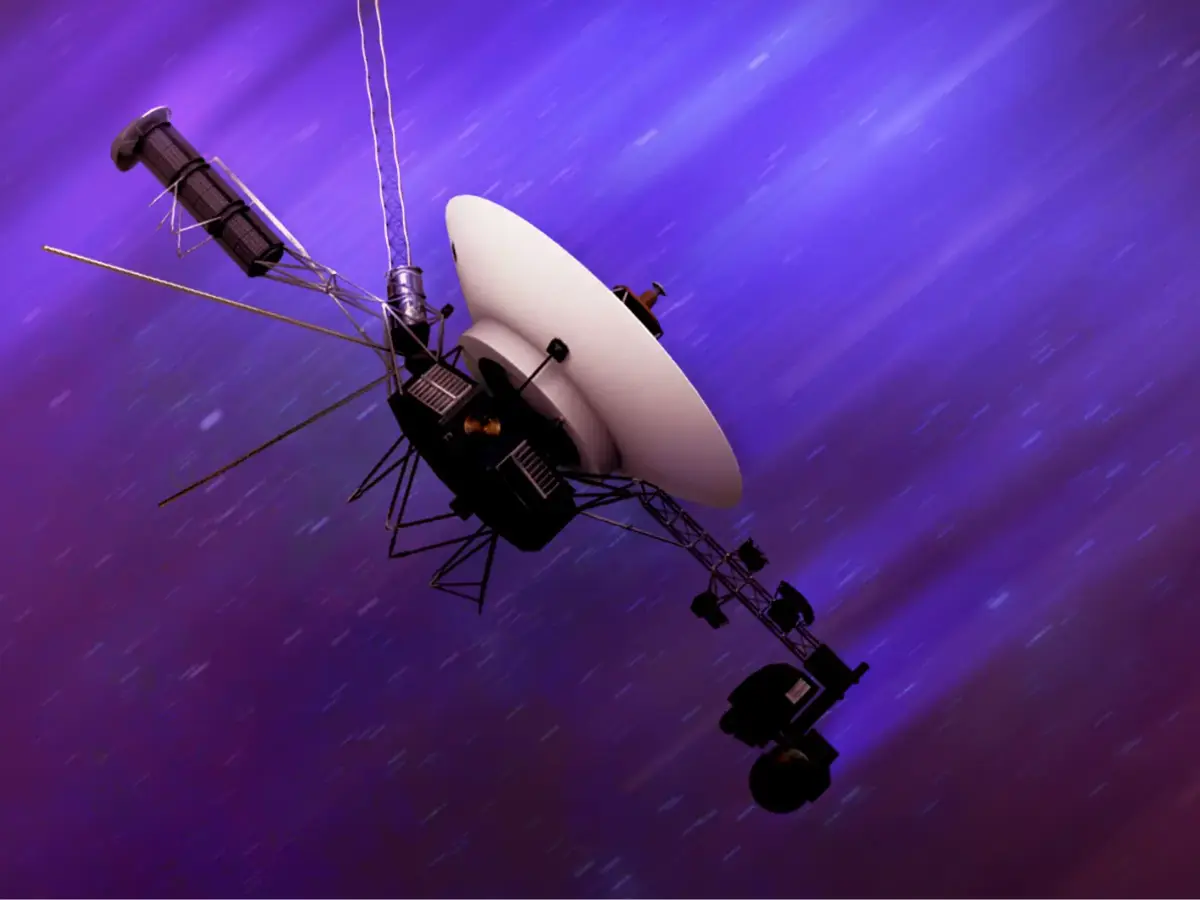
Voyager 1 will soon reach the ‘one light-day’ mark from Earth, which will be no doubt a major milestone for the probe and humans. It will be 25.9 billion kilometres from home while moving at 300,000 kilometres per second. Here are some facts about Voyager 1.
Voyager 1 nears one ‘light-day’ mark
NASA's Voyager 1 will be exactly one ‘light-day’ from Earth around 13 November in 2026. Light-day is the distance light, or any electromagnetic radiation, including radio waves, travels in a vacuum in 24 hours. Launched on September 5, 1977, it has been travelling for over 48 years and has managed to remain operational and intact for such a long time. When it reaches one light-day, it will be a huge milestone, as it will showcase a mix of physics, engineering history, and a striking reality check on the scale of our universe.
Mind-Boggling Distance (The Math)
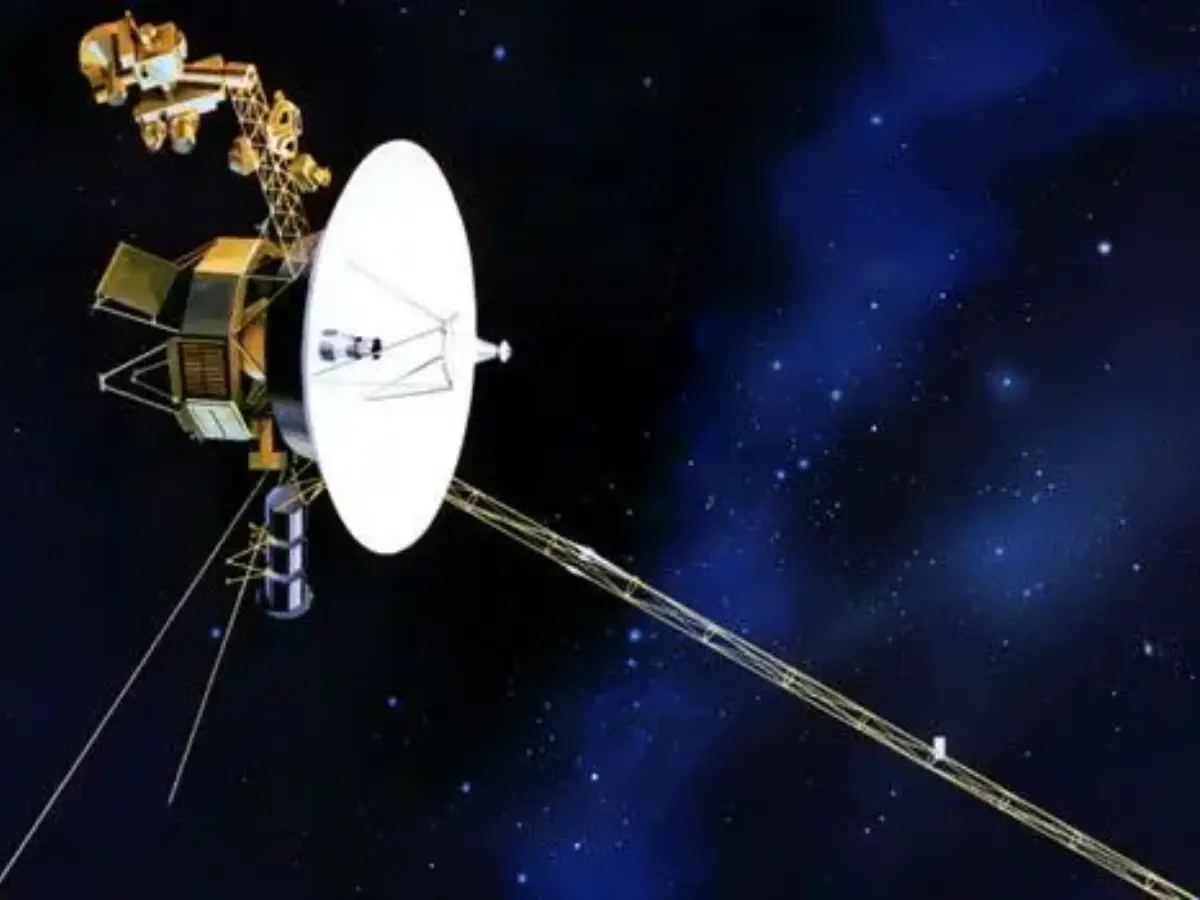
As mentioned above, "light-day" is the distance light travels in a single 24-hour day. Light moves at a blistering speed of 300,000 kilometres per second. Multiplying that by the 86,400 seconds in a day equates to roughly 25.9 billion kilometres (16.1 billion miles).
48-Hour Communication Lag
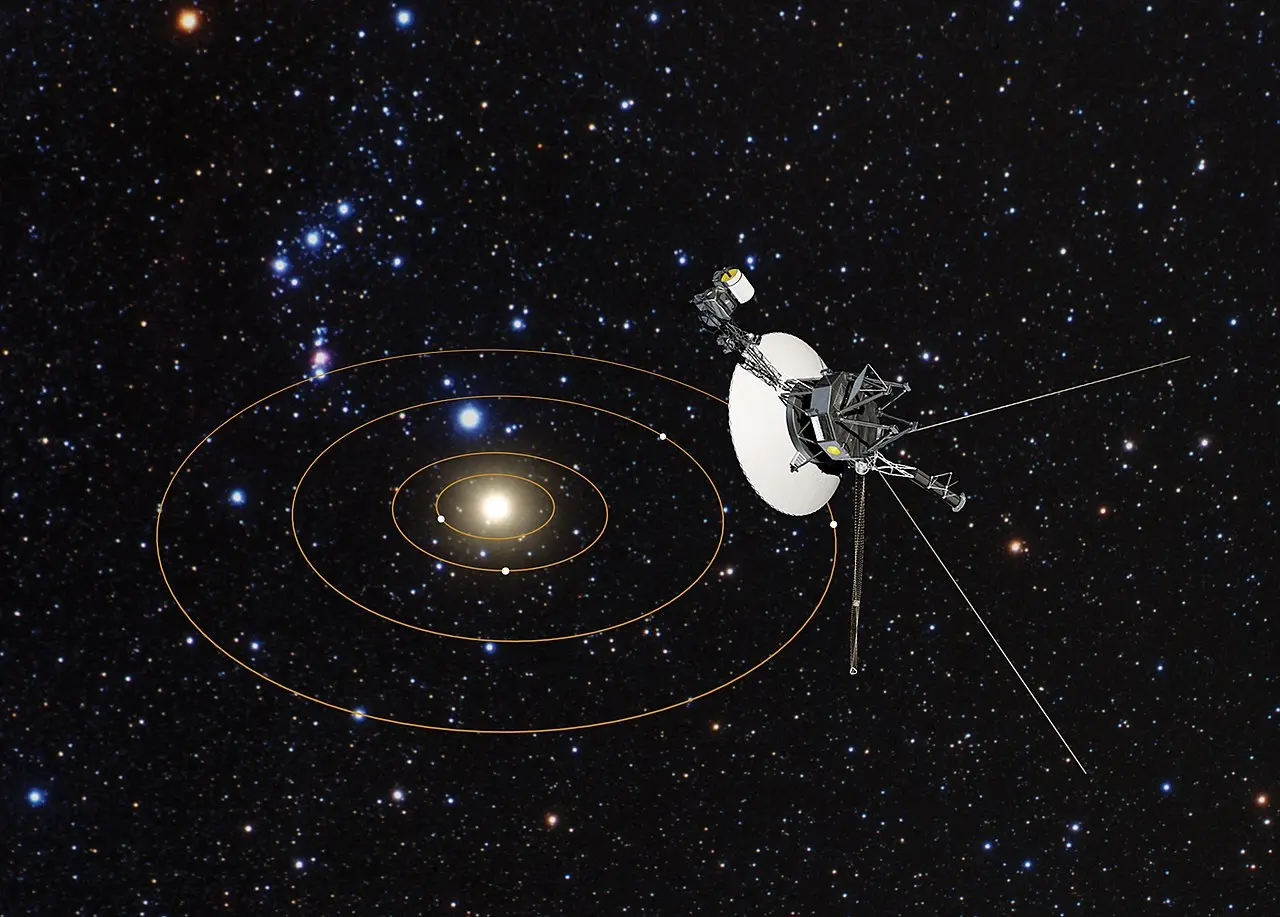
At this distance, there would be a gap in communication lasting 48 hours. A radio command sent from Earth will take 24 hours to reach the probe, and the reply will take another 24 hours to get back to us. This creates a 48-hour round-trip delay, even for something as simple as a hello.
It's Running on 68 Kilobytes of 1970s Tech
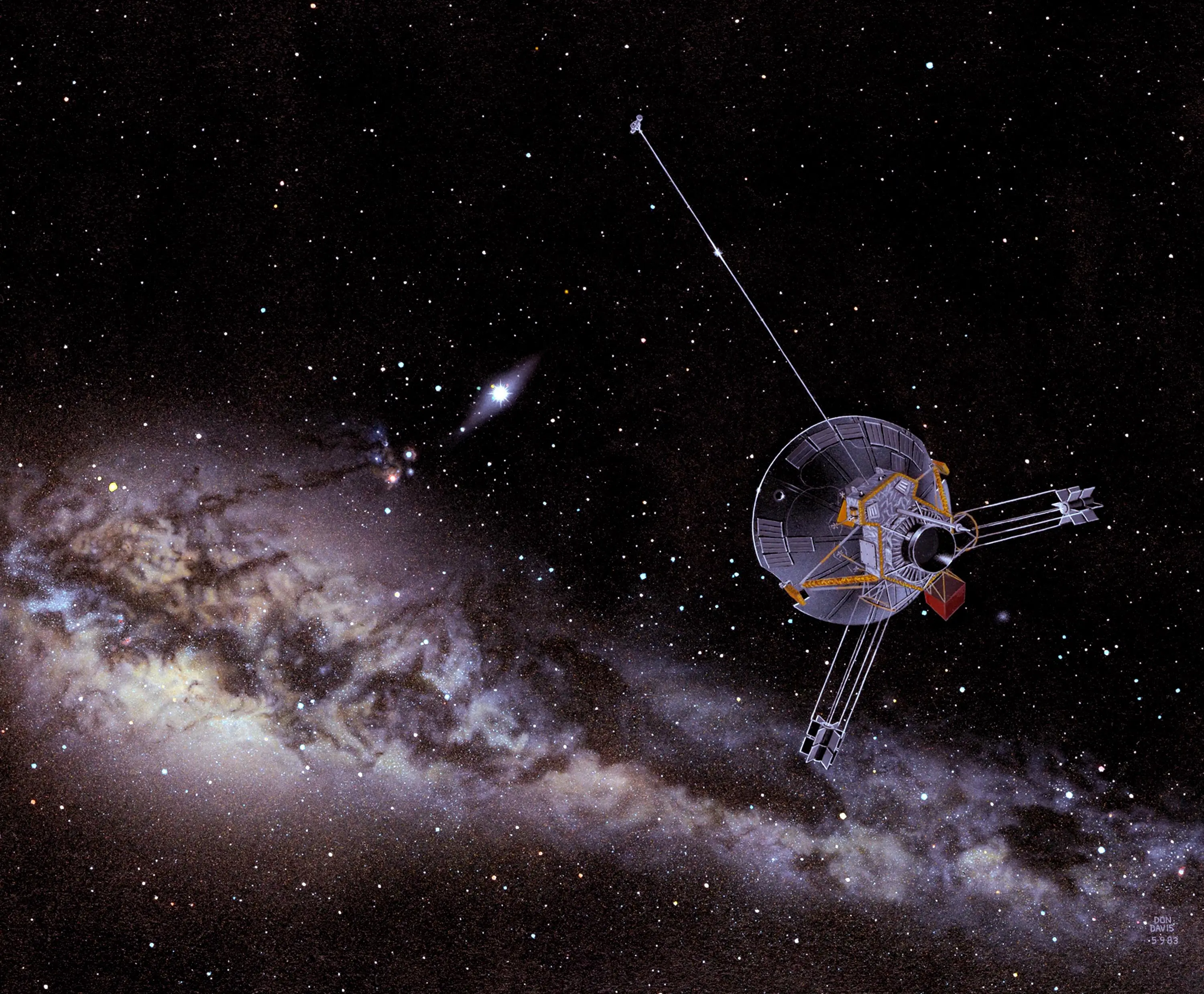
Voyager 1 is running on extremely ancient technology by today's standards. Its three onboard computers have a combined memory of just 68 kilobytes (millions of times less than a modern smartphone), and data crawls back to Earth at a tiny 160 bits per second.
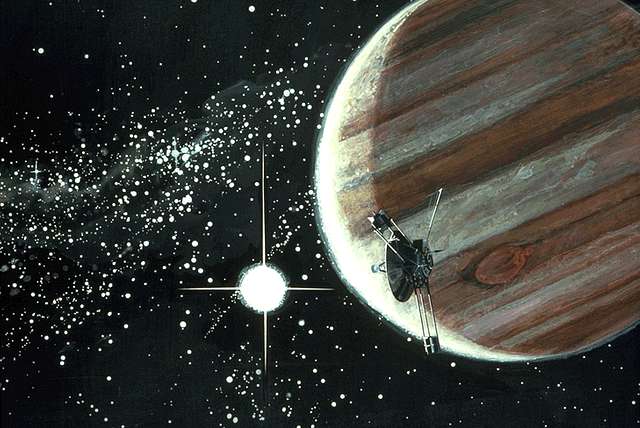
Voyager 1 is "Starving" of Power
Voyager 1 is powered by decaying plutonium. To keep its transmitter alive at this extreme distance, NASA has shut down some of the probe's non-essential heaters and scientific instruments. Its faint signal can still be picked up across a light-day of empty space, an absolute engineering miracle.
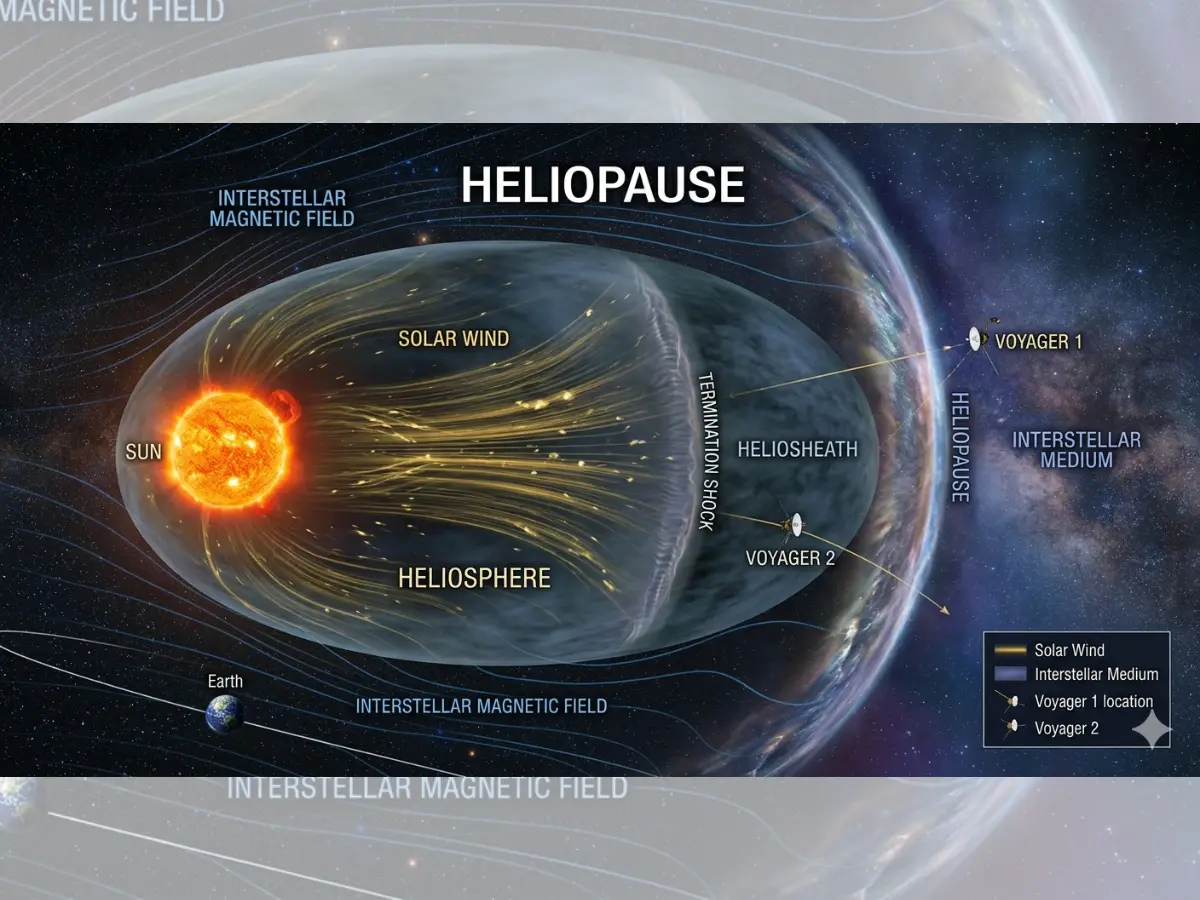
Exploring the true cosmos
Voyager 1 crossed the Sun's magnetic bubble, the heliopause, in 2012. Fourteen years later, it is even deeper in space. Reaching one light-day out emphasises just how deep into the Interstellar Medium the probe has travelled.
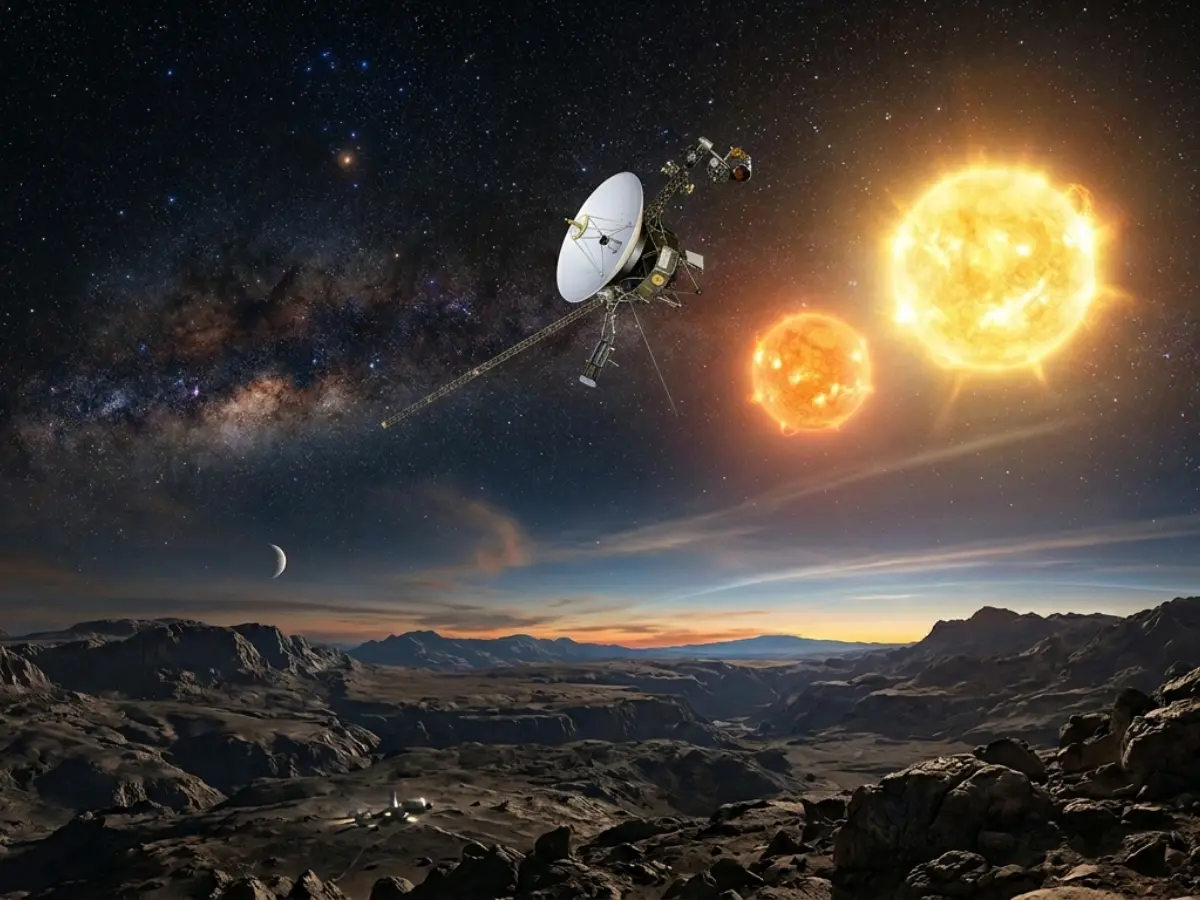
Proves Just How Unimaginably Vast the Universe Is
Even though it is a huge accomplishment for humans to have a probe at such a great distance in space, it is also a humbling experience when you consider the cosmic scale. Voyager has been moving at 61,000 km/h for nearly half a century, and would still just be 1 light day from us. In comparison, Alpha Centauri, the nearest star system, is 4.3 light-years away - or 1,570 light-days. Moving at its current speed, it will take over 70,000 years to reach Alpha Centauri.
)
)
)
)
)