'Hull Zapping': How the USS Abraham Lincoln electrocutes the ocean to stop rust

The USS Abraham Lincoln uses the Impressed Current Cathodic Protection system to pump electrical current into the ocean. This halts saltwater corrosion, protects the 100,000-tonne ship's steel hull from rusting, and saves millions in repairs.
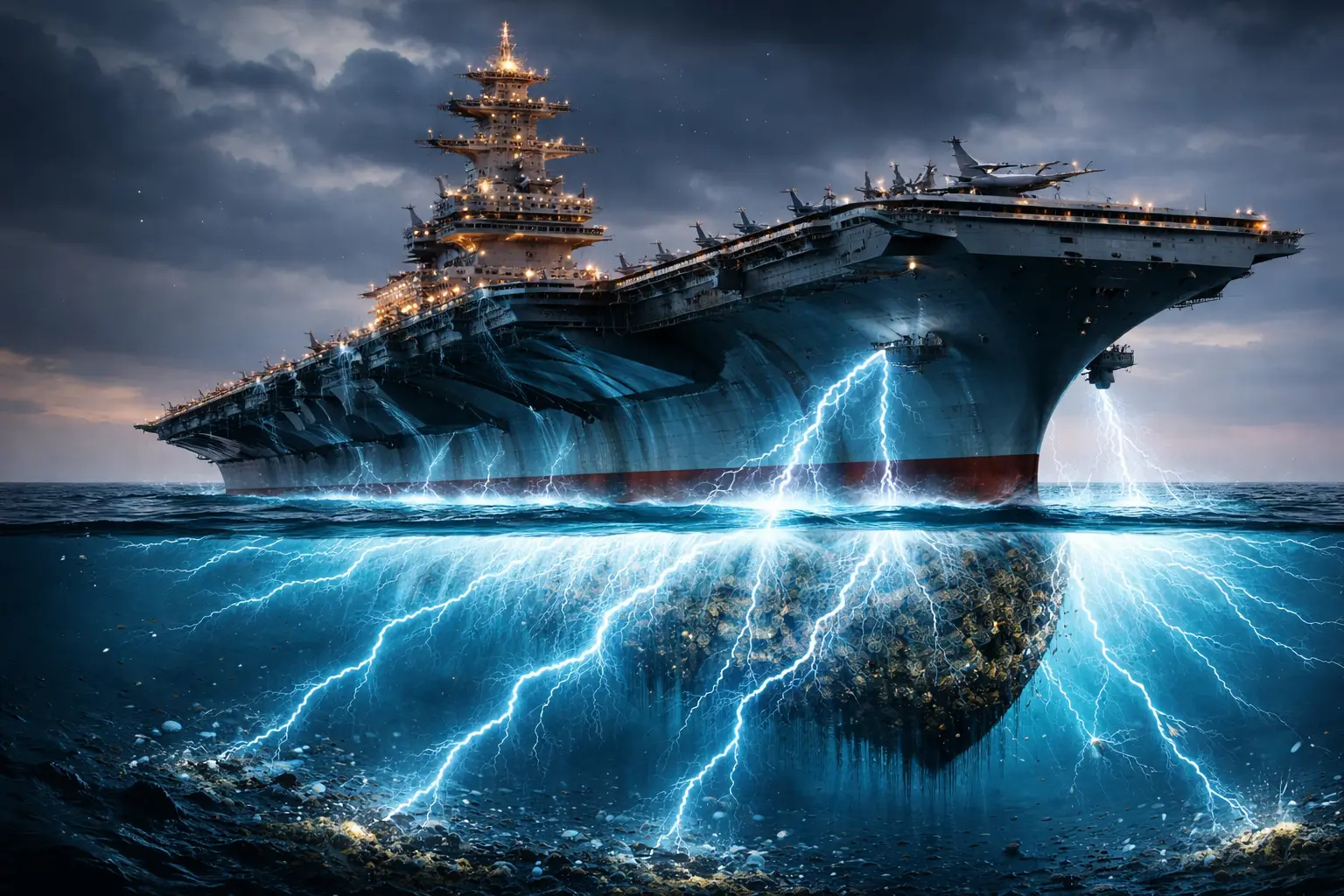
100,000-Tonne Steel Hull
The USS Abraham Lincoln is a massive 100,000-tonne Nimitz-class aircraft carrier constantly exposed to harsh marine environments. Saltwater acts as a powerful electrolyte, causing the 1,092-foot ship's steel hull to degrade rapidly. This natural electrochemical reaction continuously threatens the structural integrity of the vessel.
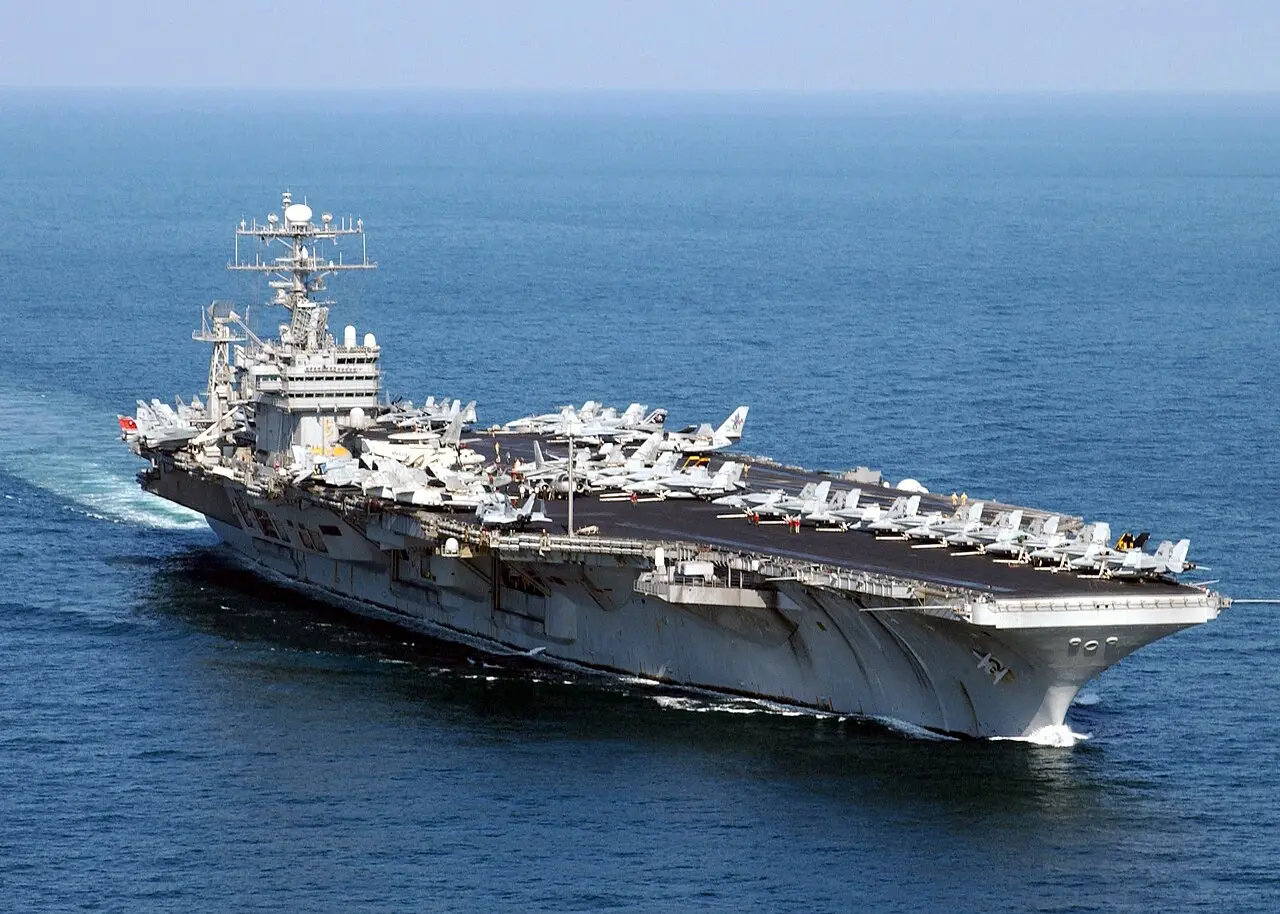
24/7 Impressed Current Shield
To fight this decay, the US Navy uses a technology called Impressed Current Cathodic Protection (ICCP). Instead of passively waiting for rust, this system actively pushes a continuous, controlled direct electrical current into the surrounding ocean water. By making the entire ship hull a cathode, it physically prevents the steel from oxidising.
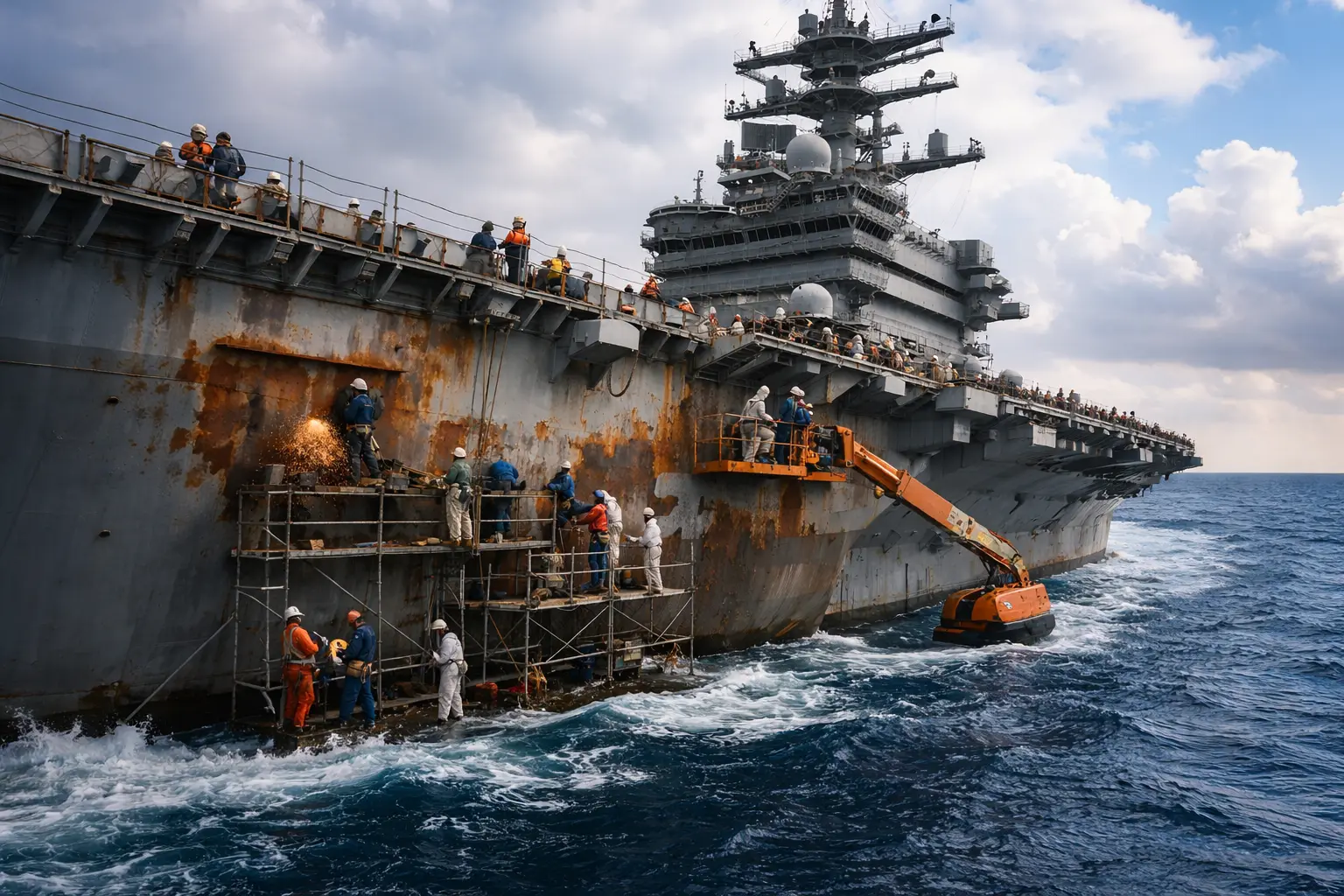
20-Year Platinum-Plated Anodes
The ICCP system relies on specialised platinum-plated tantalum or titanium anodes installed directly onto the submerged sections of the hull. These anodes are designed for a 20-year service life in extreme ocean conditions. They safely discharge the precise amount of electricity required to neutralise the corrosive forces in the seawater.
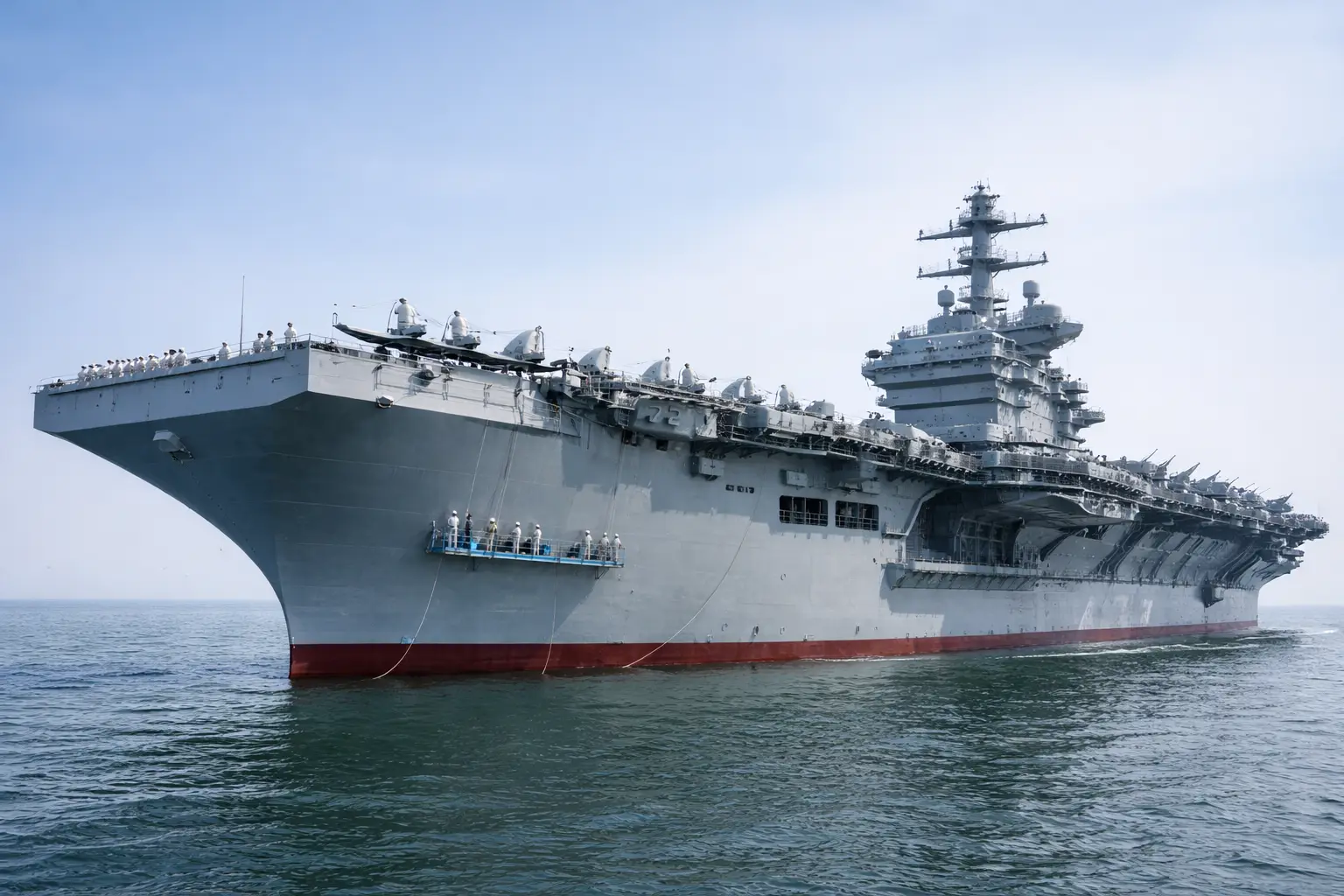
Targeting -0.85 Volts of Protection
A network of reference cells constantly measures the electrical potential of the hull at the seawater interface, aiming for an optimal -0.85 volts. If the system detects a drop in protection, an automated power supply instantly adjusts the direct current output. This ensures the warship receives exact protection regardless of water salinity or speed.
Halting 100 Per Cent Iron Loss
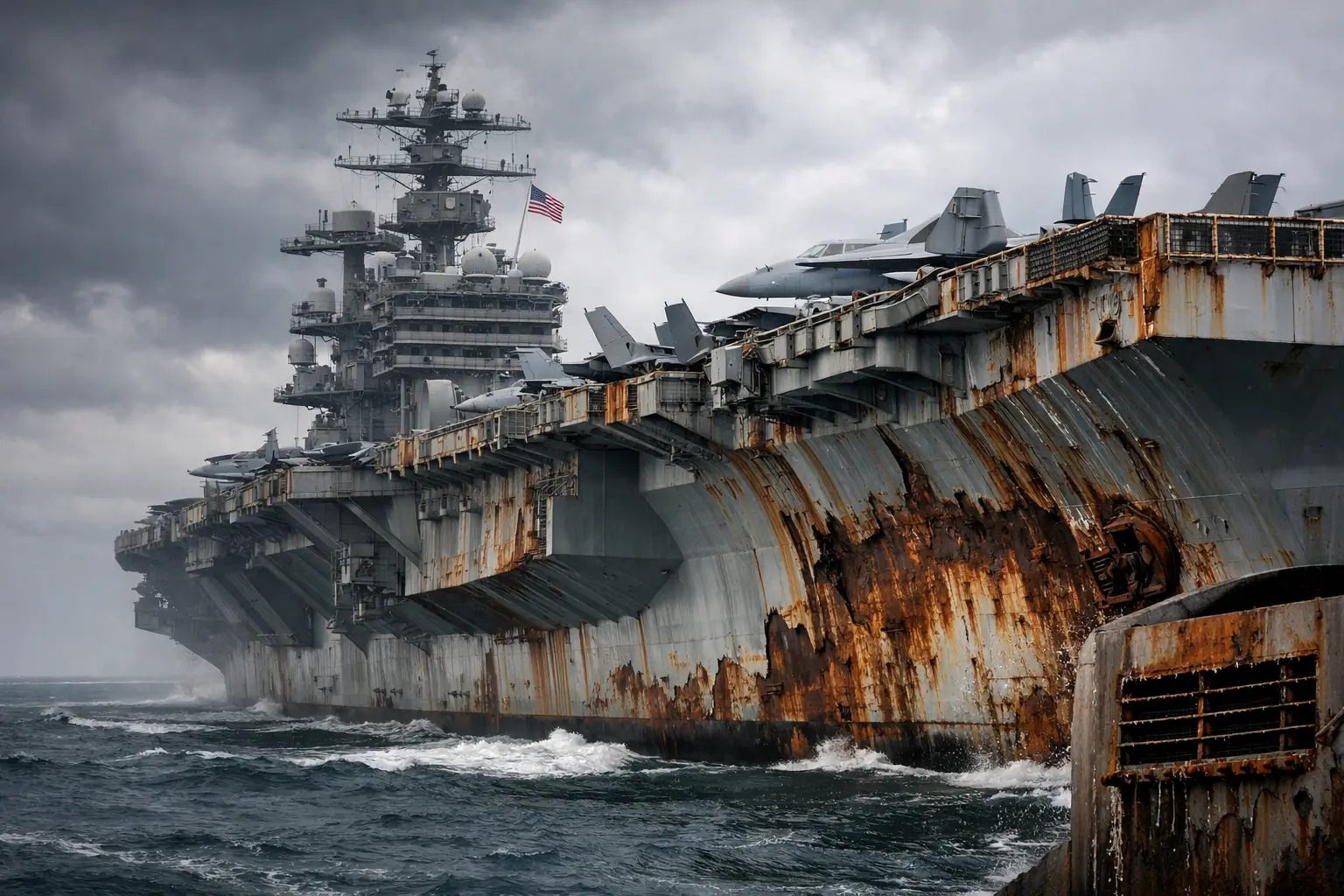
Corrosion occurs when iron atoms in the steel lose electrons and dissolve into the saltwater as ions. The impressed current system stops this by using an internal power supply to flood the ship's hull with a steady, opposing flow of electrons. Because the steel is constantly supplied with this electrical charge, the iron atoms remain stable and do not break away to form rust.
Replacing 1,000s of Zinc Blocks
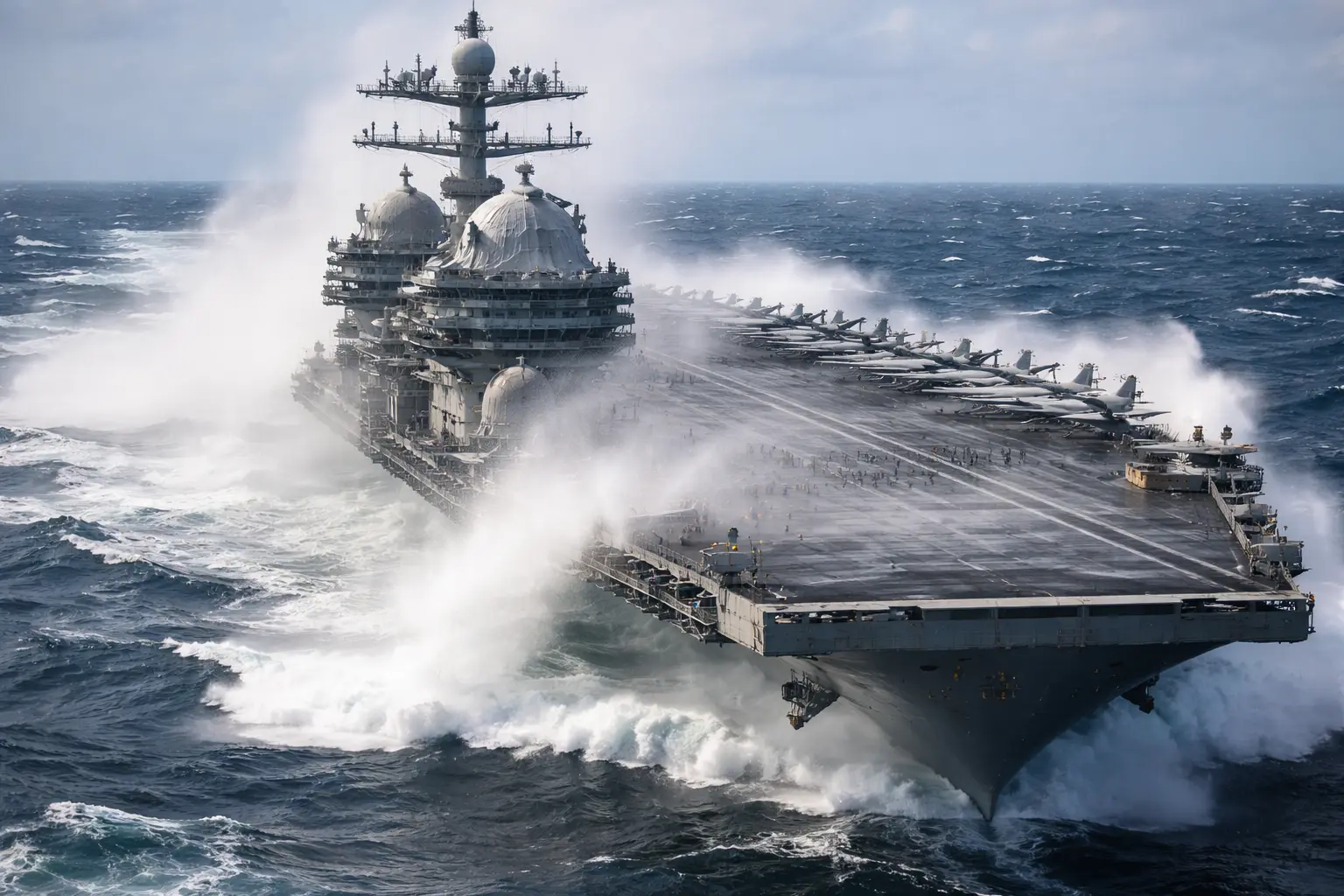
Smaller ships traditionally bolt heavy sacrificial zinc anodes to their hulls, which slowly dissolve to protect the steel. However, outfitting a Nimitz-class carrier would require thousands of heavy blocks that increase drag and fuel consumption. The electrical ICCP method provides a much lighter, permanent, and far more efficient alternative.
Saving Millions in Repairs
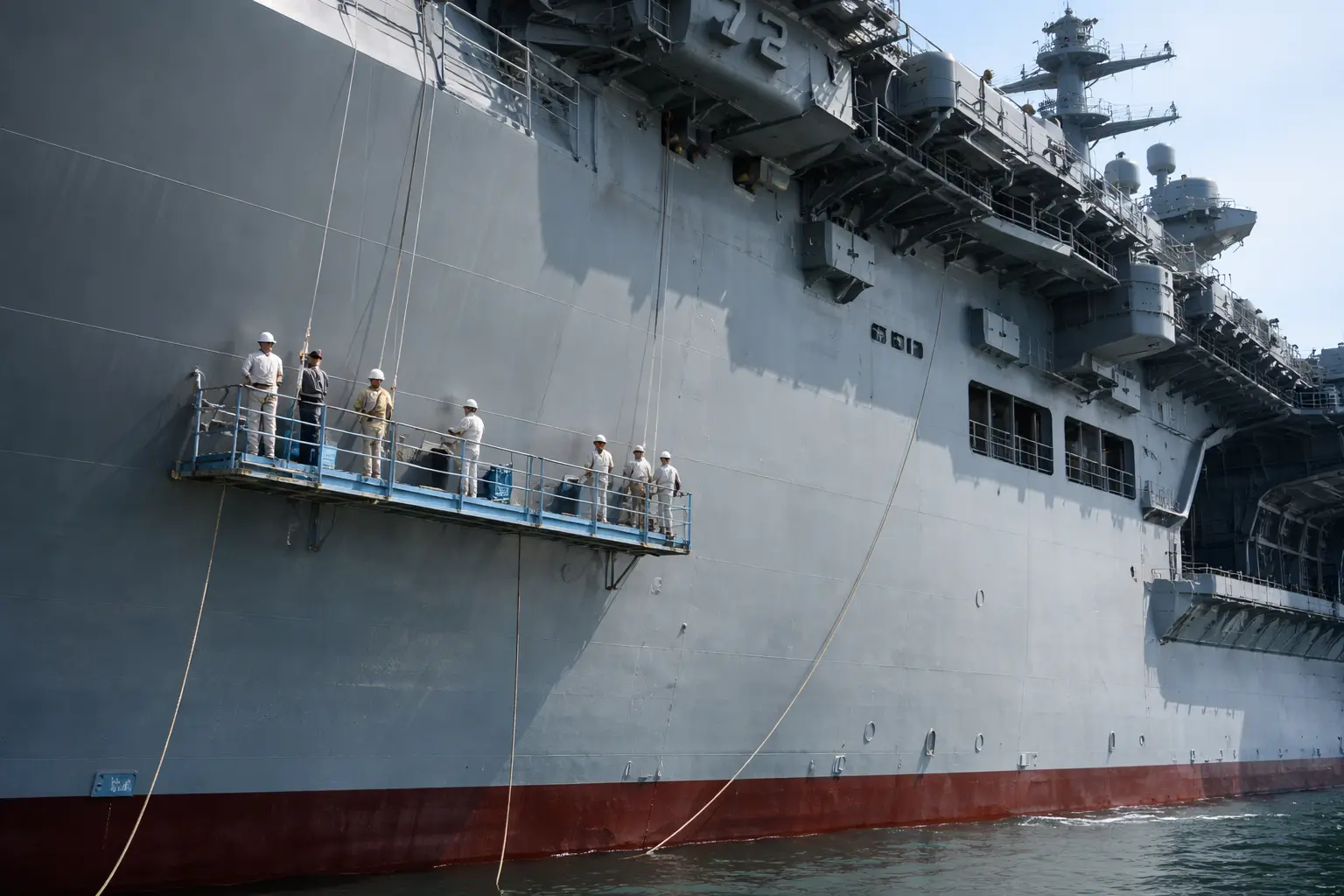
This invisible electrical barrier drastically reduces the frequency of major dry dock repairs, saving the US Navy millions of dollars annually. It actively protects underwater metal structures, including the massive propellers and rudders, without requiring constant manual intervention. Ultimately, it keeps the carrier mission-ready at sea for longer periods.
)
)
)
)
)