&imwidth=800&imheight=600&format=webp&quality=medium "India secures nine decommissioned UK Jaguars to keep strike squadrons operational")
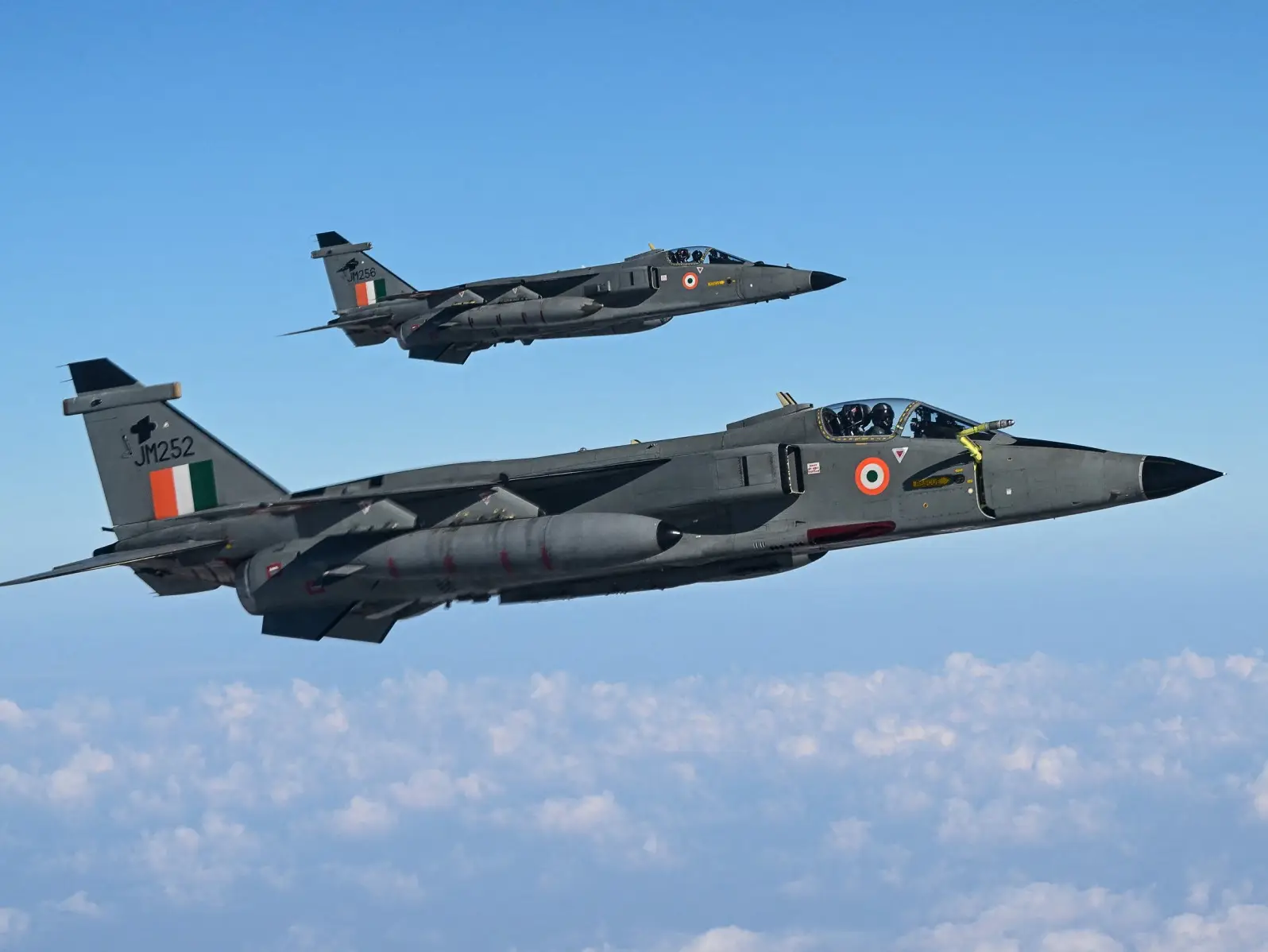
The Indian Air Force is acquiring nine decommissioned Jaguar strike aircraft from the United Kingdom to dismantle spare parts and sustain the capability of the ageing Anglo-French SEPECAT Jaguar fleet. India will use these aircraft to source spare parts and sub-assemblies like Adour engines, avionics, landing gear and hydraulics for India’s six operational Jaguar squadrons to use in its existing fleet of Jaguars to keep them airborne for more than a decade.
While the details of the deal have not been made public, several media platforms, such as the Indian Defence Research Wing, earlier this week reported that nine RAF decommissioned Jaguar aircraft, including 150 different types of spare parts, were covered in white protective layers docked at an unnamed base. In 2024, the Indian Ministry of Defence formally requested these Jagauar pacakge to combat attrition and cannibalisation purposes. The UK, France, and other previous operators have long since retired their Jaguar fleets, meaning original production lines for factory-made components have completely shut down. The Jaguar's rugged design, long range, heavy weapon performance and weapons payload, proven performance in contested environments make it a valuable asset for India's deep penetration strike requirements.

IAF's shrinking squadron strength
The Indian Air Force, as of June 2026, operates 29 squadrons instead of the approved strength of 42. Among those, there are six squadrons of Jaguars, which have been in the service of the Indian Air Force since 1980. India remains the sole operator of the SEPECAT Jaguar, a Cold War-era Anglo-French design inducted in 1979. Each squadron still processes 16 to 20 aircraft. The fleet has undergone an extensive modernisation drive under the Darin III programme led by Hindustan Aeronautics Limited, making it capable of sustaining another decade. Acquiring retired airframes will help India keep the fleet mission-ready until indigenous platforms like Tejas Mk-2 and AMCA are fully operational. Similar efforts of "buy second-hand for sustainability" strategy across its other legacy fighter fleets, most notably via a major initiative with Qatar in 2025, alongside past efforts with nations like France supplying 31 retired Jaguar airframes, Oman supplying eight Rolls-Royce Adour Mk 811 engines and around 3,500 lines of spares, and the UK selling two twin-seat Jaguar airframes and 619 lines of rotables for $400,000. The licensing for assembling this has been with Hindustan Aeronautics Limited since the early 1980s, and has been funded by the Indian Ministry of Defence.