&imwidth=800&imheight=600&format=webp&quality=medium "International Yoga Day: Yoga’s global success highlights India’s soft power paradox")
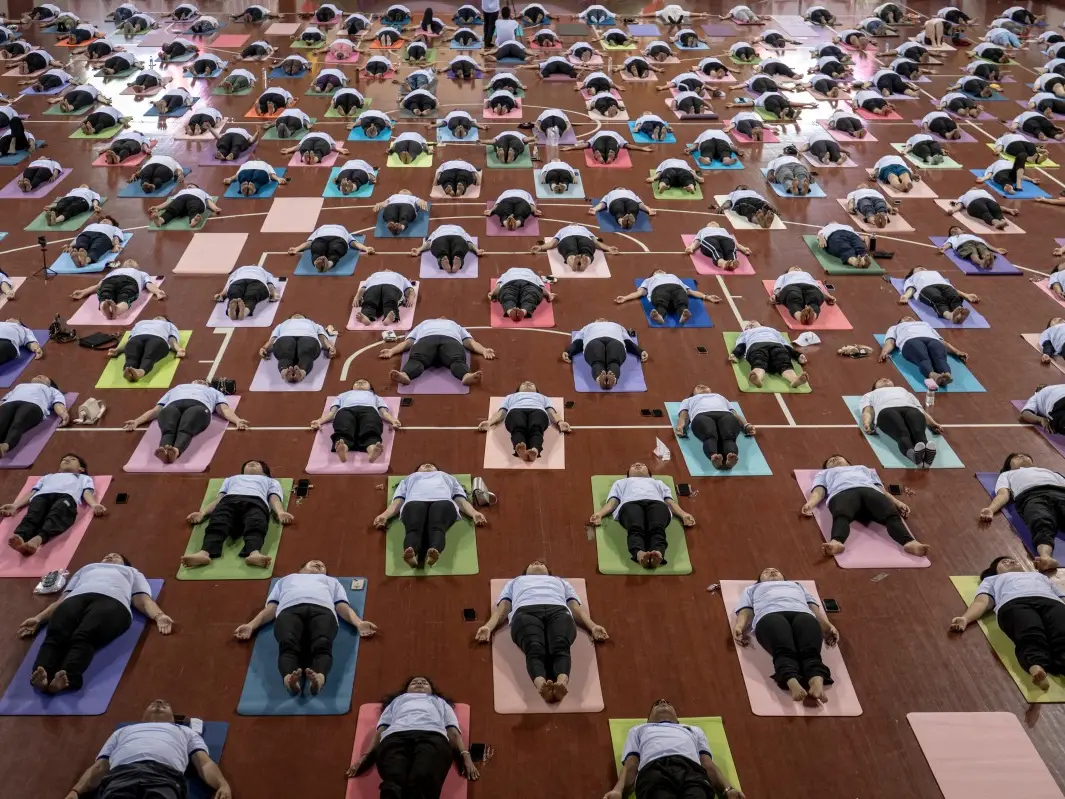
Over the past 10 years, yoga has undergone a remarkable transformation from an ancient wellness practice to an instrument of cultural diplomacy. Indian Prime Minister Narendra Modi addressed the UN General Assembly in September 2014, calling yoga “an invaluable gift of India's ancient tradition”. The United Nations General Assembly adopted a resolution receiving support from 177 member states to celebrate Yoga Day internationally. On June 21, 2015, the first celebration was held globally. Modi led over 37,000 people in yoga asanas on Delhi's Rajpath, entering the Guinness Book of Records. The theme for International Day of Yoga 2026, “Yoga for Healthy Ageing,” focuses on enhancing not just the human lifespan, but the healthspan - the period of life spent in good health.
Also Read: Trump claims multiple arrests made over Reflecting Pool vandalism as repair work continues
Between soft power and global power

Around 180 nations around the world celebrate Yoga Day annually. It has been a key plank of Indian foreign policy. The Indian government is projecting it as a tool of unifying force to the world. In December 2016, UNESCO officially inscribed yoga on the Representative List of the Intangible Cultural Heritage of Humanity. The global yoga market was estimated at $127.0 billion in 2025 and is projected to reach $138.66 billion in 2026, growing at a CAGR of 9.9 per cent. Yoga's proliferation has also contributed to India's economic output, spurring yoga tourism and increased travel to India for retreats and training. It has also served as a cultural link that strengthens ties with India's 25-million-strong diaspora. In India, it is valued at $5.06 billion in 2025, and is expected to double by 2033. It is kind of the central pillar of the compound health and wellness sector due to its massive global influence. According to the macro market data tracked in the Future of Wellness Market in India Report, the Indian wellness market was valued at $150 billion in 2024.
The core paradox is that India's major cultural export, yoga, is practised by an estimated 300+ million people worldwide, but India ranks 32nd at the Brand Finance Global Soft Power Index 2026, falling from 28th in 2023. It implies that a massive number of participants are not being transferred in diplomatic deference. When any instrument, for example, Iran's geopolitical leverage over Hormuz, shapes international outcomes, it translates into a major global power. But Indian cultural export does not help in securing favourable trade deals with the US or a UNSC permanent membership seat or resolving border tension with China and Pakistan. Yoga succeeded as a national branding but fell short of becoming a global power. It makes India admired, but not influential. Analysts also note a similar paradox from China's soft power experience: the failure to convert to tangible policy gains. Some critics at ORF and Carnegie prefer a hands-off approach from the government to Yoga and rebrand it with an apolitical appeal.