Exclusive-Bilateral ties destined to move ahead, says India's envoy to US Taranjit Singh Sandhu

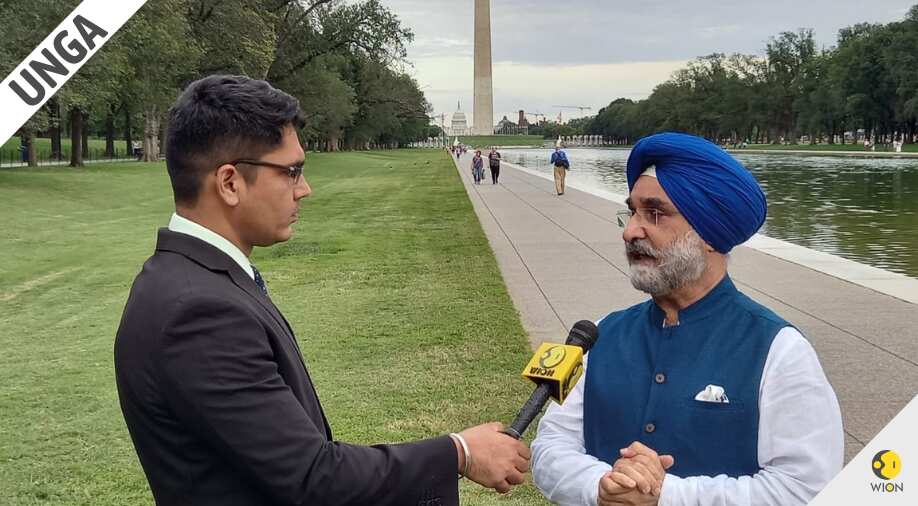
Indian envoy to US Taranjit Singh Sandhu
India's envoy to US Taranjit Singh Sandhu has said that India US ties are "destined to move ahead" and both countries continue to develop the relationship in areas like defense, health care, etc. Speaking to our diplomatic correspondent Sidhant Sibal in Washington, Envoy Sandhu said, "The relationship has steadily evolved.... in Biden's time-- in first 100 days andfirst threemonths, we have had a flurry of engagements".
His comments comeas Indian Prime Minister NarendraModi is all set to visit the US. PM will be in Washington on September 23and will hold bilateral with President Biden and participate in the Quad summit on September 24. Later he will address the United Nations General Assembly on September 25. On the visit, India's top diplomat to US Taranjit Singh Sandhu said, "very fact, the President is hosting the PM in person despite all the difficulties....is a very important signal that US holds India important, including our PM."
WION: How will the visit further the ties between India and United States?
Taranjit Singh Sandhu: See the relationship ever since President Biden has taken over, if you look at the first 100 days, you will see that the intensity of interaction. There were threedirect telephonic calls between President Biden, PM Modi. That was followed by twotop-level summits, in which both of them PM Modi was the prominent speaker. We have had, high-level exchanges of visits. We have had US defense secretary, John Kerry, we had external affairs minister Dr S Jaishankar visiting, those were substantial visits. Subsequently, a foreign secretary has come. This is part and parcel of that, the continuation of that. But you must keep in mind, but because of the Covid situation-- the visit would have otherwise happened even sooner. The very fact, the President is hosting the PM in person despite all the difficulties, not only all around the world but also covid, is a very important signal that the US holds India important, including our PM.
WION: How have the ties evolved over the years between India and the US, from Obama to Trump to Biden Administration?
Taranjit Singh Sandhu: I can certainly tell you, why the Obama administration, go back to the Clinton administration, during President George W Bush's time. The relationship has steadily evolved. Then we come back to President Trump's visit to India. And now in Biden's time-- in the first 100 days andfirst threemonths, we have had a flurry of engagements. The bilateral relationship is destined to move ahead. There are very clear fiveareas in which this relationship will develop. One is strategic and defense side, second is in health care, we have affordable vaccines, these are important priorities for both our countries, including the US. Then we have--IT, digital going into innovation as well as startups. Again, that is an area in which both US and India have a great potential to move ahead. We have an energy basket in which we have LNG, but also the largest renewable program in the world, in which solar is an important component. All this flows into what is climate change. Climate change is an important priority, both for PM Modi, as well as President Biden. Last but not the least, I will say the education, knowledge area. You know a large number of Indian students' study here, you have around 200,000 Indian students--2/3 are in STEM areas. Even in this, current educational year, a large number of Indian students have come. A great desire among US universities to get more of them, beyond that we have a new education policy in which internationalization of education policy is an important component and the US will be an important partner.
WION: How do you see Quad moving ahead, India's role in the grouping...
Taranjit Singh Sandhu: See, the quad as know is an important grouping and these are like-minded countries. They have similar systems, similar values, and all our democratic systems. You know the first virtual quad summit was hosted by President Biden and at that time there was a clear indication by him that he will hold the first in-person summit by the end of the year. They have kept the word despite all the challenges of covid and others. This is perhaps the first major international summit which is being held in the United States and all the fourcountries are coming in. And here, I will again like to mention, you have seen the first virtual summit, there were threeclear areas which had come out--one in the area of vaccine, second was in the area of emerging technologies and third was climate change. In all these threeareas things have been moving ahead, and working groups have been meeting. In this summit, further collaborative steps to be taken in these areas.