Xi’s third term to strengthen authoritarian regime in China: Report

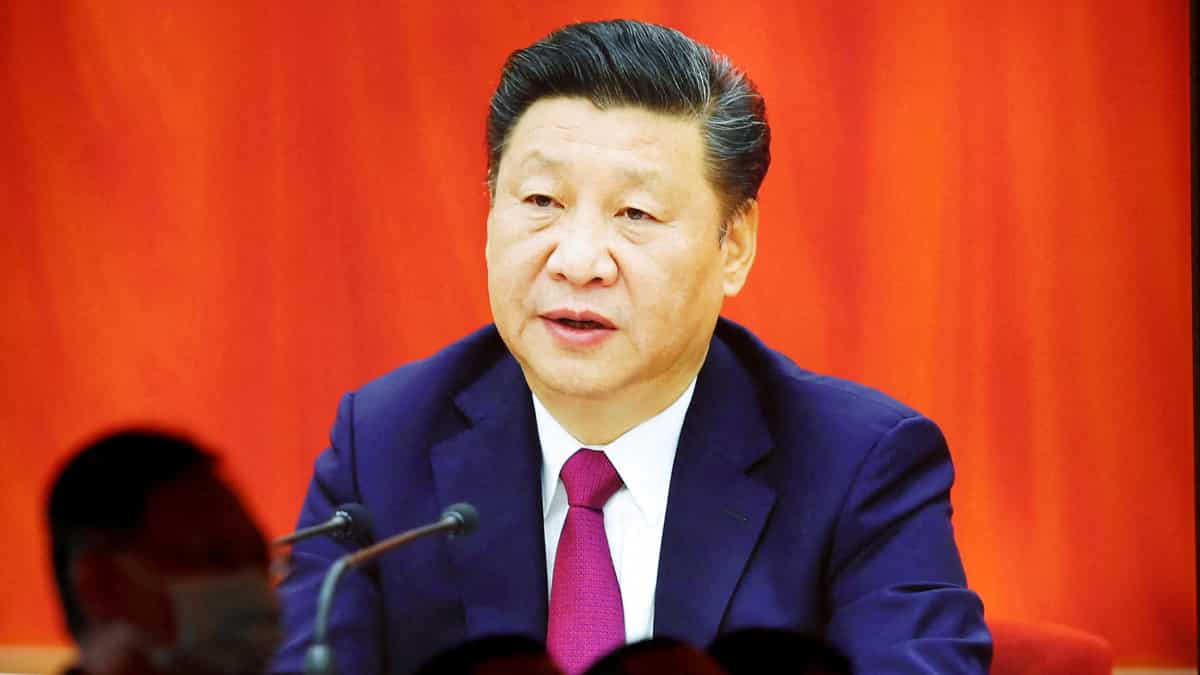
Chinese President Xi Jinping
The authoritarian government in China will be strengthened by President Xi Jinping's third term, eroding the line between the nation and the Chinese Communist Party.
According to Tibet Press, there is a resurgence of interest in the Chinese Communist Party's ability to rule the nation as the 20th party conference of the party draws near.
The party has long sought to obliterate the line separating the country and the party. Even more than his predecessors, the current leader, Xi Jinping, "has worked to indoctrinate the Chinese people to regard themselves not as part of the historic Chinese civilisation, but as gears in the CCP machine."
According to China observer Jimmy Chien, writing on the American defence website, DefenseOne, the term "China" was probably initially used to refer to the central states of the Yellow River basin during the Warring States period (475-221 BCE).
When the People's Republic of China, an entity governed by the Chinese Communist Party, gained control of the historic area of "China," this occurred in 1949.
“As understood by Chinese people, the PRC is the political power that controls the civilizational territories of China. Many Chinese-language speakers pronounce PRC in such a way that it denotes the Communist Party and not the country,” according to Chien.
Chien examines Xi's strategy of obfuscating the line between the two: But the frequent use of "China" to refer to the PRC in English-language criticism aids Xi in his mission. The Chinese people take satisfaction in good news, but the CCP gets all the credit. Negative news also makes people feel as though civilisation as a whole is under siege. The mobilisation of the Chinese people against foreign attacks on China is one of Xi's most effective strategies. By being aware of the distinctions and utilising the phrases "PRC," "CCP," "China," and "Chinese" accurately."
All facets of government are intricately linked to the Party. According to a Chinese analyst, the Communist Party of China's charter, which was updated in 2017, contains the phrase "The party leads them all." This statement reflects President Xi Jinping's belief that the party should be in charge of all spheres, including politics, the economy, and social life.
In general, there are three ways that the CCP is deeply ingrained in Chinese politics. One is that the party appoints all senior government officials, as well as the heads of state corporations, institutions (such as hospitals, schools, and labour unions), and social organisations. Senior positions must be held by members of the party.
Two, all government agencies, state-owned businesses, and public institutions are under the control of committees chosen by the party. The committees are present at all levels, including at the local level in places like rural villages. The party also places a lot of focus on advancing and regulating ideology.
According to Tibet Press, this is accomplished through the use of the media, education, "self-reflection" sessions within government organisations, and requirements that all representatives follow party directives.
Additionally, from 2012 to 2017, Xi Jinping enacted significant structural reforms "to combine the party and the state and construct a highly centralised, top-down ruling regime."
Eight party commissions that are superior to other party apparatus and government agencies are presided over by Xi. State security, internet security, military-civilian technology transfer, diplomacy, finance and economy, military reform, and national audit are among the key topics they cover.
According to Tibet Press, Xi also combined numerous government agencies into the party apparatus, thus obfuscating the distinction between the state and the party.
(With inputs from agencies)
WATCH WION LIVE HERE: