Will AI end traditional school classrooms? Here’s what an expert says

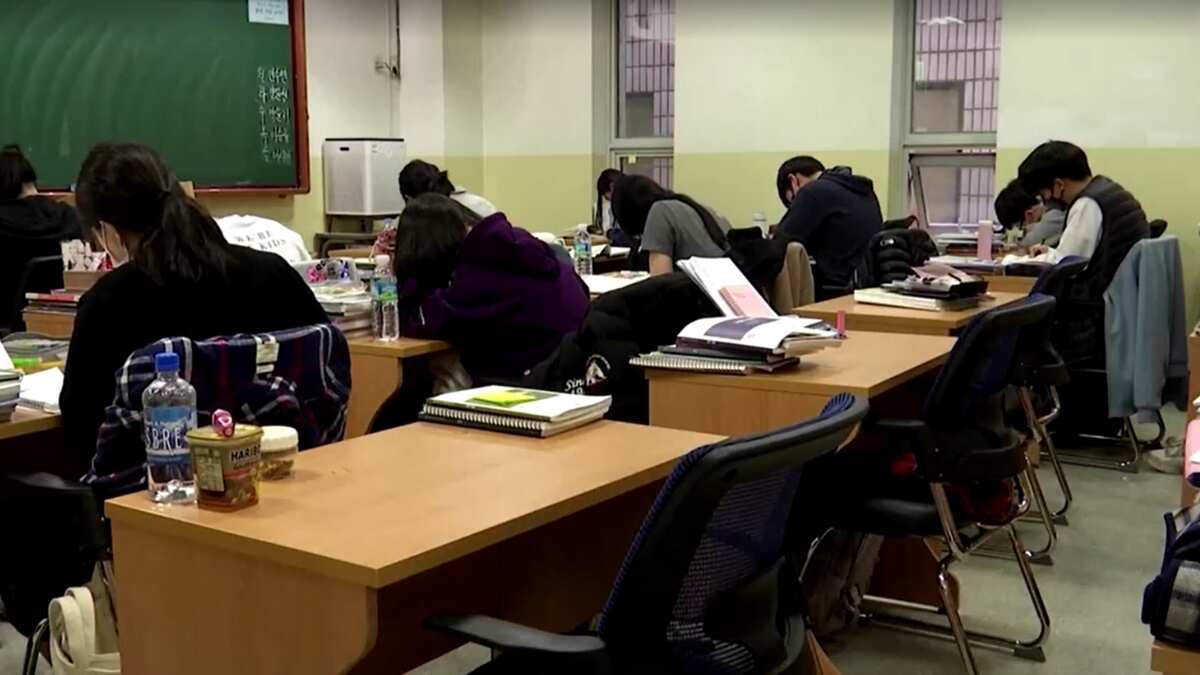
Classroom
There has been a lot of buzz about all the ways that Artificial Intelligence could change the world, from the workplace to schools and day-to-day life as a whole, but the recent advancements in the field could spell the end of the traditional school classroom. In an interview with the British media outlet, The Guardian, on Friday (July 7) one of the world’s leading experts on AI made the prediction that for better or worse, AI might change classrooms.
How would things change?
Speaking about how AI could potentially change traditional school classrooms, a British computer scientist at the University of California, Berkeley, Professor Stuart Russell told The Guardian, “Education is the biggest benefit that we can look for in the next few years.”
He explained how personalised ChatGPT-style tutors would significantly enrich education while expanding global access by delivering personalised tuition to everyone with a smartphone and could potentially feasibly deliver “most material through to the end of high school”.
It might take a few years, possibly by the end of the decade, said Russell, but the ability to deliver “high quality of education to every child in the world. That’s potentially transformative,” as quoted by the British media outlet.
What about the risks?
According to Russell, deploying technology as strong as AI in the education sector also has its risks including possible indoctrination.
Speaking to The Guardian, he said that while research has shown evidence that human tutors with one-on-one teaching have been two to three more times effective than traditional classrooms, “It’s literally infeasible to do that for every child in the world. There aren’t enough adults to go around.”
This is where AI’s personalised ChatGPT-style tutors could step in. On the other hand, it would also prompt “reasonable fears” among teachers and teaching unions of “fewer teachers being employed or possibly even none,” Russell told The Guardian.
Speaking about the risks he also said, “It will be essential to ensure that the social aspects of childhood are preserved and improved.” He expressed hope and that if the system is “properly designed, won’t tell a child how to make a bioweapon. I think that’s manageable.”
In relation to the education sector, he told The Guardian, that a more concerning issue would be its potential hijacking of software by authoritarian regimes or other players. “I’m sure the Chinese government hopes (the technology) is more effective at inculcating loyalty to the state,” said Russell, adding that in this case, AI would be “more effective than a book or a teacher.”
Should we be worried about the risks?
Notably, the British computer scientist was also one of the signatories of an open letter calling for a pause on the “out-of-control race” to develop AI and has spent years highlighting the risks that the technology poses.
Russell also went on to tell The Guardian that lawmakers are belatedly recognising and engaging with the issue so that’s good. But in addition to direct risks AI systems, particularly large language models, can have unpredictable consequences considering hundreds of millions of people will be in “conversation with these things all the time.”
“We don’t know what direction they could change global opinion and political tendencies,” Russell told The Guardian, adding that it could be a “massive environmental crisis or nuclear war” and we would not even realise why this has happened.
“Those are just consequences of the fact that whatever direction it moves public opinion, it does so in a correlated way across the entire world,” he added. Therefore, considering experts are still unable to figure out how to quantify the risks of losing control of the AI system it continues to pose both regulatory and technical challenges.
WATCH WION LIVE HERE
You can now write for wionews.com and be a part of the community. Share your stories and opinions with us here.