WHO backs antibody treatment for high-risk COVID-19 patients

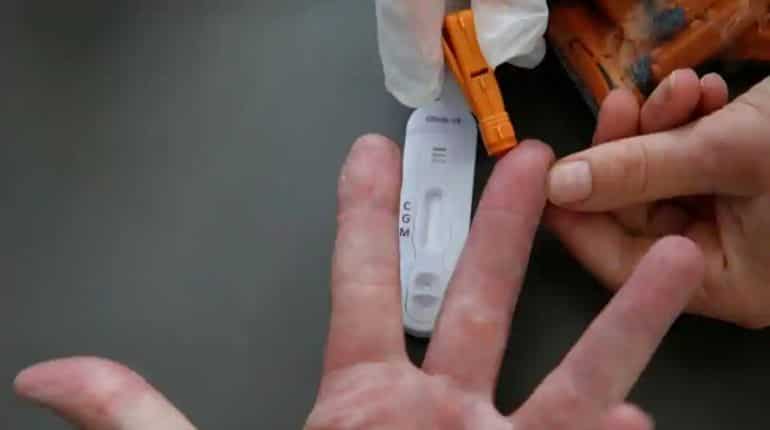
COVID-19 antibody tests
The World Health Organization (WHO) on Friday recommended the syntheticantibodytreatmentRegeneron forCovid-19, but only inpatientswith specific health profiles.
Persons with non-severeCovid-19whoare nonetheless athigh riskof hospitalisation can take theantibodycombo, as should critically illpatientsunable to mount an adequate immune response, according to aWHOfinding published in BMJ.
Regeneron is only the thirdtreatmentforCovidto be recommended by the global health authority, which added it to its "livingWHOguideline" on drugs forCovid-19.
In July,WHOgave the nod to a class of drugs that act to suppress a dangerous overreaction of the immune system to the SARS-CoV-2 virus that causesCovid.
These medicines work well in tandem with corticosteroids, which were first recommended byWHOfor use inCovidpatientsin September 2020.
The Regeneron cocktail of synthetic antibodies, casirivimab and imdevimab, has been found to reduce the risk of hospitalisation for unvaccinated, elderly or immunosuppressedpatientswithCovid, according to three clinical trials that have yet to be peer reviewed, according to the BMJ.
For the second category of patient covered by the newWHOrecommendation, another trial has reported a reduced number of deaths, and cases requiring mechanical ventilation, inpatientstaking the drugs.
"For all othercovid-19patients, any benefits of thisantibodytreatmentare unlikely to be meaningful," theWHOconcluded.
Designed by biotech firm Regeneron and marketed by pharmaceutical giant Roche under the name Ronapreve, thetreatmentwas given to former US President Donald Trump during his brush with coronavirus.
When used together, the monoclonal antibodies casirivimab and imdevimab bind to the SARS-CoV-2 spike protein, neutralising the virus’s ability to infect cells.
The World Health Organization "welcomes the addition of another therapeuticto the world’s arsenal againstCOVID-19", but expressed concern about the impact of high prices on health inequality.
"Given the high cost and low availability of the combination therapy, [global health agency] UNITAID is negotiating with Roche Pharmaceutical ... for lower prices and equitable distribution across all regions, especially in low- and middle-income countries,"WHOsaid in a separate statement.
"WHOis also in discussions with the company for a donation and distribution of the drug through UNICEF."
The UN health authority also called on other manufacturers to submit "bio-similar" versions of the drug for approval.
In July, Japan had become the first country to fully approve Regeneron'santibodytreatmentforpatientswith mild to moderateCovid-19.
Theantibodycombination has been authorised for emergency or temporary pandemic use in a number of countries and regions, including the European Union, United States, India, Switzerland and Canada.