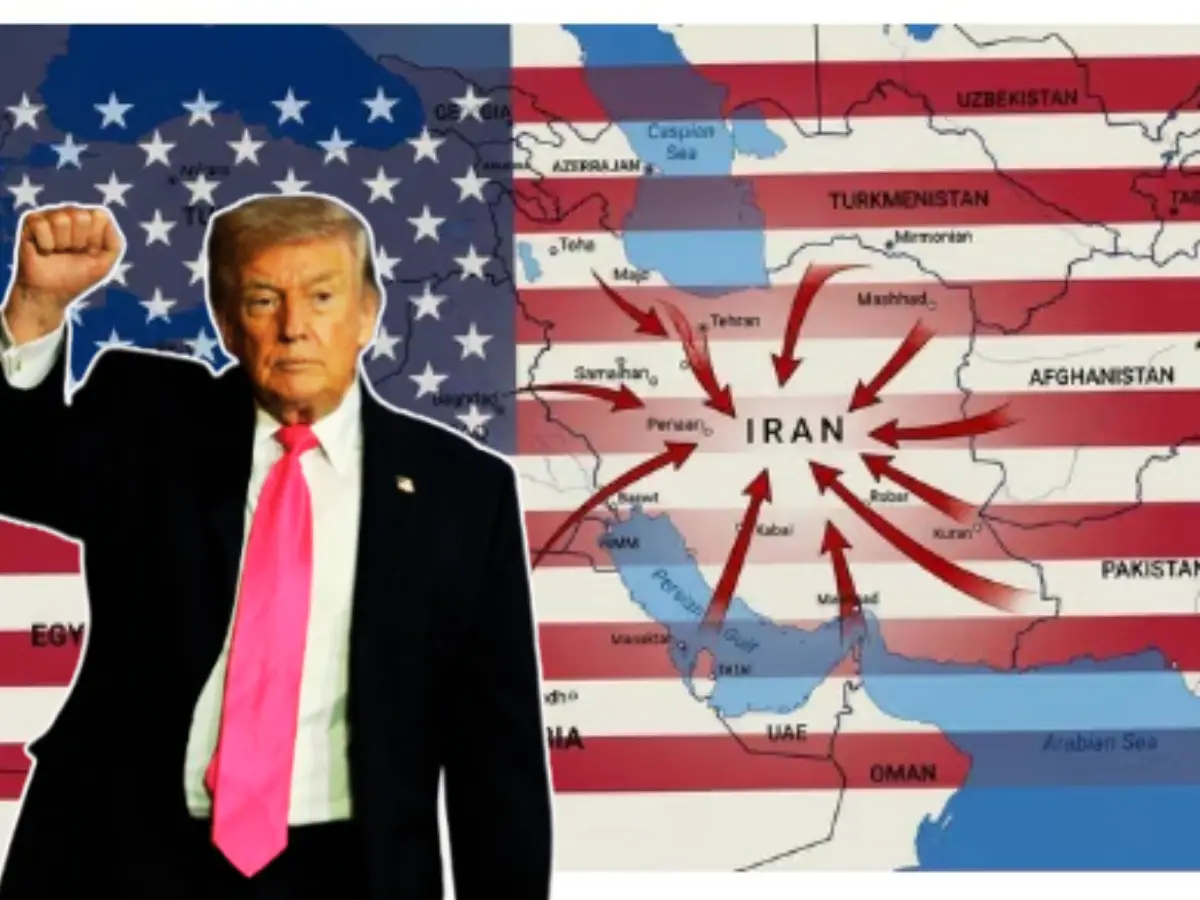
'We are going to hit Iran 'hard'. There will be a response': Trump after Tehran's strikes on US bases in Jordan

&imwidth=600&imheight=450&format=webp&quality=medium "'We are going to hit Iran 'hard'. There will be a response': Trump after Tehran's strikes on US bases in Jordan")
US President Donald Trump Photograph: (Donald Trump/Truth Social)
Trump vows retaliation after Iran's missile strikes on US forces in Jordan, while sanctions deepen Iran's economic crisis and talks remain uncertain
President Donald Trump has vowed retaliation after Iran launched missile strikes targeting US forces in Jordan, saying Washington will respond forcefully while leaving open the possibility of renewed talks with Tehran. "We're going to hit them hard," Trump was quoted as saying to Fox News' Trey Yingst in a phone call on Monday. “There will be a response.” Trump said US forces intercepted most of the missiles fired overnight, with one missile allowed to pass through air defenses because it was not expected to strike a target.
According to a US source cited by Fox News, Iran fired at least eight ballistic missiles at US forces in Jordan on Sunday. The attack reportedly caused no significant impact. The Iranian missile barrage came after US forces carried out a strike against Iranian Revolutionary Guard Corps launchers on Larak Island. American officials said the operation followed the identification of preparations for an IRGC rocket launch intended to deploy new sea mines in the Strait of Hormuz.
US Central Command described the operation as ‘limited, precise action’ against minelaying forces that posed an ‘imminent threat’ to commercial shipping and the free flow of global commerce. Despite the escalating military confrontation, Trump indicated that there could still be an opening for negotiations. "They want to meet so badly," Trump said. "I just don't know if you can count on a deal with them. The sanctions are kicking in really strongly."
Iran is also facing increasing economic pressure as US sanctions weigh on the country's oil exports and broader economy. Iranian officials have increasingly acknowledged the impact of the sanctions, while regional intelligence sources have warned that worsening economic conditions could fuel renewed unrest. The Iranian rial has fallen to about 2.1 million per US dollar, marking a historic low and underscoring the depth of the country's economic difficulties.
Although Tehran is facing mounting financial pressure, Iranian officials have shown no clear indication that they are prepared to alter their position or reach an agreement with Washington. The latest exchange of strikes has therefore heightened fears of a broader regional escalation, particularly around the Strait of Hormuz, a critical route for global energy and commercial shipping.

