Watch | China does a SpaceX: Achieves first-ever controlled recovery of reusable rocket

&imwidth=600&imheight=450&format=webp&quality=medium "Watch | China does a SpaceX: Achieves first-ever controlled recovery of reusable rocket")
Photograph: (X@The_Guy_Space)
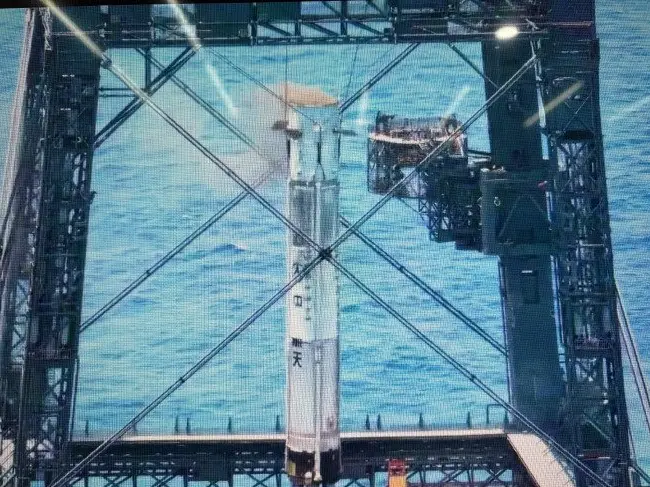
China became the second country to successfully recover a reusable orbital-class rocket booster after completing the maiden controlled recovery of its Long March 10B rocket
China on Friday (July 10) became the second country after the United States to successfully demonstrate a reusable orbital-class rocket after completing the first controlled recovery of a reusable booster during the maiden launch of its Long March 10B carrier rocket. The achievement marks a major milestone in the country's efforts to develop reusable space technology.
The feat comes more than a decade after US company SpaceX, founded by Elon Musk, became the first to recover an orbital-class rocket booster in December 2015.
Beijing celebrated the milestone, calling it "A historic day for China's space program!"
"A historic day in China’s space program!
"China’s Long March-10B has successfully completed its maiden flight—and recovered its first stage via a sea-based net. This marks the country’s first-ever controlled rocket recovery. A major leap toward reusable launch capabilities," Mao Ning, Spokesperson of the Ministry of Foreign Affairs of China, wrote on X.
Unlike SpaceX's Falcon 9, which lands autonomously on drone ships or landing pads using deployable legs, China's Long March 10B uses landing hooks to catch a net suspended on a sea platform.
SpaceX completed its first successful Falcon 9 booster landing after an orbital mission in December 2015, while Blue Origin's New Glenn achieved its first successful landing in November 2025.
China has spent nearly a decade working on reusable rocket technology through a series of low-altitude hover tests and orbital booster recovery experiments. A successful reusable launch system is expected to reduce launch costs while supporting the country's rapidly expanding commercial satellite network.
Last December, two other Chinese reusable rockets attempted SpaceX-style vertical landings using grid fins and landing legs. However, both missions failed, according to the Hong Kong-based South China Morning Post.