US North Korean envoy Stephen Biegun named as US State Department number two

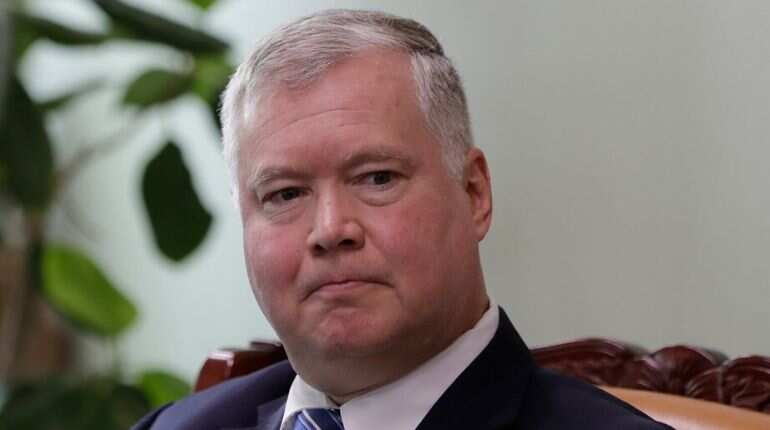
Stephen Biegun
StephenBiegun, a respected US foreign policy veteran in the difficult job of leading diplomacy withNorthKorea, wasnamedThursday as theStateDepartmentnumbertwo, a role that could become even more key in coming months.
President Donald Trump announcedBiegun's nomination to replace Deputy Secretary ofStateJohn Sullivan, who has been tapped to be ambassador to Russia.
The nomination is drawing particular attention amid growing speculation that Secretary ofStateMike Pompeo will run for Senate next year in Kansas, meaning thatBieguncould become the acting top US diplomat, at least briefly.
Biegun, whose nomination requires Senate confirmation, will remain as the special representative onNorthKorea, a position he took last year after Trump's historic first summit with leader Kim Jong Un, a US official said.
Bieguninitially received a cold shoulder fromNorthKoreanofficials who, mindful that the countries' leaders were negotiating directly about Pyongyang's nuclear program, saw little reason to deal with anenvoyon anything other than summit logistics.
ButBiegunenjoyed a breakthrough of sorts in early October when he metNorthKorea's lead negotiator Kim Myong Gil in Sweden.
NorthKorea walked away from the talks, denouncing the US attitude, but the United States issued a comparatively upbeat statement saying thatBiegunnever planned to resolve all issues in a day and that thetwosides would meet again.
At a time of deep polarization in Washington,Biegun, 56, has won respect for his affability and for offering cogent analysis rather than ideological lectures.
A lifelong Republican,Biegunspent his career in behind-the-scenes roles in Congress and in former president George W. Bush's administration, where he served in senior staff positions at the White House andStateDepartment.
Former secretary ofstateCondoleezza Rice voiced "tremendous respect" forBiegun, calling him a "very strong diplomat, but also an exceptional manager."
William Cohen, defense secretary under Democratic president Bill Clinton, in a statement praisedBiegun's "unassailable reputation for intelligence, integrity and independence" and said he had "gained the respect of others across the political spectrum and around the world."
Unlike Sullivan, who is expected to be confirmed to go to Moscow,Biegun's expertise in fact lies in Russia, where he lived from 1992 to 1994 as part of US democracy promotion work.
In an interview with an alumni publication at the University of Michigan,Biegunrecalled that he became fascinated by Russia when a high school history teacher wrote "tsar" in Cyrillic script.
"It was one of the most exotic things I'd ever seen. It left such an impression on me that I went to the town library and checked out a book to teach myself Russian," he said.
A native of Michigan,Biegunwas the third generation of his family to work at the Ford Motor Corp., handling the auto giant's relations with foreign governments before being tapped as theNorthKoreaenvoy.