

&imwidth=800&imheight=600&format=webp&quality=medium "US Midterms: How Palestine, Iran war, and Trump's rhetoric will shape Muslim vote")
Countdown has began for US Midterms elections scheduled on Nov 3. Both Republicans and Democrats are on campaign trail in an election that US President Donald Trump said would be a referendum for his administration. This article particularly examines the role of Muslim voters in the US – who have wandered from Republican roots to Democratic realignment. With Trump's anti-Muslim rhetoric, their role in spoiling the number game for Republicans gets even more interesting.
From past to present
Till 2000s, major Muslim organisations endorsed George W. Bush. Voters aligned with the GOP's conservative social values and fiscal policies. Crucially, Bush campaigned on ending the use of "secret evidence," which the community viewed as a tool for ethnic and racial profiling. However, things changed after the 9/11 attacks. The September 11 attacks fundamentally transformed the community's domestic reality. The introduction of the Patriot Act, surveillance programs and widespread racial profiling pushed many Muslim voters towards the Democratic Party.
Since then, Muslim communities have felt the “institutional exclusion” in the US when it came to Republicans. Muslim voters voted overwhelmingly for Joe Biden in 2020 (around 65% to 70%) to counter explicit xenophobia, as per reports. However, disillusionment over the Biden administration's handling of the Israel-Hamas war contributed to a sharp decline in support for the Democratic ticket. Cut to present, under Donald Trump, the travel ban on several Muslim-majority nations has reinforced a sense of institutional exclusion. Concerns over domestic profiling, discrimination and anti-Muslim rhetoric has only increased under Trump. Adding to this, in the geopolitical reality. While domestic civil liberties had long kept many Muslim voters within the Democratic coalition, the Palestinian cause remained a major source of friction over US foreign policy in the West Asia. Trump administration has been a strong ally of Israel and is seen to have backed Gaza war, despite Trump's attempt to be a peacemaker with his ‘Board of Peace.’
Trending Stories
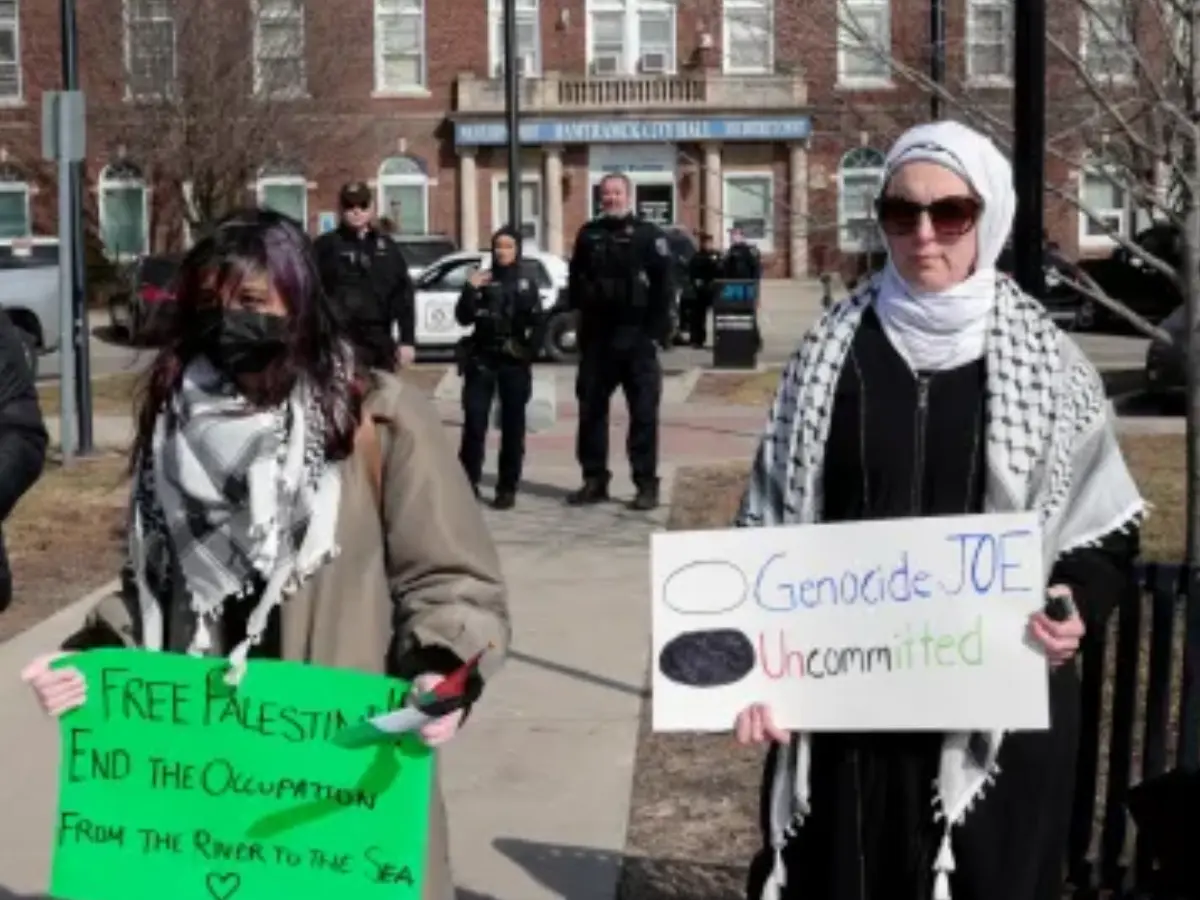
Now, a significant section of the Muslim electorate have also turned to third-party candidates. A CAIR national exit poll cited in the copy showed Jill Stein receiving 53% of the Muslim vote, followed by Donald Trump at 21% and Kamala Harris at 20%. In critical swing states like Michigan, the "uncommitted" movement actively used electoral leverage to protest US military aid to Israel. The spectacular victory of New York Mayor Zohran Mamdani can be seen as an example of the community's choices. While being Democrat, Mamdani has projected himself more like a socialist – with Trump calling him a ‘radical’ - much to his satisfaction, it seems.
A growing political infrastructure
With 255 Muslims reportedly serving in public office across 26 states, Muslim Americans are building a stronger political presence at the local and state levels. The community enters the next political cycle less as a reliable partisan bloc and more as a highly mobilised constituency balancing two priorities: domestic civil liberties and representation at home, and US foreign policy, particularly on Palestine, abroad.

