Pakistan's Taxila reconstruction: What are the UN Rules for reconstruction

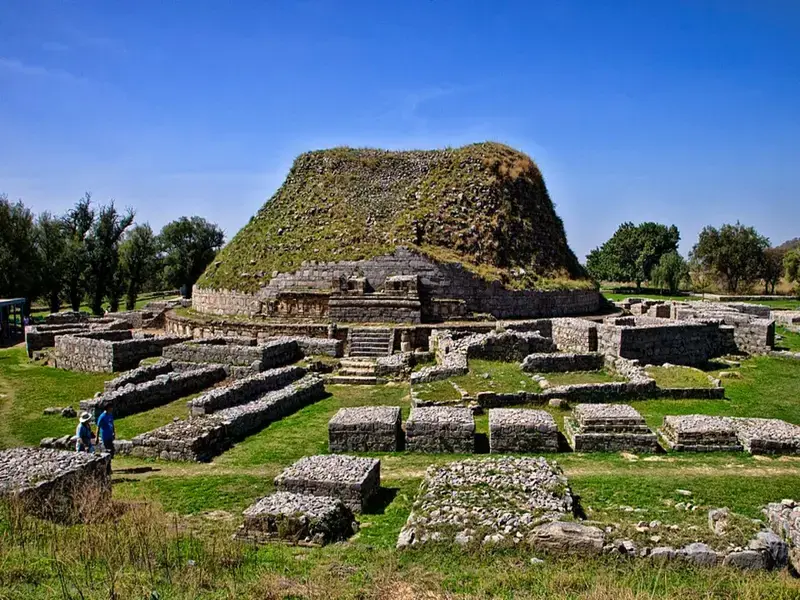&imwidth=600&imheight=450&format=webp&quality=medium "Pakistan's Taxila reconstruction: What are the UN Rules for reconstruction")
Ancient complex of Taxila Photograph: (Wikimedia Commons)
UNESCO has warned Pakistan to reverse reconstruction work at Taxila, saying the changes could threaten the integrity of the World Heritage site
The UN has asked Pakistan to reverse the “reconstructions” at Taxila that undermined the integrity of two historical sites in Taxila, a UNESCO heritage site. Failure to comply with the direction will result in being placed in the organisation's “danger list” or stripped of its World Heritage status if compliance is not met.It has been reminded that it had previously stripped a World Heritage Site in Germany and would not consider twice to strip Mohra Moradu and Sirkap due to “unnecessary interventions”.
UNESCO found that original walls were being replaced with new construction or their height was being raised, an intervention that could affect the integrity of the site. Punjab Archaeology Department Director General Malik Zaheer has rejected the characterisation, saying that the work was a reconstruction.
Also read: Gujarat ATS arrests eight alleged Jaish-e-Mohammed operatives, foils bid to build terror network
What are the UN Rules for reconstruction?
The United Nations follows the rigid rules of reconstruction, most of which are primarily mandated for only ‘exceptional circumstances’ such as damages due to conflict and major natural disasters. The UN reconstruction plans are meant to preserve the Outstanding Universal Value (OUV) of each site, the reason for which it was inscribed in the first place. UNESCO defines OUV as ‘cultural and/or natural significance which is so exceptional as to transcend national boundaries and to be of common importance for present and future generations of all humanity’. But within the context of recovery, which addresses the “questions of reconciliation and cannot rewrite history”. There is no scope for guesswork, “what it might have looked like”; it must be based on detailed and verified documentation. UNESCO prioritises opting for virtual projections, digital mapping, and museum exhibitions where the remaining materials are absent.