Ukraine under attack: Here's a timeline of months of tensions around Russia-Ukraine conflict

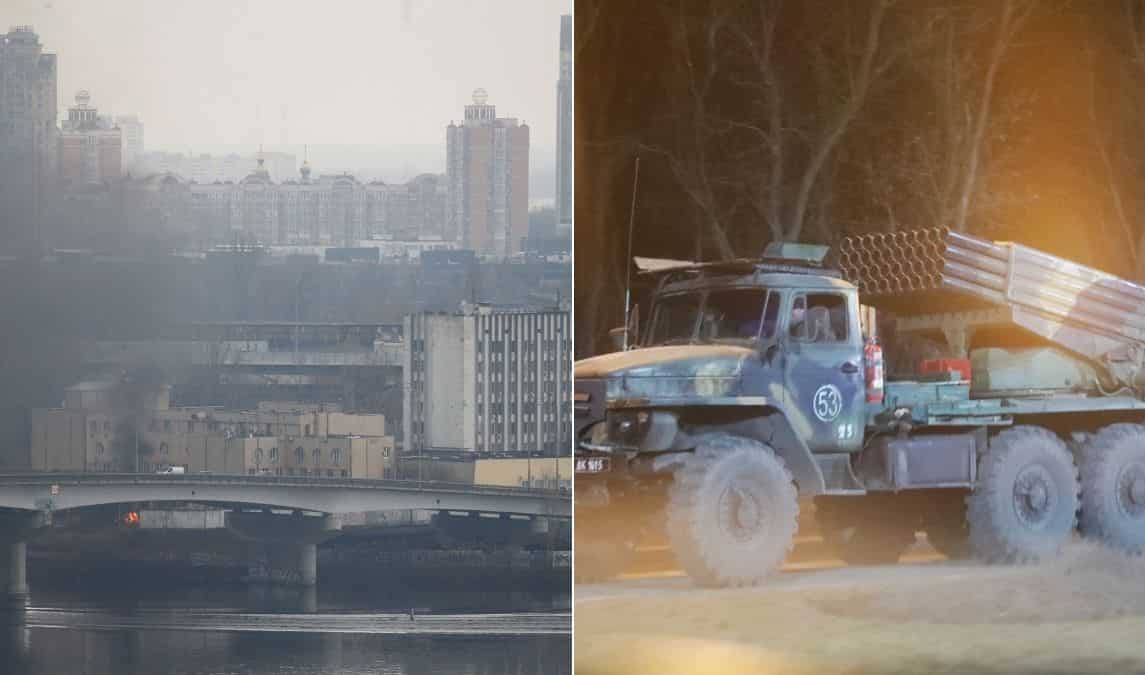
Donetsk, Ukraine
Russian President Vladimir Putin announced the launch of a military operation against Ukraine on Thursday (February 24) as news agencies mentioned that Russian ground forces invaded Ukraine from several directions.
ALSO READ |Ukraine envoy seeks PM Modi's intervention in Russia-Ukraine conflict; cites Chanakya and Kautilya
How did the Russia-Ukraine border crisis got escalated to a war-like situation? Here's a timeline of months of tensions around Ukraine:
Troop movements
On November 10, 2021, the United States reports unusual Russian troop movements near the Ukrainian border.
On November 28, Ukraine said Russia is massing nearly 92,000 troops for an offensive at the end of January or early February.
However, Moscow denies it and accused Kyiv of a military build-up of its own.
Russia also demanded "legal guarantees" that Ukraine will never join NATO.
Moscow demands
On December 7, US President Joe Biden threatened Russian counterpart Putin with "strong economic and other measures" if he invades Ukraine.
Ten days later, Moscow put forward proposals to limit US and NATO influence on former Soviet states.
Build-up in Belarus
On January 17, Russian troops began arriving in ex-Soviet Belarus for military drills. At that point in time, said that the drills were aimed at "thwarting external aggression".
Two days later, Washington announced an extra $200 million in security aid to Kyiv.
NATO on standby
On January 24, NATO put troops on standby and sent ships and fighter jets to bolster Europe's eastern defences. The next day, Moscow began military exercises involving some 6,000 troops and at least 60 fighter jets in southern Russia near Ukraine and in Moscow-annexed Crimea.
On January 26, Washington refused to shut the NATO door on Ukraine and the alliance said many of Moscow's security demands are "unrealistic".
ALSO READ |Russia-Ukraine conflict: How is India planning its response considering Indian students in Kiev
China warns US
The United States said it believes Putin "is going to use military force between now and the middle of February". The next day, China warned that Russia's security concerns should be "taken seriously".
On January 28, Putin said the West has ignored "Russia's fundamental concerns" on NATO's expansion and has "strike weapons systems near Russia's borders".
Manoeuvres in Belarus
On February 2, the United States sent 3,000 troops to fortify NATO forces in eastern Europe. Russia and Belarus began 10 days of military manoeuvres on February 10.
Retreat or reinforcement?
On February 15, Moscow said some of its forces are returning to their bases. But NATO claimed that it saw no sign of a withdrawal.
Artillery fire
On February 17, shellfire intensified all along the frontline of the two Russian-backed enclaves in eastern Ukraine. A day later, the leaders of the Donetsk and Lugansk separatist regions said they are evacuating residents to Russia.
US Secretary of State Antony Blinken accused Moscow of "false provocations" to justify further "aggression" against Ukraine.
Attack imminent?
On February 19, Ukraine said that two of its soldiers died in attacks on the frontline with Russian-backed separatists. Ukrainian President Volodymyr Zelensky proposed a meeting with Putin, as Moscow test-fired nuclear-capable missiles. Russia is "on the brink" of invading Ukraine, Washington said.
Putin-Biden summit?
France and Germany called on their nationals to leave Ukraine. On February 21, France said that Putin and Biden have agreed in principle to a summit.
But the White House said it was notably cautious and the Kremlin said it is too early. The Russian military said it has killed five "saboteurs" who crossed into Russia from Ukraine. Ukraine denied the claims.
Putin recognises separatist republics
In a televised address on February 22, Putin recognised the independence of two separatist regions in eastern Ukraine. Putin ordered Russian troops into separatist areas in eastern Ukraine on a "peacekeeping" mission.
Condemnation and sanctions
Several hours later during an emergency Security Council session, the UN and most of its members denounced the Russian decisions.
Washington said it will slap new sanctions on Russia. The EU will also adopt sanctions, the bloc's foreign policy chief Josep Borrell said.
Moscow said Russian Foreign Minister Sergei Lavrov is still ready for talks with Blinken, whom he is scheduled to meet in Geneva on Thursday.
Putin announces military operation
On Thursday (February 24), Putin announced a military operation in Ukraine in a surprise television address. He called on Ukrainian soldiers to lay down their arms, claiming he wants a "demilitarisation" of the former Soviet state but not its occupation.
Explosions were heard
Explosions were heard ring out before dawn in Ukraine's capital Kyiv and several cities near the frontline and along the country's coast.
'Full-scale invasion'
Ukraine's Foreign Minister Dmytro Kuleba accused Putin of launching a "full-scale invasion".
Martial law
Zelensky declared martial law and later broke diplomatic ties with Russia.
'Maximum losses'
The head of the Ukrainian military said that he has received orders from Zelensky to repel a Russian invasion and to "inflict maximum losses".
Airbases, defences 'destroyed'
Russia's defence ministry said it has neutralised Ukrainian military airbases and its air defence systems.
50 'occupiers' killed
Ukraine said it has killed "around 50 Russian occupiers" while repulsing an attack on a town on the frontline with Moscow-backed rebels.
China watches 'closely'
China called for restraint on all sides and said it is "closely watching" the latest situation.
WATCH |Ukraine claims to have downed 5 Russian planes, calls on army veterans to join
(With inputs from agencies)