Ukraine refugee children dance in safety in Prague

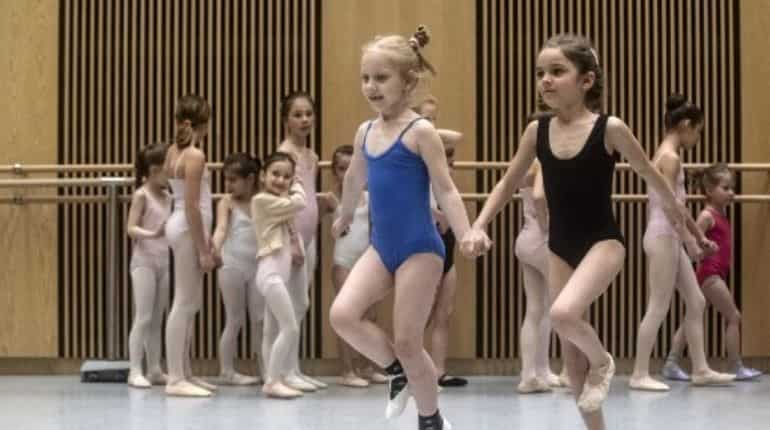
ukrainian children in prague
Six-year-old Eva swings into a backbend with ease, then assesses herself in the large mirror at the end of thedancestudio and rewards herself with a contented smile.
Two dozen Ukrainianchildrenin the room, including one boy, try to do the same, but only a few manage, while the rest end up sitting and watching in awe.
They all attend a freeballetcourse for Ukrainianrefugeechildren, opened byPrague's National Theatre at the end of March, a month after Russia began its invasion ofUkraine.
"My daughter and I went to see the Sleeping Beautyballetat the state opera... We jumped at the opportunity!" said Eva's mother, Yuliya Petronchak.
She and Eva left the western Ukrainian city of Lviv forPragueon the first day of the invasion to escape "the constant air alarms", while Eva's father stayed at home.
More than 4.5 millionrefugeeshave leftUkrainesince the invasion started on February 24, and around 300,000 have ended up in the Czech Republic.
Like manychildrentaking part in the course, Eva has experience from home -- she went to the State Choreographic School in Lviv for six months before leaving.
The cradle of classicaldance
"I have already spotted some talents," said Jana Jodasova, a former dancer at the National Theatre for 20 years who now teachesballet.
At the beginning of the lesson, she helps the little dancers choose leotards andballetshoes out of three bags provided by the parents of Czechchildrenattending her regular classes.
Watch |Gravitas: Finland prepares for a potential war with Russia
She assesses the fit and sometimes sends a dancer back to the changing room with a different leotard.
The properly dressed little ballerinas meanwhile practise pirouettes on their own or test the firmness of the bars on the sides of thedancestudio.
Jodasova came up with the idea soon after the Russian invasion started as she watched "the horrors" on TV.
"Russia andUkraineare the cradle of classicaldance, most kids over there go toballetclasses at least for some time," the energetic 59-year-old told AFP.
"Balletis one of the things they can't live without."
Moments later, she faces a crowd of around a hundred mothers with theirchildrenqueueing outside the building to register for the free course.
Arms and legs
The new role has forced Jodasova to dig up her long-forgotten command of Russian, forced onto Czechs and other nations under Moscow's communist realm until 1989.
"I communicate with thechildrenusing my arms and legs and very poor Russian. But I feel we can understand each other," she said.
When she struggles, she turns to eight-year-old Alisa Kolesnikova, who was born to Russian parents inPragueand who attends Jodasova's regular course for localchildren.
Alisa, who has attended theballetschool for three years and wants to become a ballerina, relishes the opportunity as she guides therefugeechildrenthrough the practice.
"I really love to show things to the kids, especially the beginners," the ginger-haired, blue-eyed dancer told AFP.
Hoping to return
One of the youngestchildrenat therefugeecourse, five-year-old Vasilisa Malakutska, is no beginner either.
"I first took her to aballetclass when she was four and she didn't feel too well about it, but I think now is the right time," said her mother Ekaterina Malakutska, a marketing expert from Kyiv.
She is contemplating aballetcareer for her daughter, just like Yuliya Petronchak is for little Eva.
"Either a ballerina or a doctor," university teacher Petronchak told AFP, adding that although Eva was happy at thePraguecourse, her future was inUkraine.
"Thesafetyof the child is key. But if there are no alarms in westernUkraine... we hope to return. As soon as possible."