Saudi Arabia, Turkey and Pakistan seal landmark Makkah Joint Defence Agreement

&imwidth=600&imheight=450&format=webp&quality=medium "Saudi Arabia, Turkey and Pakistan seal landmark Makkah Joint Defence Agreement")
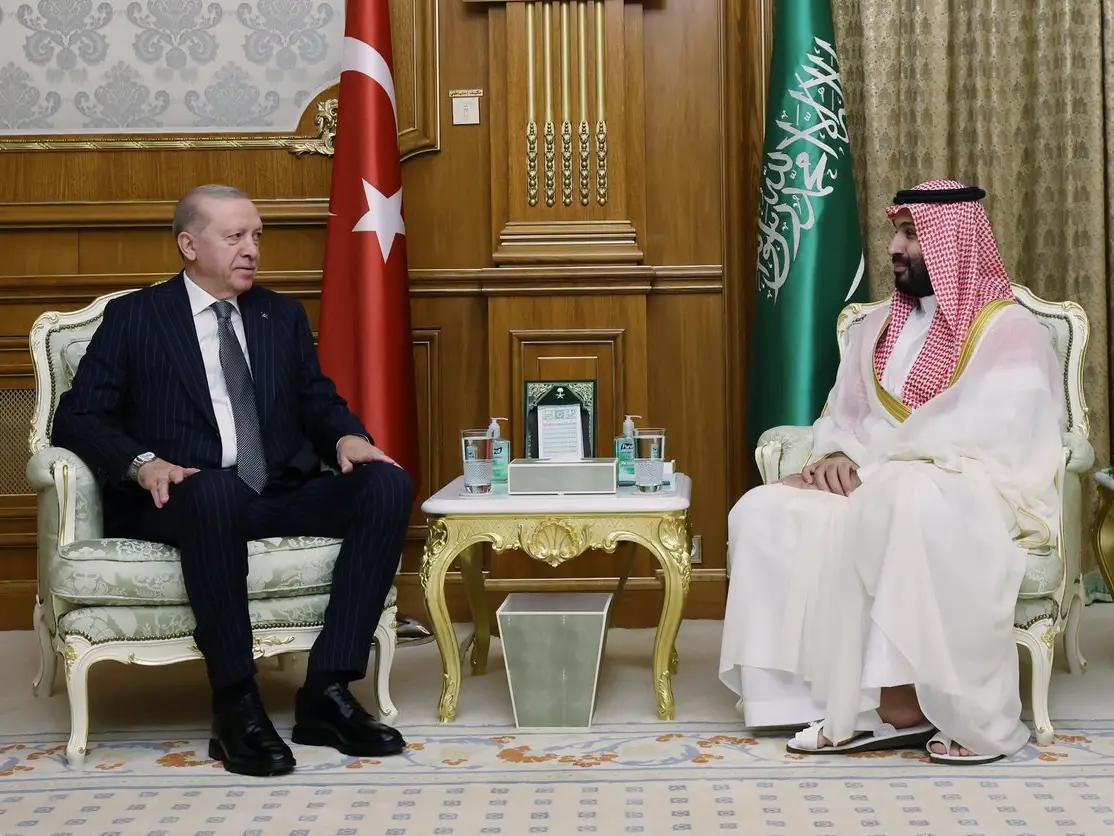
Erdogan Meets Saudi Crown Prince Mohammed bin Salman in Mecca Photograph: (x)
Turkey, Saudi Arabia and Pakistan sign the Makkah Joint Defence Agreement, pledging collective defence and enhanced military cooperation.
Turkey, Saudi Arabia and Pakistan signed a landmark trilateral defence agreement in Mecca, Saudi Arabia, on Friday, August 7. The historic Makkah Joint Defence Agreement was signed by Crown Prince Mohammed bin Salman, President Recep Tayyip Erdoğan, and Prime Minister Shehbaz Sharif. The defence agreement comes in the backdrop of the US-Iran war and Israeli aggression in the region, which had entangled the entire Gulf region and disrupted the shipping traffic through the strategic Strait of Hormuz.
In a statement, Pakistan's Ministry of Foreign Affairs said, "The Agreement is intended to strengthen collective deterrence against any act of aggression, and stipulates that any armed attack against any one of the three States shall be regarded as an attack against them all. It further provides for the enhancement of all aspects of defence cooperation among the three States." It claimed that the agreement was founded on the countries' longstanding historical ties, Islamic solidarity, shared strategic interests, and enduring defence cooperation and reflects their shared commitment to strengthening collective security while promoting “peace, security, and stability in the region and beyond, in pursuit of a secure and prosperous future.”
Why is the defence agreement happening now?
The three nations are unified by similar concerns about the Shia revolutionary ideology of Iran, Israeli Zionist expansionism and failure of the US to contain the regional conflict. This is significant as Turkey has the second largest military in NATO, Saudi Arabia, one of the world's largest oil exporters, is home to two of the holiest sites of Islam, Mecca and Medina, and Pakistan is the only Islamic country armed with nuclear power.
The pact follows a year of negotiation as Turkey's Foreign Minister Hakan Fidan said that it favoured a broader regional agreement. It is a build-up on the Saudi-Pakistani pact, which treats an attack on either as an attack on both and encompasses “all military means”. Officials emphasise that this new platform is strictly defensive, intended to stabilise the region, and will not alter or undermine the prior international alliance commitments of any participant.