

&imwidth=800&imheight=600&format=webp&quality=medium "Trump's tariff war targets 'transshipments': Here's what it means and what are the penalties announced by US")
The United States on Thursday (July 31) imposed new tariff duties on countries in continuation of US President Donald Trump's Liberation Day tariff. The rates of tariffs on as many as 70 countries were decided on the basis of their negotiations with the US in the period of 90 days that Trump gave earlier this year. While announcing the new rates, the Trump administration included a stricter crackdown on 'trans-shipment'. This means goods found by US Customs and Border Protection (CBP) to have been rerouted through third countries to evade tariffs will face a punitive 40% duty, alongside other fines and penalties.
What is 'transshipment'?
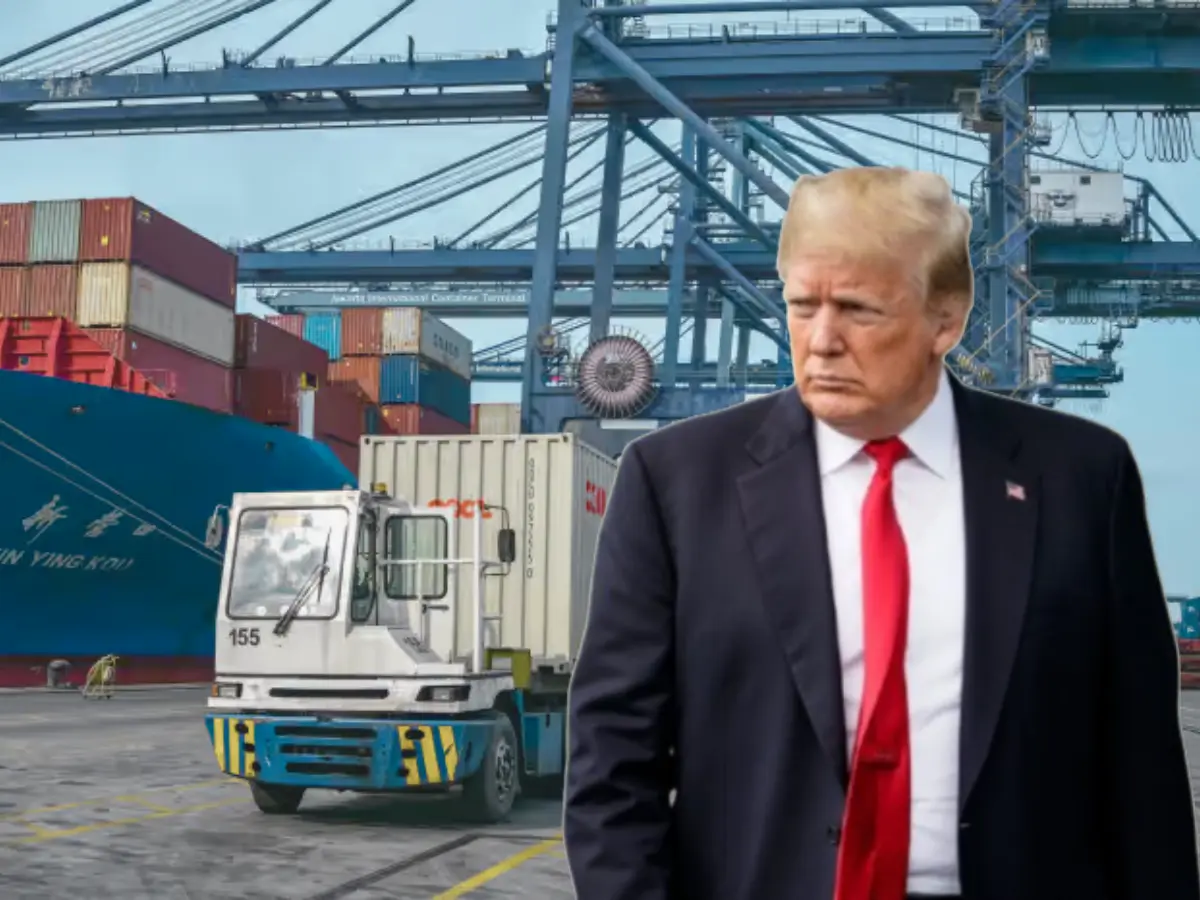
Transshipment is the process of moving goods or containers from one mode of transport to another, or from one vessel to another, at an intermediate destination before they reach their final port. This is a common practice in international trade and is often necessary when there is no direct shipping route between the origin and the final destination. Key aspects of transshipment include ‘intermediate hub.’ Under this, the transfer of goods takes place at a transshipment hub, which is typically a major port with connections to many different shipping routes. It also includes ‘changing modes’ in which transshipment can involve switching between different modes of transport, such as from a ship to a truck or a train, a process also known as "transloading." A key factor of trans-shipment is ‘cost-effectiveness’. While transshipment can add complexity and time to a journey, it is often a more economical option than a direct shipment, specially for routes with low demand. Though transshipment is a normal and legal part of global logistics, it can also be used illegally to disguise the origin of goods, avoid tariffs, or engage in smuggling.
Trump announces new tariffs
United States President Donald Trump signed an executive order late on Thursday (July 31) to increase and modify tariffs on its trading partners, in expansion of his ‘Liberation Day tariff’ that he said was imposed to punish countries using unfair trade practices. Citing a national emergency, Trump had declared on April 2 that he would impose reciprocal tariffs on American trading partners. He, however, paused the tariffs for a period of 90 days and gave an opportunity to countries to strike a trade deal with America. While countries like South Korea, Japan, the United Kingdom, the European Union, Indonesia and Vietnam struck a deal within the given period, India, Canada, and Mexico are still in talks for a fair trade deal. The White House said that the imposition of these new rates will come into effect from next Friday and not August 1, as announced earlier. The new tariff structure ranges from 10% to 41% depending on the country and product type.

